
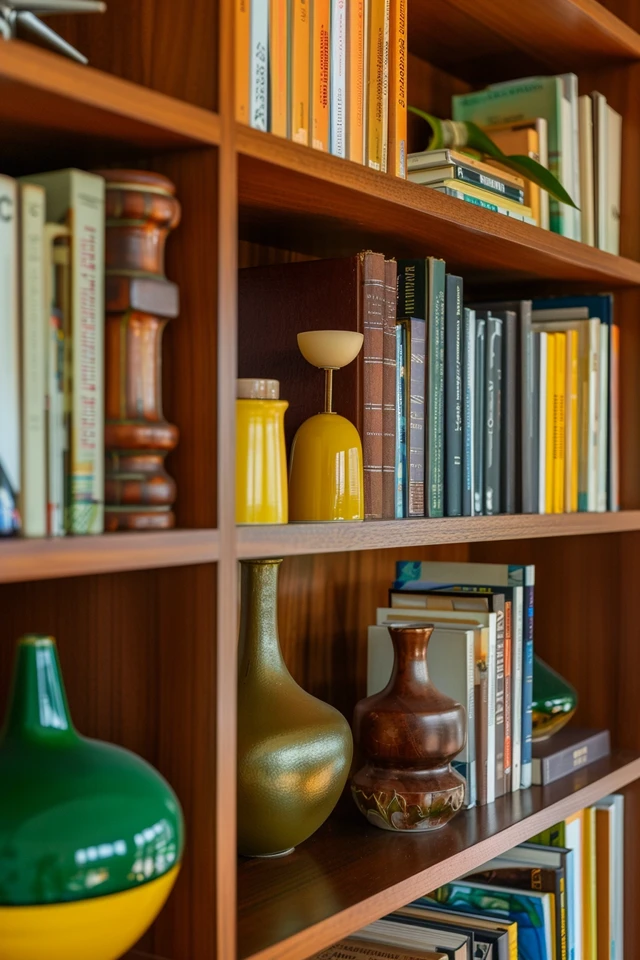
Mid-century Modern Bookcases: Display and Storage
There is a distinct magic to Mid-century Modern design that manages to be both nostalgic and futuristic at the same time. Whether you have acquired an authentic vintage piece from the 1960s or a high-quality contemporary reproduction, these bookcases are the workhorses of the living space. They offer a rare combination of open display space for your treasures and concealed storage for the clutter of daily life.
I vividly remember my first major estate sale find, a dusty walnut tension-pole unit that completely transformed my small apartment by drawing the eye upward. However, styling these pieces requires a delicate balance; you want them to look curated, not chaotic. If you are looking for visual inspiration before diving into the details, you can skip ahead to the Picture Gallery at the end of the blog post.
In this guide, we will break down exactly how to select, place, and style these units to maximize both function and form. We will look at wood tones, scale, and the specific geometry that makes this era of design so timeless. Let’s turn that empty shelving unit into the focal point of your room.
Understanding the Anatomy of MCM Shelving
Before you buy or style a bookcase, you need to understand what defines the Mid-century Modern (MCM) aesthetic. Unlike the heavy, ornate bookcases of the Victorian era or the purely industrial metal shelves of today, MCM is about “floating” forms.
Most pieces from this era feature tapered legs, often capped in brass, which lift the heavy wooden box off the floor. This is a critical design trick for smaller homes because seeing the floor extend beneath the furniture makes the room feel larger.
Material Matters: Teak, Walnut, and Rosewood
The hierarchy of wood is important for both durability and visual warmth. Teak was the gold standard for Danish imports, offering a warm, orange-brown glow that resists moisture well. Walnut was the American counterpart, often slightly darker and cooler in tone.
Rosewood is the luxury tier, characterized by dramatic, high-contrast grain patterns. If you have a rosewood piece, be careful with placement. This wood is highly photosensitive and will bleach out quickly in direct sunlight.
Freestanding vs. Modular Systems
You generally have two choices: a solid piece of furniture (credenza with a hutch or a standard bookshelf) or a modular system. Modular systems, like the famous Cado or String shelving, attach directly to the wall or use tension rods.
Modular systems are brilliant for renters or varied storage needs because you can move the shelves up and down. However, they require serious installation precision.
Designer’s Note: The “Old Smell” Factor
If you buy vintage, you might encounter a musty smell in the closed cabinets. This is common in 60-year-old wood. Do not ignore it hoping it will fade.
The Fix: Wipe the interior with a solution of water and white vinegar. Then, place a bowl of activated charcoal or dry coffee grounds inside and leave the doors closed for 48 hours. This usually pulls the odor out of the wood grain.
Sizing and Scale: Rules of Thumb
The most common mistake I see in DIY interior design is poor scale. A bookcase that is too small looks like a toy, while one that is too large can make a ceiling feel oppressive.
Height and Clearance
If you are using a freestanding tall bookcase, aim for a piece that leaves at least 12 to 18 inches of breathing room between the top of the unit and the ceiling. If the bookcase almost touches the ceiling but isn’t a built-in, it creates an awkward shadow line that visually lowers the room height.
Traffic Flow and Depth
Mid-century units are often shallower than modern bookcases, usually ranging from 10 to 14 inches deep. This is excellent for narrow walkways.
However, you must maintain a clear path. Ensure you have at least 36 inches of clearance in front of the bookcase. If the unit has sliding doors or drawers, measure that 36 inches from the edge of the open drawer, not the closed face.
Visual Weight and Balance
Because many MCM bookcases have legs, they can get top-heavy. If you have thick carpet, the unit might wobble.
I always recommend placing the front legs on the area rug and the back legs on the hard floor if the rug is large enough. If not, the unit should be entirely off the rug. Never have a bookcase “straddle” the thick edge of a rug halfway; it ruins the joinery over time due to uneven stress.
Function First: Assigning Zones
A bookcase cannot just be a dumping ground. To make it functional, we have to zone it. This is especially true for the “credenza + hutch” style units common in this design era, where you have cabinets on the bottom and shelves on top.
The Bottom Third: Heavy Storage
The bottom cabinets (or lowest shelves) are for utility. This is where you store items that are necessary but ugly. Think board games, heavy art books that are difficult to lift, or media equipment.
If your unit has glass sliding doors on the bottom, use matching storage bins to hide the clutter. Felt or wire baskets work well with the mid-century aesthetic. Avoid plastic bins, which clash with the natural wood grain.
The Middle Zone: The Active Layer
The shelves between 30 inches and 60 inches from the floor are your “active” zone. This is where the eye naturally rests.
Use this space for books you are currently reading, a small table lamp, or your best decorative objects. This is not the place for clutter; it is the stage for your personality.
The Top Shelf: Light and Airy
The top shelf should never be packed solid. Keep it airy to maintain that “floating” MCM feel.
Place trailing plants like Pothos here. The organic vines softening the sharp geometric edges of the wood create a perfect contrast.
Common Mistake: The “Library Look” in a Small Room
Packing every inch of shelf space with vertical books (spine out) can make a small mid-century room feel like a cluttered used bookstore.
The Fix: Use the “breathing room” technique. Leave 20% of every shelf empty. Alternate between rows of books and decorative objects to break up the heavy blocks of text.
The Art of Styling: Display Techniques
Styling a bookshelf is an art form, but it relies on geometry. Mid-century design is all about clean lines and geometric shapes, so your styling should reflect that.
The Zig-Zag Method
Do not line up all your books on the left side of every shelf. It creates a heavy visual list to one side.
Instead, imagine a “Z” shape overlaying your bookcase. Place a heavy object (or stack of books) on the top left. On the shelf below, place the weight in the middle. On the shelf below that, place it on the right. This keeps the viewer’s eye moving dynamically across the entire piece.
Vertical vs. Horizontal Stacking
Mix your book orientations. A row of vertical books represents structure. A stack of horizontal books represents a pause.
How to stack horizontally:
- Limit stacks to 3–5 books.
- Place the largest book on the bottom.
- Top the stack with a small object, like a geode, a small ceramic bowl, or a brass paperweight. This turns the book stack into a display plinth.
The Rule of Three
When grouping decorative objects, odd numbers are more pleasing to the eye than even numbers. A group of three items feels natural, whereas two can feel strict or competitive.
Try grouping items of different heights. For example:
1. A tall, slender vase (Height).
2. A medium, chunky vintage camera (Mass).
3. A small, low votive candle holder (Detail).
Lighting and Integration
One aspect often overlooked with vintage furniture is lighting. These pieces were designed in an era before LED strips, but they benefit standardly from modern lighting solutions.
Backlighting
If your bookcase has a back panel, it can create a “black hole” effect at night where objects disappear into the shadows.
I recommend using rechargeable, magnetic LED puck lights mounted to the underside of the shelves. Look for lights with a warm color temperature (2700K to 3000K). Anything cooler (4000K+) will make your warm walnut or teak wood look sickly and green.
Lamp Placement
If you have an open shelf that is at least 12 inches high, place a small, corded lamp on it. The soft glow from within the bookshelf adds incredible depth to a room in the evening.
Drilling holes for cords in vintage pieces is a controversial topic. If the piece is a high-value collectible, do not drill. Route the cord visibly but neatly using adhesive cable clips along the back leg. If the piece is a common user-grade item, drilling a neat 1-inch hole in the back panel for cord management is usually acceptable and increases functionality.
Real World Constraints: Kids and Pets
Mid-century legs are elegant, but they make pieces less stable than flush-to-floor units.
Safety Rule: You must anchor these bookcases to the wall. This is non-negotiable if you have children or climbing pets. Use a heavy-duty furniture strap attached to a wall stud. If you cannot find a stud exactly where the case is, use high-weight toggle bolts.
Final Checklist: What I’d Do in a Real Project
If I were installing a mid-century bookcase in your home tomorrow, this is the exact workflow I would follow to ensure success.
- Audit the Inventory: I would pull everything you want to display out onto the dining table. Then, I would edit it down by 30%. We only want the best pieces.
- Check the Floor Level: Vintage houses often have uneven floors. I would use a spirit level on the shelves and use wood shims under the legs to ensure the unit is perfectly plumb.
- Anchor the Unit: Before putting a single book on the shelf, I would secure the unit to the wall for safety.
- Place the Anchors: I would place the largest items first (large art, speakers, large plant pots) using the Zig-Zag pattern to balance the visual weight.
- Add the Books: I would add books in alternating vertical and horizontal blocks, leaving gaps for air.
- Layer the Smalls: Finally, I would fill in the gaps with the smallest treasures—photos, travel souvenirs, and ceramics.
- Conceal the Cords: I would spend the final 20 minutes zip-tying cables and tucking them behind books so the visual presentation is clean.
FAQs
Can I mix wood tones, like oak floors with a walnut bookcase?
Yes, absolutely. In fact, matching woods perfectly often looks flat. The trick is to ensure the undertones talk to each other. If your oak floor is warm (honey/yellow), a warm walnut works beautifully. To bridge the gap, use a rug that incorporates both browns and tans to visually separate the vertical furniture from the horizontal floor.
How much weight can vintage shelves hold?
Vintage particle board or solid wood spans can sag over time. As a general rule, if the shelf is wider than 30 inches without a center support, avoid filling it entirely with heavy encyclopedias or vinyl records. Keep the heavy items on the bottom where the structure is most reinforced.
How do I clean the wood finish?
Avoid modern silicone-based sprays (like Pledge) on vintage pieces. They build up a sticky residue over time. Dust regularly with a dry microfiber cloth. For deeper cleaning, use a slightly damp cloth with a drop of mild dish soap, then dry immediately. Once a year, feed the wood with a high-quality oil or wax designed for that specific wood type (teak oil for teak, beeswax for walnut).
Can I paint a mid-century bookcase?
Technically yes, but proceed with caution. If the piece has a high-quality veneer or solid wood grain, painting it will significantly devalue it. If the veneer is chipped, water-damaged, or missing, painting can be a great way to salvage a damaged piece. Matte black or navy blue looks stunning on MCM silhouettes.
Conclusion
Mid-century Modern bookcases are more than just storage; they are architectural elements that bring history and warmth into a home. By respecting the materials, adhering to proper scale, and styling with a mix of discipline and creativity, you can create a display that feels both personal and polished.
Remember that styling is not a permanent tattoo. It is a fluid process. As you acquire new books or travel to new places, your shelves should evolve. Start with the structure and rules we discussed here, but allow your home to tell your story over time.
Picture Gallery


