
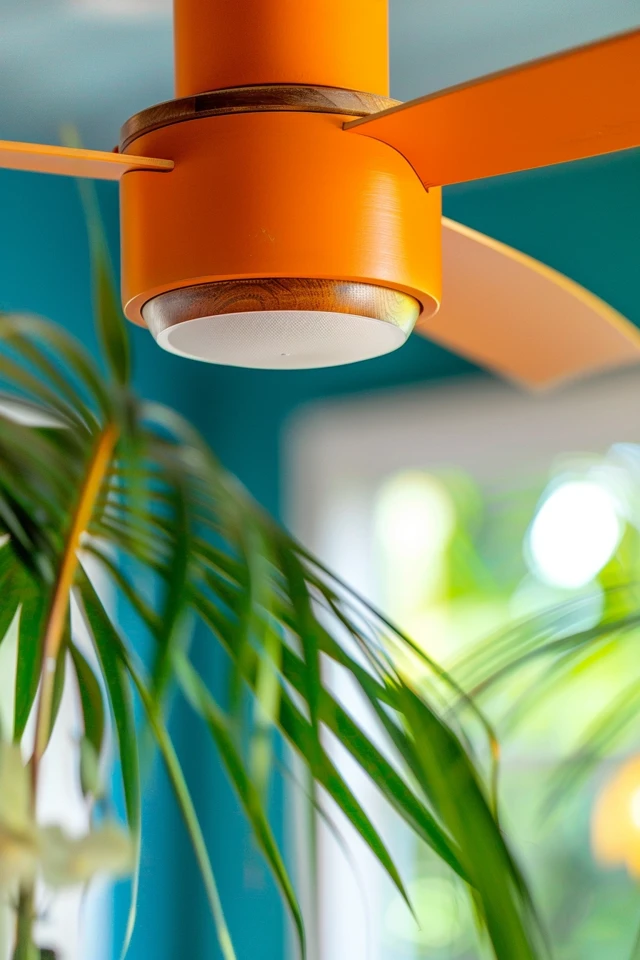
Title: Mid-century Modern Ceiling Fans: Cool and Stylish
Introduction
For a long time, ceiling fans were the enemy of interior design. They were bulky, noisy, and often ruined the aesthetic of a carefully curated room. Fortunately, the revival of Mid-century Modern (MCM) design has completely changed the landscape of air circulation. We no longer have to choose between keeping cool and having a beautiful home.
The modern fan is sleek, often sculptural, and designed with the philosophy that form must follow function. Whether you are dealing with a sweltering rental apartment or renovating a 1960s ranch, the right fixture can actually elevate the space rather than detract from it. If you are looking for visual inspiration, please scroll to the bottom of this page where I have curated a full Picture Gallery of these fans in real spaces.
At-a-Glance: Key Takeaways
- Function First: Mid-century design dictates that the fan must work efficiently. Look for blade pitches between 12 and 15 degrees for optimal airflow.
- Motor Matters: For bedrooms and quiet spaces, prioritize DC motors over AC motors. They are whisper-quiet, energy-efficient, and smaller, allowing for sleeker housing designs.
- Size It Right: A fan that is too small looks cheap; a fan that is too big feels oppressive. A 52-inch blade span is the standard “goldilocks” size for most living areas.
- Lighting Temperature: Avoid cool white LEDs. MCM interiors thrive on warmth, so aim for integrated lighting with a color temperature of 2700K or 3000K.
- Finish Coordination: You do not need to match your floor color. Instead, coordinate the fan blades with your furniture legs or the fan housing with your door hardware.
What This Style Means (and Who It’s For)
Mid-century Modern style is rooted in the design movements of the mid-1940s to the late 1960s. It emphasizes clean lines, organic curves, and a lack of unnecessary ornamentation. When we apply this to ceiling fans, we strip away the frilly glass shades and ornate ironwork found on traditional fans.
Instead, we see propeller-style blades, simple metallic housings, and warm wood tones. This style is for the homeowner who values airflow but refuses to install a “builder-grade” white fan. It is for the pragmatist who knows that air conditioning is expensive and that a good fan can lower the perceived temperature of a room by several degrees.
This look works exceptionally well for:
- Renovators: Updating a dated home without undergoing major structural changes.
- Small Space Dwellers: The slim profiles of MCM fans take up less visual weight in rooms with standard 8-foot ceilings.
- Parents and Pet Owners: Unlike floor fans, which take up valuable square footage and pose tripping hazards, ceiling fans are safe and out of the way.
The Signature Look: Ingredients That Make It Work
To get this look right, you need to identify the specific elements that signal “Mid-century.” It is not just about buying a fan with wood blades; it is about the shape and the mix of materials.
Blade Shape and Material
The most iconic MCM fans feature solid wood or high-quality composite blades that look like carved wood. Look for “propeller” shapes where the blade is wider at the base and tapers toward the tip, or simple rectangular blades with rounded corners. Walnut, koa, and whitewashed oak are the go-to finishes. Avoid high-gloss finishes on blades; matte or satin creates a more sophisticated, high-end look.
The Housing and Downrod
The motor housing should be minimal. In the 1950s, designers embraced the “Space Age,” so cylindrical or spherical housings are common. Finishes usually include brushed brass, matte black, or brushed nickel. The contrast between a matte black housing and walnut blades is a classic staple of this aesthetic.
Integrated Lighting
Many vintage fans did not have lights, but modern life requires them. The signature MCM look uses a single milk-glass globe (schoolhouse style) or a very slim LED disc that disappears into the housing. Avoid fans with three or four separate light bulbs sticking out in glass cups, as this leans too traditional.
Layout & Proportions (Designer Rules of Thumb)
Getting the scale right is more important than the style itself. A beautiful fan that is the wrong size will make a room feel off-balance. In my projects, I use specific mathematical formulas to ensure the fan fits the room physically and visually.
Sizing by Square Footage
Measurements are critical here. If you install a fan that is too small, it has to spin frantically to move air, creating noise and wind tunnels.
- Small Rooms (up to 144 sq. ft): Use a 42 to 44-inch fan. This is typical for guest rooms or home offices.
- Standard Rooms (144 to 225 sq. ft): Use a 50 to 54-inch fan. This covers most master bedrooms and living rooms.
- Large Rooms (225 to 400 sq. ft): Use a 60-inch fan or larger.
- Great Rooms (Over 400 sq. ft): Consider using two 50-inch fans spaced evenly, or one large industrial-style fan (72 to 84 inches).
Hanging Height and Clearance
Safety codes and aesthetics must meet in the middle. The bottom of the fan blades should be at least 7 feet off the floor. However, for the best airflow and look, 8 to 9 feet is optimal.
- Low Ceilings (8 feet): You must use a “hugger” or flush-mount fan. MCM styles are great for this because they are naturally streamlined.
- Standard Ceilings (9 feet): Use a 6-inch or 12-inch downrod.
- High Ceilings (10 feet+): The general rule is to calculate the ceiling height minus 9 feet to find your downrod length. For example, a 12-foot ceiling needs a 3-foot (36-inch) downrod.
Designer’s Note: The “Cone of Air”
I always remind clients that fans cool people, not rooms. You need to be in the “cone” of air to feel it. If your room is large and rectangular, but your seating area is pushed to one side, centering the fan in the room might leave your sofa in a dead zone. In open-concept spaces, center the fan over the conversation area, not necessarily the geometric center of the room.
Step-by-Step: How to Recreate This Look
Step 1: Check Your Junction Box
Before you fall in love with a heavy solid-wood fan, check your ceiling. You cannot hang a fan from a standard light fixture box. You need a “fan-rated” junction box that is braced between the ceiling joists to handle the vibration and weight. If you are unsure, unscrew your current fixture; the box should be stamped “Fan Rated” or “Acceptable for Fan Support.”
Step 2: Select the Blade Count
There is a myth that more blades equal more air. This is false. Fewer blades actually create less drag and move air more efficiently. Three-blade fans are the hallmark of Mid-century Modern design. They look sportier and cleaner than the traditional five-blade fans.
Step 3: Choose Your Control Method
Decide how you want to operate the fan.
- Wall Control: Best for new construction or easy wiring access. It looks cleanest and you never lose the remote.
- Handheld Remote: Good for rentals or simple swaps, but mount the holster by the switch so you do not lose it.
- Smart / Wi-Fi: Many modern fans connect to Alexa or Google Home. This is excellent for setting schedules (e.g., turning on the bedroom fan automatically at 10 PM).
Step 4: Layer the Lighting
If the fan is your only light source, the room will look flat. I always pair a ceiling fan with floor lamps and table lamps. The fan light should be on a dimmer and used for general tasks (like cleaning or finding lost keys), while lamp light creates the evening mood.
Budget Breakdown: Low / Mid / Splurge
You can find this aesthetic at almost any price point, but the mechanics inside the fan change drastically as you spend more.
Low Budget ($150 – $300)
At this tier, you are paying for the look, not high-end engineering.
- Materials: Blades are usually MDF (pressed wood) with a photo-veneer of walnut or oak. The housing is stamped steel.
- Motor: Standard AC motor. It might have a slight hum on high speeds.
- Control: Usually a pull chain or basic remote.
- Best for: Guest rooms, rentals, or low-use areas.
Mid-Range ($350 – $700)
This is the sweet spot for value and performance.
- Materials: Blades may be ABS plastic (which is excellent because it does not warp and can be molded into aerodynamic shapes) or plywood.
- Motor: Often DC motors, which are silent, use 70% less electricity, and offer 6 speeds instead of 3.
- Lighting: Better quality LEDs with frosted glass that diffuses light evenly without “hot spots.”
- Best for: Master bedrooms and main living areas.
Splurge ($800 – $1,500+)
Here you are paying for brand heritage, authentic materials, and smart technology.
- Materials: Solid carved balsa or paulownia wood blades. These are incredibly lightweight and naturally beautiful.
- Motor: High-precision DC motors that are completely silent and backed by lifetime warranties.
- Tech: Native smart home integration and sensors that adjust speed based on room temperature.
- Best for: Forever homes, great rooms with high ceilings, and design enthusiasts.
Common Mistakes (and How to Fix Them)
The “Strobe Light” Effect
This is the most common and annoying mistake I see. If you have recessed “can” lights in your ceiling, and you place a fan below them, the spinning blades will cut through the beam of light. This creates a strobing, flickering shadow that is headache-inducing.
The Fix: Ensure there is at least 18 to 24 inches of clearance between the tip of the fan blade and the nearest recessed light. If you cannot move the lights, choose a smaller fan or use floor lamps instead of the overhead cans while the fan is on.
Ignoring the Downrod Length
Hanging a fan too high reduces airflow; hanging it too low looks awkward and creates anxiety for tall guests.
The Fix: Use the formula mentioned in the layout section. If you are buying online, the fan usually comes with a short 4-inch or 6-inch rod. You almost always need to buy the longer downrod separately as an accessory.
Mismatched Wood Tones
People often try to match the fan blades exactly to their hardwood floors. This is nearly impossible and usually results in a “near miss” that looks bad.
The Fix: Treat the fan like a piece of furniture. Match the blades to your coffee table, media console, or dining chairs. Alternatively, go for a high contrast. If you have light oak floors, dark walnut fan blades look stunning.
Room-by-Room Variations
The Living Room
This is the place for a statement piece. Since living rooms are usually larger, you can get away with a larger blade span (60 inches). A three-blade “propeller” style in dark wood serves as a visual anchor on a white ceiling. If you have a fireplace, try to coordinate the metal finish of the fan (e.g., matte black) with the fireplace surround or tools.
The Bedroom
Silence is the priority here. Do not buy a cheap AC motor fan for a bedroom; the hum will drive you crazy at night. Invest in a DC motor fan. Visually, you might want something softer. A white fan with light wood blades can feel airier and less intrusive above a bed. Ensure the light kit is fully dimmable so you aren’t blinded when you wake up.
The Outdoor Patio
Mid-century style flows seamlessly outdoors, but you cannot use an indoor fan. You must look for “Damp Rated” (for covered porches) or “Wet Rated” (for pergolas exposed to rain) fans. ABS plastic blades are superior here because they will not droop or swell with humidity like real wood or MDF will.
Dining Room
I generally advise against fans directly over a dining table because it cools the food too fast and can feel drafty while eating. However, if you live in a hot climate and need it, look for a “fandelier.” These are fixtures that look like a chandelier but have a small fan hidden inside. If you use a standard fan, keep it on a low speed and ensure it is hung high enough (minimum 7.5 feet) so it doesn’t feel like a guillotine over the table.
Finish & Styling Checklist
When you are making your final selection, run through this checklist to ensure the fan ties the room together.
- Hardware Coordination: Look at your door handles and curtain rods. If they are matte black, a fan with black housing is a safe bet. If you have brass accents, a fan with brass knuckles or housing adds a touch of glam.
- The Rule of Three: Try to repeat the fan’s material elsewhere in the room. If you choose walnut blades, ensure there are at least two other walnut elements (e.g., a picture frame and a side table) to make it look intentional.
- Ceiling Contrast: White fans on white ceilings disappear. This is good for small rooms. Wood or black fans on white ceilings pop. This is good for design statements. Decide which impact you want.
- Switch Updates: If you are installing a beautiful new fan, replace the old beige toggle switch on the wall with a crisp white rocker switch or a modern slider. It is a $5 detail that makes the renovation feel complete.
FAQs
What direction should my fan spin?
Most fans have a switch (either on the body or the remote) to reverse direction.
- Summer: Counter-clockwise. This pushes air straight down, creating a wind-chill effect on your skin.
- Winter: Clockwise at low speed. This pulls cool air up and pushes the warm air trapped at the ceiling out towards the walls and down to you, without creating a draft.
Do I need a smart fan?
You don’t need one, but they are helpful for energy saving. Features like “Breeze Mode” (which varies the speed to mimic natural wind) are very pleasant. Also, being able to turn the fan off via your phone after you have left the house is a nice perk.
How do I clean high fans?
Dust buildup on the leading edge of the blade creates drag and can cause the fan to wobble. Use a pillowcase. Slide the pillowcase over the blade and pull it back. The dust stays inside the pillowcase rather than falling on your furniture (or face).
Can I install a fan on a sloped ceiling?
Yes, but you need a specific vaulted ceiling adapter. Most standard fan canopies (the part that touches the ceiling) allow for a slope of up to 15 or 20 degrees. If your roof pitch is steeper, you will need a specialized angled mount and a longer downrod to ensure the blades do not hit the slope.
Conclusion
Mid-century Modern ceiling fans offer the perfect blend of nostalgia and modern engineering. They prove that you do not have to sacrifice comfort for style. By focusing on simple lines, authentic materials like wood and brass, and proper scaling, you can transform a ceiling from a forgotten surface into a key element of your design.
Remember to measure twice—especially regarding clearance from walls and lights—and invest in the best motor your budget allows. A high-quality fan is something you will use every single day, making it one of the best investments you can make for your home’s livability.
Picture Gallery


