
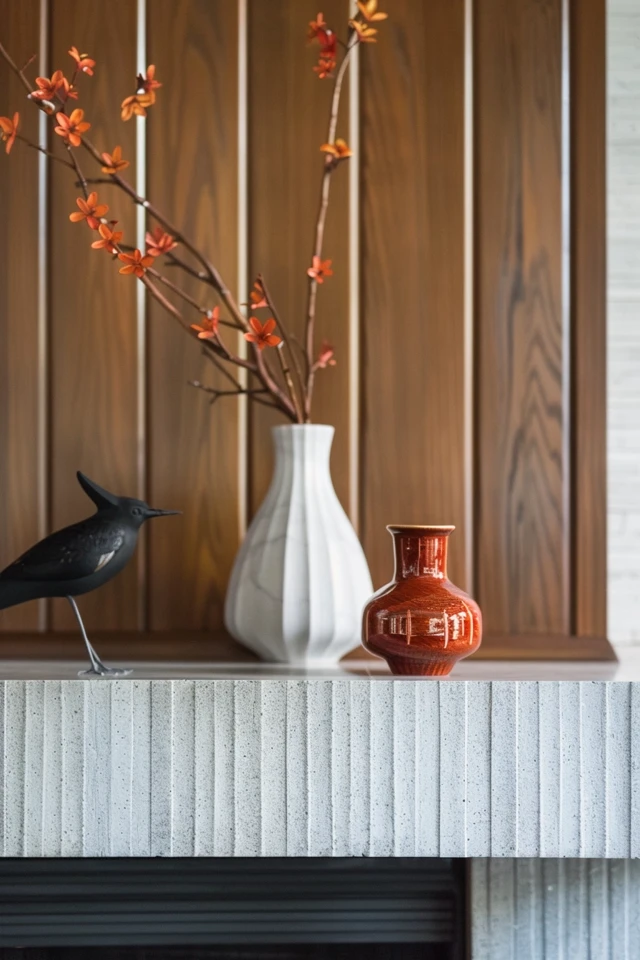
Mid Century Modern Mantel: Elevate Your Space
The fireplace is the psychological heart of a home. In Mid Century Modern (MCM) design, the mantel isn’t just a shelf for knick-knacks; it is an architectural statement that defines the room’s horizontal lines. Whether you are renovating a 1950s ranch or adding character to a new build, getting the mantel right is critical for anchoring your living space.
I have seen countless living rooms transformed simply by swapping a bulky, traditional surround for a sleek, floating beam or a slat-wood installation. The beauty of this style lies in its honesty. It celebrates natural materials, low profiles, and a seamless connection between the interior and the outdoors.
However, achieving that effortless look requires careful planning regarding scale, materials, and styling. For plenty of visual inspiration, be sure to scroll down to our curated picture gallery at the end of this post.
1. Defining the MCM Mantel Aesthetic
Before you buy lumber or hire a contractor, you need to understand what makes a mantel distinctively “Mid Century.” It is rarely about ornate carving or complex molding. Instead, the focus is on geometry and texture.
The most iconic look is the “floating” mantel. This design creates a sense of airiness and keeps the visual weight of the room low, which is essential for maintaining the sleek profile of modern furniture. The mantel often extends beyond the firebox, sometimes stretching the entire length of the wall to emphasize horizontal linearity.
Another common approach is the asymmetrical surround. You might have a stone hearth that extends to the left, while the mantel shelf sits off-center to the right. This asymmetry creates visual tension and interest, preventing the room from feeling too stiff or formal.
Designer’s Note: The “Toothpick” Mistake
One of the most common errors I see in DIY renovations is undersizing the mantel beam. If you install a 2-inch thick board on a large stone wall, it looks like a toothpick. In MCM design, you want substantial weight. I usually specify beams that are at least 4 to 6 inches thick to hold their own against the visual weight of the fireplace masonry.
2. Material Selection: Wood, Stone, and Texture
Materiality is the backbone of this design language. Since the forms are simple, the quality of the material must be high. You are looking for richness and warmth to potentialize the otherwise clean lines.
Top Wood Species for MCM Mantels:
- Black Walnut: This is the gold standard. Its dark, rich grain pairs beautifully with lighter walls and creates a sophisticated contrast.
- Teak: If you can source it responsibly, teak offers that classic, warm orange-brown tone synonymous with 1960s Danish design.
- White Oak: For a more contemporary “Japandi” or “Scandi-Modern” interpretation, white oak offers a lighter, airier feel while maintaining visible grain texture.
Stone and Surround Materials:
The wall behind the mantel is just as important as the shelf itself. Stacked slate is a classic choice that adds immense texture. However, avoid the multicolored “ledge stone” often sold at big-box stores, as it tends to look dated to the early 2000s rather than the 1950s.
Terrazzo is another fantastic option for the hearth or surround. It introduces a playful yet durable element. If you are working on a budget, large-format matte porcelain tiles that mimic concrete or basalt can provide that clean, architectural backdrop without the weight and cost of natural stone.
Common Mistakes + Fixes:
Mistake: Painting high-quality brick white instantly.
Fix: Before painting, clean the brick thoroughly. The “red” brick of the 50s is often quite beautiful when paired with a walnut mantel and dark grey walls. If you must paint, consider a whitewash or a dark charcoal masonry stain rather than a thick coat of semi-gloss latex, which ruins the texture.
3. Scale, Height, and Installation Logic
Getting the measurements right is where the project succeeds or fails. As a designer, I live by specific numbers to ensure the fireplace functions safely and looks proportional.
Standard Height Rules:
A standard mantel usually sits about 54 to 60 inches off the floor. However, in MCM homes with lower ceilings, you might drop this slightly to 50–52 inches to keep the ceiling from feeling low. The goal is to keep the art or mirror above the mantel at eye level.
Clearance Codes (Crucial!):
Safety comes first. National fire codes generally require combustible materials (like your wood mantel) to be at least 6 inches above the firebox opening. For every inch the mantel projects outward, you typically need another inch of clearance height. Always check your local building codes and the manufacturer’s manual for your specific gas or wood insert.
Depth and Projection:
For a modern look, I prefer a shelf depth of 6 to 8 inches. Anything deeper than 10 inches starts to look like a farmhouse shelf or a heavy traditional mantle. You want just enough space to lean a piece of art and place a vase, but not enough to encourage clutter.
What I’d Do in a Real Project:
If the room feels small, I would extend the mantel shelf continuously into a built-in bench or media console on one side. This unifies the wall, provides extra seating or storage, and makes the room feel much wider than it actually is.
4. Styling Your Mantel: The Rule of Asymmetry
Styling an MCM mantel requires restraint. The “Noah’s Ark” approach (two of everything, perfectly symmetrical) is the enemy of modern design. You want to create a balanced composition that feels organic and casual.
The Visual Triangle:
Create a triangle with your objects. Place your tallest item (art or a mirror) off-center. Place a medium-height object (like a vase or candlestick) on the opposite side. Finally, use a low object (like a small bowl or stack of books) to bridge the gap.
Art and Layering:
Lean your art; don’t hang it. Leaning a large abstract print or a vintage exhibition poster gives the space a relaxed vibe. You can overlap a smaller frame in front of it to add depth.
Integrating Landscape Elements:
Since MCM design emphasizes the connection to nature, your mantel should reflect that. Incorporate organic shapes and living elements.
- Ceramics: Choose pottery with matte glazes and earthy textures. West German pottery (Fat Lava style) is historically accurate and adds a pop of color.
- Greenery: A trailing pothos or a sculptural snake plant softens the hard lines of the architecture. Avoid dense floral bouquets; stick to architectural foliage.
The “Less is More” Mandate:
Leave negative space. You should be able to see parts of the wall or shelf. If you have to move three things to dust, you have too many things.
5. Lighting and ambiance
Lighting the fireplace wall changes the mood of the room entirely at night. In many original mid-century homes, lighting was often recessed or integrated into valances.
Sconce Placement:
If you are installing sconces, avoid placing them directly above the mantel in a symmetrical layout. Instead, consider a single, articulated arm lamp mounted to the side. This provides task lighting for the hearth area and adds a sculptural metal element (brass or matte black) to the wall.
Highlighting Texture:
If you have a textured stone or slate wall, install directional recessed lights (gimbals) or a track light system in the ceiling about 18–24 inches away from the wall. Aim the light to graze down the surface of the stone. This “wall washing” technique creates dramatic shadows and emphasizes the natural material.
Bulb Temperature:
Always use warm white bulbs (2700K to 3000K). Cool daylight bulbs (4000K+) will make your wood look grey and your stone look clinical. A cozy hearth requires warm light.
Final Checklist: The Project Workflow
If I were managing your mantel renovation, this is the checklist I would use to ensure nothing slips through the cracks.
1. Verify the Mechanics
Check the condition of the chimney or gas line first. There is no point in beautifying a non-functional fireplace.
2. Check Wall Strength
Floating mantels are heavy. Locate your studs. You may need to open the drywall to install blocking (horizontal wood supports) between studs to support the steel brackets for a floating beam.
3. Select Your “Hero” Slab
Visit a lumber yard, not a home improvement store. Pick a board with a grain pattern you love. Look for “live edge” if you want rustic-modern, or “square edge” for purist modern.
4. Mock It Up
Use blue painter’s tape to outline the proposed mantel size on the wall. Live with it for 24 hours. Does it feel too high? Too thin? Adjust before you cut wood.
5. Finish Before Install
Stain and seal your wood before attaching it to the wall. It is much easier to apply a clear coat in the garage than to worry about dripping polyurethane on your hearth.
FAQs
Q: Can I have a TV above an MCM mantel?
A: Ideally, no. MCM design prioritizes conversation and art. However, in the real world, it happens. If you must, use a television that displays art when off (like The Frame). Mount it as low as safely possible to avoid neck strain, and try to balance the black rectangle with dark objects on the hearth below.
Q: I am a renter. How can I get this look?
A: Focus on styling. You likely cannot replace the mantel, but you can lean large abstract art to cover a dated mirror. Use command strips to add battery-operated puck lights for drama. Accessorize with vintage ceramics to draw the eye away from a generic surround.
Q: How do I clean a raw stone fireplace?
A: Vacuum it first using a brush attachment to remove dust from crevices. Use a bucket of warm water with a small amount of mild dish soap and a soft scrub brush. Avoid harsh acidic cleaners on natural stone like limestone or slate, as they can etch the surface.
Q: Can I mix wood tones?
A: Absolutely. If your floors are light oak, a dark walnut mantel provides a stunning contrast. The trick is to ensure the undertones match (e.g., both warm or both neutral) rather than trying to match the colors perfectly.
Conclusion
Creating the perfect Mid Century Modern mantel is about balance. It requires respecting the architecture of your home while introducing the warmth and functionality that modern living demands. By focusing on quality natural materials, maintaining proper scale, and styling with restraint, you create a focal point that feels timeless rather than trendy.
Remember that the fireplace is the anchor of the room. When you get the mantel right, the rest of the furniture layout naturally falls into place. Take your time selecting that perfect beam of wood or that piece of abstract art. The result will be a space that invites you to slow down, relax, and enjoy the view.
Picture Gallery


