
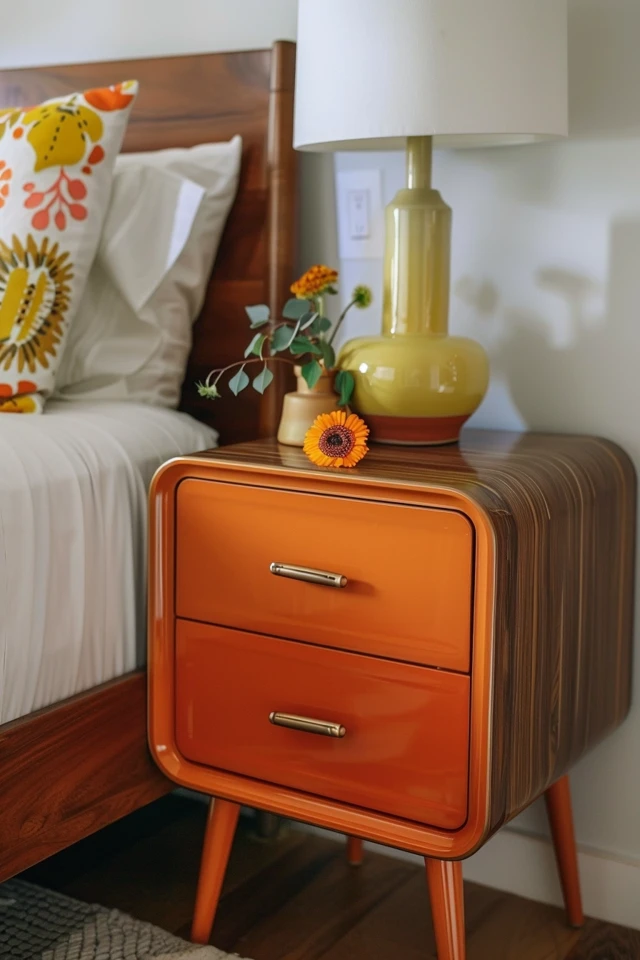
Title: Mid-century Modern Nightstands: Bedroom Essentials
Introduction
Mid-century modern design has a way of sticking around. It feels just as relevant today as it did seventy years ago, primarily because it prioritizes function without sacrificing beauty. When we talk about bedroom design, the nightstand is often the unsung hero that anchors the entire sleeping zone.
It creates the visual bracket for your bed, defining the sleeping area while holding your daily essentials. Choosing the right mid-century modern (MCM) nightstand isn’t just about picking a piece with tapered legs. It is about understanding how scale, wood tone, and storage needs interact to create a restful environment.
If you are looking for visual inspiration, you can jump right to our Picture Gallery at the end of this article. Before you buy, however, I want to walk you through the specific design principles I use to select these pieces for client projects. We will cover everything from height ratios to mixing wood finishes so you can make a choice that lasts a lifetime.
Defining the Mid-century Aesthetic
The first step in selecting the right piece is identifying the specific flavor of mid-century design that fits your space. While the term covers a broad era, nightstands generally fall into two distinct silhouettes.
The first is the “leggy” look. These pieces usually have a smaller box or drawer unit perched atop tall, tapered legs. This is ideal for smaller rooms or apartments because seeing the floor beneath the furniture makes the room feel larger.
The second silhouette is the “block” or chest style. These sit closer to the ground, often on a plinth base or very short legs. These offer significantly more storage and work best in larger primary suites where a small table might look lost.
Key Characteristics to Look For:
- Tapered Legs: The hallmark of the style, often capped in brass or left as bare wood.
- Minimal Hardware: Look for integrated routered handles or simple, small knobs.
- Warm Wood Tones: Walnut, teak, and acorn are the standard bearers for this aesthetic.
- Clean Lines: Avoid ornate carving; the beauty should come from the grain of the wood and the geometry of the piece.
Designer’s Note: The Veneer Myth
In my years of sourcing, I often hear clients say they only want “solid wood.” In true mid-century design, high-quality veneer is actually very common and desirable. It allows for beautiful “book-matched” grain patterns on drawer fronts that solid wood cannot achieve. Don’t be afraid of veneer, provided it is applied over a sturdy substrate like plywood, not cheap particle board.
Getting the Scale and Height Right
This is where most people make mistakes. A nightstand that is the wrong height is not just visually jarring; it is frustrating to use. If you have to reach up awkwardly to turn off your alarm or lean too far down to grab your water, the ergonomics are off.
The Golden Rule of Nightstand Height
Your nightstand should be level with the top of your mattress. If you cannot find a perfect match, it is acceptable for the nightstand to be 2 to 3 inches higher than the mattress.
However, you should never go more than 2 inches lower than the mattress. A low nightstand creates a visual “pit” next to the bed and makes the bed feel imposing and heavy.
Width Considerations
The width of the nightstand must relate to the size of the bed. This is about visual weight.
- King Beds: You need a substantial nightstand. Look for pieces that are at least 24 to 30 inches wide. Anything narrower than 20 inches will look like a toy next to a King mattress.
- Queen Beds: The sweet spot is usually between 20 and 24 inches wide.
- Full/Twin Beds: You can go narrower here, down to 18 inches, but ensure the surface area is still functional.
Spacing Guidelines
When laying out the room, do not push the nightstand flush against the mattress. I always leave a gap of 3 to 5 inches between the edge of the bed and the nightstand. This allows for bedding to fall naturally (especially bulky comforters) and makes making the bed much easier.
Common Mistake: The Floating Nightstand
In rental apartments or small bedrooms, I often see people pushing a tiny nightstand into a corner. If you have space constraints, prioritize the nightstand height over the width. A narrow table that is the right height looks intentional; a wide table that is too short looks temporary.
Functionality and Storage Needs
Mid-century modern furniture is famous for its “form follows function” philosophy. Before you fall in love with a vintage piece online, you need to be honest about your bedtime habits.
The “Drawer vs. Shelf” Debate
If you are a messy person—and there is no shame in that—do not buy a nightstand with open shelving. Open shelves demand curation. They require you to stack your books neatly and keep the dust away.
If you keep hand cream, charging cables, journals, and medicines next to your bed, you need drawers. A top drawer is essential for the small, ugly items we need close at hand.
Cable Management Constraints
Authentic vintage mid-century pieces were designed before the iPhone existed. They do not have holes in the back for charging cables.
- The Fix: If you buy a reproduction, look for hidden cutouts in the back panel or a drawer with a built-in power strip.
- The Vintage Fix: If you buy true vintage, you have two options. You can carefully drill a hole in the back panel (if it doesn’t devalue the piece), or you can use adhesive cable clips along the back leg to keep cords tidy.
Surface Area Reality Check
I call this the “Water Glass Test.” Place a table lamp, a book, and a glass of water on the surface. Does it feel crowded? If you bump the table in the dark, will the glass fall?
Mid-century lamps can be quite large and sculptural. If you plan to use a large ceramic lamp, you need a nightstand with enough depth to accommodate it without the base hanging off the edge.
Mixing Wood Finishes and Materials
A common fear I encounter is the fear of mixing woods. Clients worry that if their bed frame is walnut, the nightstand must be the exact same shade of walnut.
The Matchy-Matchy Trap
Buying a matching bedroom “set” (bed, dresser, nightstands all identical) can make a room feel like a furniture showroom rather than a curated home. Mid-century style thrives on subtle contrast.
How to Mix Woods Successfully
You generally want to stay within the same tonal family. Walnut, teak, and darker oaks usually have warm, orange, or red undertones. These play well together.
Avoid mixing these warm woods with “cool” woods like gray-washed oak or very blonde maple, unless you are very confident in your color theory. The clash in undertones can make the room feel disjointed.
Introducing Stone and Lacquer
To break up a room full of wood, I love using mid-century nightstands with stone tops or lacquered finishes.
- Marble Tops: A nightstand with a white Carrara marble top looks stunning next to a wood bed frame. It adds brightness and is impervious to water rings.
- White Lacquer: In a small room, white nightstands can reflect light and make the space feel airier, contrasting beautifully with a dark walnut headboard.
What I’d Do in a Real Project
If I have a client with a heavy, dark wood bed frame, I will almost always choose a nightstand that is either painted (like a matte olive green or navy) or has a stone top. This breaks up the heaviness and adds a layer of texture.
Styling and Lighting Integration
Once you have the physical pieces, the styling is what elevates the look from “furniture storage” to “designed space.”
Lighting Scale
The relationship between your nightstand and your light source is critical for visual balance.
- Table Lamps: The lamp should generally be about one-third the width of the nightstand. If the lamp is too skinny, the table looks empty. If it’s too wide, you have no room for your phone.
- Sconces: Wall-mounted sconces are a fantastic trick for small mid-century bedrooms. They free up the entire nightstand surface. Ideally, mount sconces so the bulb is roughly 60 to 66 inches off the floor, or about 6 to 12 inches above your shoulder when sitting up in bed.
The Rule of Three
When styling the surface, stick to odd numbers. A lamp, a stack of two books, and a small ceramic bowl or clock create a balanced trio.
Rug Placement
This is a detail many overlook. If you have an area rug under the bed, the nightstand legs should interact with it intentionally. Ideally, the nightstand should sit entirely on the rug or entirely off the rug.
Having a nightstand with two legs on the rug and two legs off causes the table to wobble. If you must straddle the edge due to space, use felt furniture pads on the legs that are off the rug to level the surface.
Durability and Maintenance
Mid-century modern furniture, especially vintage or high-end reproductions, requires specific care to maintain its value and appearance.
Protecting the Finish
The lacquers and oil finishes used in the 1950s and 60s are not as durable as modern polyurethanes.
- Coasters are non-negotiable: Water rings can permanently whiten the finish on vintage walnut.
- Humidity Control: Solid wood and veneer expand and contract. Keep nightstands away from direct radiator heat to prevent veneer peeling.
Dealing with Scratches
For minor scratches in walnut or teak, a simple rub with a walnut meat (literally the nut) can hide the flaw. The oil from the nut darkens the scratch. For deeper issues, I recommend “Restor-A-Finish” in the appropriate tone, applied with fine steel wool.
Checking Joinery
If you are buying vintage, check the drawer joints. You want to see “dovetail” joints (interlocking wood teeth). This is a sign of quality craftsmanship. If the drawers are held together with staples or glue only, it is likely a lower-quality piece that may not hold up to daily use.
Final Checklist: The Designer’s Approach
Before you click “purchase” or hand over your credit card at an antique shop, run through this quick checklist. This is the exact mental process I use for my clients.
1. Measure the Mattress Height:
Is the nightstand within the “level to +3 inches” range?
2. Check the Footprint:
Have you taped out the width on the floor? Do you have at least 3 inches of clearance between the bed and the table?
3. Verify Storage Needs:
Be honest—do you need a junk drawer? If yes, do not buy the table with only open shelves.
4. Check the Swing:
If the nightstand has a cabinet door rather than drawers, which way does it swing? It should swing away from the bed so you can access it while lying down.
5. The Shake Test:
If shopping in person, give the table a gentle shake. Tapered legs can sometimes loosen over time. Is it sturdy enough to hold a heavy lamp?
FAQs
Can I mix a mid-century nightstand with a modern upholstered bed?
Absolutely. In fact, this is my preferred look. The soft texture of an upholstered headboard contrasts perfectly with the architectural lines and hard wood of a mid-century nightstand. It keeps the room from feeling too museum-like.
What if my partner wants a different nightstand?
Mismatched nightstands can look very chic, but they need a unifying element. They should be of similar visual weight and height. To tie them together, use matching table lamps on both sides. This creates symmetry at eye level, even if the tables below are different.
Are vintage nightstands better than new reproductions?
“Better” is subjective. Vintage pieces have history, better wood grain, and retain their value. However, they often have “sticky” wood-on-wood drawer slides and lower heights. Modern reproductions offer smooth metal glides and taller dimensions that fit modern pillow-top mattresses better.
How do I fix a wobbly mid-century leg?
Most mid-century legs are attached with a screw-in dowel. Often, you just need to tighten the leg by hand. If the wood threads are stripped, you can buy a “furniture leg repair plate” from a hardware store for a few dollars. It screws into the base and gives the leg a fresh anchor point.
Is it okay to paint a mid-century nightstand?
If the piece is made of high-quality walnut or teak and is in good condition, I strongly advise against painting it. You ruin the value and the character. However, if the piece is damaged, missing veneer, or made of a less desirable wood, painting it a matte black or a bold color can give it a wonderful second life.
Conclusion
Selecting the perfect mid-century modern nightstand is about balancing the romance of the aesthetic with the realities of daily life. It is easy to get caught up in the beautiful silhouette of a tapered leg or the warmth of aged teak, but the best design always serves the user.
Remember to prioritize scale first. A beautiful table that is too short or too small will never feel right in the room. Once you have the measurements locked in, you can have fun with the finishes and styling. Whether you choose a vintage treasure or a modern interpretation, these pieces bring a sense of history and intentionality to the bedroom.
Take your time sourcing. The nightstand is the last thing you see before you close your eyes and the first thing you reach for in the morning. It deserves to be both functional and beautiful.
Picture Gallery


