
Title: Mid Century Modern Stair Railing Design Ideas
Introduction
The staircase is often the architectural spine of a home, acting as both a functional necessity and a sculptural centerpiece. In Mid Century Modern (MCM) design, the staircase is rarely hidden away; instead, it is celebrated with clean lines, organic materials, and open structures that allow light to filter through different levels of the house. If you are looking for visual inspiration, you can jump right to the Picture Gallery at the end of this blog post.
Renovating a staircase or designing one from scratch requires a delicate balance between rigorous safety codes and aesthetic purity. I often see homeowners treating the railing as an afterthought, only to realize that the wrong baluster spacing or handrail profile clashes with the rest of their interior architecture. The railing is the tactile connection between the user and the home, so the materials need to feel as good as they look.
In this guide, we will explore how to achieve that authentic MCM look while navigating modern building standards. We will look at timber warmth, industrial metals, and the specific geometry that defines this era. Whether you are aiming for a Brady Bunch-style open riser or a sleek, minimalist floating stair, the railing choice will dictate the success of the design.
1. Timber Authenticity: Choosing the Right Wood and Profile
Wood is the cornerstone of mid-century design, providing warmth to balance out the large expanses of glass and stone often found in these homes. When selecting timber for your railing, you generally want to stick to the classics: Walnut, Teak, or White Oak. Walnut offers that deep, rich chocolate tone synonymous with high-end 1950s furniture, while White Oak provides a lighter, Scandinavian feel that is very popular in modern interpretations of the style.
The profile of the handrail itself matters just as much as the species. Avoid ornate, colonial-style curves or heavy molding. Instead, look for “bread loaf” profiles, simple rounds, or flat rectangles with eased edges.
I typically specify a flat rectangular handrail measuring roughly 1.5 inches by 3.5 inches for a sleek look. This offers a substantial grip without feeling bulky. If you have existing hardwood floors, you do not necessarily need to match the wood species exactly, but the undertones must coordinate.
Designer’s Note: The “Matchy-Matchy” Trap
In my projects, a common point of friction is the client’s desire to match the stair railing stain exactly to the hardwood floors. This is notoriously difficult to do perfectly and can make the space feel flat.
Instead, I recommend coordinating rather than matching. If your floors are a light, natural oak, try a darker walnut railing for high contrast. This treats the staircase as a piece of furniture rather than just an extension of the floor.
Finishing for Durability
Stair railings are high-touch surfaces. Hands carry oils, lotions, and dirt that will degrade a finish over time. For an MCM look, you want a matte or satin finish, never high gloss.
I prefer using a hard-wax oil finish for solid wood handrails. It penetrates the grain rather than sitting on top like polyurethane, allowing you to feel the texture of the wood. It is also much easier to spot-repair if you get a scratch; you simply sand that spot and re-apply the oil.
2. The Vertical Screen: Floor-to-Ceiling Slats
One of the most iconic mid-century design elements is the vertical wood slat wall used as a railing guard. This serves a dual purpose: it acts as a safety barrier for the stairs and effectively zones an open-concept living space without blocking light.
The scale of the slats is critical here. If they are too thick, it looks like a construction fence; too thin, and they can warp or break. A good rule of thumb is using 1.5-inch by 1.5-inch or 1.5-inch by 3.5-inch slats.
Spacing is the next variable. You need to ensure the gaps between slats comply with the 4-inch sphere rule (a 4-inch ball cannot pass through the opening) mandated by most US building codes. I usually space them 3.5 inches apart to be safe and create a pleasing rhythm.
Lighting Integration
Vertical slats offer a unique opportunity for lighting. I love installing recessed up-lighting at the base of the slats where they meet the floor or stair stringer.
This creates dramatic shadows and highlights the architectural linearity of the staircase at night. It turns the safety feature into an ambient light source for the living room.
Installation Constraints
This design is heavy and requires significant structural anchoring. You cannot simply nail these into the floorboards.
The top and bottom plates need to be bolted into floor joists or structural blocking. If you are retrofitting this into an existing house, expect to open up the ceiling or floor to add support.
3. Horizontal Lines: Cable and Rod Systems
If you prefer a more horizontal aesthetic, cable railings or metal rods are a fantastic way to modernize the MCM vibe. This style emphasizes speed and linearity, drawing the eye across the room.
Stainless steel cable is the most common material, but for a true mid-century feel, I prefer blackened steel or matte black powder-coated rods. The black metal creates a graphic silhouette that looks sharp against wood treads.
However, there is a major “red flag” with horizontal railings that you must address before falling in love with the look.
Common Mistakes + Fixes: The Ladder Effect
The Mistake: Installing horizontal cables in a home with young children without checking local codes.
The Issue: Many building inspectors consider horizontal rails a “ladder effect” hazard, meaning kids can easily climb them and fall over the top.
The Fix: Check your local municipality’s code amendment regarding climbable guards immediately. If horizontal bars are banned, switch to a vertical metal rod system or glass. If allowed, ensure the tension is high enough that cables cannot be pulled apart to squeeze a head through.
System selection
Avoid bulky turnbuckles and heavy hardware that look like they belong on a sailboat. Look for “hidden” tensioners that bury the hardware inside the end posts.
The goal is to make the infill disappear as much as possible. I usually specify a top rail height of 36 inches for residential interiors, though 42 inches is sometimes required for landings.
4. Geometric Metalwork and Statement Designs
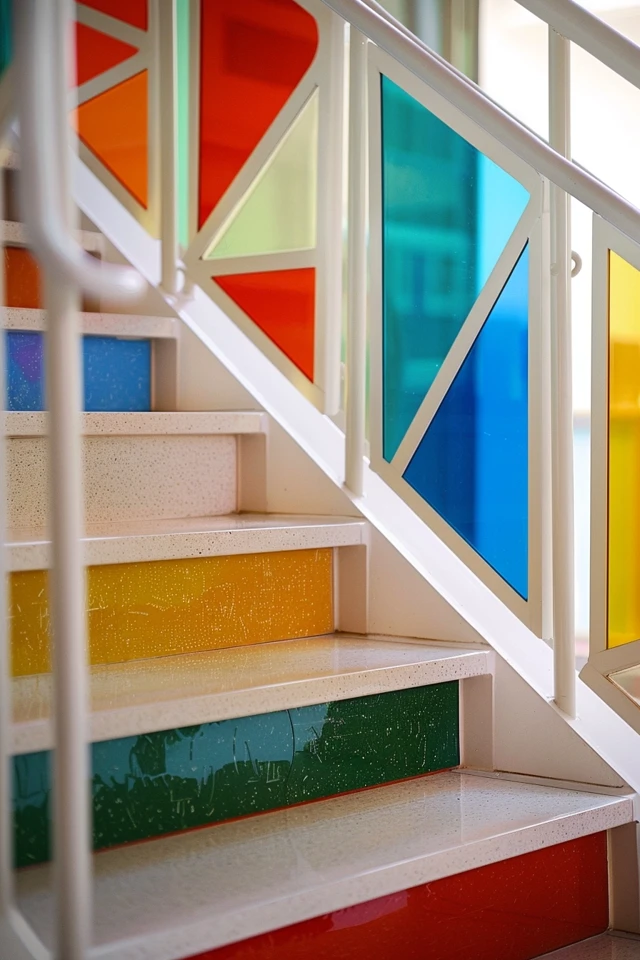
Mid-century design was not always minimalist; it was often playful and geometric. Intricate wrought iron railings featuring circles, diamonds, or honeycomb patterns were staples of the 1950s and 60s, specifically in Palm Springs architecture.
This style works best in homes that lean towards “Hollywood Regency” or eclectic MCM styles. If you have a simple, boxy split-level home, a decorative metal railing adds necessary character and curb appeal to the interior entry.
Pattern Scale
When designing custom metalwork, scale is everything. A pattern that is too small looks busy and collects dust. A pattern that is too large may fail the 4-inch sphere code test.
I recommend sketching the pattern out on cardboard at a 1:1 scale and holding it up in the space. This allows you to see how the geometry interacts with your sightlines.
Finish and Maintenance
Painted metal is the standard here. Matte black is the safest bet, but I have used burnished brass or even a deep navy blue in bolder projects.
Keep in mind that intricate metalwork is a dust magnet. Unlike a smooth wood rail, these geometric shapes have corners and crevices. I always warn clients that this choice requires a weekly dusting routine with a microfiber wand.
5. The Technical Side: Codes, Height, and Safety
Regardless of the style you choose, the ergonomics and safety regulations are non-negotiable. A beautiful railing that fails inspection will cost you thousands of dollars to replace.
First, let’s talk about handrail “graspability.” A common error is using a top cap that is too wide for a human hand to grip securely. The code typically requires a cross-section between 1.25 inches and 2.25 inches. If you use a wide flat board as a top cap, you must install a separate, smaller finger rail underneath it.
Height Requirements
In the US, the railing height is measured vertically from the nose of the stair tread.
- Handrail Height: Must be between 34 inches and 38 inches.
- Guardrail Height: On landings or open sides, it usually needs to be at least 36 inches (check local codes, as some require 42 inches).
Structural Rigidity
A railing should not wiggle. This seems obvious, but in renovations, I see it constantly. The newel posts (the main vertical supports) are the anchors of the system.
They must be lagged into the structural framing, not just the subfloor. If you are using a surface-mounted metal system, ensure the base plates are wide enough to distribute the load. If you lean your full body weight against the rail, it should feel immovable.
Final Checklist: What I’d Do in a Real Project
If I were managing your stair renovation today, this is the exact workflow I would follow to ensure success:
1. Verify the Code First
Before looking at a single picture, I would call the local building department to ask two questions: “Do you allow horizontal ladder-effect railings?” and “Is the minimum guard height 36 inches or 42 inches?”
2. Measure the Run
I would measure the total length of the staircase and the landing. This helps determine if we need custom steel fabrication (expensive) or if we can use a modular kit (cost-effective).
3. Select the “Hero” Material
I would choose one material to be the star. If the treads are beautiful solid Walnut, the railing should be simple black metal or glass to let the wood shine. If the treads are carpet or simple oak, I might choose a sculptural geometric railing to be the focal point.
4. Mock It Up
I would use blue painter’s tape to mark the height and vertical post locations on the floor and wall. This helps visualize the rhythm of the railing.
5. Order Samples
I never buy finish materials online without a sample. I would order a chunk of the handrail wood and a sample of the metal finish to see them in the home’s specific lighting.
6. Plan the Handrail Transition
I would carefully plan how the handrail connects to the wall at the top and bottom. Returns (where the rail curves back to the wall) are mandatory in many areas to prevent purses or sleeves from snagging.
FAQs
Can I mix metal and wood in an MCM railing?
Absolutely. In fact, it is preferred. A classic combination is blackened steel vertical posts with a solid walnut top rail. This blends the industrial durability of steel with the tactile warmth of wood.
Are glass railings authentic to Mid Century Modern design?
Yes, but they were less common in the average 1950s home than they are today. To keep it authentic, avoid the “frameless” ultra-modern look. Instead, use glass panels framed in wood or channel metal, which mimics the look of period-correct commercial architecture.
How much does a custom MCM railing cost?
Cost varies wildly by region and material. A simple wood slat wall is the most budget-friendly, often costing $1,500 to $3,000 for materials and labor. Custom welded steel or intricate ironwork can easily run $150 to $300 per linear foot. Glass is typically the most expensive option due to the cost of tempered panels and heavy hardware.
What is the best way to childproof an open-riser staircase?
True MCM stairs often have “open risers” (gaps between steps). To childproof this without ruining the look, you can install clear Plexiglas risers. They block the gap so a child cannot slip through but still allow light to pass through, maintaining the open feel.
Conclusion
Designing a Mid Century Modern stair railing is about respecting the era’s devotion to honesty in materials and clarity in form. Whether you choose the rhythmic repetition of vertical wood slats, the sleek profile of blackened steel, or the transparency of glass, the goal is to enhance the architecture, not clutter it.
Remember that the railing is something you will touch every single day. It deserves as much attention to detail as your kitchen countertops or your sofa. By focusing on correct scaling, sturdy installation, and warm finishes, you can create a staircase that is safe, code-compliant, and perfectly in tune with the mid-century aesthetic.
Picture Gallery


