
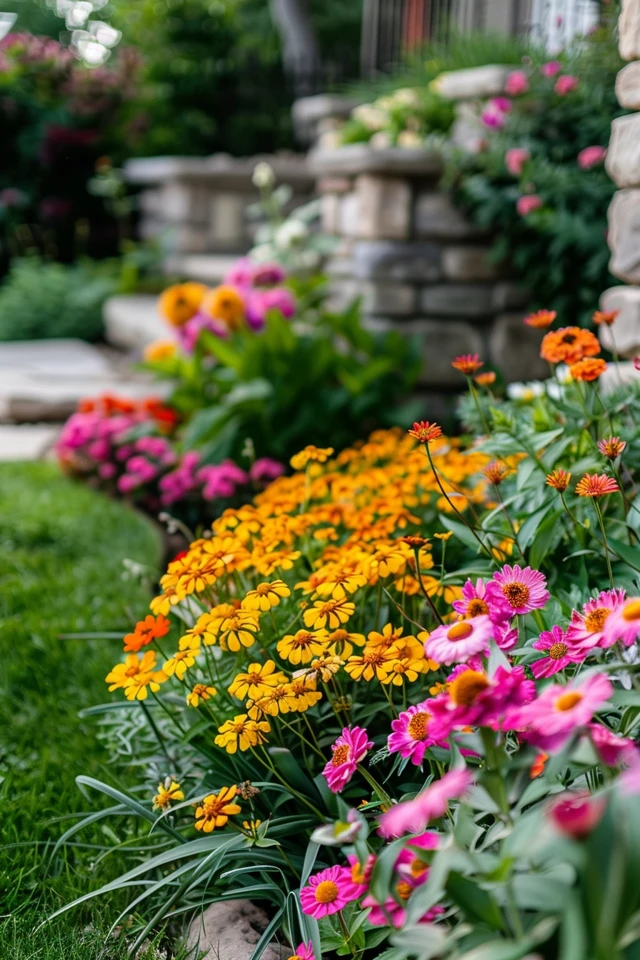
Midwest Landscaping Ideas to Elevate Your Yard
Designing a landscape in the Midwest is a balancing act between beauty and resilience. We deal with humid summers, freezing winters, and heavy clay soil that challenges even the most enthusiastic gardeners. However, the distinct four seasons also offer incredible design opportunities that other regions simply don’t have.
When I work with clients in this region, my goal is to extend their outdoor living season as long as possible. We want the patio to be usable from the first spring thaw until the late autumn freeze. This requires strategic material choices and a planting palette that can handle temperature swings of over 100 degrees throughout the year.
For a visual walkthrough of these concepts, be sure to scroll down to the Picture Gallery at the end of the blog post.
1. Designing for the “Fifth Season”: Winter Interest
In the Midwest, winter is long. If you only design for spring and summer blooms, your yard will look barren and gray from November to March. As a designer, I treat winter as a distinct season that requires its own architectural structure.
We achieve this primarily through “bones” or structural plantings. You should aim for a ratio of roughly 30% evergreens to 70% deciduous plants in your foundational landscape borders. This ensures that when the leaves drop, you aren’t left with a see-through yard.
Key Plants for Winter Texture:
- Red Twig Dogwood: The bright red stems pop dramatically against white snow.
- Ornamental Grasses: Varieties like Karl Foerster or Switchgrass should not be cut back until spring; their tan vertical stalks add movement and height during winter winds.
- Boxwoods or Yews: These provide the deep green permanent structure that anchors the house.
Designer’s Note: The “Rule of Threes”
One lesson I learned early in my career is that single plants get lost visually, especially in large Midwest yards. Always plant perennials and shrubs in odd-numbered clusters—groups of three, five, or seven.
If you plant a single conical boxwood, it looks like a soldier standing guard. If you plant three in a staggered triangle, it looks like a deliberate design element. This creates a mass of color and texture that reads clearly from the street or the living room window.
2. Hardscaping: Battling the Freeze-Thaw Cycle
The biggest enemy of Midwest hardscaping is the freeze-thaw cycle. Ground water expands when it freezes, causing the earth to heave. If your patio or walkways aren’t built correctly, they will crack or become uneven within two seasons.
For this reason, I often recommend flexible pavement systems, like pavers or natural stone set on a gravel base, over poured concrete. If a paver moves slightly during a harsh winter, it settles back down or can be easily releveled. If a concrete slab cracks, the repair is visible forever.
Material Selection Guide:
- Bluestone: Beautiful and classic, but can get very hot in full sun. Best for shaded areas or covered porches.
- Concrete Pavers: Highly durable and engineered to withstand salt and ice. Look for “tumbled” finishes for a softer aesthetic.
- Crushed Granite/Gravel: Excellent for drainage and budget-friendly, but harder to shovel snow off of in winter.
What I’d Do in a Real Project: Patio Sizing
When laying out a patio, homeowners almost always underestimate the space needed for furniture. Here is the mini-checklist I use to determine square footage:
- Dining Area: Measure your table and add 36 inches on all sides. You need 3 feet of clearance to slide a chair back without falling off the patio edge.
- Lounge Area: Allow for 18 inches between the sofa and the coffee table. This is close enough to set a drink down but wide enough to walk through.
- Walkways: Main pathways should be at least 48 inches wide so two people can walk side-by-side. Secondary paths can be 30–36 inches.
3. Embracing the Prairie Aesthetic with Native Plants
The “New Perennial” movement is massive right now, but it is actually native to the Midwest. This style mimics the natural prairies that used to cover the region. It is characterized by drifts of grasses and hearty flowering perennials that support pollinators.
Native plants have massive root systems—sometimes extending 10 to 15 feet deep. This makes them incredibly drought-tolerant once established and capable of breaking up heavy clay soil naturally. They require less watering and zero fertilizers compared to traditional annuals.
Top Native Performers for Zones 4–6:
- Purple Coneflower (Echinacea): The quintessential Midwest flower. Leave the seed heads up in winter for goldfinches.
- Black-Eyed Susan (Rudbeckia): providing cheerful yellow blooms from late summer into fall.
- Butterfly Weed (Asclepias): Essential for Monarch butterflies and features striking orange flowers.
- Little Bluestem: A native grass that turns a stunning copper-red color in the fall.
Common Mistakes + Fixes
Mistake: Planting natives individually like specimen plants.
Fix: Natives look messy if they aren’t planted in masses. They are social plants that rely on each other for support. Plant them close together (touching) to suppress weeds and create a lush, intentional look.
Mistake: Ignoring height layering.
Fix: Follow the “Bleacher Effect.” Tall plants (grasses, Joe Pye Weed) go in the back or center. Medium plants (Coneflowers) go in the middle. Short groundcovers (Creeping Phlox, Sedum) go in the front. This ensures every plant gets light and is visible.
4. Fire Features to Extend the Season
In the Midwest, a fire feature isn’t just for ambiance; it is a functional heating element that adds two months to your outdoor living season. With a good fire pit or fireplace, you can comfortably use your patio from April through November.
When choosing between a built-in fireplace and a fire pit, consider the wind. The Midwest is windy. A full masonry fireplace blocks wind and directs smoke up a chimney, making it more comfortable on breezy nights. A fire pit is more social, allowing people to circle around, but smoke can be an issue.
Placement Rules of Thumb:
- Distance from Home: Wood-burning features should be at least 15 to 20 feet away from the house or any low-hanging tree branches. Gas features can be closer, often within 10 feet or on the patio itself.
- Circulation Space: You need 36 to 48 inches of space between the edge of the fire pit and the front of the seating. This prevents guests from overheating but keeps them close enough to feel the warmth.
- Fuel Type: Gas is instant and clean (no smoke), but provides less heat. Wood offers higher heat output and the crackling sound, but requires cleanup and wood storage.
5. Dealing with Shade and Canopy Trees
Many established Midwest neighborhoods are blessed with mature maples and oaks. While beautiful, they create deep shade and compete for water, making it difficult to grow a lush lawn. Instead of fighting a losing battle with grass seed under a tree, I recommend embracing shade gardens.
Shade gardens rely on texture and foliage color rather than showy blooms. By mixing different shades of green, variegation (white or yellow stripes), and leaf sizes, you can create a serene and sophisticated space.
The Shade Palette:
- Hostas: The staple of the Midwest shade garden. Mix giant blue varieties (like ‘Sum and Substance’) with smaller variegated ones.
- Coral Bells (Heuchera): These come in shades of purple, lime green, and caramel. They are semi-evergreen and add color when nothing else is blooming.
- Astilbe: One of the few shade plants that offers a bright, feathery flower plume.
- Japanese Forest Grass: Adds a weeping, water-like texture that softens the edges of walkways.
Lighting the Landscape
Lighting is crucial for safety and aesthetics, especially in shaded areas or during the shorter days of spring and fall.
- Color Temperature: Always use LEDs with a temperature of 2700K to 3000K. This is a warm white light. anything higher (4000K+) looks blue and sterile, like a hospital parking lot.
- Path Lights: Place these sparingly. You don’t want to create an airport runway effect. Stagger them on opposite sides of the path, roughly 8 to 10 feet apart.
- Uplights: Use these to highlight the trunk structure of your large trees. This adds drama and depth to the yard at night.
Final Checklist: Planning Your Midwest Landscape
Before you break ground or buy a single plant, run through this checklist to ensure your plan is realistic and durable.
- Check Your Hardiness Zone: Most of the Midwest is Zone 4 or 5. Do not buy plants rated for Zone 6 just because they look pretty at the nursery; they will likely die in January.
- Assess Sun Exposure: Map where the sun hits at 10 AM, 2 PM, and 6 PM. “Full Sun” means 6+ hours of direct light. “Part Shade” is 3-6 hours.
- Call 811: Always have your utilities marked before digging. Midwest yards are crisscrossed with gas, electric, and cable lines.
- Plan for Drainage: Ensure the ground slopes away from your house foundation. The grade should drop at least 6 inches over the first 10 feet.
- Deer Proofing: If you have deer, prioritize resistant plants like Boxwood, Bleeding Heart, and ornamental grasses. Avoid Hostas and Daylilies unless you plan to fence them in.
- Water Access: Make sure your hose reaches all corners of the new planting beds. If not, budget for an irrigation system or a new hose bib.
FAQs
When is the best time to plant in the Midwest?
The sweet spot is generally mid-April to mid-June, and then again from early September to mid-October. Avoid planting in July and August. The heat and humidity put too much stress on new root systems, requiring constant watering to keep them alive.
How do I fix heavy clay soil?
Do not just add sand; mixing sand and clay creates concrete. Instead, amend your soil with organic matter. Till in compost, pine bark fines, or leaf mold. This breaks up the clay particles, improving drainage and nutrient absorption. For established beds, top-dress with compost every spring.
Should I mulch every year?
Yes, but don’t overdo it. A layer of 2 to 3 inches of shredded hardwood mulch is ideal. It retains moisture, suppresses weeds, and insulates roots against temperature swings. Avoid “volcano mulching” (piling mulch high against the trunk of a tree), as this invites rot and pests.
What is the most durable material for a Midwest patio?
Concrete pavers or clay bricks are generally superior to poured concrete because they tolerate ground movement. If you prefer the look of natural stone, ensure it is a dense variety like granite or high-quality bluestone, set on a proper deep gravel base (at least 6-8 inches).
Conclusion
Elevating your Midwest yard is about working with the environment, not against it. It means accepting the reality of cold winters and hot summers and choosing materials and plants that thrive in those conditions. By focusing on four-season structure, creating comfortable hardscaped zones, and utilizing native plants, you can create an outdoor sanctuary that feels luxurious and inviting.
Remember that a landscape is a living thing. It takes time to fill in and mature. Start with good bones—the patio, the trees, the drainage—and layer in the color and texture over time. With thoughtful planning, your yard will become a true extension of your home, ready for everything from summer BBQs to crisp autumn fire pit nights.
Picture Gallery


