
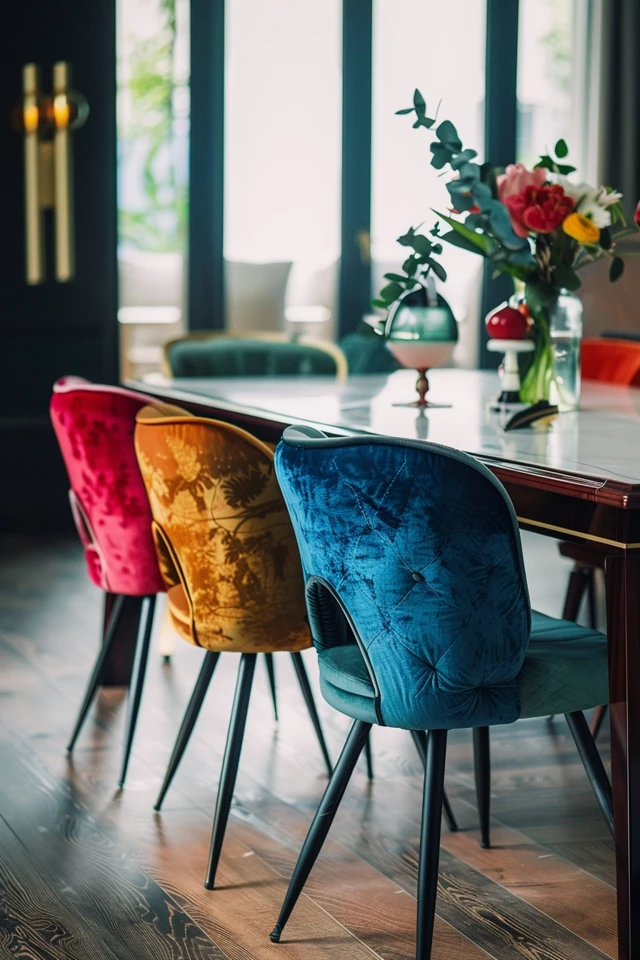
Title: Mixed Dining Chairs Ideas for Eclectic Spaces
Introduction
There is a distinct moment in every interior design project where a client realizes they do not have to buy the matching set from the showroom floor. The “room in a bag” look often feels flat and devoid of personality. Mixing dining chairs is one of the most effective ways to inject character, history, and warmth into a home, but it can be intimidating to execute without a plan. For visual inspiration, I have curated a stunning Picture Gallery at the end of the blog post showing these concepts in action.
I once worked with a client who loved the idea of an eclectic dining room but was terrified it would look like a garage sale explosion. We started small, swapping only the head chairs, and the result completely transformed the energy of the room. The space went from feeling like a sterile display to a curated home.
The secret to mastering this look is not randomness; it is intentionality. You are creating a dialogue between pieces rather than an argument. By following a few key principles regarding scale, material, and repetition, you can create a dining space that feels collected over time yet perfectly cohesive.
1. The Foundation: Scale and Ergonomics
Before you look at colors or fabrics, you must look at the tape measure. The biggest failure point in mixing dining chairs is ignoring the scale. If one chair has a high, regal back and the chair next to it is a low-slung mid-century piece, the visual rhythm of the room breaks.
More importantly, the seat heights must be consistent. Standard dining seat height is roughly 18 inches from the floor to the top of the seat. However, vintage chairs often sit lower, sometimes at 17 inches, while modern upholstery can sit higher at 19 inches.
If your guests are sitting at different heights, conversation feels awkward and disjointed. Always measure the seat height of every chair you intend to mix. A variance of half an inch is acceptable; anything more will be noticeable when seated.
You also need to consider the width of the chairs. If you are mixing varying styles, ensure the widest chair dictates the spacing. You generally need 24 inches of table edge per person to avoid elbow wars during dinner.
Designer’s Note:
One specific issue I encounter frequently involves arm heights. If you choose carver chairs (chairs with arms) for the sides of the table, measure the clearance under the table apron. There is nothing worse than a beautiful chair that cannot be tucked in because the arms hit the table edge. Aim for at least 1 to 2 inches of clearance between the chair arm and the bottom of the table apron.
2. Strategy A: The “Head of the Table” Approach
This is the entry-level strategy for mixing chairs and is almost impossible to mess up. You keep the side chairs identical and swap out the two chairs at the heads of the table. This anchors the room and creates a sense of hierarchy.
To make this work, the head chairs need to feel substantial. They should be slightly taller, wider, or more upholstered than the side chairs. They act as the “parents” of the table.
For example, if your side chairs are simple wooden wishbone chairs, use fully upholstered wingback chairs or slipcovered host chairs at the ends. This adds softness to a room that might otherwise feel like too much wood.
This strategy works exceptionally well in rectangular rooms. It emphasizes the length of the table and draws the eye to the ends of the room. It also allows you to splurge on two expensive statement chairs while keeping the side chairs budget-friendly.
3. Strategy B: The “Common Thread” Method
If you want a truly eclectic look where every chair might be different, you need a unifying element. We call this the “common thread.” This prevents the design from looking chaotic.
The Shape Thread:
You can use mismatched chairs if they all share a similar silhouette. For example, you might collect various bentwood Thonet-style chairs. They can be slightly different models, but the curved timber backs unify them.
The Color Thread:
This is my favorite method for modern eclectic spaces. You can take six completely different chair shapes—some vintage, some modern, some farmhouse—and paint them all the same color. Matte black or high-gloss white works wonders here. The color creates uniformity, allowing the sculptural differences to shine.
The Material Thread:
You can mix styles if the materials speak the same language. If you have a rustic oak table, you might mix a rattan chair, a woven leather bench, and a wood chair with a similar stain. The natural, organic texture connects them even if the shapes vary.
4. Strategy C: The Bench Compromise
Using a bench on one side of the table is a fantastic way to break up the monotony of “leggy” furniture. In a dining room, seeing 20 or more chair legs can sometimes feel visually cluttered. A bench grounds the space and provides a solid block of material.
This is particularly useful for families with young children. A bench allows you to squeeze an extra child at the table during parties, which is harder to do with individual seats. It also makes the room feel more casual and inviting.
However, be mindful of the “exit strategy.” People sitting in the middle of a bench cannot get up easily without the outer people moving. I recommend placing the bench on the window side or the wall side of the room, rather than the side facing the main walkway.
Common Mistakes + Fixes:
- Mistake: Mixing too many wood tones.
- Fix: Try to stick to two dominant wood tones in a room. If your table is walnut and you have oak floors, try to match your chairs to one of those two or paint them a solid color.
- Mistake: Ignoring the view from the back.
- Fix: Remember that you usually see dining chairs from the back. Ensure the back detail is interesting. If you have open-concept living, avoid high-backed chairs that block sightlines to the table.
5. Practicalities: Upholstery and Durability
When mixing chairs, you often end up mixing eras and manufacturing techniques. This requires a keen eye for durability, especially if you have pets or children.
Vintage chairs are charming, but the joints are often dried out. Before placing a vintage find in a high-traffic spot, wiggle the back. If the joinery is loose, it needs to be reglued and clamped by a professional. Do not rely on loose chairs for daily dining.
For upholstery, mixing fabrics is a great way to hide wear. I often suggest putting durable, wipeable leather or faux leather on the side chairs where the kids sit. Then, use a more delicate velvet or linen on the head chairs, which usually get less daily abuse.
If you are renting, mixed dining chairs offer incredible versatility. If you move to a smaller apartment, you can repurpose the two head chairs as living room accent chairs. A matching set of eight is much harder to break up and repurpose.
6. Advanced Styling: Rugs and Lighting
The rug is the frame for your mixed chair composition. Because the chairs are visually active, the rug should usually be quieter to avoid overwhelming the eye. A natural jute, a solid wool, or a subtle vintage wash works best.
Sizing Logic:
Your rug must be large enough that when a guest scoots their chair back to stand up, the back legs stay on the rug. Typically, this means the rug should extend 24 to 30 inches past the table edge on all sides. With mixed chairs, some might have deeper footprints than others, so measure your deepest chair.
Lighting needs to center on the table, not the room. Since your chairs are drawing attention, keep the chandelier height appropriate—usually 30 to 36 inches above the table surface. This keeps the focus intimate.
If your mixed chairs have high backs, ensure your light fixture is substantial enough to hold its own. A tiny pendant over a table with large wingback chairs will look disproportionate.
What I’d Do in a Real Project (Mini-Checklist)
If I were designing a dining room today with a $5,000 budget and a client who wants an eclectic look, here is exactly how I would execute it:
1. Buy the table first. It is the stage. I would choose a simple, solid wood table with minimal ornamentation.
2. Select the “Workhorses.” I would buy 4 sturdy, new side chairs. I would look for a timeless shape (like a wishbone or a simple shaker style) in a finish that contrasts the table slightly.
3. Hunt for the “Captains.” I would spend weeks looking for two vintage armchairs for the heads of the table. I would look for unique shapes but would plan to reupholster them.
4. Verify the Heights. I would carry a tape measure to ensure the vintage chairs sit between 18″ and 19″ high.
5. Unify with Fabric. I would recover the vintage chair seats in a fabric that contains the color of the side chairs, tying the whole look together.
Final Checklist for Shopping
Before you click buy or head to the antique market, run through this list to ensure your mix will succeed.
- Seat Height: Are all seats within 1 inch of each other in height?
- Arm Clearance: Do the armchairs slide under the table apron?
- Visual Weight: Do the head chairs look heavier/sturdier than the side chairs?
- Leg Check: Are there too many spindly legs? Consider a pedestal table or a bench to reduce visual clutter.
- Maintenance: Is the fabric on the daily-use chairs wipeable or performance-grade?
- Floor Protection: Have you bought felt pads for all different leg types?
FAQs
Can I use an odd number of chairs?
Generally, no. Even in eclectic spaces, dining tables function best with symmetry. However, you can place a single odd chair in the corner of the room as an accent that can be pulled up when you have an extra guest.
Does my dining bench need a back?
For long dinners, yes. Backless benches are great for visual space and kids, but adults will become uncomfortable after about 45 minutes without back support. If you host long dinner parties, opt for a settee or a bench with a backrest.
Can I mix metals in the dining room?
Absolutely. If your chairs have metal legs, they do not need to match the chandelier. However, try to keep the finish type similar. Mix brushed metals with other brushed metals, rather than mixing shiny chrome with rustic iron.
Is it okay to mix wood chairs with a wood table?
Yes, but contrast is key. If the woods are too similar but not an exact match, it looks like a mistake. Aim for a clear difference, such as a dark walnut table with blonde oak chairs, or a painted table with natural wood chairs.
Conclusion
Mixing dining chairs is an exercise in balance. It moves your home away from the generic catalog look and towards a space that reflects your personality and life. It allows for practical adjustments, like putting durable seats where the kids sit and plush seats where the adults linger over wine.
Start with the basics of scale and ergonomics. Once you know your guests will be comfortable, you have the freedom to play with style, era, and texture. Trust your eye, measure twice, and embrace the freedom of breaking up the set.
Picture Gallery


