Mixed Dining Chairs Ideas for Eclectic Spaces
Discover unique mixed dining chairs ideas to elevate your home with eclectic charm and trendy seating solutions that blend style and personality.
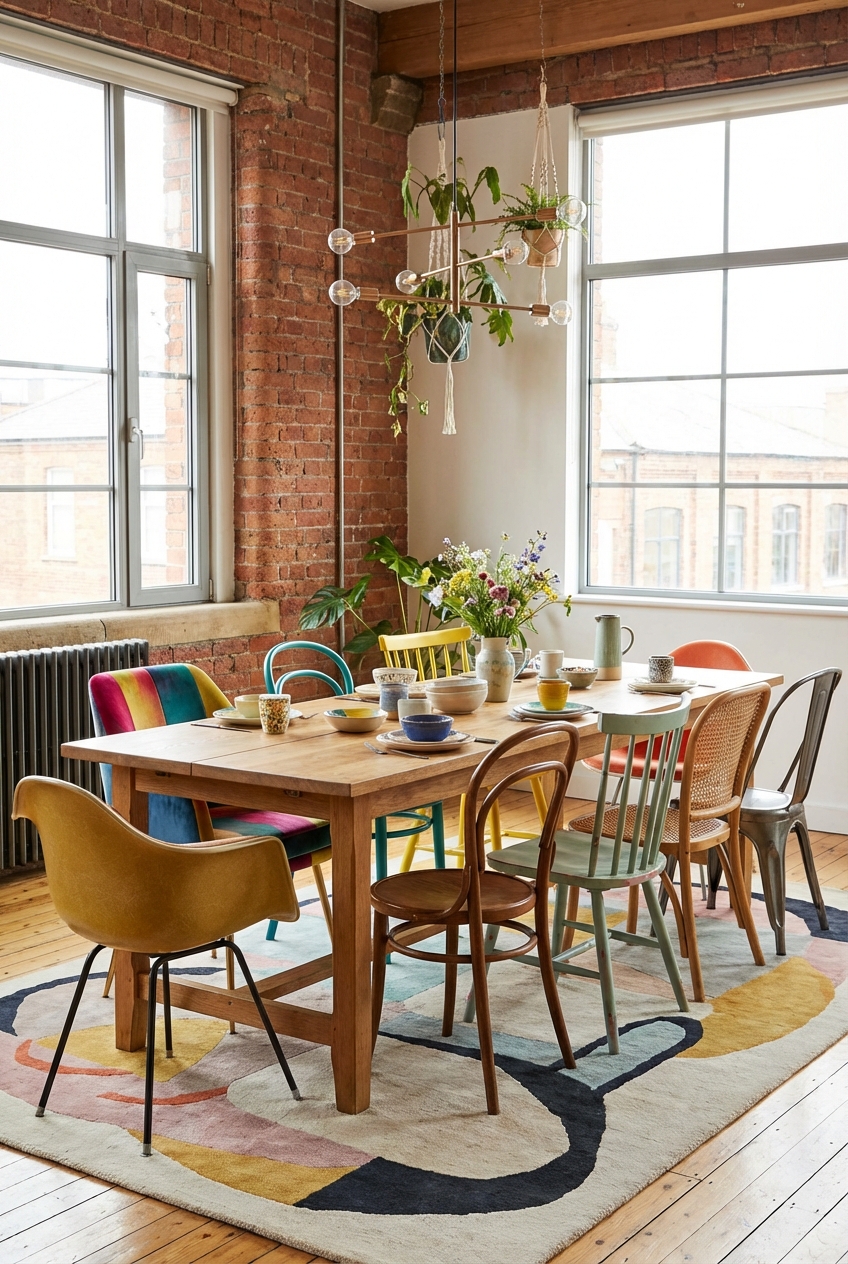
There is a fine line between a curated, eclectic dining room and a space that simply looks accidental. We have all seen dining areas that feel effortlessly collected, where no two chairs match, yet the room feels cohesive and inviting. Achieving that look requires a bit more strategy than just grabbing whatever seating is on sale at the local vintage shop.
When I work with clients who want that “lived-in” aesthetic, we usually start by breaking the rules of traditional dining sets. The goal is to create personality without sacrificing comfort. If you want to see how these concepts come together in real homes, skip ahead to our curated Picture Gallery at the end of this post.
However, before you start buying, you need a roadmap. Mixing dining chairs is an art form rooted in scale, repetition, and material balance. In this guide, I will walk you through the specific formulas I use to mix seating successfully, ensuring your dining room looks designed rather than chaotic.
1. The “Same Shape, Different Colors” Strategy
One of the most beginner-friendly ways to dip your toes into the eclectic trend is to keep the silhouette consistent but play with color. This works exceptionally well if you have found a set of vintage chairs where the frames are good, but the finish is damaged or inconsistent.
By unifying the shape, you establish a rhythm in the room. The eye recognizes the repeating form, which calms the visual noise. This allows you to introduce a variety of colors without the space feeling cluttered.
For example, a set of six identical farmhouse spindle-back chairs can be painted in a gradient of blues or a mix of pastels. This approach retains the formality of a matching set but injects the fun of an eclectic palette.
Designer’s Note: The Paint Finish Matters
If you are painting vintage chairs, do not skip the prep work. In my early days, I made the mistake of spray painting directly over varnished wood. The paint chipped within weeks. You must sand the existing finish to create a “tooth” for the primer. For high-traffic dining chairs, I recommend a professional lacquer finish or a high-quality enamel spray paint rather than standard latex, which can feel sticky in humid weather.
Common Mistakes + Fixes
Mistake: Using colors that have different saturation levels.
Fix: Stick to a consistent tone. If you choose muted, earthy tones (olive, terracotta, mustard), avoid throwing in a neon or primary bright color. Keep the “weight” of the colors the same.
2. The “Same Color, Different Shapes” Approach
This is the inverse of the previous strategy and is my personal favorite for modern eclectic spaces. This method involves sourcing chairs from different eras or styles but unifying them with a single material or color finish.
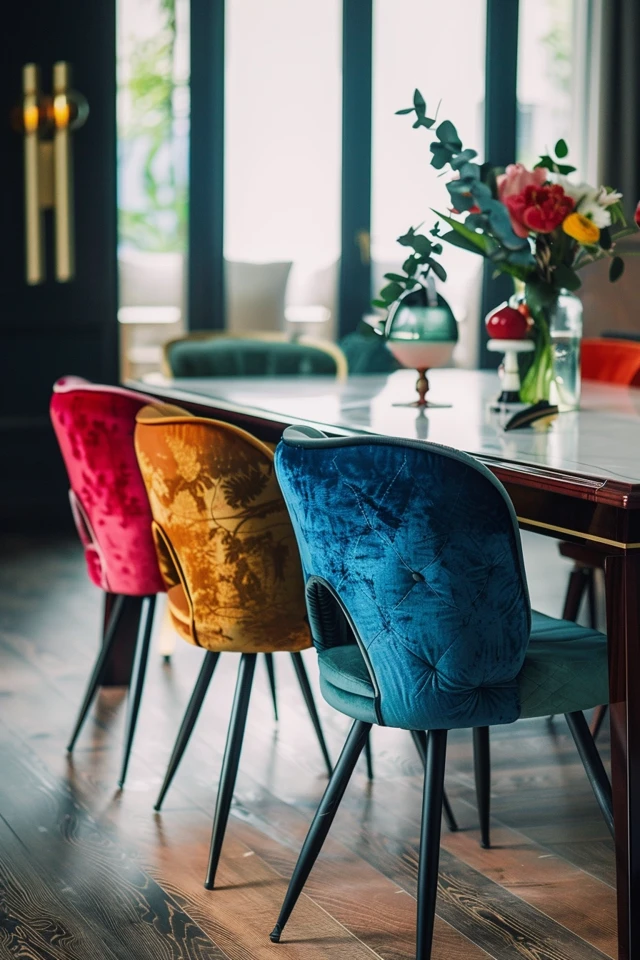
Imagine a dining table surrounded by six completely different chairs: a wishbone chair, a heavy velvet armless chair, a bentwood chair, and a modern plastic molded chair. If they are all matte black, they instantly belong together. The color acts as the “glue” that binds the divergent styles.
This technique is excellent for renters or homeowners who love thrifting. You can collect chairs one by one over time. As long as you can refinish or upholster them to match your established color palette, they will fit right in.
Managing Visual Weight
When using different shapes, you have to be careful about visual weight. You do not want three heavy, solid-back chairs on one side of the table and three airy, spindly chairs on the other. The room will feel lopsided.
What I’d Do in a Real Project:
- I would alternate the chairs around the table (heavy, light, heavy, light).
- If the table is rectangular, I would place the two largest, heaviest chairs at the heads of the table to anchor the composition.
- I would ensure the seat heights are identical, even if the back heights vary wildly.
3. The Head of the Table Strategy
If mixing six or eight random chairs feels too risky, start with the “Captains” strategy. This involves keeping the side chairs matching while swapping out the two chairs at the heads of the table for something distinct.
This is the safest bet for those who want visual interest but need to maintain a sense of order. It also allows you to introduce pattern or fabric into a dining room that might otherwise be full of wood or metal surfaces.
Rules for Head Chairs
The head chairs should almost always be “grand” compared to the side chairs. They should feel like the hosts of the party. If your side chairs are armless, choose head chairs with arms. If your side chairs are wood, choose upholstered head chairs.
Scale and Clearance
A major technical constraint here is the arm height. If you choose a grand wingback chair for the head of the table, you must measure the “apron” of your dining table (the wood piece that connects the legs beneath the tabletop).
Designer’s Note: The 2-Inch Rule
You typically need at least 2 to 3 inches of clearance between the top of the chair arm and the bottom of the table apron. If the chair arms scrape the table every time you push them in, the fabric will tear, and the wood will scratch. If the chairs don’t tuck in at all, the footprint of your dining set grows by about 18 inches, which can ruin the flow of a small room.
4. Mastering Scale and Ergonomics
The biggest failure point in eclectic dining rooms isn’t style; it is ergonomics. You can have the most beautiful collection of vintage seating, but if one person is sitting 2 inches lower than the person next to them, the dinner party will feel awkward.
The Golden Rule of Seat Height
Standard dining seat height is 18 inches from the floor to the top of the seat. However, vintage chairs often run lower (sometimes 17 inches), and modern imported chairs can run higher (19 inches).
- Measure every single chair. Do not trust the online description.
- Acceptable Range: You can get away with a variance of about 1 inch (e.g., some chairs are 17.5″ and others are 18.5″).
- The Dealbreaker: Do not mix a 17-inch seat with a 19-inch seat. The person in the low chair will feel like a child, and the person in the high chair will be hunching over the table.
Back Height Variety
Unlike seat height, back height is a great place to create variation. However, you need to consider the sightlines of your room.
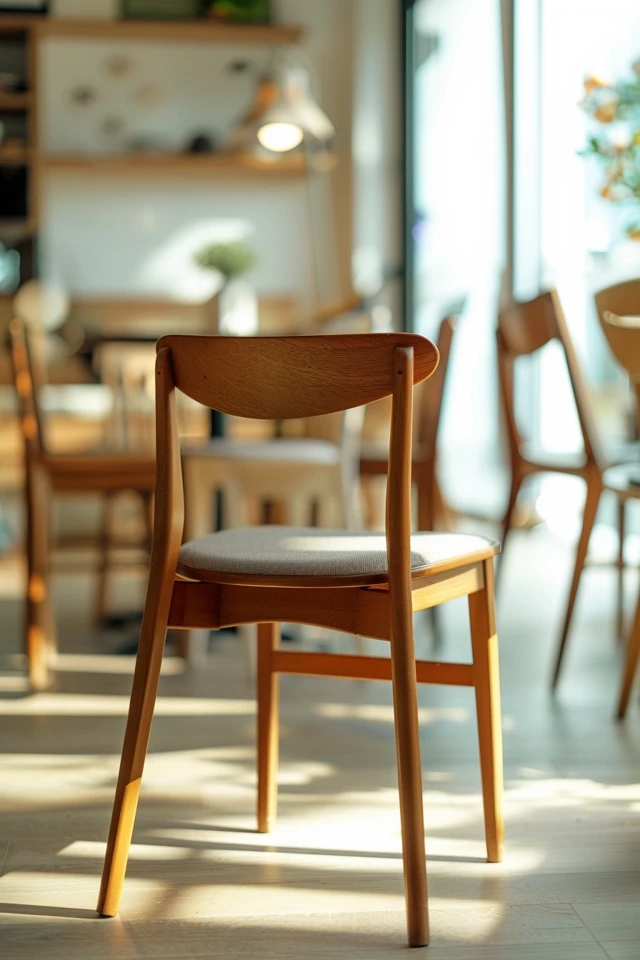
If your dining table is in an open-concept space between the kitchen and the living room, avoid a wall of high-backed chairs that blocks the view. I prefer to use low-profile chairs (like mid-century styles or benches) on the side of the table facing the rest of the room. This keeps the space feeling open.
Common Mistakes + Fixes
Mistake: Grouping chairs that are too wide for the table legs.
Fix: You need 24 inches of table width per person for comfortable dining. If you have a vintage farmhouse table with legs that are set in from the corners, ensure your eclectic chairs fit between those legs. Wide armchairs often cannot fit three-across on a standard 72-inch table.
5. Mixing Eras and Materials (The Advanced Method)
Mixing eras is where the magic happens, but it requires a keen eye for undertones. Can you mix an 18th-century French antique chair with a 1960s plastic Eames chair? Absolutely. The contrast creates tension and drama.
However, when mixing materials—specifically woods—you need to be careful. If you have a walnut table, oak chairs, and mahogany floors, the room will look muddy.
The Rule of Two
Try to have at least two items in the room that share a material or finish.
- If you have a marble table, maybe two of the chairs have a white/grey fabric that mimics the stone.
- If you introduce a brass cantilever chair, ensure there is a brass light fixture or brass hardware on a nearby sideboard.
Managing Wood Tones
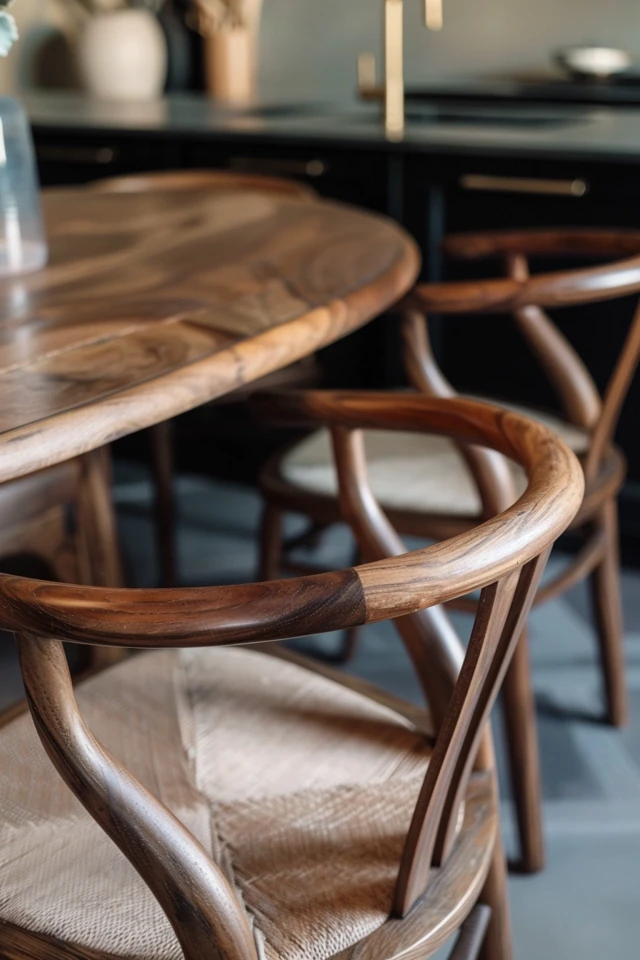
If you are mixing wood chairs, try to keep the “temperature” of the wood consistent. Mix warm woods with warm woods (oak, pine, walnut) and cool woods with cool woods (ash, grey-stained maple).
Designer’s Note: The Rug Buffer
If your chairs clash with your wood floors, use a rug as a buffer. A rug creates a visual island that separates the chair legs from the floor boards, making the difference in wood grain less noticeable.
Final Checklist for Eclectic Dining
Before you finalize your purchase or start painting, run your choices through this checklist. This is the exact mental list I use during the procurement phase of a project.
FAQs
- Can I use a bench on one side and chairs on the other?
- Yes, this is a classic eclectic move. It saves space and creates a casual vibe. However, be aware that getting in and out of a bench when three people are seated can be annoying. I usually place the bench on the “quiet” side of the table (against a wall or window) and put individual chairs on the traffic side.
- How do I handle upholstery if I have pets or kids?
- If you are mixing chairs, this is actually an advantage. You can put the wipeable wood or plastic chairs on the sides for daily use and use upholstered chairs at the heads of the table. If you want fabric on all chairs, look for “performance velvet” or fabrics with a durability rating of 50,000+ double rubs. Avoid loose-weave linens or wicker, which trap crumbs and are impossible to clean.
- I’m on a tight budget. Where should I start?
- Start with the “Captain’s Chair” method. Buy four inexpensive, simple chairs (like IKEA or Target basics) for the sides. Then, spend the bulk of your budget on two amazing, unique vintage chairs for the heads of the table. This elevates the whole look without breaking the bank.
- Is there a limit to how many styles I can mix?
- I generally recommend sticking to a maximum of three distinct styles in one room. For example: a modern table + vintage wooden side chairs + upholstered head chairs. Once you introduce a fourth or fifth distinct style, the room starts to lose its narrative and just looks like a storage unit.
Conclusion
Mixing dining chairs is one of the most effective ways to show confidence in your interior design. It tells guests that you prioritize character over “add-to-cart” convenience.
Remember that the goal is balance, not perfection. A scratched vintage chair next to a sleek modern one tells a story of the home’s evolution. Start with ergonomics—ensure everyone sits at the same height—and then have fun with the aesthetics. Whether you choose to unify through color, shape, or material, the result will be a dining space that feels uniquely yours.
Picture Gallery
Five photographs · drag or swipe