
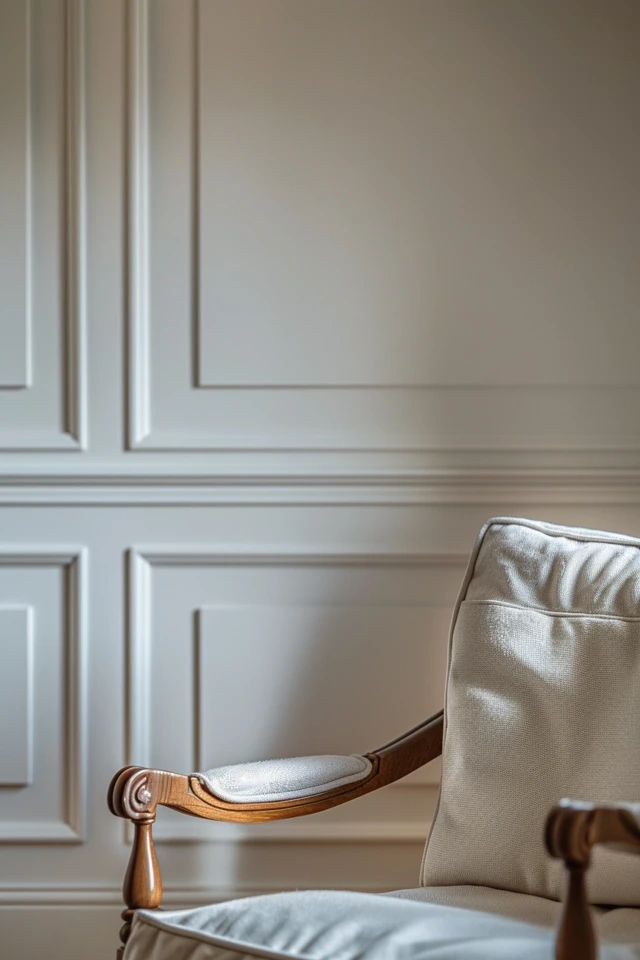
Chair Rail Molding – Modern Ideas for Stylish Home Decor
For a long time, chair rail molding suffered from a bit of an identity crisis. It was often viewed as a dated relic found in dusty dining rooms or builder-grade suburban homes from the 1990s. However, when applied correctly, this architectural detail provides structure, scale, and immense character to a room.
I recently worked with a client who wanted to rip out all the trim in her pre-war apartment because it felt “too traditional.” Instead of removing it, we modernized it by painting the walls and the molding the exact same deep charcoal hue. We have curated a stunning Picture Gallery at the end of the blog post to inspire your next renovation project.
Modern chair rail isn’t just about protecting plaster from the back of a dining chair. It is a tool for manipulating the visual proportions of a room. Whether you are adding new trim or updating what you already have, these ideas will help you rethink this classic element.
1. Rethinking the Height: The Rule of Thirds
The biggest mistake homeowners make with chair rail is placing it at the wrong height. The standard recommendation has always been between 30 and 32 inches off the floor. While this is functional for protecting walls from chair backs, it often cuts the room in half visually.
Splitting a wall 50/50 creates a static, boring aesthetic that lowers the perceived ceiling height. In modern design, we rely on the “Rule of Thirds.” You want the molding to sit at either the lower third or the upper third of the wall.
For a contemporary look, try installing the rail lower, around 24 to 28 inches. This elongates the upper portion of the wall, making your ceilings feel soaring. Alternatively, in a bathroom or moody study, you can install a “picture rail” or high chair rail at 60 to 64 inches, treating the bottom section like high wainscoting.
Designer’s Note: The Ceiling Height Factor
I always measure the total ceiling height before deciding on rail placement. If you have standard 8-foot ceilings, do not go higher than 32 inches unless you are doing a full board-and-batten look. If you have 10-foot ceilings, a 30-inch rail will look puny and lost; scale it up to 36 inches to match the room’s volume.
Common Mistakes + Fixes
- Mistake: Relying solely on the “chair back” measurement.
- Fix: Prioritize visual proportion over function. Unless it is a high-traffic commercial dining space, the wall protection is secondary to the look.
- Mistake: Running the rail through windowsills.
- Fix: Adjust your rail height so it either butts into the window casing cleanly or runs below the sill. Never interrupt the window trim.
2. The Power of Monochromatic Color Drenching
The traditional approach to chair rail involves a white strip of wood separating a colored wall from a white bottom, or two different wall colors. This high-contrast look can feel busy and disjointed. It draws the eye directly to the stripe rather than the room as a whole.
The modern solution is “color drenching.” This involves painting the wall above, the rail itself, and the wall below (and often the baseboards) in the same color. This technique adds texture and shadow without breaking the vertical line of the room.
This works exceptionally well in small spaces. By removing the harsh horizontal line of white trim, you stop the eye from getting “stuck” as it scans the room. The molding becomes a sculptural element rather than a divider.
Playing with Sheen
If you choose a monochromatic palette, differentiate the sections using paint finish. I recommend using a matte or flat finish for the drywall surfaces. For the chair rail and baseboards, switch to a satin or semi-gloss finish in the exact same color code.
This subtle shift reflects light differently. It highlights the architecture while maintaining that sleek, modern continuity. It is also practical, as satin paint is much easier to wipe down than matte paint.
What I’d Do in a Real Project
If I am designing a moody powder room or a cozy den:
- I would choose a rich color, like navy, forest green, or terracotta.
- I would paint the baseboards, wainscoting/drywall, chair rail, and upper walls all that single color.
- I would paint the ceiling the same color (or 50% lighter) to envelop the space completely.
3. Selecting Modern Profiles and Materials
The profile, or shape, of the molding dictates the style. The standard profile sold at big-box hardware stores is often a “Colonial” style. It features an ogee curve (an S-shape) that leans very traditional. If you want a modern look, you need to look for different profiles.
Flat Stock and Craftsman Styles
For a clean, transitional, or modern farmhouse look, use simple flat stock lumber. A 1×4 piece of high-quality poplar creates a crisp, square edge. You can cap this with a tiny piece of cove molding for a softer transition, or leave it square for a Shaker aesthetic.
This flat profile gathers less dust than curved molding. It also serves as a perfect “shelf” for picture frames if the top edge is wide enough. This is often referred to as a picture ledge chair rail.
Geometric and Fluted Options
If you want to push the envelope, look for reeded or fluted trim. These profiles have small vertical grooves that catch the light beautifully. When painted, they add a rhythmic texture that feels very Art Deco or mid-century modern.
Material Matters: Wood vs. MDF vs. Polyurethane
- Solid Wood (Poplar/Pine): Best for high-traffic areas. It takes paint well and withstands dents from furniture. Essential for dining rooms.
- MDF (Medium Density Fiberboard): Great for dry areas like hallways or bedrooms. It is smooth and cheap but swells if it gets wet. Avoid using this in bathrooms.
- Polyurethane: Lightweight and rot-proof. This is the best choice for bathrooms or damp basements, but it can dent easily if hit by a heavy chair.
4. Pairing with Wallpaper and Wainscoting
Chair rail rarely likes to be alone. It looks its best when it is acting as a header for something happening below it, or a footer for something happening above it. The most timeless yet modern application is using the rail to separate pattern from solid.
Wallpaper Above, Paint Below
Wallpaper can be expensive. By installing a chair rail, you only need to paper the top two-thirds of the wall. This saves money on material and labor. The bottom third can be painted a color that is pulled directly from the wallpaper pattern.
This is a “grounding” technique. Darker paint on the bottom anchors the room, while the pattern on top keeps it airy. From a practical standpoint, painted drywall or wood paneling below the rail is much more durable than wallpaper, which can tear if kicked or scuffed.
The Faux-Paneling Trick
You don’t need expensive raised panels to create a high-end look. A favorite trick of interior designers is “box molding.” This involves installing your chair rail, and then using thin picture-frame molding to create rectangles on the wall below the rail.
When everything is painted one color, it looks like expensive custom millwork. For a modern spacing rule, leave about 3 to 4 inches of space between the boxes and the chair rail/baseboard.
Designer’s Note: Handling Transitions
One of the trickiest parts of design is knowing where to stop the wallpaper. Chair rail provides a clean, logical stopping point. If you have an open floor plan, do not try to force a chair rail around a corner into a living room where it doesn’t belong. Terminate the rail into a door casing or an inside corner.
5. Installation Logistics for the DIYer
Installing chair rail is a very achievable weekend project, but precision is key. Wavy molding or bad joints will instantly cheapen the look of your home. You need the right tools and a plan before you buy your first stick of lumber.
The Importance of a Level Line
Floors in homes are rarely perfectly level. If you measure up 32 inches from the floor at every stud, your chair rail might end up looking like a rollercoaster. Instead, measure up 32 inches (or your desired height) at one spot.
Use a laser level to shoot a line across the entire room based on that single mark. Snap a chalk line or mark it with a pencil. You will install the molding to this level line, not the floor. If there are gaps between the molding and the wall due to waves in the drywall, caulk will be your best friend.
Coping vs. Mitering Corners
Inside corners are where most DIYers struggle. If you cut two pieces at 45-degree angles, they rarely fit tight because corners are never perfectly 90 degrees. As the wood expands and contracts, that joint will open up.
The pro move is to “cope” the inside joint. This means one piece of molding runs square into the corner. The second piece is cut to fit over the profile of the first. It requires a coping saw and some practice, but it ensures a tight fit that lasts for years. For outside corners, standard miter cuts with wood glue are sufficient.
The “Return” Trick
What do you do when the chair rail simply ends in the middle of a wall or at an opening without casing? You cannot just leave the raw wood end exposed. You must create a “return.”
This involves cutting a tiny triangular piece of molding at a 45-degree angle to cap the end of the rail. This turns the profile back toward the wall for a finished, professional look. It is a small detail that signals high-quality craftsmanship.
Final Checklist: Planning Your Project
Before you head to the lumber yard, run through this quick checklist to ensure you haven’t missed a critical detail.
- Check Proportions: Tape up a piece of painter’s tape at your desired height. Step back. Does it cramp the room or lift the ceiling?
- Measure Linear Footage: Measure your walls and add 15% for waste and cutting mistakes. You will make mistakes.
- Identify Obstacles: Note the height of window sills, electrical outlets, and light switches. You do not want the rail to run directly through a light switch plate.
- Choose Profile Depth: Ensure your chair rail is not thicker than your door casings. The rail should die into the casing, not stick out past it.
- Select Finish: Decide if you are painting or staining. Prime your wood before installation to save time.
FAQs
Can I put chair rail in a hallway?
Yes, hallways are actually one of the best places for chair rail. They are high-traffic zones where walls get scuffed by bags and elbows. A chair rail with a darker paint color below offers excellent protection and breaks up the “tunnel” effect of long corridors.
Should chair rail match the baseboards?
Ideally, yes. They don’t have to be the exact same profile, but they should share a similar style language. For example, don’t pair a very ornate, curvy Victorian chair rail with a blocky, modern square baseboard. The thicknesses should also be comparable.
Do I paint the wall or the trim first?
If you are spraying, spray the trim first. If you are rolling and brushing by hand, paint the trim first. It is much easier to tape off the hard surface of the trim to paint the walls than it is to tape off the drywall to paint the trim.
Is chair rail out of style in 2024?
Traditional, white, mid-height chair rail on a beige wall can look dated. However, architectural molding itself never goes out of style. The modern application involves creative heights, monochromatic color schemes, and pairing it with wallpaper or paneling.
Conclusion
Chair rail molding is a chameleon of interior design. It can be a utilitarian wall guard or a sophisticated architectural feature, depending entirely on how you treat it. By ignoring the old rules of standard heights and exploring new color techniques like drenching, you can transform a plain box of a room into a curated space.
Remember that the success of this project lies in the preparation. Take the time to map out your heights relative to your furniture and windows. Choose a profile that complements the age of your home, and don’t be afraid to use paint to blend the molding into the wall for a seamless look. With these modern ideas, your chair rail will feel fresh, intentional, and undeniably stylish.
Picture Gallery


