
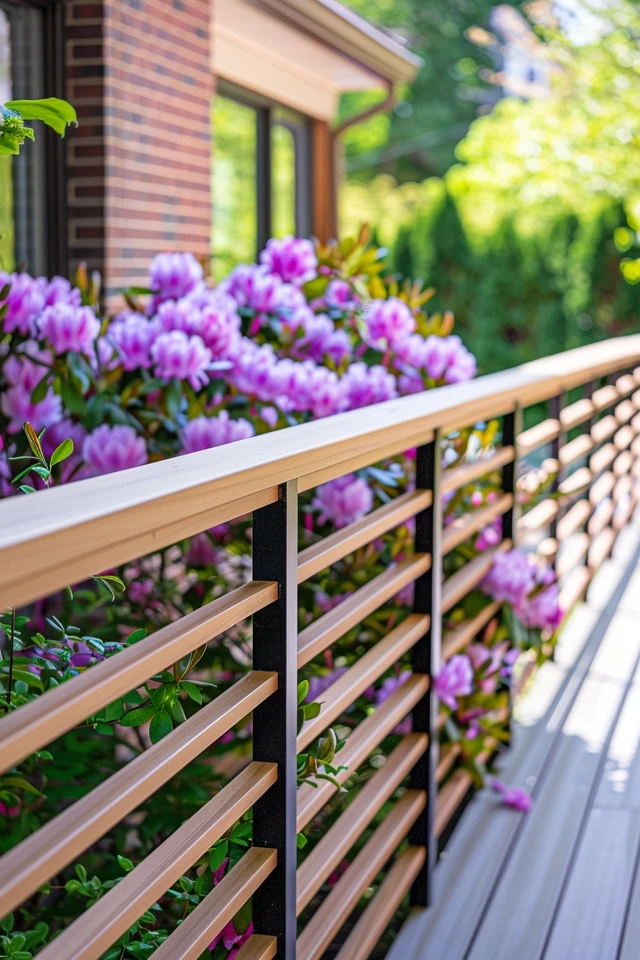
Modern Horizontal Deck Railing Ideas | Chic Designs
Introduction
When we think about outdoor renovations, we often fixate on the decking material or the furniture layout, treating the railing as a mandatory safety afterthought. However, shifting your perspective from vertical balusters to horizontal lines can completely transform the architectural identity of your home. Horizontal railings immediately modernize a facade, creating a sleek, elongated visual that draws the eye outward rather than boxing you in.
In my design practice, I often use horizontal railings to solve specific visual problems, such as making a narrow deck feel wider or minimizing obstructions to a scenic view. There is a distinct rhythm to horizontal slats or cables that feels calmer and more grounded than the busy repetition of traditional vertical spindles. For those seeking immediate visual inspiration, a curated Picture Gallery is waiting at the end of the blog post.
However, this design choice comes with specific structural and safety considerations that differ significantly from traditional styles. From the “ladder effect” safety concerns to the inevitable sagging of improper material choices, getting this look right requires planning. Let’s dive into the materials, measurements, and design rules you need to know to execute this chic look successfully.
Choosing the Right Material for Horizontal Lines
The material you choose dictates not just the aesthetic, but the maintenance schedule and the structural integrity of the rail. Unlike vertical pickets, gravity works against horizontal spans differently.
Natural Hardwoods and Softwoods
Wood is the most accessible entry point for horizontal railings and offers the warmest aesthetic. We often use cedar or redwood because they are naturally resistant to rot and insects. For a truly high-end, furniture-grade look, I recommend Ipe (Brazilian Walnut), though it requires carbide-tipped blades to cut.
Designer’s Note: The biggest issue with horizontal wood railings is warping. Long horizontal boards tend to bow or twist over time if they aren’t thick enough or supported correctly.
To prevent this, I never specify a span longer than 6 feet between posts for horizontal wood planks without an intermediate support block. If you want a seamless look, use 5/4-inch decking boards rather than standard 1×6 lumber for added rigidity.
Cable Railings
Stainless steel cable is the gold standard for view preservation. If your deck overlooks a lake, a garden, or a city skyline, cable railing virtually disappears from a distance.
The aesthetic is decidedly nautical or industrial-modern. We typically use 1/8-inch or 3/16-inch stainless steel cables running through wood or metal posts.
Common Mistake: Using standard steel or lower-grade stainless in coastal areas.
The Fix: Always specify “Type 316” stainless steel (marine grade) if you live within 10 miles of saltwater. Type 304 will develop tea-staining rust spots within months in salty air.
Powder-Coated Metal and Aluminum
For a sharper, more graphic look, flat bar metal railings are excellent. They offer the strength of steel with the clean lines of mid-century modern design. Aluminum is generally preferred over steel for residential decks because it is lighter and rust-proof.
I often use black powder-coated aluminum rails to frame a space. The color black actually recedes from the human eye better than white, making the railing less obtrusive against a green landscape background.
The “Ladder Effect” and Safety Codes
This is the most critical section of this guide. Before you fall in love with a photo on social media, you must understand the safety implications of horizontal railings.
Understanding the Climbability Issue
In the building code world, horizontal rails are often scrutinized for what is called the “ladder effect.” The concern is that the horizontal rungs make it easy for young children to climb up and over the railing.
While the International Residential Code (IRC) removed the specific prohibition on “climbable” guards in the 2001 edition, many local jurisdictions still enforce strict rules against them.
What I’d do in a real project:
- Check Local Amendments: Before buying a single board, call your local building department. Ask specifically about “horizontal ladder effect” restrictions.
- Assess Your Household: Even if it is legal, I do not recommend horizontal wood slats for high-elevation decks if you have toddlers or active young children.
- Use Tension Vertical Spacers: If using cable, I ensure the cables are tensioned so tightly that a 4-inch sphere cannot pass through, even when a child steps on them.
Spacing Requirements
Regardless of orientation, the universal code requires that a 4-inch sphere (representing a baby’s head) cannot pass through any opening in the railing.
For horizontal designs, this means your spacing between boards or cables generally needs to be slightly tighter than 4 inches to account for wood shrinkage or cable deflection. I usually aim for a 3-inch gap between horizontal wood slats. This ensures that even after the wood dries and shrinks, you are still well within the safety margin.
Architectural Styling and Proportions
Once you have the safety and materials sorted, you need to scale the design to your home. A railing that is too chunky can ruin a delicate house, while spindly rails look cheap on a large structure.
The Top Rail (Cap Rail)
The top rail is the part of the railing you interact with most. In my designs, I almost always use a “drink rail” cap. This creates a functional perimeter for your outdoor room.
This involves installing a deck board flat across the top of the posts, creating a 5.5-inch wide surface. This is perfect for resting a coffee mug, a wine glass, or small planters. It turns the railing into a piece of furniture.
Coordinating with Siding
Look at the lines of your house. If you have lap siding (horizontal boards), a horizontal railing complements it perfectly. However, you want to vary the scale.
If your house siding has a 7-inch reveal, try a railing with narrower slats (like 1x4s or 2x2s). If the widths are exactly the same, the deck can look like a weird extension of the wall. Contrast in scale creates visual interest.
Post Thickness and Color
The posts provide the rhythm of the railing. For a modern aesthetic, I prefer 4×4 posts rather than 6×6, as they feel lighter.
If you are using horizontal wood slats, consider painting the vertical posts black or a dark charcoal. This makes the posts visually recede, emphasizing the floating horizontal wood lines. It creates a high-end, “resort” look for the cost of a can of paint.
Privacy vs. Transparency
Horizontal railings are versatile because they can be tuned to control privacy levels more effectively than vertical ones.
The Louvered Look
If your deck faces a neighbor or a busy street, you can install the horizontal slats at a 45-degree angle, similar to window blinds.
From inside the deck looking down, you get a view. From the street looking up, the view is blocked. This requires precise carpentry, but it is one of the best ways to reclaim privacy in suburban backyards.
Variable Spacing
You don’t have to keep the spacing uniform. A popular modern technique involves varying the gaps or the board widths.
For example, I might group three narrow boards tightly together, leave a wider gap, and then repeat. This creates a custom, architectural pattern that looks significantly more expensive than standard spacing.
Common Mistake: Ignoring airflow.
The Fix: Never butt horizontal boards completely against each other to create a solid wall unless you are building a fence. Wind load can topple a solid railing during a storm. Always leave at least 1/2 inch of space for air to pass through.
Installation and Long-Term Maintenance
The reality of horizontal railings is that they hold water differently than vertical ones. Vertical spindles shed water instantly; horizontal surfaces let it sit.
Water Management
Because water sits on the flat face of the boards, horizontal wood railings rot faster if not treated correctly.
Designer’s Note: I always specify a slight bevel or slope on the top edge of horizontal slats if possible, or I ensure the wood is sealed on all four sides before installation.
Cable Tensioning
If you choose cable railings, know that they will sag. It is not a matter of if, but when. New cables stretch as they settle.
You must buy a railing kit that includes easy-to-access turnbuckles. You will likely need to re-tension the lines three months after installation, and then annually after that. If you skip this, the railing becomes a safety hazard.
Sagging Wood
As mentioned earlier, gravity pulls down on the center of horizontal spans. To prevent your chic modern railing from looking like a sad smile, install a “vertical stay” in the center of any span over 4 feet.
This is a thin strip of wood or metal connecting the bottom rail to the top rail in the center of the panel. It keeps the spacing consistent and transfers the load, keeping the lines crisp and straight.
Final Checklist: Before You Build
Before you finalize your design, run through this checklist. This is the same mental process I use for client projects to avoid costly revisions.
- Code Compliance: Have you verified with the local building inspector that horizontal members are permitted in your specific zone?
- The 4-Inch Rule: Can a 4-inch sphere pass through any point in your design? If using cable, have you accounted for the cable stretching?
- Span Distance: Are your posts spaced no more than 6 feet apart (4 feet is better for wood) to prevent sagging?
- Material Grade: If you are near water, are you using 316 stainless steel or hot-dipped galvanized hardware?
- Drink Rail: Have you considered a wide top cap for functionality?
- Furniture Layout: Have you checked that your furniture placement won’t encourage kids to climb over the rail? Keep sofas away from the edge.
FAQs
Are horizontal deck railings more expensive than vertical ones?
Generally, yes. Standard vertical pressure-treated pine is the cheapest option. Horizontal wood requires higher-grade lumber to prevent warping. Cable railing systems are significantly more expensive due to the stainless steel hardware required for tensioning.
Can I use horizontal railings on a high balcony?
This depends entirely on your local building code. Some municipalities ban them on second-story decks due to the climbing hazard. If allowed, ensure you have a minimum height of 42 inches (standard is often 36, but 42 is safer for high elevations).
How do I clean cable railings?
Even stainless steel needs cleaning. Use warm water and a mild car wash soap with a soft cloth. Avoid harsh chemicals or steel wool, which can damage the protective layer and actually cause rust.
What is the best wood for horizontal slats?
Ipe or Cumaru are the best for durability and stiffness, but they are pricey. For a mid-range budget, Knotty Cedar is excellent, provided you seal it regularly. Avoid standard pressure-treated pine for horizontal slats as it has a high tendency to twist and warp as it dries.
Conclusion
Switching to horizontal deck railings is one of the most effective ways to update the exterior of a home. It signals a modern sensibility and demonstrates a thoughtful approach to lines and perspective. Whether you choose the invisible utility of stainless steel cable or the warm, organic feel of cedar slats, the result is a deck that feels larger and more connected to the landscape.
Remember that this design choice requires a higher level of precision during installation. Vertical errors are forgiving; horizontal errors are obvious. Invest in quality materials, respect the building codes regarding climbability, and maintain the tension or seal of your materials. Done correctly, a horizontal railing isn’t just a safety barrier; it is a design feature that elevates your entire outdoor living experience.
Picture Gallery


