
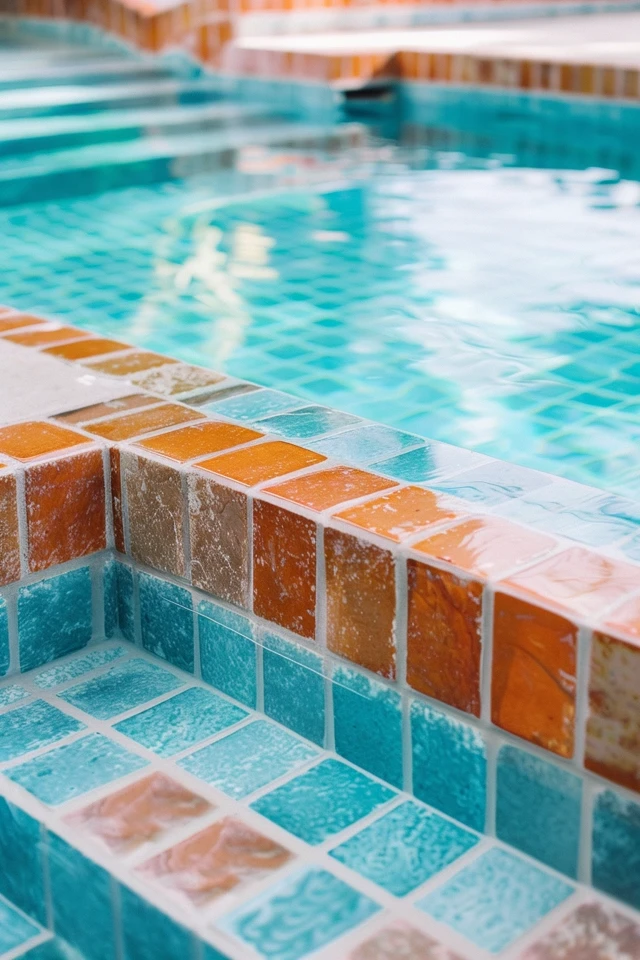
Modern Pool Tile Ideas: Elevate Your Oasis
Designing a pool is one of the most exciting, yet technically complex, parts of a home renovation. In my years of designing outdoor living spaces, I have found that the tile selection is the single most defining factor of the pool’s personality. It bridges the gap between the architecture of your home and the organic nature of your landscape.
Many homeowners underestimate how much the tile color affects the water color and the overall vibe of the backyard. A wrong choice here can turn a “modern sanctuary” into something that feels dated before the water is even filled. We are going to look beyond the standard blue squares and explore textures, large-format materials, and lighting effects that define modern luxury.
If you need visual inspiration, you can skip straight to our curated Picture Gallery at the end of this blog post.
1. Large-Format Porcelain: The Seamless Look
When we talk about modern interior design, we often talk about reducing visual clutter. The same rule applies to your pool. One of the strongest trends right now is using large-format porcelain tiles.
Instead of thousands of tiny grout lines that busy the eye, we use tiles sized at 24×24 inches or even larger slabs. This creates a monolithic, seamless look that makes small pools feel significantly larger.
Texture and Finish
You cannot simply take a bathroom tile and use it outdoors. For pool decks and coping, you need porcelain with a specific slip-resistance rating. In the industry, we look for a DCOF (Dynamic Coefficient of Friction) greater than 0.42, or an R11 rating for exterior wet areas.
A matte or textured finish is non-negotiable for safety. However, for the waterline inside the pool, you can switch to a semi-polished finish to reflect the water.
Designer’s Note: The Continuity Trick
One of my favorite design moves is “deck-to-waterline continuity.” We use the same porcelain paver for the pool deck, the coping (the edge), and the waterline tile. This blurs the boundary of the pool, making it look like a sheet of glass dropped into the patio.
Common Mistakes + Fixes
- Mistake: Using standard grout for large tiles in a submerged environment.
- Fix: Large tiles exert a lot of pressure on mortar beds. You must use a high-quality, polymer-modified thin-set and verify that the tile manufacturer rates the product for “submerged applications.” Not all porcelain is pool-safe.
2. Glass Mosaic: Depth and Luminosity
Glass tile has dominated the luxury pool market for the last decade, but the modern application is different. We are moving away from simple flat colors and toward complex, iridescent blends.
Glass interacts with sunlight differently than ceramic or stone. It allows light to penetrate the surface and bounce back, giving the water a gem-like quality.
The Scale of the Mosaic
For a modern aesthetic, I generally steer clients away from the standard 1×1 inch grid. Instead, consider a running bond pattern with 1×2 or 1×4 inch glass bricks. This linear look elongates the pool visuals.
Another modern approach is the “micro-mosaic,” where the tiles are tiny (about 0.5 inches) but color-blocked to create gradients. This adds incredible texture without feeling retro.
Installation Reality Check
Glass is the most expensive option, not just for materials but for labor. It is difficult to cut without chipping. It requires a specific white thin-set so the color reads true.
If you are renovating on a budget, consider using glass only for the waterline (the top 6 inches) or a raised spa wall. You get the visual punch without the cost of an all-tile pool.
What I’d Do in a Real Project
- Lighting: I always pair glass tile with LED pool lighting. At night, iridescent glass tiles catch the LED colors, turning a black pool into a glowing deep purple or electric blue.
- Grout Color: Never use white grout with glass tile below the waterline. It will eventually stain or show algae. I specify a translucent epoxy grout or a grey tone that recedes into the background.
3. Natural Stone: The Organic Modernist
If your home leans towards Mid-Century Modern, Desert Modern, or Bali-style designs, natural stone is your best ally. It provides an earthy, grounded feel that bright blue tile simply cannot achieve.
Travertine and Limestone
Silver Travertine is a staple in my designs. It offers beautiful greys, creams, and warm tans that look sophisticated and expensive. Limestone is another favorite, particularly in “French Blue” or “Gascoigne Blue” tones.
These stones are cool to the touch, making them excellent for coping where people will sit.
The Saltwater Warning
This is a critical conversation I have with every client. If you are installing a saltwater pool system, you must be careful with soft natural stones like travertine or limestone. Salt can erode these stones over time, causing pitting.
If you love the stone look but want saltwater, you have two options:
- Seal the stone meticulously every 1-2 years with a consolidator sealant.
- Use a porcelain look-alike. Digital printing on porcelain has become so advanced that it is often hard to tell the difference between real travertine and a porcelain replica.
Designer’s Note: Coping Profiles
The shape of the pool edge (coping) dictates the style.
- Modern: distinct “Square Edge” or “Eased Edge.”
- Traditional: “Bullnose” (rounded).
For a modern pool, always request a square edge coping profile with a slight 1/8-inch bevel to prevent chipping.
4. Dark Tiles and the Mirror Effect
One of the most dramatic shifts in modern pool design is the move toward dark finishes. Black, charcoal, or deep emerald tiles create a lagoon-like effect.
The Science of Reflection
Light-colored pools reflect the bottom of the pool. Dark-colored pools reflect the sky and the surrounding landscape.
If you have beautiful architecture or lush trees around the pool, a black or dark grey interior will mirror those elements on the water’s surface. This is often called a “reflecting pool” aesthetic.
Temperature Considerations
Dark tiles absorb heat. In a cooler climate, this is a benefit—it can passively heat your pool by a few degrees, saving on energy costs.
However, in extremely hot climates (like Arizona or Palm Springs), a black pool can get bath-water warm in August. We often compromise with a medium grey or “Steel Blue” to get the moody look without the excess heat absorption.
Common Mistakes + Fixes
- Mistake: Calcium buildup on dark tiles.
- Fix: White calcium deposits (scale) are very visible on dark tiles. You need to be diligent about water chemistry. I recommend installing an automated pH control system to prevent scale from forming in the first place.
5. Water Color Theory: Choosing Your Vibe
Clients often point to a tile and ask, “What color will the water be?” This is the most difficult thing to visualize, but there are rules of thumb we follow.
The water acts as a blue filter. Whatever color tile you choose sits behind that blue filter.
The Formulas
- White or Very Light Grey Tile: Result = Ice Blue / Cyan. This is the classic “Caribbean resort” look. It feels bright, happy, and clean.
- Tan, Beige, or Sand Tile: Result = Aqua / Green / Turquoise. This creates a natural spring or river look. It pairs beautifully with lush landscaping.
- Grey or Blue-Grey Tile: Result = Deep Blue. This is the most popular modern choice. It looks like the deep ocean.
- Black or Charcoal Tile: Result = Mirror / Dark Navy. Highly sophisticated, but reduces visibility of the bottom (safety consideration for families with small children).
Real-World Constraint: Depth Matters
Remember that water color deepens with depth. The shallow Baja shelf (sun shelf) will look lighter than the deep end.
If you want a consistent deep blue across the whole pool, you have to choose a darker tile for the shallow areas, which can be technically difficult to blend. It is usually best to embrace the gradient.
Final Checklist: What I’d Do in a Real Project
If I were consulting on your pool today, this is the decision tree I would walk you through.
1. Define the Palette
Look at your house exterior. Is it cool toned (greys, whites, blacks) or warm toned (creams, terra cotta, wood)? Match the pool coping to the house, not the landscaping.
2. Choose the Waterline
Select a 6-inch band of tile for the waterline.
Modern Choice: 1×2 Glass Mosaic in a blend of three colors, or a large format matte porcelain cut to size.
3. Select the Interior Finish
Are we doing an all-tile pool (premium budget) or a plaster/pebble finish with tile accents (standard budget)?
My advice: If budget is tight, spend money on high-quality waterline tile and a premium pebble finish (like PebbleTec) rather than buying cheap tile for the whole pool.
4. Plan the Layout
Ensure the tile installer provides a layout plan.
Crucial Detail: Where are the cut pieces going to be? They should be hidden in corners, not visible in the center of the wall.
5. Grout Selection
Choose an epoxy grout. It costs more upfront but saves headaches later. Pick a color that matches the darkest tone in your tile to hide dirt.
FAQs
Can I use bathroom tile in my pool?
generally, no. Pool tile must be frost-proof (impervious to water absorption) and able to withstand chemical submersion. Standard ceramic wall tile will often crack or pop off after a few freeze-thaw cycles. Always check the spec sheet for “submerged” ratings.
What is the most durable pool tile?
Glass tile is extremely durable chemically, but porcelain is the hardest physically. For longevity, a high-quality porcelain tile specifically rated for pools is often the most “bulletproof” choice against wear and tear.
How do I make my small pool look bigger?
Use lighter colors for the water. Dark water defines the edges clearly, making the volume strictly apparent. Light blue water blurs the edges and reflects the sky, making the space feel airier. Also, use larger format coping stones to reduce visual clutter on the deck.
Is an all-tile pool worth the cost?
An all-tile pool is the gold standard for luxury and durability. Plaster eventually pits and needs resurfacing every 10–15 years. Tile, if installed correctly, can last decades. However, the upfront cost can be 3 to 4 times higher than plaster. It is an investment in longevity and texture.
Conclusion
Selecting the right pool tile is about balancing practical constraints—like slip resistance and maintenance—with the emotional impact of color and light. Whether you choose the moody sophistication of black slate or the glimmering luxury of iridescent glass, the goal is to create a space that invites you in.
Don’t rush the selection process. take samples outside, wet them with a hose, and look at them in direct sunlight and evening shade. Your pool is a permanent fixture in your landscape; choosing materials that age gracefully will ensure it remains an oasis for years to come.
Picture Gallery


