
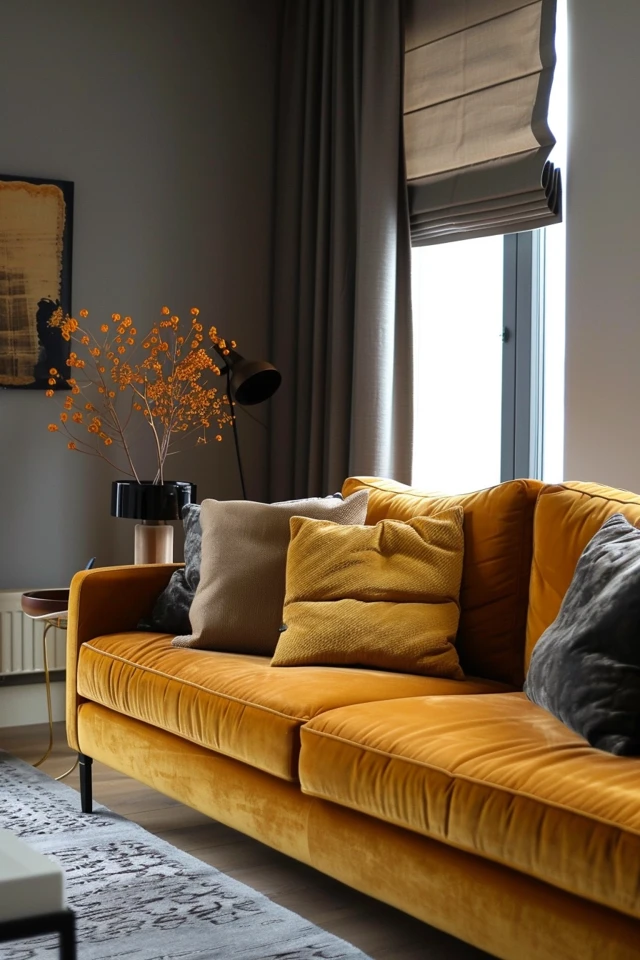
Mustard Sofa Living Room Ideas for Chic Spaces
One of the boldest moves a homeowner can make is stepping away from the safety of gray or beige upholstery. I remember a specific project where a client fell in love with a mid-century mustard velvet sofa but was terrified it would clash with everything else in her home. We took the leap, and that sofa became the crown jewel of the house, anchoring the room with a warmth that neutral furniture simply cannot achieve.
A mustard sofa is not just a piece of furniture; it is a statement of confidence and style. It brings a golden hour glow to your living space regardless of the time of day, but it does require a thoughtful approach to color theory and layout to keep things looking chic rather than chaotic.
I have compiled a comprehensive Picture Gallery at the end of this blog post to inspire your next living room transformation.
Mastering the Color Palette and Undertones
The success of a mustard sofa depends almost entirely on what you put next to it. Mustard is a complex color because it bridges the gap between yellow, brown, and sometimes green.
If you treat it like a primary yellow, the room will look like a preschool; treat it too much like a neutral, and it will look muddy. The key is understanding the undertone of your specific fabric and choosing wall colors and accents that complement rather than compete.
The Cool Contrast Approach
If you want a modern, high-contrast look, look across the color wheel to blues and teals. A mustard sofa sits beautifully against a wall painted in a deep moody navy or a dusty teal.
The coolness of the blue neutralizes the heat of the mustard, making the sofa pop without overwhelming the eye. This combination works exceptionally well in rooms with limited natural light, as it leans into a cozy, library-like aesthetic.
The Warm Analogous Route
For a space that feels organic and earthy, pair your sofa with colors that sit near it on the color wheel. Think terracotta, rust, olive green, and warm creams.
This creates a desert-chic or 1970s revival vibe that is incredibly popular right now. The trick here is to ensure there is enough variance in saturation so the room doesn’t feel like a single blob of warm tones.
Designer’s Note: The White Paint Trap
The Mistake: Painting the walls a stark, hospital white (high blue undertone) hoping it will make the sofa stand out.
The Reality: Cool, bright whites can make mustard fabric look dirty or sickly green.
The Fix: Always opt for a warm white or a creamy off-white with yellow or red undertones. Colors like “Swiss Coffee” or soft almond shades bridge the gap and keep the sofa looking rich.
Choosing the Right Fabric Texture for Durability
When selecting a bold colored sofa, the texture is just as important as the hue. Mustard reads very differently on velvet than it does on linen or leather.
As a designer, I always ask clients about their lifestyle before recommending a fabric. A mustard sofa is a focal point, meaning stains and wear will be more visible than on a charcoal couch.
Velvet: The Gold Standard
Velvet is the most popular choice for this color because the pile captures light, making the mustard look like liquid gold. It adds depth and changes shade depending on the direction of the nap.
For households with pets (especially cats), I recommend a high-performance polyester velvet rather than cotton velvet. Performance velvet has a tight weave that resists claw snags and is often hydrophobic, meaning liquids bead up rather than soak in.
Linen and Wovens: The Casual Option
If you prefer a relaxed, coastal, or farmhouse aesthetic, a heavy linen blend in a mustard tone can look stunning. However, flat weaves in this color can sometimes look flat or dull if the lighting isn’t right.
If going with a woven fabric, look for a “slubby” texture or a boucle blend. This added dimension helps hide dirt and adds visual interest to the solid block of color.
Common Mistakes + Fixes: Fabric Wear
Mistake: Buying a natural fiber linen sofa in mustard for a home with toddlers.
Fix: Natural linen absorbs oils and spills instantly. If you have kids, opt for a “solution-dyed acrylic” fabric or a slipcovered option that can be tossed in the wash.
Lighting and Metallic Accents
Lighting is the silent makeup artist of interior design. Because mustard is yellow-based, it is highly reactive to the color temperature of your light bulbs.
If you install cool daylight bulbs (4000K-5000K), your sophisticated mustard sofa will look neon and cheap. If your bulbs are too warm (below 2700K), the sofa might turn a muddy brown.
The Lighting Sweet Spot
Aim for LED bulbs with a color temperature of 3000K. This mimics crisp halogen light, keeping the colors true without casting a blue or overly orange tint.
Layer your lighting. Use floor lamps with linen shades to diffuse light softly onto the fabric. Avoid directing harsh track lighting straight at the sofa, as this can create hot spots that fade the fabric over time.
Mixing Metals
Hardware and accessories define the era of the room.
- Brass and Gold: The natural companion to mustard. Unlacquered brass or brushed gold legs and lamp bases create a monochromatic, luxurious feel.
- Matte Black: This offers a modern, industrial edge. It grounds the airy yellow tones and adds necessary visual weight.
- Chrome and Silver: Use with caution. Cool metals can clash with the warmth of the sofa unless you are aiming for a very specific space-age retro look.
Rugs, Curtains, and The “Envelope”
The items that physically touch or frame your sofa—the rug underneath and the curtains behind—are critical for grounding the furniture.
A common issue I see is a “floating” sofa. This happens when the rug is too light or too small, making the bold sofa look like a raft in the ocean.
Rug Sizing and Selection
The Rule of Thumb: The front two legs of the sofa must sit on the rug, extending at least 8 inches inward. Ideally, the rug should extend 12 to 18 inches beyond the sides of the sofa.
For a mustard sofa, I love using vintage-style Persian rugs with hints of red and navy. The complex pattern hides life’s messes, and the deep colors balance the brightness of the couch.
If you prefer a neutral rug, choose a jute or sisal rug for texture, or a grey wool rug. Avoid bright yellow or orange rugs; you want contrast, not a match.
Window Treatments
If the sofa is near a window, your curtain choice frames the view.
- Height: Hang the curtain rod 4-6 inches above the window frame (or to the ceiling) to draw the eye up.
- Color: If your walls are neutral, try olive green or charcoal velvet drapes for drama. If your walls are dark, go for oatmeal linen curtains to provide visual relief.
Layout, Scale, and Real-World Functionality
Mustard sofas often attract attention, so their placement dictates the flow of the room. Because the color advances visually (it looks closer to you than cool colors), a large mustard sectional can feel massive in a small room.
Managing Visual Weight
If you have a small living room (under 12×12 feet), look for a sofa with legs rather than a skirted base. Seeing the floor underneath the sofa tricks the eye into thinking the piece is lighter and the room is larger.
Ensure you have at least 30 to 36 inches of walking path around the sofa. If the space is tight, consider a loveseat paired with a smaller accent chair rather than cramming in a full-sized sofa.
Coffee Table Pairings
The distance between your sofa and coffee table should be between 14 and 18 inches. This is close enough to set down a drink but far enough to walk through without banging your shins.
Regarding materials, walnut wood is the best friend of mustard upholstery. The rich, dark brown tones of walnut contrast beautifully with the golden fabric. Light oak can sometimes look too washed out next to mustard, lacking the necessary contrast to make the design sing.
What I’d Do: A Real Project Mini-Checklist
If I were styling a mustard sofa for a client today, here is the exact formula I would follow:
- Wall Color: Farrow & Ball “Hague Blue” (for drama) or Benjamin Moore “Swiss Coffee” (for airy).
- Rug: A faded vintage runner or a large area rug with charcoal and rust accents.
- Accents: Two throw pillows in a geometric black and white pattern to break up the solid color.
- Greenery: A large Fiddle Leaf Fig or Bird of Paradise plant next to the sofa. The natural green is the perfect complementary color to the yellow.
Final Checklist for Chic Styling
Before you finalize your room design, run through this checklist to ensure you have balanced the boldness of the sofa with the rest of the space.
1. Check the Undertones
Does your wall paint have a warm base? If it has a cool blue base, swatch a warmer white.
2. Verify the Scale
Is the rug large enough? Ensure it extends past the sofa ends. A 5×8 rug is usually too small for a standard 84-inch sofa; opt for an 8×10 or 9×12.
3. Layer the Lighting
Do you have at least three sources of light (overhead, table, floor)? Are the bulbs 3000K?
4. Add Organic Elements
Do you have wood, stone, or plants in the room? A mustard sofa needs natural elements to ground it so it doesn’t feel like a fast-food color scheme.
5. Texture Check
Do you have contrasting textures? If the sofa is velvet, add a leather chair or a chunky wool throw. If the sofa is linen, add velvet pillows.
Frequently Asked Questions
Is a mustard sofa just a trend that will fade?
While mustard had a huge peak in the 1970s and again recently, it has established itself as a “new neutral” in the design world. Unlike millennial pink, which feels very specific to a time period, mustard works in Mid-Century, Bohemian, Traditional, and Eclectic homes. It has staying power if styled correctly.
How do I keep a mustard sofa clean?
Mustard is forgiving with dust but unforgiving with dark liquid spills. Vacuum the sofa weekly with a soft brush attachment to prevent dust from settling into the fibers, which creates a dull cast. For spills, blot (never rub) immediately. I highly recommend professional upholstery cleaning once a year to keep the color vibrant.
Can I put a mustard sofa in a small room?
Absolutely. In a small room, let the sofa be the only “star.” Keep the walls light and the other furniture minimal. A bold color in a small space actually distracts from the size of the room and focuses the eye on the design.
What chair colors go with a mustard sofa?
Navy blue, cognac leather, charcoal grey, and forest green are the best pairing options. Avoid bright red (too ketchup and mustard) or bright purple (too Mardi Gras) unless you are very experienced with maximalist design.
Conclusion
Choosing a mustard sofa is a declaration that you want your home to feel alive, warm, and full of personality. It serves as a constant source of sunshine in your living room, inviting guests to sit down and relax.
By paying attention to the temperature of your lighting, grounding the space with the right rug size, and pairing the yellow tones with rich woods and organic textures, you can create a space that feels curated and high-end. Don’t be afraid of the color; embrace the warmth it brings to your daily life.
Picture Gallery


