
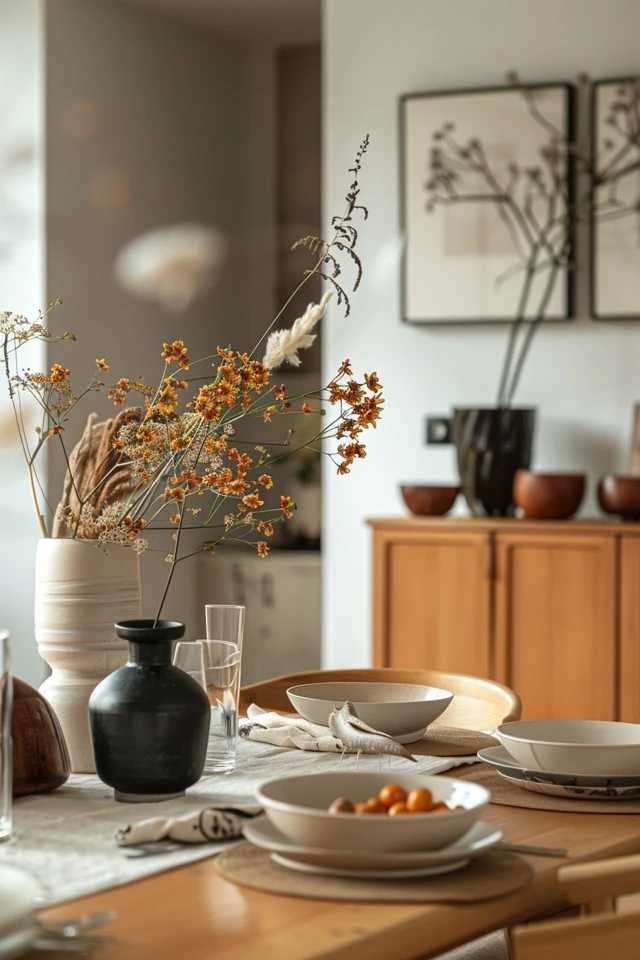
My Top Buffet Table Ideas at Home for Easy Hosting
Hosting a dinner party is one of my absolute favorite things to do, but I admit it used to stress me out. The biggest game-changer in my own home wasn’t a bigger oven or a fancy playlist; it was rethinking how I used my buffet table. A well-designed buffet setup allows you to get out of the kitchen and actually enjoy the conversation with your guests.
When we rely solely on the main dining table for food service, things get crowded fast. Elbows bump into serving spoons, and wine glasses are always at risk of being knocked over by a passing platter. By moving the service to a dedicated sidebar or buffet, you create a natural flow that feels elegant rather than chaotic.
In this guide, I am going to walk you through the practical side of selecting, placing, and styling a buffet table for real life. For a visual dose of inspiration, be sure to check out the Picture Gallery at the end of this blog post.
1. Choosing the Right Piece: Scale and Dimensions
As an interior designer, the first thing I look at is the scale of the furniture relative to the room. A buffet table that is too small looks dinky and unintentional, while one that is too large will choke the traffic flow.
You need to start with the height. Standard dining tables are usually 30 inches high, but a buffet table functions best when it is slightly taller. I recommend looking for a piece that is between 34 and 36 inches high.
This added height is crucial for ergonomics. When your guests are standing in line to serve themselves, they shouldn’t have to hunch over to reach the salad. The 36-inch height is comfortable for scooping and pouring while standing.
Next, consider the depth. A functional buffet needs to be deep enough to hold standard serving platters but shallow enough not to encroach on the dining chairs.
Designer’s Note: The Golden Measurement
Ideally, you want a piece that is 18 to 22 inches deep. Anything shallower than 16 inches will struggle to hold a dinner plate and a serving dish side-by-side. If you are tight on space, look for “console” styles, but always measure your largest serving platter before buying.
The length of the buffet depends on your wall size, but aesthetic balance is key. A good rule of thumb is that your buffet should be at least two-thirds the length of your dining table. If your table is 72 inches long, aim for a buffet that is at least 48 inches long to keep the room feeling grounded.
Common Mistakes + Fixes
- Mistake: Buying a piece with legs that are too spindly or delicate.
- Fix: Hosting involves heavy earthenware, stacks of plates, and leaning guests. Choose a piece with a solid base or substantial legs to handle the weight visually and structurally.
- Mistake: Ignoring the interior storage configuration.
- Fix: Ensure the shelves inside are adjustable. You will need height for stacking cake stands or storing tall pitchers when they aren’t in use.
2. The Logic of Layout and Traffic Flow
Placing the buffet is just as important as buying the right one. In a dining room, clearance is everything. You never want a guest to feel trapped in their chair because the furniture is too close together.
We use specific clearance zones in professional design projects. You generally need 36 inches from the edge of your dining table to the nearest wall or obstacle to allow someone to slide their chair back comfortably.
However, if that obstacle is a buffet table where people will be walking to serve food, you need more space. I aim for 42 to 48 inches of clearance between the dining table and the front of the buffet.
This allows one guest to be seated while another guest walks behind them with a full plate. If you are working with a small apartment or a rental, you might not have 48 inches.
In tight spaces, consider placing the buffet on a wall adjacent to the table ends rather than parallel to the long side. This often opens up the circulation path.
What I’d Do in a Real Project:
- Map the corners: I use painter’s tape to mark the floor before buying furniture.
- Check the swing: Open every door and drawer on the proposed buffet unit. Do they hit the dining chairs? If yes, look for sliding doors instead of swinging doors.
- Analyze the entry: Ensure the buffet isn’t creating a bottleneck near the kitchen door. The food station should draw people into the room, not clog the entrance.
3. Styling for Service vs. Everyday Use
Most of us don’t host dinner parties every night. This means your buffet needs a split personality: it must look beautiful as a decor piece on Tuesday but function as a workhorse on Saturday night.
For everyday styling, I love using the “Z” configuration or a symmetrical triad. This usually involves a large piece of art or a mirror centered above the unit, flanked by two tall lamps or vases.
When it’s time to host, the decor needs to be easily removable. I always advise clients to use trays for their everyday decor. When the doorbell rings, you can lift the entire tray of styled books and candles and move it to a bedroom, leaving a clear surface for food.
The Hosting Setup Strategy
When setting up the food, logic is your best friend. Follow the natural progression of how a person builds a meal.
- Start with plates: Place the stack of dinner plates at the far left (or whichever side the line starts).
- Main dishes: Place the heaviest or most substantial dish next.
- Sides and Salads: These follow the main dish.
- Condiments and Sauces: keep these near the dishes they pair with.
- Cutlery and Napkins: Place these at the very end of the line.
Placing cutlery at the end is a pro move. There is nothing more annoying than trying to balance a knife and fork while scooping mashed potatoes. Let guests grab the silverware last, just before they head back to their seats.
Designer’s Note: Height Variation
A flat buffet spread looks unappealing and makes it harder to reach dishes in the back. I use sturdy wooden risers or even stack heavy cookbooks under a tablecloth to create different elevations. Place the rear platters higher than the front ones. This adds visual interest and improves accessibility.
4. Materials and Durability: The “Oops” Factor
Dining rooms see high traffic and messy spills. The material of your buffet top matters immensely. If you have a porous stone like marble, it is susceptible to etching from lemon juice, wine, or tomato sauce.
Wood is warm and inviting, but it hates heat and water rings. If you are buying a vintage mid-century modern credenza, the finish is likely lacquer or oil, which can be fragile.
For families with kids or frequent hosts, I often recommend a buffet with a quartz top. Quartz is non-porous, heat-resistant, and incredibly forgiving. It mimics the look of natural stone without the maintenance headache.
If you love your wood buffet, you simply need to protect it. Custom-cut glass tops are a great solution for high-use areas. They are relatively inexpensive to order from a local glass shop and disappear visually.
Protective Measures for Wood Surfaces:
- Use Trivets: Never place a hot casserole dish directly on wood or glass. I prefer felt or cork-bottomed trivets because they don’t scratch.
- The Runner Trick: A thick table runner adds color and absorbs minor spills. Ensure it is machine washable.
- Coaster discipline: If you are using the buffet as a bar, designate a specific tray for mixing drinks to catch drips.
Common Mistakes + Fixes
- Mistake: Using a mirrored surface top.
- Fix: While glamorous, they scratch instantly and show every fingerprint. If you must use mirror, use it on the vertical cabinet facings, not the horizontal serving surface.
- Mistake: Sharp corners in a tight room.
- Fix: If your clearance is tight, choose a buffet with rounded corners or a “demilune” (half-moon) shape. This saves your guests from painful hip bruises.
5. Lighting the Spread
Lighting is the secret sauce of interior design. It changes the mood from a cafeteria to a fine dining establishment. Overhead lighting is often unflattering and creates shadows exactly where you are trying to serve food.
You need localized light sources on the buffet. The classic solution is a pair of buffet lamps. These are distinct from standard table lamps; they are usually taller and have a smaller footprint (base).
The height is important because you want the pool of light to cast downward onto the food, not into your guests’ eyes. Look for lamps that are 28 to 32 inches tall.
If your buffet surface is small, you might not want to sacrifice space for lamps. In this case, wall sconces are a brilliant alternative.
Sconce Placement Rules:
If you are hard-wiring sconces, I generally place them 60 to 66 inches from the finished floor to the center of the light source. This keeps them high enough to clear the artwork or mirror but low enough to relate to the furniture piece.
For renters or those who don’t want to hire an electrician, rechargeable picture lights are a fantastic innovation. You can mount them above your artwork to wash the wall and the serving surface in a soft, ambient glow.
Designer’s Note: Color Temperature
Always check your bulbs. For a dining environment, you want “warm white” bulbs, which are 2700K on the Kelvin scale. Anything higher (3000K-5000K) will look blue and clinical, making the food look unappetizing.
Final Checklist: Ready to Host?
Before your guests arrive, run through this quick checklist to ensure your buffet is ready for action.
- Clearance Check: Pull out the dining chairs. Is there still a walkway?
- Surface Protection: Are trivets and runners in place to protect the finish?
- Flow Logic: Are plates first and cutlery last?
- Serving Utensils: Do you have a serving spoon or fork for every single dish? (Check this twice!)
- Trash Bin: Is there a small, discreet wastebasket nearby for cocktail napkins or toothpicks?
- Lighting: Are the lamps on and dimmed to a warm glow?
- Empty Space: Did you leave a spot for guests to set down a drink while they serve themselves?
FAQs
Can I use a dresser as a buffet table?
Absolutely. This is one of my favorite budget hacks. Dressers are often deeper and offer better storage than traditional sideboards. Just ensure the height is appropriate (around 34-36 inches). You may need to change the hardware to something more formal to elevate the look from “bedroom” to “dining room.”
How high should I hang a mirror or art above the buffet?
The connection between the furniture and the art is vital. A common mistake is hanging art too high, leaving it floating aimlessly. Aim for a gap of 4 to 8 inches between the top of the buffet and the bottom of the frame. This visually connects the two elements into a single vignette.
What is the difference between a sideboard, a buffet, and a credenza?
In modern design, we use these terms interchangeably, but there are historical differences. A buffet usually has longer legs and is intended for the dining room. A credenza is typically lower, longer, and often has sliding doors (originally for offices). A sideboard often has cabinets to the floor (no legs). For hosting purposes, focus on the height and storage capacity rather than the name.
How do I handle power cords for slow cookers or warming trays?
If you plan to use electric warmers, you need a plan for the cords. I often drill a small grommet hole in the back of the buffet cabinet to feed cords through to a wall outlet discreetly. If that’s not an option, use gaffer tape (which doesn’t leave residue) to tape the extension cord safely to the floor so no one trips.
Conclusion
Integrating a buffet table into your home is about more than just buying a piece of furniture; it is about reclaiming the joy of hosting. When you have a dedicated station that is the right height, the right size, and organized logically, the stress of serving food evaporates.
You no longer have to worry about where to put the hot casserole or whether there is room for the water pitcher. Everything has a place. This organization frees you up to focus on what really matters: connecting with your friends and family.
Remember to measure your space twice, respect the traffic flow, and choose materials that can withstand a little bit of party chaos. With the right setup, your buffet will serve you beautifully for years to come.
Picture Gallery


