
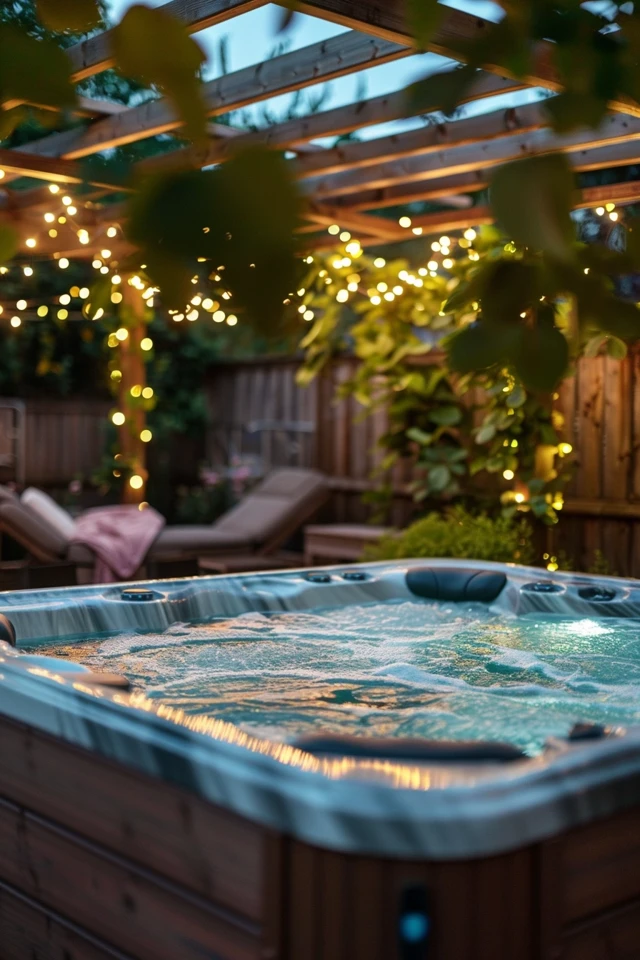
My Top Picks for Hot Tub Pergola Ideas
One of the most frequent requests I get from clients isn’t just about redesigning a living room; it is about extending that living space outdoors. Specifically, homeowners want to know how to integrate a hot tub without it looking like an afterthought dropped onto a concrete slab.
I remember a specific project in a dense suburban neighborhood where the client bought a beautiful, high-end spa but refused to use it. The reason was simple: they felt like they were on a stage performing for their neighbors every time they took the cover off. The solution wasn’t moving the tub; it was creating a “room” around it using a pergola structure that offered privacy without blocking the sky.
A pergola defines the space, provides necessary shade or rain protection, and anchors the hot tub visually. If you want to skip straight to the visuals, you can find a curated Picture Gallery at the end of this blog post to spark your inspiration.
1. The Adjustable Louvered Roof System
If budget allows, an aluminum pergola with an adjustable louvered roof is my number one recommendation for functionality. This design solves the biggest problem with traditional open-rafter pergolas: rain and heavy sun.
With a motorized or manual crank system, you can rotate the roof slats from fully open (to see the stars) to fully closed (to block rain or snow). This effectively turns your hot tub area into a four-season room.
In terms of materials, powder-coated aluminum is the winner here. It does not rust, it does not rot, and it requires almost zero maintenance compared to wood. I usually specify a dark bronze or matte black finish, as it tends to disappear into the landscape better than stark white.
Designer’s Note: The Drainage Detail
The biggest lesson I learned the hard way involves water runoff. When you close those louvers during a rainstorm, the water has to go somewhere. Ensure your system has an integrated gutter system inside the beams. If the water just sheets off the side, it will splash onto your deck and freeze in winter, creating a slip hazard right where you step out of the tub.
Common Mistake:
Installing a louvered pergola that is too short.
The Fix:
Because the roof creates a solid ceiling when closed, it can feel oppressive if it is too low. I recommend a minimum clearance height of 8 feet to keep the space feeling airy, whereas 7 feet is usually fine for open trellis styles.
2. The “Privacy Wall” Timber Frame
For a warmer, more organic aesthetic, a heavy timber pergola (typically Cedar or Redwood) is timeless. However, the modern twist I am applying to these projects involves treating one or two sides as “privacy walls” rather than open posts.
We achieve this by installing horizontal slats between the rear posts. I prefer using 1×2 inch slats with 1-inch spacing. This spacing is the “Goldilocks” zone: tight enough to block the neighbor’s line of sight, but open enough to let breezes pass through so the structure doesn’t turn into a wind sail.
If you are a renter or looking for a temporary solution, you can achieve a similar effect by installing outdoor curtain rods between the posts. Use heavy-weight outdoor fabrics (like Sunbrella) and ensure they are weighted at the bottom so they don’t blow into the water.
Measurement Rule of Thumb:
When designing horizontal privacy slats, stop the slats about 6 to 12 inches above the floor level. This makes it much easier to sweep debris off the deck or patio without getting leaves stuck in the bottom crevices of your wall.
3. The Attached Extension with Skylights
Sometimes the best location for the hot tub is right up against the house. In these cases, an attached pergola (ledger-mounted to the home’s framing) creates a seamless flow from the back door to the water.
This design functions as an extension of your indoor living room. Because attached pergolas can make the adjacent indoor room darker by blocking natural light, I often suggest incorporating polycarbonate skylight panels or leaving the rafters widely spaced (24 inches on center) to maintain light flow.
This layout is ideal for cold climates. The shorter the distance from your back door to the warm water, the more likely you are to actually use the hot tub in January.
Real-World Project Checklist:
- Ledger Board Flashing: This is critical. If not flashed correctly, water will rot your house’s rim joist. Always hire a pro for the connection point.
- Roof Pitch: Even a pergola needs a slight slope if you cover it. Aim for a minimum 1/4-inch drop per foot to shed water away from the house foundation.
- Siding Protection: The steam from a hot tub can damage certain types of siding over time. Position the tub at least 3 feet away from the house wall, even if the pergola is attached.
4. The “Garden Folly” with Living Walls
For clients who want a “Secret Garden” vibe, we focus on the landscape integration rather than just the carpentry. This style uses a simple pressure-treated or cedar pergola as a skeleton for climbing plants.
Wisteria, Jasmine, or Grapevines are classic choices. However, there is a major functional caveat here: falling organic matter. If leaves and petals fall into your hot tub, they clog the filter and mess with your water chemistry.
To make this work, I strictly use this design when the hot tub has a hard, high-quality cover that stays on whenever the tub is not in use. I also recommend installing a fine mesh screen across the top of the pergola rafters before the vines grow over. This catches the debris before it hits the water.
Common Mistake:
Planting aggressive vines that destroy the structure.
The Fix:
Avoid English Ivy, which can work its way into wood joints and pry them apart. Stick to Clematis or climbing hydrangeas which are generally gentler on structures.
5. Integrated Bar and Seating Perimeters
Space is often at a premium in backyards. A clever way to maximize utility is to use the pergola posts to support a bar counter on the outside of the hot tub.
Imagine a pergola covering the tub, with a 12-inch wide cedar shelf running along one side of the structure at bar height (42 inches). This allows people who are not in the water to sit on stools and chat with those who are soaking. It bridges the gap between the “wet zone” and the “dry zone.”
This setup is perfect for entertaining. It provides a safe place to set drinks, towels, or phones without risking them falling into the water.
Designer’s Note: Scale and Spacing
You need to ensure there is enough walking space. If you add a bar counter with stools, you need at least 36 to 42 inches of clearance behind the stools for people to walk past. If you cram this into a tight area, it will feel like an obstacle course.
6. Lighting and Ambiance Strategy
A pergola isn’t finished until the lighting is installed. Overlooking lighting is the most common DIY error I see. You do not want a floodlight pointing at your face while you are trying to relax.
For hot tub pergolas, indirect lighting is mandatory. I prefer creating a “moonlight” effect. This can be achieved by mounting small, downward-facing puck lights on the inside of the pergola posts, about 18 inches down from the top beam.
Another successful technique is using IP65-rated (waterproof) LED strip lights hidden on top of the rafters, shining up into the canopy or trees above. This provides a soft glow that doesn’t blind you.
What I’d Do in a Real Project:
- Dimmers are non-negotiable: Ensure all pergola lights are on a dimmer switch. You need bright light for cleaning the tub, but very dim light for soaking.
- Bypass the Solar: Cheap solar string lights rarely last a season and provide poor output. Hardwire your low-voltage lighting into the landscape system for reliability.
- Kelvin Temperature: Stick to 2700K or 3000K (warm white). Anything higher (4000K+) looks like a hospital operating room and ruins the relaxation vibe.
Final Checklist: Before You Build
If you are ready to break ground, run through this quick checklist to ensure you haven’t missed any logistical hurdles. This is the exact mental list I review during a site consult.
1. Check the Load-Bearing Capacity
If you are building the pergola on an existing deck, can the footings support the extra weight of the timber? A hot tub full of water is heavy (5,000+ lbs), but the pergola adds point loads that standard decks aren’t designed for.
2. Confirm Overhead Clearances
Do you have power lines running overhead? Most codes require a 10-foot clearance from electrical service lines. Also, check for tree branches that might snap in a storm.
3. Locate the Electrical Disconnect
Code typically requires an emergency shut-off switch for the hot tub within sight of the tub but at least 5 feet away. Ensure your pergola posts don’t block access to this panel.
4. Plan for Cover Lifter Clearance
Most hot tub covers fold up and require 18 to 24 inches of clearance on one side. If you place a pergola post or privacy wall too close to the tub, you won’t be able to open the cover.
5. Flooring Traction
If you are tiling the area under the pergola, check the slip rating. I look for an R10 or R11 anti-slip rating. Smooth porcelain is a recipe for a concussion when wet.
FAQs
Do I need a permit for a pergola over a hot tub?
In most jurisdictions, yes. Even if it is a detached structure, if it exceeds a certain square footage (often 120 or 200 sq ft) or involves electrical work for lights, a permit is required. Always check local zoning for setback rules (distance from property lines).
How tall should a pergola be over a hot tub?
I recommend a clear height of at least 7.5 to 8 feet from the floor of the deck. However, remember that you stand up in a hot tub to get out. You need enough headroom so you don’t hit your head on a beam when stepping up out of the water.
Can I put a roof on my pergola later?
Only if you planned for it structurally. Adding a solid roof adds significant weight and creates “wind uplift” issues during storms. The footings need to be sized for a roofed structure from day one.
What is the best wood for a hot tub pergola?
Western Red Cedar is the industry standard for a reason. It is naturally resistant to rot and insects. Pressure-treated pine is cheaper but tends to warp and twist, which looks messy on a precise structure. Ipe is incredible but very expensive and hard to work with.
Conclusion
Adding a pergola over your hot tub transforms it from a simple appliance into a genuine architectural feature of your home. It provides the privacy required to truly relax and the protection needed to use the space year-round.
Whether you choose a sleek aluminum louvered system or a rustic cedar timber frame, the key is paying attention to the scale, the lighting, and the flow of traffic around the tub.
Take the time to measure your cover lifter clearance and plan your privacy angles before you dig the first post hole. A well-designed pergola makes the difference between a hot tub you use once a month and an outdoor sanctuary you use every single night.
Picture Gallery


