
My Top Safari Party Ideas for Wild Fun!
Planning a themed event often walks a fine line between immersive fun and feeling like a children’s cartoon. When clients approach me for a safari-themed gathering, my goal is always to elevate the concept from a costume party to a sophisticated “destination” experience right in their backyard or living room. For plenty of visual inspiration to spark your creativity, be sure to check out the curated Picture Gallery included at the end of this blog post.
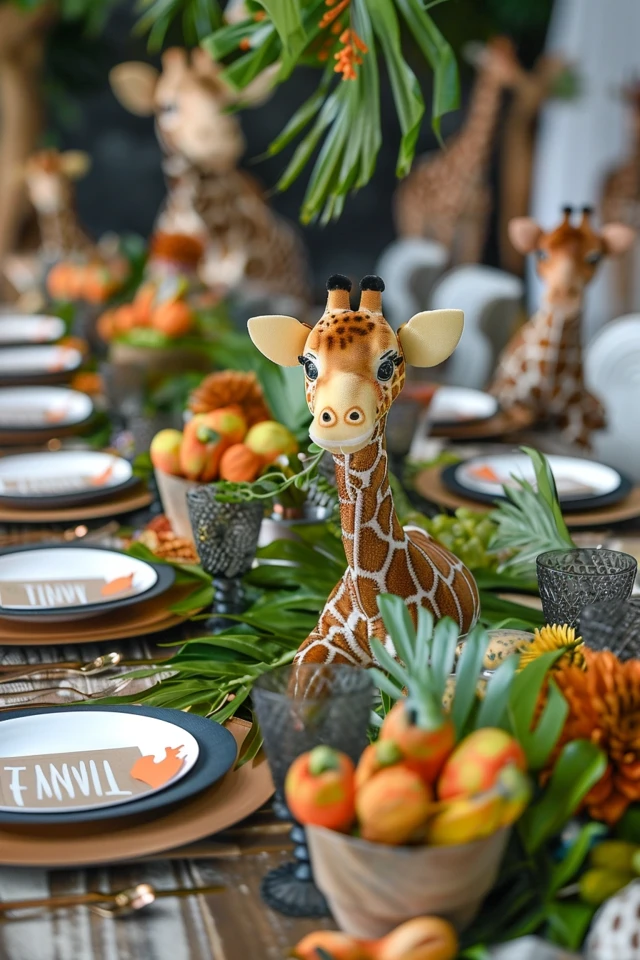
I view these events through the same lens I use for interior design projects: we need to consider flow, texture, lighting, and scale. A great party isn’t just about decorations; it is about spatial planning and how your guests interact with the environment you have created. Whether you are hosting a playful birthday bash or an elegant “sunset in the savannah” dinner party, the fundamentals of good design remain the same.
In this guide, I am going to walk you through how to construct a safari experience that feels authentic and high-end. We will cover everything from selecting a grounded color palette to the logistics of furniture layout and lighting design. Let’s strip away the plastic gimmicks and focus on organic materials, lush foliage, and professional styling tricks that will leave your guests talking long after the last lantern goes out.
1. Establishing the Color Palette and Texture Map
The biggest mistake I see DIY hosts make is relying too heavily on primary colors or neon jungle prints. To achieve a designer look, you must look to nature. A true safari aesthetic is rooted in the dry heat of the plains and the lush density of the bush. We want to build a palette that feels organic and collected.
I recommend starting with a 60-30-10 color rule. For a safari theme, your 60% (dominant color) should be neutrals like oatmeal, sand, or warm taupe. Your 30% (secondary color) brings in the life: deep sage green, olive, or terracotta. Finally, your 10% (accent) is where you add drama with charcoal black, burnt orange, or hints of aged brass.
Texture is just as important as color. In interior design, we use texture to create visual weight and interest. For this theme, you want to mix rough with smooth. Think rough jute rugs paired with smooth wooden chargers, or canvas tenting paired with soft linen napkins.
Recommended Materials List
- Base Textiles: Unbleached cotton canvas, heavy linen, and burlap.
- Hard Surfaces: Rattan, woven wicker, dark stained wood, and matte ceramics.
- Accents: Leather (faux or real), animal prints used sparingly (think a throw pillow, not a wall-to-wall tablecloth), and dried grasses.
Designer’s Note: When using animal prints, scale is everything. If you use a zebra print rug, keep the surrounding fabrics solid. Mixing a leopard print tablecloth with zebra napkins creates visual chaos that tires the eye. Treat animal print like a spice—a little goes a long way.
2. Tablescapes That Transport Your Guests
The dining table is often the centerpiece of the party, and it requires careful architectural planning. As a designer, I always start with the mechanics of eating. Guests need elbow room and the ability to see each other across the table. A crowded table looks messy and makes conversation difficult.
Allow for at least 24 inches of width per place setting. If you are using chargers—which I highly recommend for layering—make sure they don’t touch the charger next to them. For the centerpiece, follow the “15 or 24” rule. Decor should either be below 15 inches so guests can see over it, or above 24 inches (on a thin stand) so they can see under it. Anything in between blocks sightlines.
For a safari look, I love using a “runner” made of living or dried elements rather than just fabric. Lay down a base of monstera leaves or eucalyptus branches down the center of the table. Intersperse this with low amber glass votives or wooden candle holders. This creates a lush, overgrown look that feels authentic.
Common Mistakes + Fixes
- Mistake: Using plastic tablecloths that blow away or look cheap.
- Fix: Use a drop cloth from the hardware store. It is heavy canvas, mimics a safari tent texture, is incredibly cheap, and can be washed.
- Mistake: Overcrowding the center of the table with tall vases.
- Fix: Use clusters of three small vessels at varying low heights. Odd numbers are more pleasing to the human eye.
If you are serving food buffet-style, apply the same design principles to the food station. Elevate platters using wooden crates or sturdy boxes covered in linen to create varying heights. Flat buffets look unappealing; varying heights create a landscape for the eye to travel across.
3. Spatial Planning and “Campsite” Zones
In interior design, we talk constantly about “circulation paths.” This is the empty space people need to walk comfortably without bumping into furniture. For a party, especially one with a “wild” theme, you want to encourage movement while creating distinct zones for different activities.
Think of your venue layout like a luxury campsite. You need a “Mess Hall” (dining area), a “Watering Hole” (bar), and a “Base Camp” (lounge). Separating these zones prevents bottlenecking. If the food and drinks are on the same table, you will have a traffic jam. Keep them at least 6 to 10 feet apart if space allows.
For the “Base Camp” lounge area, low seating works exceptionally well for this theme. If you are outdoors, lay down large outdoor rugs to define the space. The rule for rugs remains the same outdoors as it does indoors: at least the front legs of all furniture pieces should sit on the rug to anchor the group.
What I’d Do in a Real Project
- The Entryway: Create a sense of arrival. I would flank the entrance with two large potted palms or tall lanterns to signal the transition into the party space.
- The Flow: Ensure main walkways are at least 36 inches wide. This allows two guests to pass each other comfortably, even if one is holding a plate.
- The Lounge: I would pile floor cushions and poufs around a low coffee table or a fire pit. This encourages a relaxed, communal vibe typical of a safari evening.
If you are renting furniture, look for “Peacock” chairs or bamboo folding chairs. They are structurally sound but add immediate thematic impact. Avoid standard white plastic folding chairs if at all possible; they will break the immersion instantly.
4. Lighting the Savannah (Ambience Control)
Lighting is the most powerful tool in a designer’s kit. It changes the mood instantly and hides a multitude of sins. For a safari party, you want to mimic the warm glow of firelight and starlight. We want to avoid cool, blue-toned light (anything over 3000 Kelvin) which feels like a hospital or office.
If you are outdoors, overhead floodlights are the enemy. They flatten the space and create harsh shadows. Instead, focus on layering your lighting at three levels: high, medium, and low.
The Three Layers of Lighting
- High (Overhead): String lights (bistro style) strung between trees or poles. These act as your “stars.” Ensure they are draped loosely, not pulled tight, for a more relaxed look.
- Medium (Eye Level): Lanterns placed on tables or hung from shepherd’s hooks. Hurricane lanterns with real or high-quality LED candles are perfect here.
- Low (Ground): Path lighting or lanterns placed on the corners of rugs and steps. This is crucial for safety but also adds a dramatic uplight effect to plants.
Safety Note: If you are using real candles, they must be contained within glass vessels that are at least two inches taller than the flame. In an active party environment, especially with dried grasses as decor, fire safety is paramount. I often prefer high-end LED candles that have a realistic “flicker” simply for peace of mind.
5. Creating Tasteful Focal Points
Every room needs a focal point, and every party needs a “moment.” This is often where people take photos, but it also serves to anchor the visual theme. In the age of social media, people want a backdrop, but as a designer, I cringe at vinyl printed banners. We want architectural interest, not a billboard.
Consider creating a “Tent Moment.” You don’t need a full marquee. A simple A-frame tent made from wooden dowels and canvas drop cloth can serve as a photo booth or a play area for kids. Style the interior with sheepskins and vintage suitcases to tell a story.
Another option is a “Living Wall.” Use a trellis or a hanging rod to suspend a density of greenery. Mix faux tropical leaves (high quality only) with real dried palm fans. The contrast between the green and the dried tan colors captures that safari essence perfectly.
Pro-Level Styling Tips
- Odd Numbers: When grouping items like vintage suitcases or lanterns, always group in threes or fives. Even numbers tend to look too regimented.
- Verticality: Don’t let everything sit at waist height. Use tall plants or hanging decor to draw the eye up. This makes a small space feel larger and more grand.
- Concealment: Use your decor to hide unsightly elements. A stack of vintage crates can hide a trash can. A large potted bird of paradise can hide an ugly fence post.
Final Checklist: The Designer’s “Go-Bag”
Before the first guest arrives, I run through a specific checklist to ensure the space functions as well as it looks. Here is what I would check for a safari event:
- Trip Hazards: Check that rugs are lying flat (use rug tape if on hard surfaces) and that extension cords for lights are taped down or buried under mulch.
- Wind Test: If outdoors, are the tablecloths weighed down? I use tablecloth weights or secure them underneath with clamps. One gust of wind can ruin a tablescape.
- Music Level: Sound is part of design. Have a playlist of afro-beat, jazz, or ambient nature sounds. Test the volume—you should be able to speak over it without shouting.
- Lighting Check: Turn all lights on 30 minutes before sunset to ensure batteries are fresh and timers are set.
- Circulation: Walk the path from the entrance to the drink station. Is there any obstacle that makes you turn sideways? If so, move it.
FAQs
How do I make this theme kid-friendly without it looking childish?
Focus on the “Explorer” aspect rather than the “Cartoon Animal” aspect. Give kids pith helmets and binoculars (which serve as decor and toys) and set up a scavenger hunt. Use the same high-quality color palette of greens and tans, but introduce sturdy materials like melamine plates instead of ceramic.
What if it rains and I have to move the party indoors?
The design principles hold up indoors. Clear out as much existing furniture as possible to open up flow. draped canvas sheets over your existing sofas can give them a “covered for the season” look. Bring your potted plants inside and group them in corners to create indoor jungles. Dim your overhead lights and rely heavily on your lamps and lanterns.
Where should I splurge and where should I save?
Splurge on the “touch points”—the things guests handle. Nice linen napkins and heavy glassware make a huge difference in perceived quality. Save on the backdrop and high-up decor. No one is inspecting the material of the bunting hanging ten feet in the air, but they will notice a flimsy paper napkin.
How do I handle bugs for an outdoor safari party?
Incorporate pest control into the design. Large citronella candles can be placed in galvanized buckets to look industrial and chic. You can also place discreet fans at ground level near seating areas; mosquitoes are weak flyers, and a gentle breeze keeps them away better than most sprays.
Conclusion
Creating a memorable safari party doesn’t require a ticket to the Serengeti; it requires a commitment to consistency and atmosphere. By focusing on a natural color palette, prioritizing guest flow, and using lighting to create warmth, you can transport your friends and family to a world of adventure.
Remember that the best design feels effortless. It is about creating a backdrop where memories can happen naturally. Don’t stress over perfection. If a candle blows out or a napkin gets stained, it’s all part of the wild experience. Trust your eye, stick to your “nature-first” material list, and enjoy the process of building your own little world for the evening.
Picture Gallery


