
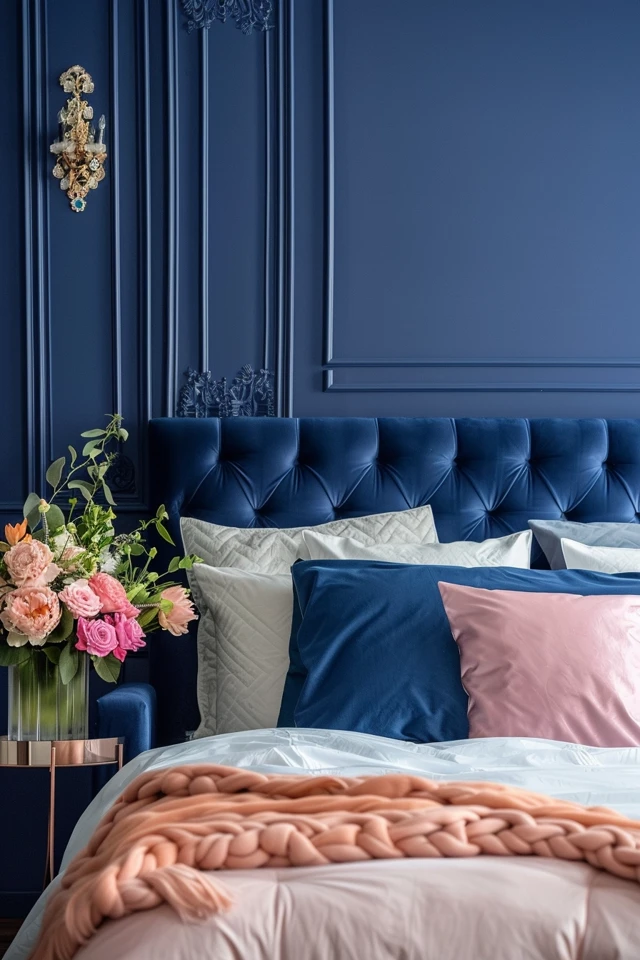
Navy Blue Headboard Bedroom Ideas: Chic Transformations
I remember one of my very first residential projects involved a client who was terrified of color. She lived in a sea of beige and cream, convinced that anything darker would make her small master bedroom feel like a cave. After weeks of convincing, we installed a deep navy blue velvet headboard. It didn’t shrink the room; instead, it blew the walls out by creating a focal point that anchored the entire space.
Navy blue acts as a neutral in the design world. It carries the visual weight of black but offers the chromatic complexity of color. It pairs just as easily with rustic oak as it does with polished brass, making it one of the most versatile choices you can make for a bedroom renovation. Whether you are renting an apartment or building a custom home, this piece of furniture does the heavy lifting for you.
For a huge dose of inspiration before you start shopping, make sure to check out the curated Picture Gallery at the end of this blog post.
1. Establishing the Mood: Color Palettes That Work
The success of a navy headboard depends entirely on the supporting cast of colors in the room. If you isolate the blue without connecting it to other elements, it can feel like an afterthought. I always start my mood boards by defining the emotional goal of the space.
The Coastal Crisp (Navy + White + Jute)
This is the most timeless application. To achieve this without it looking kitschy or nautical, focus on stark contrasts. Pair the headboard with bright white walls (look for paints with a high Light Reflectance Value). Use warm wood tones for flooring or nightstands to prevent the room from feeling cold.
The Moody Monochrome (Navy + Charcoal + Black)
For a cocoon-like effect, I love “color drenching.” This involves painting the walls a shade of blue similar to or slightly lighter than the headboard. It blurs the lines of the room, which actually makes small spaces feel infinite rather than cramped. Layer in dark charcoal rugs and black metal light fixtures for a sophisticated, masculine edge.
The Glamour Contrast (Navy + Blush + Gold)
Navy and pink are complementary colors, but you have to get the saturation right. Avoid hot pinks; stick to dusty rose or terracotta. The warmth of a blush throw blanket or area rug cuts through the coolness of the navy, creating a balanced, high-end look. Accents should be unlacquered brass or gold to catch the light.
2. Fabric Selection and Durability
Choosing the material for your headboard is just as important as the color. The way light hits the fabric changes how the navy blue reads in the room. As a designer, I also have to consider the lifestyle of the homeowner.
Velvet: The depth creator
Velvet is the gold standard for navy headboards because the pile of the fabric catches the light, making the blue look dynamic. It can look midnight blue in the shadows and royal blue in the light.
Pros: Luxurious look, soft to lean against.
Cons: It attracts dust and pet hair like a magnet. If you have a white cat, skip navy velvet.
Linen or Cotton Blend: The casual approach
If you want a relaxed, lived-in vibe, go for a linen weave. Navy linen tends to look more matte and dry. It works beautifully in farmhouse or Scandinavian-style bedrooms.
Pros: Breathable, natural aesthetic, less formal.
Cons: Can wrinkle, and pure linen can be difficult to spot clean without creating water rings.
Leather or Faux Leather: The sleek option
Navy leather is rarer but incredibly chic. It creates a smooth, architectural line.
Pros: wipeable (great for allergy sufferers), durable, ages well.
Cons: Cold to the touch in winter, can scratch if you have pets with claws.
Designer’s Note: Durability Check
If you are buying a custom or semi-custom headboard, check the “double rub” count of the fabric. This measures abrasion resistance. For a headboard that you lean against nightly to read, I look for a minimum of 15,000 double rubs to ensure the fabric doesn’t bald or pill over time.
3. Sizing and Scale: Getting the Proportions Right
A common mistake I see when walking into a DIY bedroom makeover is a headboard that is drowning in pillows. Scale is everything. If your headboard is too low, your euro shams will cover it completely, defeating the purpose of buying a statement piece.
Height Rules of Thumb
Standard Ceilings (8 feet): Look for a headboard that is roughly 50 to 54 inches tall. This allows about 20 to 24 inches of headboard to be visible above the mattress and standard pillows.
Tall Ceilings (9+ feet): You can go grand here. A headboard that is 60 to 70 inches tall draws the eye up and fills the vertical volume.
Low Profiles: If you are placing the bed in front of a window, measure the sill height. You generally want the headboard to sit just below the trim so you don’t block natural light.
Width Considerations
Most people buy a headboard that matches the mattress width exactly (e.g., 60 inches for a Queen). However, for a more custom, high-end look, I often specify an “extended” headboard. This is a design where the headboard runs wider than the bed, encompassing the nightstands as well. It unifies the sleeping zone into one cohesive block.
Common Mistakes + Fixes
Mistake: Buying a headboard based on the mattress height without accounting for the box spring.Fix: Measure your total bed height (frame + box spring + mattress). The bottom of the headboard upholstery should start roughly 2-3 inches below the top of your mattress so you don’t see a gap or the bed frame legs.
4. Bedding Coordination: The Art of Layering
When working with a dark headboard, your bedding choices will determine if the room feels heavy or airy. The biggest amateur error is trying to match the blue of the bedding to the blue of the headboard. It is nearly impossible to match navy dyes perfectly, and the result usually looks like a “near miss.”
The White Hotel Strategy
My go-to formula for clients who want a clean look is crisp white sheets and a white duvet cover. The high contrast against the navy headboard makes the bed look crisp and inviting. It’s a classic Ralph Lauren-inspired aesthetic that never fails.
Pattern Play
If you love patterns, keep the base sheets solid. Use a duvet cover that incorporates the navy tone in a small-scale print—like a block print or a pinstripe. This ties the bed to the headboard without overwhelming the eye.
Texture over Color
If you prefer dark bedding, vary the textures. If the headboard is velvet, use linen bedding. If the headboard is smooth leather, use a chunky knit wool throw.
Layer 2: Coverlet or Quilt (Tucked in tight).
Layer 3: Duvet (Folded at the foot of the bed for volume).
Layer 4: Throw blanket (Draped casually for movement).
What I’d Do in a Real Project
For a King bed with a navy headboard, I would style it with:
- Two white Euro shams (26×26) against the headboard.
- Two King sleeping pillows in front.
- One long lumbar pillow (14×36) in a cognac leather or mustard velvet to add a pop of contrasting color.
5. Nightstands and Lighting Combinations
Because navy absorbs light, you have to be intentional about your lighting plan and the furniture flanking the bed. Dark furniture next to a dark headboard can create a “black hole” effect unless you have excellent natural light.
Wood Tones
Walnut is the perfect partner for navy blue. The warm, dark brown tones harmonize with the cool blue, creating a mid-century modern feel. If you want a coastal or Scandinavian look, opt for white oak or bleached wood. The light wood pops against the dark fabric, highlighting the silhouette of the headboard.
The Metallic Touch
Hardware is the jewelry of the room.
Matte Black: Use this for a modern, industrial, or minimalist look. It is subtle and blends in.
Polished Nickel: This cools the room down. It works well in traditional or glam spaces but can feel a bit sterile if you aren’t careful.
Lighting Brightness
Since the navy headboard won’t reflect light the way a beige one would, you may need to up your bulb brightness. I recommend using 3000K (warm white) LED bulbs. 2700K can sometimes look too yellow against navy, making the fabric look muddy.
Sizing the Nightstand
Rules of thumb for spacing:
Height: The top of the nightstand should be level with the top of your mattress, or up to 2 inches higher. Never lower—it’s visually jarring and hard to reach.
Width: For a King bed, try to use nightstands that are at least 24-30 inches wide. For a Queen, 18-24 inches is standard.
* Spacing: Leave about 3 inches of breathing room between the edge of the headboard and the nightstand.
Final Checklist
Before you commit to a navy headboard makeover, run through this quick designer checklist to ensure you have covered your bases.
- Check the Undertones: Bring a fabric swatch home. Does the navy lean purple, green, or true blue in your specific lighting?
- Measure the Path: Ensure the headboard fits up your stairwell or through the bedroom door. Wingback headboards are notorious for getting stuck in hallways.
- Outlet Placement: Look behind your current bed. Will a solid headboard block your only electrical outlets? You may need to plan for extension cords or move the electrical boxes.
- Rug Sizing: Does your rug extend at least 18-24 inches on the sides of the bed? A dark headboard demands a substantial rug to balance the visual weight.
- Paint Test: Paint a large swatch of your wall color behind where the bed will go. See how it interacts with the blue swatch at night with the lamps on.
FAQs
Will a navy headboard make my room look smaller?
Not necessarily. While dark colors advance visually, a headboard is just one element. If you keep your walls light and your bedding bright, a navy headboard simply adds depth. If you have a small room, choose a headboard with legs (open bottom) rather than a solid floor-to-ceiling style to keep the sightlines open.
What color rug goes best with a navy headboard?
You have three strong options:
1. Neutral: A cream, off-white, or jute rug allows the bed to be the star.
2. Traditional: A vintage-style red and blue Persian rug creates a classic, library-like aesthetic.
3. Grey: A light grey wool rug offers a cool, contemporary base.
Is navy blue just a trend?
Navy is considered a “heritage color.” Unlike teal or sage green, which trend in cycles, navy has been a staple in design for over a century. It is as timeless as charcoal grey or beige. It is a safe investment piece.
How do I clean a velvet navy headboard?
Dust is the enemy here. Vacuum the headboard weekly using the upholstery attachment on your vacuum cleaner. For spills, blot (do not rub) immediately with a clean, dry white cloth. If you need a solvent, check the cleaning code on the manufacturer’s tag (usually S, W, or WS).
Conclusion
Transforming your bedroom with a navy blue headboard is a low-risk, high-reward design move. It provides an immediate sense of sophistication and grounding that is hard to achieve with lighter furniture. Whether you pair it with crisp white linens for a hotel feel or moody dark walls for a cozy retreat, the key lies in the layers—getting the textures, lighting, and scale right.
Don’t be afraid of the dark. Embrace the depth and drama that navy brings. It might just give you the best night’s sleep you’ve had in years.
Picture Gallery


