
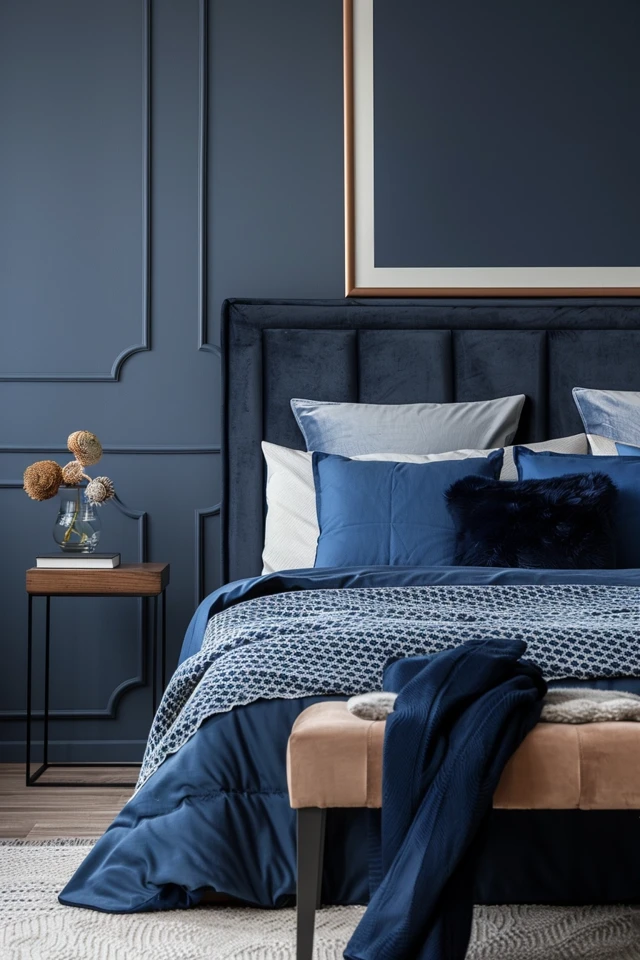
Navy Blue Headboard Bedroom Ideas for Chic Decor
Navy blue functions as a fantastic anchor in bedroom design. It possesses the grounding capability of black but offers a rich, chromatic depth that makes a space feel more sophisticated and customized. Whether you are working with a plush velvet upholstered piece or a painted wood frame, this color demands specific design choices to truly shine.
Many clients come to me afraid that a dark headboard will make their room feel small or overly masculine. The reality is quite the opposite; when paired with the right textures and lighting, navy creates a cozy, boutique-hotel atmosphere that induces deep rest.
In this guide, I will walk you through exactly how to style this centerpiece, from selecting the right wall treatments to choosing the perfect nightstands. For a huge dose of visual inspiration, make sure to check out our curated Picture Gallery at the end of the blog post.
1. Establishing Your Color Palette
The biggest mistake DIYers make with navy headboards is assuming they can only pair it with white. While navy and white is a classic “crisp” look, sticking strictly to this duo can sometimes veer into unintentional nautical territory. To achieve a chic, high-end aesthetic, you need to introduce a third and fourth tone to bridge the gap.
The “New Neutral” Approach
Navy acts as a neutral in modern design. This means it pairs surprisingly well with other deep, moody tones. I often pair navy headboards with charcoal gray, forest green, or even black accents. This low-contrast approach creates a sanctuary feel that is very popular in urban apartments.
If you prefer a lighter room, look toward “greige” (gray-beige) or warm taupe rather than stark bright white. The warmth in a taupe wall prevents the navy from feeling too cold or clinical.
Accent Colors that Work
- Burnt Orange or Rust: This is the direct complementary color to blue on the color wheel. A rust-colored throw blanket at the foot of a navy bed creates an electric, sophisticated vibration.
- Mustard Yellow / Ochre: Use this sparingly, perhaps in a velvet lumbar pillow. It adds a mid-century modern flair.
- Dusty Pink / Blush: This softens the masculinity of navy blue. It works exceptionally well in guest rooms or softer primary suites.
Designer’s Note: Be careful with red. Navy blue and bright red almost always reads as “Americana” or a flag motif. Unless that is your specific goal, swap red for burgundy, terracotta, or cognac leather to keep the look chic.
2. Selecting the Right Headboard Material and Shape
If you haven’t purchased the headboard yet, the material you choose dictates the entire vibe of the room. Navy blue absorbs light, so the texture of the material will determine how “flat” or “dimensional” the color looks.
Velvet: The Luxe Choice
Velvet is the gold standard for navy headboards. The pile of the fabric catches the light, creating highlights and lowlights that make the blue look like a gemstone (sapphire).
However, velvet requires maintenance. If you have cats or dogs that shed light-colored fur, a navy velvet headboard will act as a magnet. I recommend having a lint roller in the nightstand drawer if you go this route.
Linen and Cotton Blends
For a more casual, “Coastal Grandma” or organic modern look, navy linen is beautiful. It has a matte finish that feels dry and tactile. This works best in rooms with a lot of natural wood and woven rugs.
Common Mistakes + Fixes:
- Mistake: Buying a headboard that is too low. once you pile on your mattress (12-14 inches) and Euro shams, a short headboard disappears.
- The Fix: Always check the height. I prefer headboards that are at least 50 to 54 inches tall for a standard ceiling height (8 feet). This ensures the blue creates a focal point even when the bed is fully made.
Leather and Faux Leather
Navy leather is rare but incredibly striking. It is easier to wipe down, making it a great choice for allergy sufferers who want to avoid dust-trapping fabrics. It creates a sleek, bachelor-pad aesthetic that pairs well with walnut furniture.
3. Wall Treatments: What Goes Behind the Bed?
The wall behind your headboard is the canvas. You have three primary strategies here: High Contrast, Color Drenching, or Texture.
Strategy A: High Contrast (Crisp & Clean)
Painting the wall a warm white (like Benjamin Moore Swiss Coffee) creates a silhouette effect. The navy headboard pops sharply against the light background. This is the safest bet for small rooms as it keeps the overall volume feeling airy.
Strategy B: Color Drenching (Moody & Immersive)
This is my favorite technique for 2024 and beyond. Paint the wall behind the bed the exact same shade of navy as the headboard.
This sounds counterintuitive—won’t the bed disappear? No. It creates a seamless, built-in look that makes the room feel larger because the boundaries of the furniture blur into the architecture. You rely on the texture difference (velvet bed vs. matte wall) to define the edge.
Strategy C: Wallpaper and Pattern
A navy headboard anchors busy wallpaper beautifully. If you love Chinoiserie patterns, florals, or geometric grasscloths, the solid blue headboard gives the eye a place to rest.
What I’d do in a real project:
- If the room is small (under 12×12), I would use a grasscloth wallpaper in a natural tan color behind the navy bed. This adds warmth and texture without closing the walls in.
- If the ceilings are low, I would avoid a chair rail or wainscoting that cuts the room in half. Run the color or paper floor-to-ceiling.
4. Bedding Coordination: The Layering Game
You cannot just throw a navy comforter on a navy bed and call it a day. That creates a “blue blob” effect where all definition is lost. You need contrast and layers to break up the visual weight.
The White Hotel Look
The most timeless option is crisp white percale sheets and a fluffy white duvet. Fold the duvet halfway down the bed to expose the sheets. This creates a clean band of white that separates the headboard from the rest of the room.
The Patterned Approach
If you have kids or pets and white bedding scares you, opt for a patterned duvet that contains navy but isn’t solid navy. Think of a toile print, a wide stripe, or a block print that mixes blue with cream or gray.
Pillow Arrangements
Scale is critical here. For a King bed, you need three Euro shams (26×26 inches) against the headboard. For a Queen, use two.
Choose a fabric for these rear pillows that contrasts with the headboard. If the headboard is solid navy velvet, make the Euro shams a patterned linen or a lighter shade of blue. This layering prevents the headboard from looking like a flat wall.
5. Nightstands and Lighting
Because navy is a visual “heavyweight,” your supporting furniture needs to hold its own. Avoid spindly, delicate furniture that looks like it might snap next to a substantial upholstered bed.
Wood Tones
- Walnut: The rich, dark browns of walnut wood look expensive and masculine next to navy. This is a mid-century modern staple.
- White Oak: Lighter oak creates a fresh, Scandinavian or California Casual vibe. The contrast is lower, making the room feel softer.
- Burl Wood: Highly textured burl wood nightstands are trending. The swirling grain patterns play beautifully against solid blue fabric.
Lighting Finishes
Lighting is the “jewelry” of the room. The metal finish you choose changes the temperature of the blue.
Brass and Gold: This is the winning combination. The warmth of gold creates a striking contrast against the cool blue. It feels regal and traditional.
Matte Black: This creates a modern, industrial, or minimalist look. It is subtle and lets the blue take center stage.
Chrome/Silver: This cools the room down significantly. Use this only if you want a very glam, icy, or ultra-modern aesthetic.
Designer Rule of Thumb for Lamps:
The bottom of your lamp shade should be roughly at eye level when you are sitting up in bed reading. If you have a tall navy headboard, ensure your lamps are substantial (28-30 inches tall). Tiny lamps will look dwarfed by a grand headboard.
6. Rug Sizing and Selection
The rug anchors the bed and prevents it from “floating” in the room. With a navy bed, the rug is your opportunity to lighten the floor plane.
Color and Pattern
Avoid a solid navy rug. It is too much blue. Instead, look for:
- Vintage/Oushak style: These rugs often feature faded reds, blues, and creams. They hide dirt well and add character.
- Jute or Sisal: A natural fiber rug brings an earthy element that grounds the sophistication of the blue. It is durable and affordable.
- Cream Wool/Moroccan: High pile designs add coziness, but be wary of foot traffic staining.
Sizing Guide
A common error is buying a rug that is too small.
- King Bed: You need a 9×12 rug. The rug should start about 6-12 inches in front of the nightstands and extend past the foot of the bed.
- Queen Bed: An 8×10 rug is usually perfect.
- Twin Beds: Place a 3×5 or runner between them, or put both on a single 8×10.
Final Checklist: Styling Your Navy Bedroom
Before you finalize your purchases, run through this quick checklist to ensure cohesion.
1. Contrast Check: Do I have enough light elements (bedding, walls, or rug) to balance the dark headboard?
2. Texture Audit: Do I have at least three different textures? (e.g., Velvet headboard + Metal lamp + Wood nightstand).
3. Height Verification: Is the headboard tall enough (50″+) to be seen behind my pillows?
4. Lighting Temperature: Are my bulbs warm white (2700K-3000K)? Cool white (4000K+) can make navy blue look harsh and office-like.
5. Scale: Are my nightstands wide enough? A King bed generally needs nightstands at least 24-30 inches wide.
FAQs
Does a navy blue headboard make a room look smaller?
No, the headboard itself won’t make the room look smaller. In fact, a dark focal point draws the eye to the end of the room, creating depth. However, if you paint all four walls navy in a room with poor natural light, that will shrink the space.
Can I mix black furniture with a navy headboard?
Absolutely. The old rule that “black and blue don’t mix” is dead. The trick is to make it intentional. Ensure the navy is distinct enough from the black so it doesn’t look like a matching mistake. A navy velvet bed with a matte black metal light fixture is a very chic combination.
What color curtains go with a navy headboard?
If your walls are white, match the curtains to the walls (white/off-white) to keep the room feeling tall. If you want drama, match the curtains to the headboard (navy velvet drapes). Avoid trying to match a random accent color like red or yellow for curtains, as this can look chaotic.
Conclusion
Choosing a navy blue headboard is a design decision that pays off for years. It is versatile enough to adapt as trends change—moving from a nautical vibe to a moody modern aesthetic simply by swapping out throw pillows and lamps.
By focusing on scale, layering textures, and choosing the right supporting colors, you can create a bedroom that feels both professionally designed and deeply personal. Trust the darkness of the blue; it brings a calm, quiet confidence to your space that lighter colors just can’t match.
Picture Gallery


