
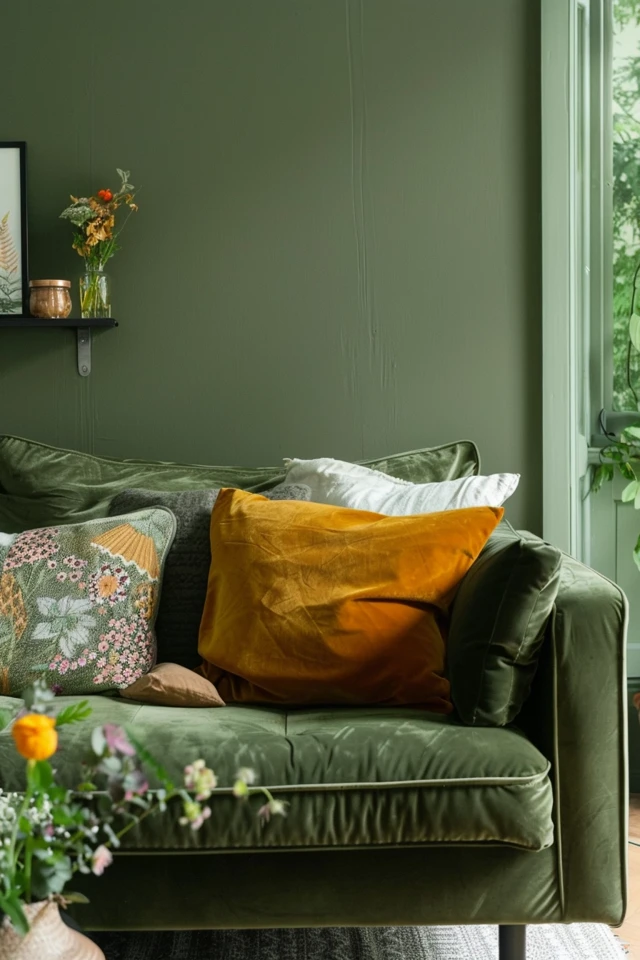
Olive Green Room Ideas for a Refreshing Space
Olive green has steadily shifted from a trend color to a modern neutral in the interior design world. It offers the grounding quality of a neutral gray or beige but introduces a sense of life and biophilia that those standard shades often lack. When I walk into a home that uses olive correctly, it feels established and calm, like the space has existed for decades rather than just being freshly painted.
I have used olive green in everything from moody, windowless powder rooms to expansive, sun-drenched kitchens. It is incredibly versatile, but it does require a specific approach to lighting and undertones to prevent the room from feeling “muddy” or drab. The key lies in balancing the green with the right wood tones and metals to keep the aesthetic crisp.
For plenty of visual inspiration to guide your renovation, be sure to look at the curated Picture Gallery at the end of the blog post. Before you pick up a paintbrush, let’s dive into the mechanics of making this color work in a real home.
1. Choosing the Right Shade and Undertone
Not all olive greens are created equal. In the paint deck, you will find olives that lean heavily toward brown (warm) and others that lean toward gray (cool). Selecting the wrong one is usually where homeowners get stuck.
If you are painting a room that faces north, the natural light will be cool and blue. A gray-leaning olive in a north-facing room will look flat and lifeless. In these spaces, you need an olive with strong yellow or brown undertones to counteract the blue light. Conversely, in a south-facing room flooded with warm sunlight, a yellow-based olive might look too much like army camouflage. Here, a cooler, grayer olive reads as sophisticated and refreshing.
We also look at Light Reflectance Value (LRV). This is a number on the back of the paint chip that tells you how much light the color reflects. For a moody, cozy library or den, look for an LRV between 10 and 20. If you want a light, airy sage-olive hybrid for a nursery or living room, aim for an LRV of 40 or higher.
Designer’s Note: The “Muddy” Trap
A common issue I see is clients choosing a color that looks great on a small chip but turns into “swamp water” on the wall. This usually happens when the paint lacks enough pigment complexity. To prevent this, never rely on the swatch alone. Buy a sample pot and paint a large 24×24 inch square on two different walls. Watch how it changes from morning to night.
Common Mistakes + Fixes
- Mistake: Matching olive walls with olive furniture.
- Fix: Create contrast. If your walls are dark olive, choose a sofa in oatmeal, cognac leather, or charcoal. If you have an olive velvet sofa, keep the walls neutral or a very pale, dusty green.
- Mistake: Ignoring the ceiling.
- Fix: In small rooms, paint the ceiling the same olive as the walls. This blurs the boundaries of the room and actually makes it feel larger and more enveloping.
2. Pairing Olive with Wood and Metals
Olive green is inherently earthy, which means it sings when paired with natural materials. My absolute favorite pairing is olive green cabinetry or wainscoting with unlacquered brass hardware. The warmth of the gold tones pops against the green, and as the brass patinas and gets darker over time, it looks even better.
For wood tones, you generally have two successful routes. The first is high contrast using Walnut or Mahogany. The dark, rich grain of walnut against a medium-olive backdrop feels mid-century modern and masculine. It is a very “executive” look that works well in offices and dining rooms.
The second route is low contrast using White Oak or Birch. This creates a “Japandi” or organic modern aesthetic. It feels lighter, fresher, and more casual. I often use this combination in kitchens and laundry rooms to keep the space feeling clean. Avoid cherry wood or honey-oak with distinct red/orange undertones, as they can clash comfortably with certain greens unless you are extremely careful with the specific shade.
What I’d do in a real project:
- Flooring: Wide-plank white oak floors with a matte seal.
- Hardware: Knurled brass knobs for texture.
- Countertops: If using olive cabinets, I prefer a marble with warm veining (like Calacatta Gold) rather than a stark white quartz. The warm veining ties the brass and the green together.
3. Olive in the Kitchen: Cabinetry and Layouts
Olive green kitchens are having a major moment, and for good reason. They hide scuffs and splashes much better than white kitchens, making them practical for families. When designing a kitchen with olive cabinetry, the finish is crucial.
I almost always recommend a satin finish for cabinetry. It has enough sheen to be wipeable and durable but isn’t so glossy that it looks plastic. If you are doing a DIY refresh, proper prep is non-negotiable. You must degloss and sand existing surfaces, or the green paint will chip around the handles within months.
For layouts, consider a two-tone approach if you are nervous about committing to full green. A popular method is to paint the lower cabinets and the island in olive green, while keeping the upper cabinets a warm white (like creamy off-white, not stark hospital white). This grounds the kitchen without darkening the room at eye level.
Pro-Level Measurements & Spacing
- Walkways: Ensure you have 42 to 48 inches of clearance between your island and your perimeter counters. Dark colors can make spaces feel tighter visually, so maintaining physical space is key.
- Hardware Placement: For shaker cabinets, place the bottom of the knob or pull centered on the stile, aligned with the top of the bottom rail.
- Lighting Temperature: This is critical in a green kitchen. Use 3000K LED bulbs. 2700K is too yellow and will alter the paint color; 4000K is too blue and will make the olive look harsh.
Designer’s Note: The Toe Kick
Don’t forget the toe kick (the recessed space under the cabinets). Paint this black or the same color as the cabinets. Do not paint it white. A white toe kick gets dirty instantly and creates a weird visual “floating” effect that ruins the grounding nature of the olive.
4. Textiles and Furniture Selection
Bringing olive green in through furniture is a lower-risk investment than cabinetry, but it requires attention to fabric durability. An olive green velvet sofa is a timeless piece. It bridges the gap between vintage and modern.
If you have pets or kids, be realistic about materials. Velvet is surprisingly durable if it is a performance polyester velvet. It cleans easily with water and releases pet hair better than a woven linen. Avoid olive linen blends in high-traffic areas, as the color can fade unevenly if the sofa sits in direct sunlight.
When styling an olive room, rugs play a huge supporting role. If the walls are green, I look for rugs with terracotta, rust, or deep navy accents. These colors sit opposite or adjacent to green on the color wheel in a way that feels harmonious. A vintage Turkish rug or a Persian-style runner is usually a foolproof choice.
Rug Sizing Rules of Thumb
- Living Room: The front legs of all furniture (sofa and chairs) should sit on the rug. The rug should extend at least 6 to 8 inches past the sides of the sofa.
- Dining Room: You need 24 inches of rug extending from the table edge on all sides. This ensures that when a guest pulls out a chair, the back legs don’t fall off the rug and get caught when sliding back in.
- Clearance: Leave 12 to 18 inches of bare floor between the edge of the rug and the wall. This “breathing room” is essential to keep the room from looking like it has wall-to-wall carpeting.
Common Mistakes + Fixes
- Mistake: Using curtains that are the exact same shade as the walls.
- Fix: While monochrome can work, it is hard to pull off. Instead, go for oatmeal linen curtains or a subtle pattern that incorporates the green.
- Curtain Height: Hang the curtain rod 4 to 6 inches above the window frame (or all the way to the ceiling molding) to draw the eye up.
5. Lighting and Accessories for Atmosphere
Lighting can make or break an olive room. Because olive is a light-absorbing color, you often need to increase the lumen output of your fixtures compared to a white room.
Layer your lighting. You need ambient light (overhead), task light (reading lamps), and accent light (sconces or picture lights). In an olive room, I love using lamp shades made of natural materials like wicker, rattan, or pleated linen. These add texture. A pure white glass shade can sometimes look too stark against a dark green wall.
For accessories, think about “bringing the outside in.” Large scale terracotta pots with actual olive trees or fiddle leaf figs are meta but effective. The greenery of a live plant will always be brighter and fresher than the paint, adding dimension.
What I’d do in a real project:
- Mirrors: Place a large mirror opposite a window. This bounces light around the room and breaks up the solid block of green color.
- Art: Frame art with wide white mats. The white matting provides a crisp visual break between the artwork and the olive wall, making the art pop.
- Throw Pillows: Use the rule of three. One solid texture (leather), one large pattern (floral or geometric), and one small scale pattern (stripe or check).
Final Checklist for Your Olive Room
Before you commit to your refreshing olive space, run through this quick checklist to ensure you have covered the professional bases.
- Sample Test: Have you painted a 24×24 inch swatch on two different walls and viewed it at three different times of day?
- Undertone Check: Does the green clash with your existing flooring? (Red-toned floors need a greener olive; yellow-toned floors need a browner olive).
- Lighting Audit: Do you have 3000K bulbs ready to ensure the color renders correctly?
- Texture Balance: Do you have at least three different textures in the room plan? (e.g., Velvet, Wood, Brass).
- Contrast Plan: Have you identified where your “white space” or contrasting elements will be to prevent the room from feeling like a cave?
FAQs
Is olive green a good color for small rooms?
Yes, absolutely. Many people fear dark colors in small rooms, but olive green can actually blur the corners and shadows, making the room feel infinite rather than small. It creates a “jewel box” effect. This works exceptionally well in powder rooms, small offices, or guest bedrooms.
Does olive green go with grey?
It depends on the grey. It pairs beautifully with charcoal or slate grey. It can be tricky with cool, blue-based light greys. If you want to pair it with light grey, look for a “greige” (grey-beige) which has enough warmth to bridge the gap with the organic nature of olive.
Is olive green timeless or trendy?
Olive green is timeless. While it is currently trending, it has been a staple in design for centuries (think Victorian studies or mid-century modern homes). It is considered a “neutral” in the design industry because it mimics nature. Unlike bright emerald or lime, olive rarely looks dated if styled correctly.
What color trim works best with olive walls?
You have two main options. For a traditional look, use a warm white like Benjamin Moore White Dove. For a modern, immersive look, paint the trim, baseboards, and crown molding the exact same olive color as the walls, but use a Satin or Semi-Gloss finish for the trim and Eggshell for the walls. This is called “color drenching.”
Conclusion
Designing a room with olive green is one of the most rewarding choices you can make for your home. It creates a space that feels grounded, sophisticated, and deeply relaxing. By paying attention to undertones, investing in the right lighting, and layering natural textures like wood and brass, you can avoid the common pitfalls and create a room that feels professionally curated.
Remember that paint is the least expensive way to transform a room, but it has the highest impact. Don’t be afraid to go a little darker or a little warmer than you initially think—olive shines best when it has some depth to it.
Picture Gallery


