
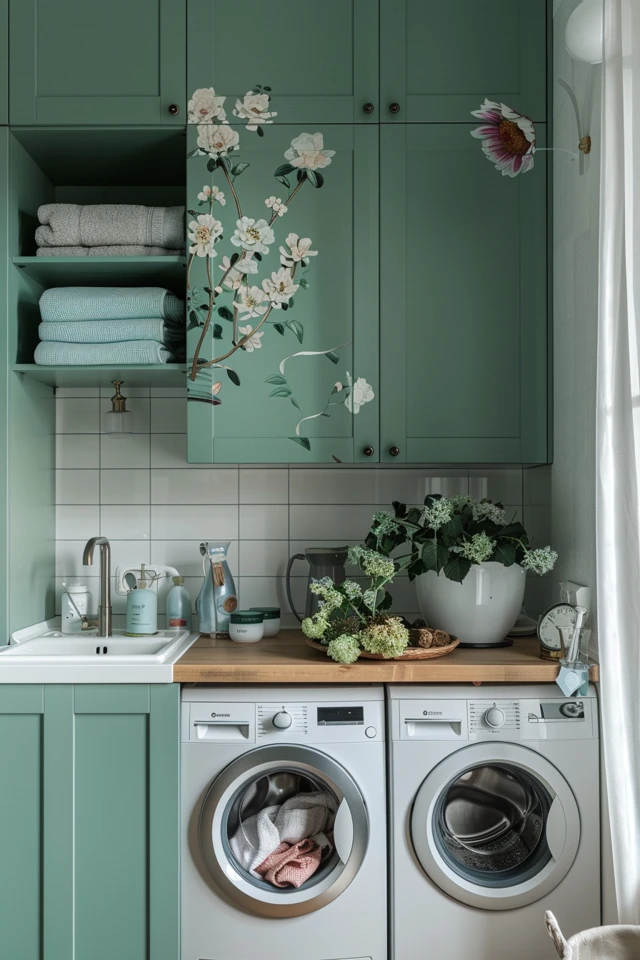
Optimize Space: Cabinets Small Laundry Room Ideas
Introduction
I recall walking into a client’s home in the city where the laundry area was essentially a closet tucked into a hallway. The washer door hit the opposite wall, and the detergent lived on the floor because there wasn’t a single shelf in sight. It is a common frustration, but small laundry rooms often hold the most potential for clever design solutions.
When square footage is limited, the functionality of your cabinetry becomes the most critical element of the room. You cannot afford dead space or inefficient layouts when you only have five feet of width to work with. We have to treat these spaces like a ship’s cabin, where every hinge, shelf, and drawer serves a distinct purpose.
For plenty of visual inspiration regarding layouts and finishes, make sure you scroll down to the Picture Gallery at the end of this blog post.
1. Maximizing Vertical Real Estate
In small laundry rooms, the floor area is usually dominated by the appliances themselves. This means your only option for significant storage is to go up. Utilizing the full height of your walls is the first step in maximizing utility.
Standard stock cabinets often stop a foot short of the ceiling, creating a “dust bunny” ledge that serves no purpose. I always recommend taking cabinetry all the way to the ceiling molding. Even if you need a step stool to reach the top shelf, that space is invaluable for storing seasonal items or bulk paper goods.
Standard Dimensions for Uppers
When installing upper cabinets above a washer and dryer, you need to be mindful of reach and clearance.
- Depth: Standard upper cabinets are 12 inches deep. However, in a laundry room, I prefer bumping this to 14 or 15 inches if custom is an option, as it accommodates large detergent jugs better.
- Clearance: You generally want 18 to 24 inches of clearance between the countertop (or top of the machines) and the bottom of the upper cabinets.
- Setback: If you are placing cabinets directly above a top-loading washer, you must ensure the cabinet does not block the lid from opening fully.
Designer’s Note: The “Head Banger” Rule
A common issue in DIY renovations is installing deep cabinets too low over the work area. If you are installing a countertop over front-loading machines for folding, make sure your upper cabinets are shallow enough (12 inches maximum) so you do not hit your head while folding clothes.
2. The “Washer Gap” and Narrow Pull-Outs
One of the most underutilized spaces in a laundry room is the gap between the appliances or between an appliance and the wall. These gaps, often just 6 to 10 inches wide, are usually covered with a cosmetic filler strip. This is a waste of prime storage real estate.
Instead of a static filler strip, I recommend installing a narrow pull-out cabinet. These are essentially tall drawers that slide out on heavy-duty glides. They are perfect for storing brooms, mops, or tall, narrow bottles of stain remover and bleach.
Planning for Filler Cabinets
If you have at least 6 inches of width, you can install a functional pull-out.
- Hardware matters: Use soft-close glides rated for at least 100 lbs. Laundry supplies are heavy, and cheap hardware will fail quickly.
- Height alignment: Ensure the top of the pull-out aligns perfectly with your machine height or countertop for a seamless look.
- Baseboards: Remember to account for baseboards. You may need a spacer on the wall side to ensure the pull-out drawer front doesn’t scrape against your trim.
Common Mistakes + Fixes
Mistake: Ignoring the water shut-off valves.
Fix: Homeowners often box in their machines so tightly with cabinetry that they cannot reach the emergency shut-off valves. If you install cabinets around the machines, cut a neat access panel in the back of the cabinet or ensure the machines can be rolled out easily.
3. Material Selection and Moisture Resistance
Laundry rooms are wet zones. They experience high humidity, temperature fluctuations from the dryer, and the occasional water splash or leak. The material you choose for your cabinets is just as important as the layout.
I generally steer clients away from cheap particle board cabinetry in laundry rooms. If a hose leaks or a bottle spills, particle board will swell and crumble like a wet cracker. Plywood boxes are significantly more durable and resistant to water damage.
Finish Durability
The finish on the cabinet doors needs to withstand chemical exposure. Laundry detergents and bleach can damage standard wood stains or low-quality paints.
- Thermofoil: This is a vinyl coating heat-sealed over the door. It is very easy to wipe clean and is moisture resistant, making it a budget-friendly option for laundry rooms.
- Factory Paint: If choosing painted wood, ensure it is a catalyzed conversion varnish (common in professional cabinetry). This is much harder and more chemical-resistant than standard latex paint.
- Melamine: High-quality textured melamine is incredibly durable. It resists scratches and moisture better than almost any painted surface.
Countertop Choices
If your design includes a counter over the washer and dryer, avoid porous stones like marble. They will stain instantly if detergent drips on them. Quartz is my go-to recommendation because it is non-porous and chemical resistant. If you are on a budget, a high-pressure laminate with a square edge can look modern and clean.
4. Interior Organization and Specialized Hardware
A cabinet is only as good as its internal organization. In a small room, you cannot afford to have a deep “black hole” cabinet where things get lost in the back. Utilizing internal hardware increases the usable surface area of your storage.
One of my favorite additions is a pull-out ironing board drawer. It replaces a standard drawer stack and unfolds instantly. This eliminates the need to store a clunky full-size ironing board behind a door or in a closet elsewhere in the house.
Hamper Integration
Dirty laundry on the floor makes a small room look tinier. Built-in hamper cabinets are essential.
- Tilt-out bins: These look like regular cabinet doors but tilt downward. They are excellent for narrow spaces because they don’t require the swing clearance of a door.
- Slide-out baskets: These function like a trash pull-out in a kitchen. They usually hold two canvas bags, allowing you to pre-sort lights and darks.
- Ventilation: If you build a custom hamper cabinet, drill holes in the back or use a mesh front panel. Damp towels in a sealed cabinet will create mildew.
What I’d Do in a Real Project
If I were designing a 5×7 laundry room today, here is my hardware checklist:
1. Two tilt-out hampers (one for whites, one for colors).
2. A valet rod mounted to the side of an upper cabinet for hanging delicates to dry.
3. A floating shelf directly above the machines for immediate-access items like pods or dryer sheets.
5. Optimizing Corners and Awkward Angles
Small laundry rooms are rarely perfect rectangles. They often have bulkheads for HVAC ducting, odd corners, or water heaters tucked away. Standard cabinetry does not handle these quirks well.
If you have an L-shaped layout, the corner cabinet is usually the biggest pain point. A standard “blind corner” cabinet is difficult to access. To fix this, I use a “Super Susan” or a kidney-shaped pull-out. These rotate out of the cabinet, bringing the contents to you.
Floating Shelves vs. Cabinets
Sometimes, a cabinet just won’t fit. If you have an odd nook that is only 10 inches deep, a standard cabinet will protrude too much.
- Visual weight: In very tight spaces, cabinets can feel claustrophobic. Swapping an upper cabinet for two robust wood floating shelves can make the room feel wider.
- Basket systems: Use uniform baskets on the shelves to hide the clutter. This gives you the aesthetic of open shelving with the concealment of a cabinet.
- Pipe concealment: If you have exposed pipes in a corner, build a shallow “chase” or false column using cabinet material. Add a hinge to it so it can act as a long, shallow cabinet for brooms.
Designer’s Note: Lighting the Corners
Dark corners shrink a room. Under-cabinet lighting is mandatory in my designs. It is not just about aesthetics; it is about seeing stains on clothes. Use LED tape lights with a color temperature of 3000K to 4000K (clean white) to mimic daylight.
Final Checklist: Before You Order Cabinets
Before you commit to a purchase, run through this checklist to ensure your space will actually function.
- Measure the machines: Do not just measure the metal box. Measure the depth including the hoses at the back and the bubble of the glass door at the front.
- Check door swings: Will the cabinet door hit the entry door? Will the washer door hit the dryer door?
- Locate studs: Upper cabinets in laundry rooms carry heavy loads (liquid detergent is dense). You must anchor them into studs, not just drywall.
- Identify power sources: Do not cover your electrical outlets with a cabinet back unless you cut an access hole.
- Plan for maintenance: Ensure you can slide the washer out to clean the dryer vent hose annually.
FAQs
How much space do I need behind the washer and dryer?
You typically need about 4 to 6 inches of space behind the machines for the dryer vent, water hoses, and drain pipe. If you try to push them flush against the wall, you risk crushing the dryer vent, which is a severe fire hazard. There are “recessed dryer vent boxes” you can install in the wall to gain back a few inches.
Can I put cabinets directly on top of the washer and dryer?
No, you should not rest cabinets directly on the machines. The vibration from the spin cycle will shake the cabinets and contents violently. You should either wall-mount the cabinets or install a countertop that spans over the machines, supported by side panels (gables) or a cleat on the back wall. Leave at least one inch of clearance between the machine and the counter/cabinet.
Is it expensive to add custom cabinets to a small laundry room?
It varies wildly, but small rooms are budget-friendly because you need fewer boxes. Using “stock” or “semi-custom” cabinets from a big box store is the most cost-effective route. You can make them look custom by adding crown molding and high-end hardware. Expect to spend between $1,500 and $4,000 for materials in a small to medium laundry room, depending on finishes.
Conclusion
Transforming a small laundry room requires a shift in perspective. You have to stop looking at the lack of floor space and start looking at the volume of the walls and the efficiency of the layout. By choosing the right cabinet heights, utilizing pull-outs for narrow gaps, and selecting durable materials, you can turn a cramped closet into a highly functional workspace.
Remember that the goal is not just storage; it is workflow. If the detergent is within reach, the hamper is accessible, and you have a surface to fold on, the chore of laundry becomes significantly less burdensome. Measure twice, prioritize durable materials, and don’t be afraid to use every inch of vertical space available to you.
Picture Gallery


