
Title: Outdoor Park Birthday Party Food Ideas Unveiled
Introduction
Designing an event in a public park is very different from hosting in a controlled backyard environment. I learned this the hard way years ago when I designed a “simple” picnic for a client, only to have the tiered cake melt and the paper tablecloths blow away in the first ten minutes. It was a lesson in physics and logistics that I have never forgotten.
When you take the party to a park, you lose the safety net of a nearby kitchen and consistent climate control. You have to think like a landscape architect and an event planner simultaneously. If you are looking for visual inspiration to tie these concepts together, you can find a curated Picture Gallery at the end of this blog post.
The key to a successful park party is selecting food that is durable, self-contained, and visually striking without requiring complex plating. This guide covers the architectural approach to park dining, ensuring your setup looks intentional and functions perfectly.
1. The Architecture of Transport: Packing with Precision
Before we talk about specific recipes, we must address the logistics of getting the food to the site. In interior design, space planning is everything; the same applies to your coolers and transport bins.
You need to view your cooler as a floor plan. Square containers are superior to round ones because they eliminate “dead space” and maximize volume. I recommend using clear, stackable acrylic bins so you can see inventory immediately without letting cold air escape.
Designer’s Note: The Cooler Zoning Rule
A common mistake is mixing drinks with food in a single large cooler. This is a design flaw because drinks are accessed frequently, raising the internal temperature every time the lid opens. Always dedicate one cooler strictly for beverages and a separate, high-performance cooler for perishables that stays shut until serving time.
Here is the hierarchy of packing for stability:
- Base Layer: Heavy beverages and ice blocks (avoid loose ice if possible to prevent waterlogging).
- Middle Layer: Sealed structural containers (pasta salads, dips, fruit).
- Top Layer: Delicate items (sandwiches, garnishes, desserts) protected by a rigid surface or tray.
2. The Menu: Structural Integrity and Ambient Temperature
When I design a kitchen, I look for materials that withstand heat and wear. When designing a park menu, I look for ingredients that withstand ambient temperatures. You want “room temperature resilient” foods.
Avoid anything that relies on a specific texture that degrades quickly, like crispy fried foods or delicate leafy greens that wilt in humidity. Instead, lean into robust textures and foods that are meant to be eaten at cool or ambient temperatures.
Verticality in Presentation: The Charcuterie Cup
Flat platters take up valuable table surface area (a precious commodity in parks). I prefer vertical food presentation. “Charcuterie cups” or “jarcuterie” are visually stunning and highly functional.
Pack individual servings of salami, hard cheeses (like Manchego or aged cheddar), grapes, and breadsticks into kraft paper cups or small bamboo boats. This allows guests to grab a complete serving with one hand and walk away, facilitating better traffic flow.
The Skewer Strategy
Cutlery adds friction to the dining experience. If a guest has to hold a plate, a fork, and a drink, they are uncomfortable. I design menus where 80% of the food is on a stick.
- Caprese Skewers: Cherry tomato, mozzarella pearl, basil leaf, drizzled with balsamic glaze (holds up better than sliced tomatoes).
- Fruit Wands: Watermelon cubes, pineapple, and grapes.
- Chicken Satay: Grilled beforehand and served cold with a peanut dipping sauce.
3. Zoning the Buffet: Traffic Flow and Table Layout
The layout of your food station dictates how guests interact with the space. In a home renovation, we look at “circulation paths.” In a park, you need to prevent the dreaded bottleneck where everyone congregates at the salsa bowl.
If you are using a standard 6-foot park picnic table, do not place the food in the center. This forces guests to reach over one another. Instead, create a linear progression.
The Linear Flow Setup:
- Start: Plates, napkins, and sanitizing wipes (always start with the vessel).
- Middle: The “Main Event” foods (sandwiches, wraps, proteins).
- End: Sides, chips, and cutlery.
- Separate Station: Drinks should be at least 6 to 8 feet away from the food table to split the crowd.
Common Mistake: The Wind Tunnel Effect
Parks are often open fields, which means wind is your enemy. Lightweight plastic tablecloths are a disaster; they flap noisily and can overturn cups.
The Fix: Use fitted vinyl tablecloths with elastic edges, or use heavy tablecloth weights. If you want a more upscale look, use a heavy linen runner down the center and weigh it down with your heaviest serving platters or potted plants.
4. Materiality and Durability: Choosing the Right Serveware
As a designer, I am obsessive about materials. For an outdoor party, you want materials that mimic the weight and feel of indoor dining but possess outdoor durability.
Skip the flimsy white paper plates. They absorb moisture and collapse under the weight of potato salad. They also lower the visual value of your event.
Melamine and Bamboo
Melamine has come a long way. You can find melamine platters that look exactly like handmade ceramic or stoneware. They are shatterproof and heavy enough to withstand a breeze.
Bamboo is another excellent choice. It is lightweight, biodegradable, and adds a warm, natural wood tone that complements the park setting.
What I’d Do in a Real Project:
- Serveware: I use high-walled trays rather than flat platters. The walls (1-2 inches high) prevent grapes or tomatoes from rolling off if the picnic table isn’t perfectly level.
- Drinkware: I never use open cups. I use small mason jars with lids or reusable cups with silicone tops. This prevents spills on uneven ground and keeps bugs out of the lemonade.
- Leveling: I always pack a few wooden shims in my kit. Park tables are notoriously wobbly. A discreet shim under a table leg stabilizes the entire spread.
5. Sweet Treats: Avoiding the Melt
Dessert in a park requires strategic thinking. Buttercream frosting will slide off a cake at temperatures above 75 degrees Fahrenheit. Chocolate melts in direct sunlight within minutes.
The “Naked” Cake Concept
If you must have a cake, choose a “naked” style with minimal exterior frosting. Better yet, choose a loaf cake or a bundt cake which relies on the structure of the batter rather than the stability of the icing.
Cookie Sandwiches
A more durable option is the cookie sandwich. It protects the filling between two stable layers.
- Oatmeal Creme Pies: Extremely heat stable.
- Macarons: While delicate, they don’t melt like chocolate.
- Rice Krispie Treats: You can dip these in chocolate and sprinkles beforehand; they are virtually indestructible and very kid-friendly.
Designer’s Note: Height and Drama
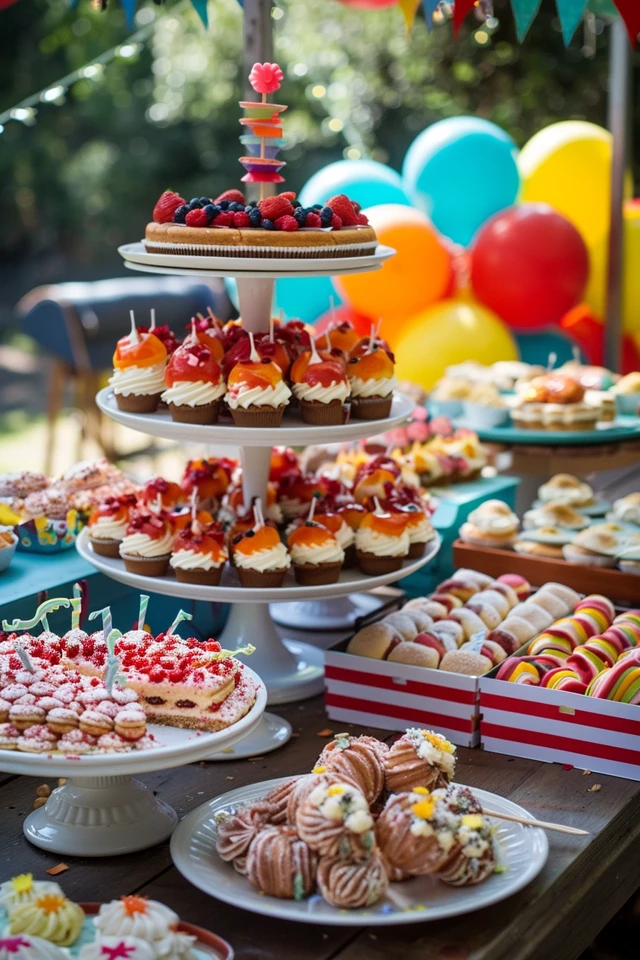
To make the dessert table look designed, use varying heights. Bring a few acrylic risers or turn a sturdy wooden crate upside down. Placing the focal dessert 6 to 10 inches higher than the rest creates a visual hierarchy and makes the table look styled rather than just “set.”
Final Checklist: The “Go-Bag” Essentials
When I leave for an install, I have a toolkit. When you leave for the park, you need a similar “Go-Bag” specifically for food maintenance.
- Trash Bags: Bring 3x more than you think you need. Create a dedicated recycling bag.
- Pop-up Mesh Food Covers: These are essential for keeping flies off the buffet.
- Painters Tape and Sharpie: For labeling coolers or cups.
- Extra Ice: Kept in a separate, sealed cooler solely for replenishing.
- Paper Towels: A minimum of two rolls.
- Wet Wipes: Essential for sticky fingers when there is no running water nearby.
- First Aid Kit: Basic band-aids and antiseptic.
- Sunscreen and Bug Spray: Placed in a basket away from the food.
FAQs
How much food should I calculate per person?
For a standard afternoon party (2-4 hours), plan for:
- 3-4 savory bites/skewers per person.
- 1.5 sandwiches or main servings per person.
- 2 servings of sides (approx. 1/2 cup each).
- 2 beverages per hour per person.
How do I keep food cold without electricity?
Use the “nesting” technique. Place your serving bowl inside a larger bowl filled with crushed ice. Replenish the ice every 45-60 minutes. Alternatively, use slate or marble serving platters that have been frozen overnight; they hold the cold for a surprisingly long time.
What is the best way to handle seating if there aren’t enough tables?
Create “Rug Zones.” As a designer, I use rugs to define spaces indoors. Outdoors, use large waterproof picnic blankets to create “living rooms” on the grass. Place a few firm throw pillows for comfort. This encourages guests to spread out rather than hovering over the food table.
How do I make a park pavilion look expensive?
Focus on lighting and linens. If the party goes into the evening, hang battery-operated bistro lights or place LED votives on the tables. Cover the industrial metal picnic tables with quality linen runners (securely weighted). The contrast between the rough outdoor textures and soft fabrics feels luxurious.
Conclusion
Hosting a birthday party in a park is a balancing act between aesthetics and endurance. You aren’t just serving food; you are managing an environment. By choosing structural foods, planning your packing logistics like a floor plan, and zoning your layout for traffic flow, you elevate the experience from a chaotic picnic to a curated event.
Remember that the most beautiful event is one where the host is relaxed. By prepping your “room temperature resilient” menu and organizing your gear with architectural precision, you free yourself to enjoy the fresh air and the company of your guests.
Picture Gallery


