
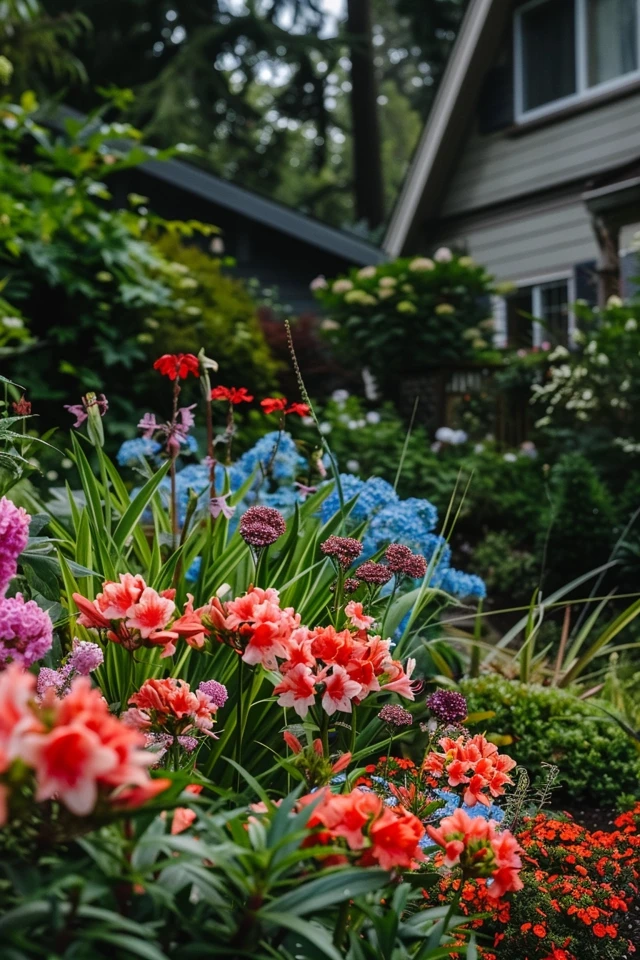
Pacific Northwest Landscape Ideas for Your Yard
There is a specific kind of magic to the Pacific Northwest that you just do not find anywhere else. The light is softer, the greenery is more vibrant, and the connection between indoor and outdoor living feels incredibly intimate. If you are looking for visual inspiration to guide your renovation, be sure to check out the curated Picture Gallery at the end of the blog post.
However, designing a landscape here comes with a unique set of challenges that I have learned to navigate through years of getting my boots muddy on job sites. We deal with soggy soil in February, surprisingly bone-dry heat in August, and moss that seems to grow on stationary objects overnight. The goal is not to fight the climate but to lean into it.
A successful PNW garden balances the wild, woodland aesthetic with clean, modern livability. Whether you are in Seattle, Portland, or Vancouver, the following ideas will help you create a yard that looks beautiful even when it is gray outside.
1. Embrace the Woodland Palette (Layering Native Plants)
The biggest mistake homeowners make here is trying to force a palm springs or English cottage look that fights our natural environment. The most successful PNW landscapes mimic the local forest floor but with a curated, intentional hand.
You need to think in layers. In interior design, we layer textures to create warmth; in landscaping, we layer canopy, understory, and groundcover to create depth.
The Upper Canopy
If you are lucky enough to have existing Douglas Firs or Western Red Cedars, protect them at all costs. They provide the “ceiling” of your outdoor room. If you are planting new trees, look for vertical interest that won’t overwhelm a small lot.
Vine Maples are a personal favorite for smaller urban yards. They have an architectural, twisting structure that looks stunning even when bare in winter. Japanese Maples also thrive here, offering that brilliant pop of red or orange against our evergreen backdrops.
The Middle Layer (The Workhorses)
This is where your privacy and year-round structure live. I always advise clients to aim for a mix of 70% evergreen and 30% deciduous plants in this layer. If you flip that ratio, your yard will look like a bundle of dead sticks from November to March.
Rhododendrons and Azaleas are classics for a reason, but try to source species with interesting leaf variation. Fatsia Japonica is another designer secret weapon. It has massive, tropical-looking leaves that stay green all winter, adding a bold, modern texture that contrasts beautifully with fine-needled conifers.
The Ground Floor
Forget high-maintenance lawns if you have heavy shade. Moss will eventually win that battle. Instead, embrace shade-tolerant groundcovers.
Sword Ferns are practically bulletproof and add lush volume. For a softer look, creeping Jenny or wild ginger creates a dense mat that suppresses weeds. When planting ferns, group them in odd numbers (3, 5, or 7) for a natural, un-contrived look.
Designer’s Note: A common failure point in PNW planting is spacing. Plants grow faster and larger here due to the moisture. When the tag says “spreads to 3 feet,” believe it. Plant your shrubs so they will touch slightly at maturity, but do not pack them in so tight that they choke each other out within two years. Give them room to breathe.
2. Hardscaping That Handles the Wet
In the Pacific Northwest, your hardscape choices are more important than in any other region. Why? Because for six months of the year, the ground is soft, muddy, and wet. If you do not have solid paths and patios, you will not use your yard.
The Trouble with Wood
I love the look of a cedar deck, but I have to be honest with my clients about the maintenance. In our damp climate, algae and moss can turn a wood deck into a skating rink. If you are set on wood, you need to commit to pressure washing and sealing it annually.
For a lower-maintenance alternative that mimics the look, I often specify high-quality composite decking in a warm, teak tone. It provides the visual warmth of wood without the rot risk.
Stone and Gravel
Natural stone is the king of PNW hardscaping. Basalt is the local hero; its dark gray charcoal tones look incredible when wet. Using basalt slab pavers for walkways grounds the space and feels native to the region.
If you are on a budget or dealing with drainage issues, gravel is your best friend. However, do not use pea gravel. Pea gravel is round and acts like ball bearings, making it difficult to walk on.
Pro Tip: Use “5/8-inch minus” crushed rock. The jagged edges lock together to form a firm surface that lets water drain through instantly. It creates a satisfying crunch underfoot and keeps the mud at bay.
Common Mistakes + Fixes
- Mistake: Using smooth, polished concrete for patios.
- Fix: Concrete in the PNW needs a “broom finish” or an exposed aggregate texture. Smooth concrete becomes dangerously slippery when wet and mossy.
- Mistake: Narrow pathways.
- Fix: Main pathways should be at least 48 inches wide so two people can walk side-by-side. Secondary paths should never be less than 36 inches.
3. Mastering Drainage and Water Flow
It is not the most glamorous part of design, but drainage is the difference between a thriving garden and a muddy swamp. Before we plant a single shrub, I look at where the water goes.
Many PNW yards have slopes. Instead of fighting gravity with expensive retaining walls, consider a dry creek bed. This is an intentional channel lined with river rocks and boulders that directs rainwater away from your foundation.
When it is raining, it acts as a functional stream. When it is dry, it looks like a sculptural rock feature. It adds texture and breaks up large areas of planting.
The Rain Garden
If you have a low spot in the yard where water pools, turn it into a rain garden. This is a shallow depression planted with species that can tolerate “wet feet” in winter and drought in summer.
Red Osier Dogwood and Slough Sedge are excellent choices here. Not only does this solve a functional problem, but it also helps filter runoff before it enters the local waterways, which is a major environmental plus in our region.
4. Designing for Year-Round Outdoor Living
We do not let the rain stop us from going outside, and your landscape design should reflect that. Creating a covered outdoor “room” essentially adds square footage to your home.
The Structure
A simple pergola won’t cut it here unless it has a solid roof. I recommend a lean-to structure attached to the house or a freestanding pavilion with a polycarbonate roof. Polycarbonate (specifically the multi-wall type) is fantastic because it blocks rain but lets light filter through, keeping the adjacent interior rooms bright.
Heat and Light
To truly extend the season, you need heat. A gas fire pit is easier to use than wood in damp weather—no smoke and instant heat. For dining areas, infrared heaters mounted on the ceiling are a game-changer.
Measurement Rule: Most electric patio heaters need to be mounted 7 to 9 feet off the ground to be effective and safe. Always check the manufacturer’s clearance requirements for combustibles.
Lighting the Gray
Winter days are short. Good landscape lighting is crucial for curbing the gloom. Avoid the mistake of using cool, blue-white LEDs. They look harsh and sterile against wet greenery.
Stick to warm white bulbs in the 2700K to 3000K range. Use uplighting on the trunks of your Japanese maples to highlight their structure. Use path lights to gently wash the walkway surfaces, spacing them 6 to 8 feet apart to avoid the “airport runway” look.
5. Modern Zen: The Japanese Influence
There is a strong historical connection between the Pacific Northwest and Japanese garden design. Both regions share similar climates and a reverence for nature. Incorporating these elements creates a sense of calm that suits our environment perfectly.
You do not need to create a literal tea garden to get the effect. It is about the principles: asymmetry, stone, and negative space.
Negative Space
In interior design, we talk about the importance of “white space.” In the garden, this might be a patch of raked gravel or a calm area of moss. Don’t feel the need to fill every square inch with flowers.
Restraint is key. Place a single large boulder as a focal point rather than a pile of small rocks. Prune your trees to reveal their branching structure (a technique called aesthetic pruning) rather than shearing them into balls.
Water Features
A simple stone basin with a bamboo spout adds a auditory layer to the garden. The sound of trickling water is incredibly soothing and helps mask city noise. Because our humidity is high, you won’t lose much water to evaporation, making fountains low-maintenance.
Real Project Checklist: What I Would Do
If I were walking into your yard today to start a renovation, this is the exact mental checklist I would run through. You can use this to keep your project on track.
Phase 1: The Assessment
- Check the drainage: Go outside during a heavy rainstorm. Where is the water pooling? Mark these spots.
- Map the light: Observe which areas get morning sun vs. afternoon sun. This dictates your plant placement.
- Identify “borrowed landscapes”: Do neighbors have trees that provide privacy? Can you frame a view of a distant hill?
Phase 2: The Hardscape (Bones)
- Define circulation: Layout paths using a garden hose to visualize the curves. Ensure main paths are 48″ wide.
- Select materials: Choose local basalt or permeable pavers. Order samples and wet them down to see their true PNW color.
- Plan electric/gas: Trench for lighting wires and gas lines before laying any stone.
Phase 3: The Planting (Skin)
- Place trees first: These are your anchors. Position them to block unsightly views.
- Layer the shrubs: Place your evergreen foundation plants.
- Drifts of color: Plant perennials and grasses in groups of 3 or 5, not as single soldiers.
- Mulch immediately: Apply 2-3 inches of organic compost mulch (not bark nuggets) to suppress weeds and hold moisture.
Frequently Asked Questions
How do I stop moss from taking over my patio?
The honest answer is that you cannot stop it entirely, but you can manage it. Increasing sunlight by pruning overhanging branches helps. For hardscapes, a yearly pressure wash or an application of an eco-friendly moss killer in spring is standard maintenance. Some people, myself included, actually encourage moss between pavers for an aged look.
Do I need an irrigation system if it rains so much?
Yes, absolutely. This shocks many newcomers. Our summers are actually drought-prone. We often go July, August, and September with almost zero rainfall. New plantings need regular water for the first 3 years to establish roots. A drip irrigation system is the most efficient way to protect your investment.
What is the best material for privacy screens?
Horizontal slat fencing is very popular in the PNW. Cedar is the traditional choice, but it grays out quickly. If you want that warm wood tone to last, use a penetrating oil stain every two years. For a modern look, Cor-Ten steel panels look fantastic against green foliage and require zero maintenance.
Can I grow lavender and rosemary here?
You can, but drainage is the key. These Mediterranean plants hate wet roots in winter. Plant them in mounded soil mixed with gravel, or put them in pots where you can control the drainage. Give them the sunniest spot you have, preferably near a south-facing wall that radiates heat.
Conclusion
Designing a landscape in the Pacific Northwest is about partnership with the environment. It is about accepting the gray days as a backdrop for vibrant green ferns and red dogwood stems. It is about building patios that keep your socks dry and creating views that look just as good from the kitchen window as they do from the garden bench.
Start with your drainage and hardscape—the “bones” of the yard. Layer in your evergreens for winter structure, and then have fun with the seasonal textures. If you follow these principles, you won’t just have a yard; you will have a sanctuary that embraces the unique beauty of our corner of the world.
Picture Gallery


