
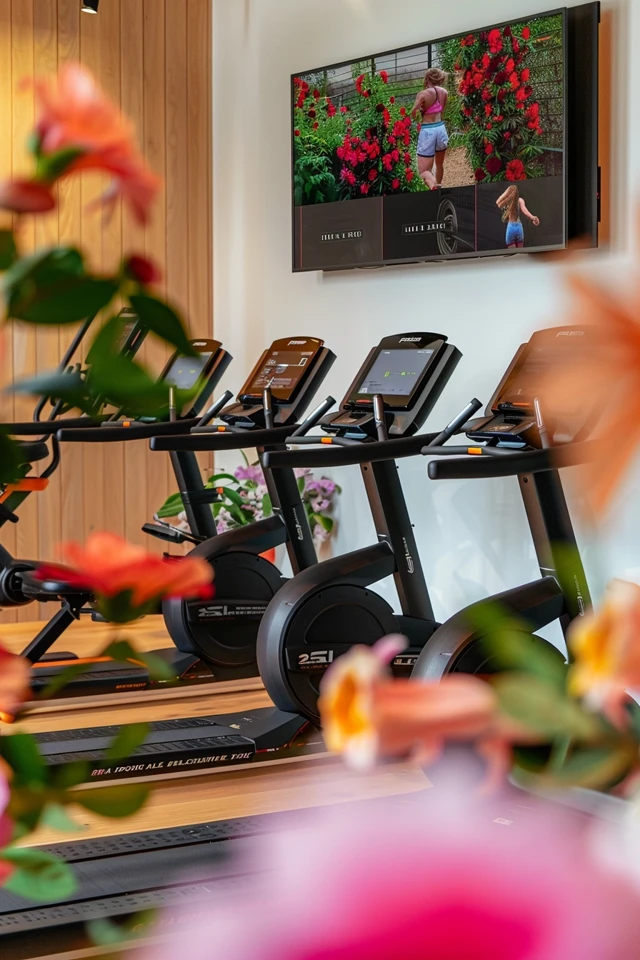
Peloton Room Ideas for Stylish Home Gyms
The era of hiding exercise equipment in the basement or the garage is officially over. Today, wellness is a central part of our daily routine, and home gyms have moved into our primary living spaces. Whether you have a dedicated room or a multipurpose corner in a home office, the goal is to create a space that motivates you to clip in while blending seamlessly with your home’s aesthetic.
When I design fitness spaces for clients, I treat the Peloton bike not just as a machine, but as a sculptural element that dictates the room’s flow. The challenge lies in balancing the rugged durability required for high-intensity cardio with the softness needed to make a room feel inviting. You want a zone that screams “performance” when the lights go down, but “luxury” when the workout is over.
For visual inspiration on layouts, lighting setups, and storage solutions, be sure to check out the curated Picture Gallery at the end of this blog post.
1. Layout Logic: Spacing and Orientation
The single most common mistake I see in DIY home gyms is poor spatial planning. A Peloton bike has a relatively compact footprint, roughly 4 feet by 2 feet, but the “active footprint” is much larger. You need to account for your body movement, specifically out-of-saddle riding and arm exercises with weights.
The “Swing Zone” Rule
As a general rule of thumb, I require a minimum of 24 inches of clearance on all sides of the bike. This isn’t just for safety; it is psychological. If you feel cramped or worry about hitting a bookshelf with your elbow during a ride, your intensity drops.
Ideally, give yourself 30 inches behind the bike if you plan to do floor exercises or stretching off the back of the mat.
The Command Position
Borrowing a concept from office design, never face your bike directly toward a blank wall if you can avoid it. This feels stifling. Instead, position the bike facing into the room or toward a window. This provides a sense of openness and prevents the “time-out corner” feeling.
Designer’s Note:
If you are placing the bike in a multipurpose room, like a guest bedroom or office, use a room divider or a strategically placed tall plant to create a visual separation. This helps you mentally switch gears from “work mode” to “workout mode.”
Common Mistakes + Fixes
Mistake: Placing the bike directly under an HVAC vent.
Fix: While airflow is good, direct cold air on sweaty skin can cause muscle cramping or discomfort. Offset the bike by a few feet and use a floor fan for controlled cooling.
2. Lighting: Setting the Mood for performance
Lighting is the unsung hero of interior design, and nowhere is this more true than in a home gym. Standard overhead recessed cans are often unflattering and too bright for an early morning ride. To recreate that boutique studio vibe, you need layered lighting.
The Dimmable Requirement
I never install a gym without a dimmer switch. High-intensity rides often benefit from moodier, lower lighting to help you focus on the music and the instructor. Aim for lighting fixtures that can drop to 20% brightness without flickering.
Color Temperature Matters
Stick to 3000K to 4000K LED bulbs. This creates a crisp, clean light that mimics daylight. Anything warmer (2700K) feels too sleepy for a workout, while anything cooler (5000K+) can feel sterile and clinical, like a hospital.
Smart Lighting Integration
If you want to elevate the experience, install RGB LED strips behind a mirror or under floating shelves. Philips Hue or similar systems allow you to change the color to red or blue to match the intensity of your heart rate zone. This provides an immersive experience that huge screens alone cannot provide.
Glare Control
Check the position of your windows relative to the Peloton screen. West-facing windows can create blinding glare in the afternoon. If you can’t move the bike, install top-down/bottom-up cellular shades. They allow natural light to enter from the top while blocking direct sun at eye level.
3. Flooring and Acoustics: Protecting Your Home
One of the first questions clients ask is about protecting their hardwood floors. The bike is heavy, and sweat is corrosive. You need a barrier, but it doesn’t have to look like a commercial locker room.
The Layered Approach
Start with the standard high-density equipment mat. It is non-negotiable for stability and sweat protection. However, to make it look “designed,” I often layer this mat on top of a larger, low-pile area rug.
The rug frames the workout zone and adds acoustic dampening. Make sure the rug is flat-woven or very low pile. A high-pile shag or plush wool rug will cause the bike to wobble, which ruins the ride.
Apartment Dwellers and Vibration
If you are in a second-floor apartment, noise transfer is a real concern. The flywheel is quiet, but clipping in and out creates vibrations.
- Use a 3/4-inch thick rubber horse stall mat (cut to size) under the bike mat.
- Add acoustic panels to the walls if the room echoes.
- Heavy velvet curtains also do an excellent job of absorbing sound and elevating the room’s look.
Real-World Project Tip
In a recent project with a polished concrete floor, we used luxury vinyl woven flooring tiles in the gym area. They look like fabric but are waterproof and scrubbable. This defines the zone without risking water damage from water bottles or sweat.
4. Storage: Organizing the Clutter
A Peloton room comes with accessories: shoes, heart rate monitors, towels, weights, and headphones. If these end up in a pile on the floor, the room looks messy. Specialized storage is key to a stylish setup.
Floating Shelves with Purpose
Install two or three floating shelves near the bike.
- Shelf 1: Keep this at handle-bar height. Use it for your water bottle, phone, and towel during the ride if the bike tray is full.
- Shelf 2: Use this for shoe storage. I love using wall-mounted cleats to hang shoes by the heel, or simply placing them on the shelf.
- Shelf 3: Decorative items like a small succulent or a framed quote.
The Towel Hamper
Don’t overlook the “after” part of the workout. A stylish woven basket or a sleek metal bin dedicated to dirty towels prevents them from ending up on the furniture. Look for baskets with canvas liners that can be washed.
Weight Storage
The weights on the back of the bike are fine for riding, but if you do “Bike Bootcamp” classes, you likely have heavier dumbbells. Avoid leaving them on the floor where they become toe-stubbing hazards. Use a low credenza or a dedicated weight rack that matches the metal finish of the bike (usually matte black).
5. Mirrors and Wall Decor
Mirrors serve two purposes: they allow you to check your form (knees straight, shoulders down), and they bounce light around to make small rooms feel double the size.
Mirror Placement Rules
Ideally, place a large mirror on the wall perpendicular to the bike or directly in front.
- Size: Go big. A 24×36 inch mirror is too small. I recommend a floor-to-ceiling lean mirror or a wall-mounted piece that is at least 48 inches wide.
- Height: If wall-mounting, ensure the bottom of the mirror is roughly 24 inches off the floor so you can see your legs while pedaling.
Motivational Decor (Done Right)
Avoid generic “Live Laugh Love” style fitness quotes. They tend to look dated quickly. Instead, opt for abstract art with energetic colors or black and white photography of landscapes.
Biophilic Design
Plants are essential in a home gym. They scrub the air and add a sense of life.
- Snake Plants: Nearly indestructible and great for low-light corners.
- ZZ Plants: Thrive on neglect and add a nice architectural structure.
- Hanging Pothos: Great for softening the edges of high shelves.
What I’d Do in a Real Project
If I had a client with a 10×10 spare room, I would paint the ceiling a dark charcoal to create intimacy. I would install a wall-to-wall mirror on one side, place the bike facing the window, and use a vintage Turkish rug (over a rubber pad) to anchor the bike. It mixes old-world charm with modern tech.
6. Tech and Connectivity Considerations
Nothing ruins a workout faster than buffering. While this isn’t strictly “decor,” the placement of your router and outlets affects the design.
Cord Management
The Peloton power cord is white and can be an eyesore against dark floors.
- Use cord covers painted to match your wall color.
- Run the cord under the area rug if possible (use a flat cord protector to avoid a lump).
- Ideally, install a floor outlet directly under the bike during a renovation. This creates a completely floating look with zero visible wires.
Fan Placement
Ceiling fans are great, but a floor fan aimed at your torso is often more effective for cycling. I recommend “air circulator” style fans like those from Vornado. They are compact, powerful, and look industrial-chic rather than like a cheap plastic appliance. Place it at a 45-degree angle from the front of the bike.
Final Checklist: Ready to Ride?
Before you call the project done, run through this designer checklist to ensure the room functions as well as it looks.
1. Clearance Check: Can you fully extend your arms to the side with 3lb weights without hitting a wall or furniture?
2. Glare Check: Sit on the bike at the time of day you usually ride. Is the sun hitting the screen? Adjust window treatments accordingly.
3. Stability Check: Is the bike 100% level? Adjust the feet under the stabilizers. If the bike rocks, it damages the floor and the equipment.
4. WiFi Strength: Run a speed test in that specific room. If it is weak, add a mesh extender plug behind a dresser.
5. Sweat Defense: Do you have a plan for towels and cleaning spray? Keep them within arm’s reach.
6. Lighting: Are your dimmers working without buzzing?
FAQs
Can I put a Peloton on a second floor or carpet?
Yes. The bike weighs about 135 lbs. Standard residential floors can easily support this. If you have plush carpet, the bike might wobble. I highly recommend buying a piece of 3/4-inch plywood, cutting it to the size of the mat, painting the edges black, and placing it under the mat to create a stable platform.
How do I hide the bike in a living room?
If you can’t put it in a separate room, use a folding screen. There are beautiful rattan or wood screens available. Alternatively, place the bike behind the sofa so the sofa back hides the flywheel and pedals, leaving only the screen and handlebars visible from the rest of the room.
What is the best paint color for a home gym?
It depends on your motivation style. If you want high energy, go for a deep navy (like Benjamin Moore “Hale Navy”) or an energetic teal. If you want a spa-like yoga vibe for recovery rides, stick to warm whites (like Sherwin Williams “Alabaster”) or soft greige. Avoid bright reds; they can raise blood pressure and induce stress visually.
Conclusion
Designing a Peloton room is about more than just finding a spot to park the bike. It is about crafting an environment that respects the effort you put into your health. By focusing on proper spacing, layered lighting, and intentional decor, you can turn a sweaty corner into a sanctuary.
Remember that the best gym is the one you actually use. If the space feels cramped, dark, or cluttered, your motivation will suffer. Invest the time to get the layout and the vibe right, and your personal records will follow.
Picture Gallery


