
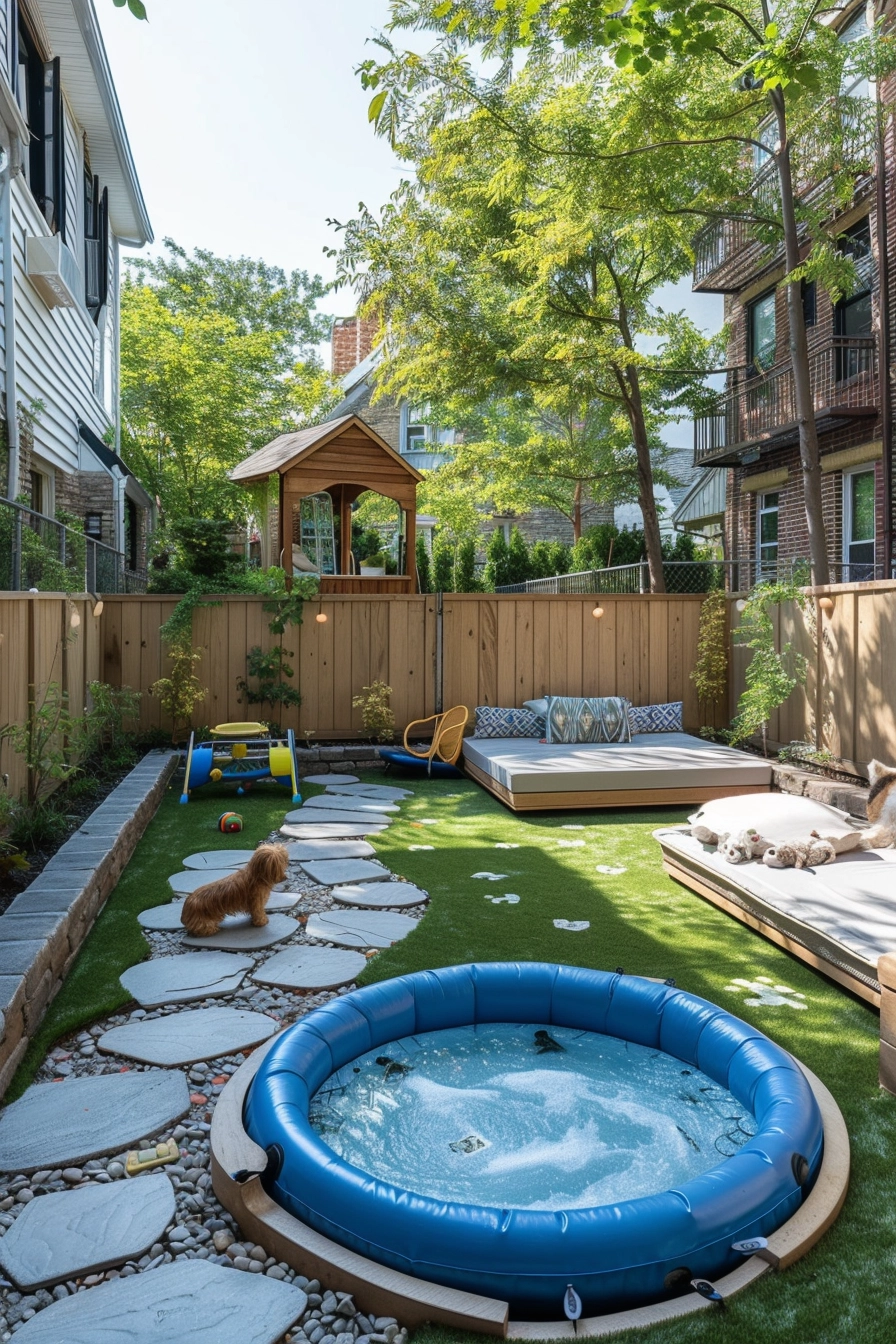
Pet-Friendly Backyard Ideas: Keeping Your Furry Friends Happy and Safe
Designing a backyard that pleases both your aesthetic sensibilities and your four-legged family members is one of the most rewarding challenges in landscape design. Too often, homeowners believe they have to choose between a manicured garden and a dog-run disaster zone. The reality is that with strategic zoning and durable materials, you can have a stunning outdoor oasis that withstands the zoomies.
As a designer, I approach these projects by looking at the space from a “paws-down” perspective. We have to consider how animals navigate a space, where the sun hits the pavers, and exactly what happens to a lawn after months of play. For a visual feast of inspiration, be sure to scroll down to the curated Picture Gallery at the end of the blog post.
This guide covers the essential rules of thumb I use for client projects, balancing safety, durability, and style. We will look at everything from hardscaping choices to toxic plant avoidance, ensuring your outdoor living area is safe for every member of the family.
1. The Foundation: Hardscaping and Surface Selection
The floor of your outdoor room is the most critical decision you will make. It needs to be durable enough to withstand claws but soft enough to be comfortable for lounging.
Avoid heat-absorbing materials
Dark stone, asphalt, and certain dense concretes can reach dangerous temperatures in the summer sun. I always recommend testing materials barefoot; if it is too hot for you, it is definitely too hot for your pet.
Stick to lighter-colored pavers or natural flagstone, which tend to reflect heat rather than absorb it. Travertine is a personal favorite for pool decks because it stays remarkably cool even in direct sunlight.
The case for Decomposed Granite (DG)
For pathways or rustic patios, decomposed granite is a fantastic, budget-friendly alternative to concrete. However, you must specify “stabilized” DG.
Loose gravel can get stuck in paw pads and tracked into the house, scratching your hardwood floors. Stabilized DG includes a binding agent that hardens the surface, making it feel like a soft concrete that is permeable and paw-friendly.
Designer’s Note: The “Patrol Path”
Dogs are creatures of habit and often feel the need to patrol the perimeter of their territory. If you plant delicate flowers right against the fence, they will likely be trampled.
What usually goes wrong: Homeowners fight this instinct by replanting the same spot repeatedly.
How to prevent it: Leave a 24-to-30-inch buffer zone between your fence and your planting beds. Turn this space into a designated “patrol path” using mulch, DG, or simple pavers. This gives the dog a job to do without ruining your landscaping.
2. Plant Selection: Safety and Durability
Your planting palette must be robust. Delicate specimens generally do not survive high-traffic zones with pets.
Know your toxicity list
Before buying a single plant, cross-reference your selections with the ASPCA’s toxic plant list. Common landscaping staples like Sago Palms, Azaleas, and Oleanders are highly toxic and can be fatal if ingested.
Instead, opt for safe, hardy alternatives like Boston Ferns, Spider Plants, and Crepe Myrtles. If you love the look of tropical foliage, Canna Lilies are a pet-safe alternative to many poisonous tropicals.
Deterrent planting tactics
If you have a digger, use nature to set boundaries. Denser, woodier shrubs planted closely together can create a natural barrier that is difficult for a dog to penetrate.
I often use ornamental grasses like Miscanthus or Fountain Grass (check local invasive species lists) to create soft borders. They are resilient; if a dog runs through them, they spring back up rather than snapping like a brittle woody stem.
Common Mistakes + Fixes
Mistake: Using cocoa shell mulch.
Fix: While it smells like chocolate and looks great, cocoa mulch contains theobromine, which is toxic to dogs. Use cedar mulch or pine bark instead.
Mistake: Planting bare soil areas.
Fix: Bare soil invites digging. Cover all exposed soil with mulch, river rock (large enough not to be swallowed), or ground cover plants like creeping thyme.
3. Zoning and Layout: The “Room” Concept
Just like your interior, your exterior needs defined zones. Open concepts are great, but dogs benefit from having designated areas for different activities.
The Play Zone
This is the area for fetch, wrestling, and high-energy activity. If you have a lawn, this is where it goes.
If you have a small yard, keep the center open and push vertical elements (trees, heavy planters) to the perimeter. This maximizes the visual sense of space while giving the dog the longest possible “runway” for exercise.
The Lounge Zone
This is where the humans sit, and ideally, where the dog settles down to relax. Elevate your furniture slightly or use robust outdoor rugs to define the space.
Pro-level rule of thumb: Ensure your outdoor coffee table is heavy enough that a wagging tail or a bumping hip won’t knock it over. I generally look for tables with a solid base rather than spindly legs for pet-friendly homes.
Shade is non-negotiable
Dogs can overheat much faster than humans. If you don’t have mature trees, you need to manufacture shade.
Install a pergola, a cantilever umbrella, or tensioned shade sails. Ensure the shaded area includes a different textural surface, like a raised cot or a cool concrete pad, as dogs seek out conductive cooling on their bellies.
4. Managing the “Potty” Problem
Let’s be realistic: this is the biggest pain point for pet owners. Nitrogen in dog urine burns grass, leading to those unsightly brown spots.
Artificial Turf: The pros and cons
Modern synthetic turf is the most effective solution for a pristine green look year-round. It drains instantly and is easy to clean.
However, synthetic turf can get hot. If you choose this route, you must choose a high-quality product with “Cooling Technology” infill. I also recommend installing a sprinkler head nearby to quickly wet down the turf on 90-degree days before letting the dogs out.
The designated gravel run
If you want natural grass for the main yard, train your dog to use a specific side run. Pea gravel creates an excellent drainage layer for a potty area.
It is easy to scoop, can be hosed down and sanitized with pet-safe enzymatic cleaners, and keeps the mess away from your entertaining area. Visually separate this area with a low picket fence or a row of hardy boxwoods.
What I’d do in a real project
1. Select the spot: Choose a side yard or a corner hidden from the main patio view.
2. Excavate: Dig down 4-6 inches.
3. Base layer: Add 3 inches of crushed rock for drainage.
4. Top layer: Add 3 inches of smooth pea gravel (avoid crushed stone with sharp edges).
5. Decor: Add a fire hydrant or a marking stone to encourage use.
5. Enrichment and Water Features
A bored dog is a destructive dog. Incorporating enrichment features into the landscape design can save your furniture and your flowerbeds.
The legal dig pit
Some breeds, like Terriers and Huskies, are born to dig. Instead of punishing the behavior, channel it.
Build a sandbox or a designated digging pit. Bury toys or bones in the sand to encourage them to dig there rather than in your rose garden. You can frame this with landscape timbers so it looks intentional and tidy.
Water features for hydration and play
Stagnant bowls of water are breeding grounds for mosquitoes and bacteria. Consider installing a recirculating water feature or a splash pad.
A simple bubbling boulder is aesthetically pleasing for adults but doubles as a fresh water fountain for pets. Ensure the reservoir is hidden or covered with grating so the dog cannot fall in, and avoid using chemical additives in the water.
Window to the world
If you have a solid wood fence, dogs often bark because they can hear things they cannot see.
Installing a “pet window” or a bubble portal in the fence allows them to see the street or the park. This often reduces anxiety-based barking and jumping. Alternatively, use mixed fencing materials—solid at the bottom for containment, but open ironwork at the top for visibility.
Final Checklist: Is Your Yard Ready?
Before you open the back door, run through this safety and functionality audit.
- Fence Check: Walk the entire perimeter. Are there gaps wider than 3 inches? Are there footholds (like horizontal slats) that a climber could use to escape?
- Latch Security: Ensure all gates have self-closing hinges and auto-latches. Padlocks are recommended for service entrances.
- Shade Audit: Is there a shaded spot available at high noon?
- Surface Temperature: Can you hold the back of your hand on the pavement for 7 seconds? If not, it needs shade or a hose-down.
- Clean-up Station: Do you have a dedicated trash bin with a lid for waste? Is the hose accessible for muddy paws?
- Chemical Storage: Are fertilizers, pesticides, and pool chemicals stored in a locked shed or garage?
FAQs
How do I stop my dog from tracking mud inside?
The best defense is a buffer zone. Create a “landing pad” of hardscaping (concrete or pavers) immediately outside the back door, at least 6 to 8 feet deep. This gives mud a chance to fall off paws before they hit the threshold. Inside the door, use a runner rug with a rubber backing that is machine washable.
Can I have a vegetable garden with dogs?
Absolutely, but it needs physical separation. Raised beds are the best solution. Build them at least 24 inches high to deter casual sniffing and marking. If you have a jumper, you may need to add a low wire fence around the perimeter of the beds.
What is the best grass for dogs?
If you are sticking with natural grass, go for durability. Bermudagrass and Zoysia are excellent warm-season choices that recover quickly from traffic. For cool climates, Kentucky Bluegrass is durable, while Tall Fescue is more resistant to urine burns due to its deep root system.
How do I handle lighting for pets?
Avoid low-voltage path lights that stick up on stakes; they are easily knocked over by running dogs. Instead, use tree-mounted downlights (moonlighting) or flush-mounted lights in decking and risers. This keeps the fixtures out of harm’s way while illuminating the yard for nighttime potty breaks.
Conclusion
Creating a pet-friendly backyard does not mean sacrificing style for utility. It requires a shift in perspective—viewing your outdoor space as a multi-species environment where durability meets design. By choosing the right materials, creating engaging zones, and respecting the natural instincts of your pet, you can build a sanctuary that is safe for them and beautiful for you.
Remember that the most successful designs are those that evolve. Start with the “patrol paths” and the potty zones, and layer in the decorative elements as you learn how your pet interacts with the space. A happy dog usually leads to a happy homeowner, and a well-designed yard is the backdrop for those memories.
Picture Gallery


