
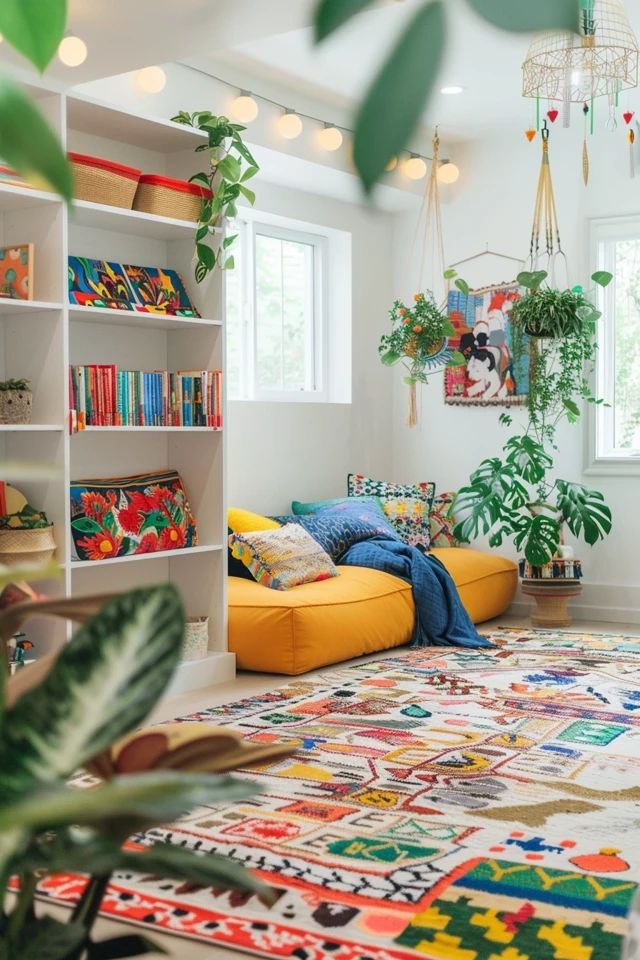
Title: Playroom Guest Room Ideas: Dual-Purpose Spaces
Introduction
Merging a playroom with a guest room is one of the most requested design challenges I encounter. You want your children to have a dedicated space to explore and create, but you also need a dignified place for grandparents or friends to sleep. It often feels like a battle between Lego chaos and hotel-like serenity.
However, with the right layout and furniture choices, this hybrid room can easily become the hardest-working space in your home. For those eager to see how these designs come together, please note that there is a complete Picture Gallery at the end of the blog post. By prioritizing vertical storage and convertible furniture, you can stop sacrificing square footage for a room that is only used occasionally.
In this guide, I will walk you through the practical steps of designing a dual-purpose space that doesn’t compromise on style or function. We will cover floor planning, durable materials, and the specific mechanics of sleeper furniture that won’t ruin your guests’ backs. Let’s create a room that serves your family 365 days a year.
1. Mastering the Layout and Floor Plan
The success of a dual-purpose room relies entirely on the floor plan. In a standard 10×12 or 12×14 bedroom, you cannot treat the furniture arrangement casually. You must establish distinct zones or create a layout that transforms easily.
I always start by placing the largest piece of furniture, which is usually the bed or sleeper sofa. If you are using a sleeper sofa, you need to measure the distinct “open” footprint. A standard queen sleeper extends out about 85 to 90 inches from the wall.
You must ensure there is at least 30 inches of walking clearance around the foot of the bed when it is pulled out. If the room is tight, consider placing the sleeper sofa on the longest wall to maximize central play space when the bed is tucked away.
Designer’s Note: The Clearance Trap
One specific lesson I learned early in my career involved a Murphy bed and a ceiling fan. I designed a beautiful wall unit, but we forgot to measure the clearance of the bed tilting down relative to the existing low-hanging light fixture. Always measure the vertical arc of a Murphy bed and the swing radius of closet doors. You never want to move furniture just to open a closet.
Defining Zones in Larger Rooms
If you are lucky enough to have a large bonus room (think 15×20 or larger), you don’t need convertible furniture. You can use a rug to define the “sleeping zone” and open floor space for the “play zone.”
I recommend angling the bed away from the primary toy storage. This creates a visual separation so your guests don’t wake up staring directly at a stack of puzzles. Use a console table behind a floating sofa to act as a physical divider between the adult space and the kid space.
2. The Bed Dilemma: Murphy Beds, Daybeds, and Sleepers
The bed you choose dictates how the room functions during the day. This is where you should spend the bulk of your furniture budget. Cheap mechanisms fail quickly, and uncomfortable mattresses guarantee your guests will book a hotel next time.
The Murphy Bed (Wall Bed)
This is the gold standard for small spaces. When closed, it looks like a wardrobe or cabinetry, keeping the floor completely open for play.
- Pros: Uses real mattresses (up to 10-12 inches thick), completely clears the floor, can include built-in shelving.
- Cons: Requires professional installation (must be anchored to studs), expensive upfront cost.
- Tip: Look for “piston” mechanisms rather than springs. Pistons are safer for easy lifting and lowering, which is crucial if you are managing the room solo.
The Daybed
A daybed is excellent for narrow rooms. It functions as a deep lounging sofa for reading to kids and a twin bed for guests. If you have a trundle underneath, it becomes a King (or two Twins) for couples.
- Pros: No moving parts to break, serves as everyday seating, standard twin sheets fit easily.
- Cons: Trundles take up floor space where a rug might be; making the bed can be physically difficult against a wall.
The Modern Sleeper Sofa
Technology has improved here. Avoid the old “bar-in-the-back” models. Look for solid platform sleepers where the mattress unfolds on a solid base.
- Pros: Most aesthetic option, looks like a living room, comfortable for sitting.
- Cons: Cushions often need to be stored elsewhere; mattress thickness is limited (usually 4-5 inches).
Common Mistakes + Fixes
Mistake: Buying a sleeper sofa that is too heavy to operate.
Fix: Test the mechanism in the showroom. If you can’t open it with one hand, don’t buy it. You will likely be setting up this room while holding a toddler or a vacuum.
3. Storage: Taming the Toy Chaos
In a guest room, visual clutter is the enemy of relaxation. Your guests do not want to see bins of plastic dinosaurs. The goal is “concealed accessibility.” The kids need to reach the toys, but the mess needs to disappear when the grandparents arrive.
Closed Cabinetry is Essential
Open shelving is popular for styling, but for a playroom/guest combo, you need doors. I recommend a mix of low cabinets for kids and high shelving for display or guest use.
Standard lower cabinets are usually 30-36 inches high. This is the perfect height for a “play surface” on top, while the inside hides the clutter. Ensure the hardware is low-profile so active kids don’t bump into sharp knobs.
The Closet Strategy
Don’t let the closet become a wasteland. Divide the closet vertically.
- Bottom 40 inches: Dedicate this to heavy toy bins, rolling carts, or large items like dollhouses.
- Middle Section: Install a hanging rod for guest use. Even if they are only staying for a weekend, they need about 24 inches of hanging space.
- Top Shelf: Store extra guest bedding here in vacuum-sealed bags or zippered canvas bins. This keeps pillows dust-free and out of the way until needed.
Designer’s Note: Bin Logic
Avoid opaque bins where kids have to dump everything out to find one item. Use clear bins inside closets, or label solid baskets with pictures (for non-readers) or text. If cleanup is difficult, the room will never be ready for guests.
4. Rugs, Fabrics, and Durability
A playroom sees high traffic, spills, and rough use. A guest room needs to feel soft and inviting. Balancing these two needs requires specific material choices.
Rug Selection
You need a rug that is soft enough for crawling knees but durable enough to handle foot traffic.
- Avoid: High-pile shag rugs (Legos get lost in them), viscose (stains with water), and silk.
- Choose: 100% Wool or high-quality Polypropylene. Wool is naturally stain-resistant and self-cleaning.
- Sizing Rule: The rug should be large enough to anchor the room. In a 12×14 room, an 8×10 or 9×12 rug is standard. Leave about 12-18 inches of bare floor around the perimeter.
Upholstery and Fabrics
If you choose a sleeper sofa or an upholstered headboard, go for performance fabrics. “Performance Velvet” is my secret weapon. It is incredibly durable, cleans with soap and water, and feels luxurious to guests.
Avoid linen, which wrinkles instantly and stains easily. If you prefer a woven look, seek out Crypton fabrics or solution-dyed acrylics (often marketed as indoor/outdoor fabric), which resist fading and scrubbing.
5. Lighting and Ambiance
Lighting transforms the mood from “energy” to “rest.” A playroom needs bright, even general lighting. A guest room needs soft, warm task lighting. You must layer these to make the room work.
Overhead Lighting
Install a flush mount or semi-flush mount fixture. Avoid low-hanging chandeliers if kids are throwing balls or pillows. Aim for a color temperature of 3000K (soft white). Anything higher (4000K-5000K) looks like a hospital; anything lower (2700K) is too dim for play.
Dimmer Switches
This is non-negotiable. Put the overhead light on a dimmer. When the kids are playing, crank it up. When guests are winding down, lower it to 20%. It is the cheapest upgrade with the highest impact.
Bedside Lighting
If you are using a sleeper sofa, you likely don’t have permanent nightstands. Use wall-mounted sconces on either side of the sofa location. Look for “plug-in” sconces if you don’t want to hire an electrician.
Alternatively, use lightweight nesting tables that can be moved around easily. When the bed is pulled out, the tables act as nightstands. When the bed is away, they tuck into a corner or serve as a coloring surface.
Final Checklist: What I’d Do in a Real Project
If I were designing your playroom guest room today, this is exactly how I would execute it to ensure success:
1. Verify the Bed Mechanics
I would measure the sleeper sofa extended. I would walk around it to ensure I can access the window to close the curtains. If the clearance is under 24 inches, I would switch to a daybed or Murphy bed.
2. Audit the Storage Depth
I would ensure toy storage units are no deeper than 15 inches unless they are built-in. Deep cabinets eat up floor space. I would use the vertical height of the walls for shelves, keeping the floor clear for play mats or train tracks.
3. Select “Double Duty” Tables
I would choose a coffee table that is lightweight or on casters (wheels). Or, I would use two upholstered ottomans instead of a table. Ottomans provide storage, extra seating, and a soft edge for kids, but can hold a serving tray for guests.
4. Install Blackout Window Treatments
I would install blackout roman shades or drapery. Kids nap, and guests like to sleep in. I would mount the curtain rod 4-6 inches above the window frame to make the ceiling look higher and the room feel grander.
5. Test the “Guest Experience”
I would lie on the mattress myself. If it’s thin, I would buy a high-quality memory foam topper and designate a specific shelf in the closet to store it. A bad night’s sleep is the only thing guests remember.
FAQs
How do I fit a playroom and guest room in a small 10×10 room?
In a 10×10 room, floor space is gold. A Murphy bed is the best option here because it disappears completely. If that is over budget, a daybed with a trundle is the runner-up. Avoid a queen sleeper sofa in a 10×10 room; it will dominate the space and leave no room for a suitcase. Utilize vertical wall shelves for toys and keep the center of the room empty.
Where do I store the guest bedding when not in use?
If you use a Murphy bed, you can often strap the bedding to the mattress so it folds up with the unit. For sleeper sofas, use an ottoman with internal storage to hold the pillows and duvet. Alternatively, clear the top shelf of the closet and use vacuum-seal bags to compress bulky comforters into thin, manageable packages.
How do I make the room look like a cohesive design and not a mess?
Stick to a limited color palette. Pick three colors (e.g., navy, sage green, and cream) and ensure the rug, curtains, and bins all fit that palette. Buy matching storage bins. Nothing ruins a design faster than mismatched, clear plastic tubs mixed with cardboard boxes. Uniform storage makes even a messy room look designed.
Can I use an air mattress instead of buying new furniture?
You can, but it changes the room’s utility. An air mattress requires floor space to be cleared entirely. If you go this route, ensure you have a “high-rise” air mattress with a built-in pump. However, for a long-term design solution, a daybed or sleeper sofa adds value to your home and looks much more intentional.
Conclusion
Creating a dual-purpose playroom and guest room is about respecting both functions equally. It does not have to be a compromise where neither side wins. By investing in the right “anchor” furniture—like a quality sleeper or wall bed—and committing to closed storage, you create a space that adapts to your life.
Remember that flexibility is key. Your needs will change as your children grow, so choose furniture that can evolve. A daybed that works for a toddler’s playroom today can eventually become a reading nook in a teenage hangout. With careful planning and a focus on durability, you can build a room that handles playdates and holidays with equal grace.
Picture Gallery


