
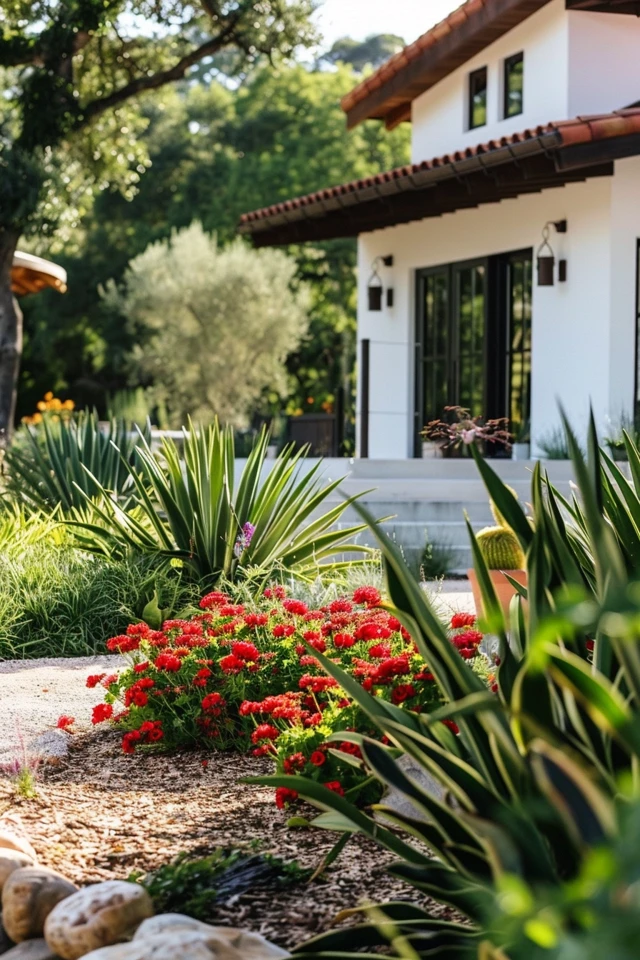
Ranch House Landscape Ideas for Curb Appeal
I have always had a soft spot for ranch-style homes. There is something incredibly grounding about their horizontal lines and open layouts that connects us directly to the outdoors. However, in my years of designing exteriors, I have noticed that the long, low profile can often feel a bit monotonous if the landscaping is not on point.
Many homeowners struggle with the “bowling alley” effect, where the house feels like one long, uninterrupted stretch of brick or siding. The goal with a ranch renovation is never to fight the architecture but to enhance it by adding depth, texture, and strategic vertical elements. If you are looking for visual inspiration to guide your renovation, be sure to check out the Picture Gallery at the end of this blog post.
In this guide, I am going to walk you through the exact strategies I use when consulting on ranch exteriors. We will cover everything from hardscape ratios to specific plant layering techniques that break up the horizontal massing. Let’s turn that flat facade into the standout home on the block.
1. Playing with Scale and Verticality
The defining characteristic of a ranch house is its low-slung roofline. While we love this mid-century charm, it can make the house look “squat” if your landscape is equally flat. You need to introduce vertical elements to draw the eye upward without hiding the house.
I often see homeowners planting rows of identical boxwoods right against the foundation. This mimics the horizontal line of the house and actually makes it look lower. Instead, we want to disrupt that line.
Breaking the Roofline
You should use small-to-medium ornamental trees to soften the corners of the house. Placing a tree like a Japanese Maple, Dogwood, or Redbud off the corner helps frame the home.
The placement here is critical. Do not plant the tree directly on the corner. Pull it out at least 8 to 12 feet diagonally from the house corner. This adds depth and prevents the canopy from rubbing against the gutters as it matures.
Using Ornamental Grasses
If you are hesitant about trees, use tall ornamental grasses. Varieties like Feather Reed Grass (Calamagrostis) grow vertically rather than spreading wide.
Planting clusters of these near the entryway or between windows adds necessary height. They sway in the wind, which adds movement to an otherwise static brick facade.
2. Redefining the Entryway
One of the biggest complaints I hear from ranch owners is that the front door gets lost. Because the house is long, the entry often lacks the architectural grandeur of a two-story home. We have to create that grandeur through landscape design.
The 48-Inch Rule
Your front walkway is likely too narrow. Most builder-grade walks are 36 inches wide, which feels tight. For a ranch house, where horizontal width is the theme, I almost always widen the main path to at least 48 inches, and preferably 60 inches.
This allows two people to walk side-by-side comfortably. It also creates a visual “landing strip” that guides the eye straight to the door.
Creating a “Landing Zone”
Don’t just have the path hit the driveway. Create a dedicated landing zone or a small courtyard area near the front door.
I like to extend the hardscape out from the front porch at least 6 to 8 feet. This provides space for potted plants or a bench. It signals to guests that they have arrived, effectively creating a foyer outside the house.
3. Layering Your Planting Beds
If your planting beds are only 3 feet deep, you are leaving curb appeal on the table. Shallow beds force you to plant in a single straight line, which reinforces the “flatness” of a ranch.
Expansive Bed Depths
In my projects, I push planting beds out to a minimum of 6 to 8 feet from the foundation. This depth allows us to layer plants, creating a rich, three-dimensional look.
The Three-Tier Strategy
I use a “bleacher” seating strategy for planting layouts:
- Back Row (Foundation): Use evergreens that stay green year-round. These hide the concrete foundation. Keep them pruned below the window sills.
- Middle Row (Texture/Color): This is where you put flowering shrubs like Hydrangeas or structural plants like Boxwoods. Stagger them in zigzag patterns rather than straight lines.
- Front Row (Border): Use low-growing ground covers or annuals. Liriope, creeping phlox, or hostas work well here to soften the edge between the bed and the lawn.
Designer’s Note: The “Gap” Rule
Here is a lesson I learned the hard way early in my career: allow for air circulation.
Do not plant your back row directly against the brick or siding. Leave a 12 to 18-inch maintenance strip of gravel or mulch between the foundation and the mature size of the plant. This prevents mold on your siding and gives you space to access the house for repairs without trampling your shrubs.
4. Hardscape Materials and Geometry
The shape of your landscape beds and walkways can dramatically change the vibe of a ranch home. You generally have two directions to go: curving organic lines or sleek modern geometry.
Softening with Curves
Since ranch homes are very boxy, using large, sweeping curves in your garden beds can soften the overall look. This works best for traditional or farmhouse-style ranches.
When cutting these bed lines, avoid “snakes.” A bed line should have long, confident curves, not small wiggles. A good rule of thumb is that if a riding lawnmower can’t follow the curve easily, it is too tight.
Modernizing with Rectangles
If you have a Mid-Century Modern ranch, embrace the geometry. Use rectangular concrete pavers for your walkway with 4-inch gaps in between. Fill those gaps with gravel or black star pebbles.
This linear approach complements the architecture. If you go this route, keep your plant selection more architectural as well—think Yucca, Agave, or disciplined rows of grasses.
5. Lighting the Horizontal Lines
Lighting is the unsung hero of curb appeal. Because ranch houses are wide, they can disappear into the darkness easily at night. Proper lighting expands the visual width of the property after sunset.
Soffit Lighting
Ranch homes usually have deep eaves (overhangs). Installing recessed lighting in the soffits is a game-changer. It washes the facade with light, highlighting the texture of the brick or stone.
Uplighting Trees
Remember those ornamental trees we placed off the corners? Place a warm LED uplight at the base of each. This frames the house and adds drama.
Color Temperature Matters
Stick to a color temperature between 2700K and 3000K. This is a warm white light. anything higher (4000K+) will look blue and clinical, like a gas station, which ruins the cozy residential vibe.
Common Mistakes + Fixes
Mistake: Hedges that block windows.
Many homeowners inherit massive yews or hollies that cover the lower half of their windows. This makes the house look dark and uninviting.
Fix: If the shrub is overgrown, do a “rejuvenation prune” in late winter, cutting it back significantly. If it bounces back, great. If not, rip it out. You need that window line visible.
Mistake: Ignoring the driveway.
Ranch homes often have prominent driveways. A cracked, oil-stained slab ruins the view.
Fix: You don’t always need to repour concrete. You can line the driveway with pavers (an “apron”) or use concrete stain to refresh the color. Adding a border of Liriope or low grasses along the driveway edge also softens the hardscape.
Mistake: The “Polka Dot” Planting.
This happens when you buy one of every plant you like and scatter them around. It looks cluttered.
Fix: Plant in masses. Buy 3, 5, or 7 of the same plant and group them together. Drifts of plants look much more professional and intentional than isolated specimens.
What I’d Do in a Real Project
If I were hired today to revamp a tired 1960s ranch, here is the mini-checklist I would follow before buying a single plant:
- Step 1: Edit the overgrown. I would remove any shrub that touches the eaves or blocks a window. Clear the canvas.
- Step 2: Widen the approach. I would likely jackhammer out the narrow builder path and pour a new, 5-foot wide walkway with a modern finish.
- Step 3: Define the beds. I would use spray paint to mark out new, deep beds (8 feet deep) with long, sweeping curves.
- Step 4: Soil Prep. I would amend the soil with 3 inches of organic compost. You cannot skip this if you want lush growth.
- Step 5: Install “Anchors.” I would plant the corner trees and the foundation evergreens first to establish the “bones” of the design.
Final Checklist
Ready to get started? Use this summary to keep your project on track:
- Assessment: Stand at the curb and take a photo. Identify where the house feels “flat.”
- Hardscape: Check if your walkway allows two people to walk side-by-side (48″+).
- Bed Prep: Widen beds to at least 6 feet deep.
- Trees: Select 1-2 ornamental trees for corner framing.
- Layering: Plan for 3 distinct heights of plants (Back, Middle, Front).
- Lighting: Plan for uplights on trees and path lights for the walkway.
- Maintenance: Ensure water access. Install drip irrigation if budget allows.
FAQs
How do I modernize the exterior of a brick ranch without painting the brick?
Focus on high-contrast landscaping. If you have red brick, use plants with bright green or chartreuse foliage (like ‘Gold Mop’ Cypress) to create contrast. Dark mulch (black or dark brown) also makes the brick pop. Updating light fixtures and house numbers to modern matte black can also modernize the look instantly.
What are the best low-maintenance plants for the front of a house?
For a “set it and forget it” landscape, look for Dwarf Yaupon Holly, Liriope, Boxwoods (check for blight resistance), and ornamental grasses like Miscanthus. These require minimal watering once established and only need pruning once a year.
How much does it cost to landscape a ranch front yard?
This varies wildly, but for a professional overhaul including new wide walkways, removing old plants, soil prep, and new plants, budgets often range from $10,000 to $25,000. If you DIY the labor and keep the existing concrete, you can often do a significant refresh for $2,000 to $4,000 in plant material and mulch.
Can I use raised beds in front of a ranch house?
Yes, but keep them low. A raised bed made of stone or corten steel that is 12-18 inches high can add a nice layer of texture. However, avoid building them too high, or you risk covering the lower windows, which defeats the purpose.
Conclusion
Revitalizing a ranch house is one of the most rewarding landscape projects because the transformation is so visible. By respecting the horizontal architecture while introducing smart vertical elements and deep layering, you can turn a modest home into a sophisticated property.
Remember, landscaping is a process. It is okay to start with the hardscaping and the trees, then fill in the layers over time. The key is to have a master plan so that every plant you buy contributes to the final vision.
Picture Gallery


