
Title: Ranch Style Home Front Yard Landscaping Ideas
Introduction
Ranch-style homes possess a unique charm that is deeply rooted in American architectural history. Their long, horizontal profiles and open floor plans offer a seamless connection to the outdoors, but their exteriors can sometimes feel a bit flat or dated without the right landscaping. I have worked on countless renovation projects where the goal was simply to stop the house from looking like a long, boring rectangle.
The secret to elevating a ranch home lies in playing with scale and layers to create depth. You want to honor the architectural integrity of the build while introducing modern textures and purposeful hardscaping that guides the eye. It is about moving away from the single row of overgrown shrubs hugging the foundation and expanding the garden outward to greet the street.
If you are looking for visual inspiration to spark your creativity, keep reading because I have curated a stunning Picture Gallery at the end of the blog post. Before we get there, let’s dive into the practical design rules, measurements, and layout strategies that will transform your curb appeal.
Embracing the Horizontal Lines
The defining feature of a ranch home is its low-slung, horizontal nature. A common mistake I see homeowners make is trying to force verticality where it doesn’t belong, like planting tall, skinny arborvitae right against the house. This fights the architecture rather than complementing it.
Instead, you want to mimic the home’s lines using layered planting beds. I recommend extending your flower beds out significantly further than the standard builder-grade depth. A bed depth of 6 to 8 feet allows you to create three distinct rows of plants: low ground cover in the front, medium-height perennials in the middle, and taller backdrop shrubs in the rear.
This layering effect adds visual weight to the bottom of the house, grounding it properly. When selecting materials for retaining walls or edging, opt for long, linear formats. Elongated bricks or rectangular concrete forms reinforce that mid-century vibe much better than rounded cobblestones.
Designer’s Note: The “See-Through” Rule
I often see people plant dense hedges to create privacy for those large front picture windows. The problem is that this creates a fortress effect that creates a visual barrier.
Instead, I use “see-through” plants for privacy. Ornamental grasses like Feather Reed Grass or light, airy trees like Serviceberries offer screening without blocking the light. You get the privacy you need from the street, but you can still see out from your living room.
Hardscaping and The Approach
Ranch homes often have the front door flush with the facade, which can make the entry feel unceremonious. Your hardscaping needs to tell visitors exactly where to go. A narrow, 3-foot wide concrete path doesn’t cut it for a house with such a wide footprint.
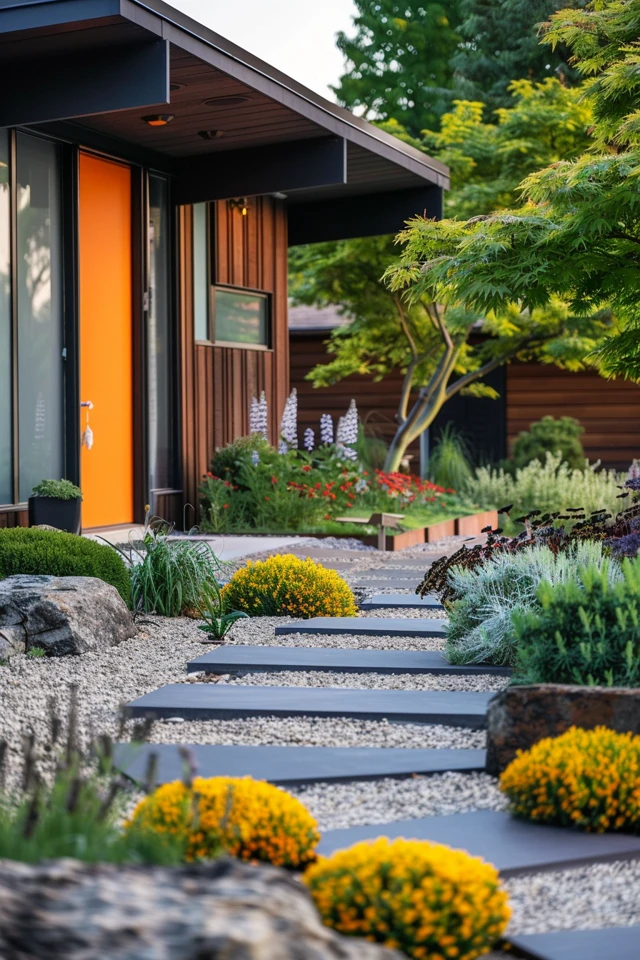
I always specify walkways that are at least 48 to 60 inches wide. This allows two people to walk side-by-side comfortably and balances the scale of the long house. If you are pouring new concrete, consider floating steps or offset pavers with gravel in between to add a modern, rhythmic texture.
Create a “landing pad” or a small courtyard effect near the front door. Since ranch porches are often shallow, expanding the hardscape out into the yard creates a usable patio space. This is a perfect spot for two low-profile lounge chairs and a ceramic planter, turning the front yard into a functional living space rather than just a pass-through.
Common Mistakes + Fixes
Mistake: Ignoring the driveway.
Why it fails: On a ranch home, the driveway is often a massive visual element right in the front.
The Fix: Soften the edges. Line the driveway with a 2-foot strip of liriope, lavender, or ornamental grasses. If you are redoing the driveway, add a “ribbon” driveway (two strips of concrete with grass in the middle) to reduce the amount of pavement and increase greenery.
Plant Layering and Selecting the Right Scale
Scale is the most difficult part of landscape design to master without experience. Because ranch houses are only one story high, a massive oak tree planted 10 feet from the door will eventually swallow the house whole. Conversely, tiny annual flowers look like confetti and get lost against a wide brick facade.
Stick to the “foundation rule”: mature plants closest to the house should never exceed two-thirds of the height of the windows. You do not want to be trimming bushes every weekend just to see outside. Look for dwarf varieties of shrubs that max out at 3 or 4 feet tall.
For trees, focus on ornamental, multi-stem trees placed at corners or midway in the yard. Japanese Maples, Dogwoods, or Redbuds are excellent choices. They provide a ceiling for the garden without looming over the roofline. Place these trees at least 15 to 20 feet away from the foundation to allow their canopy to spread beautifully.
What I’d Do in a Real Project
If I were designing a front yard for a client with a classic 1960s ranch today, here is my go-to plant palette checklist:
- Structure: Boxwood ‘Winter Gem’ or Yews (kept low and square).
- Texture: Ornamental grasses like Miscanthus or Fountain Grass to break up the static lines.
- Color: Hydrangeas (like ‘Little Lime’) for summer blooms that hold their structure in winter.
- Ground Cover: Creeping Jenny or Pachysandra to act as a “living mulch” and reduce weeding.
Modernizing with Mid-Century Elements
Many ranch homes were built during the mid-century modern era, and leaning into this style is a surefire way to boost curb appeal. Even if your ranch is more traditional, adding modern elements cleans up the look. The key here is simplicity and geometry.
Swap out curvy, organic garden bed lines for straight lines or clearly defined geometric angles. Use steel edging to keep lines crisp between the lawn and the mulch. This sharpness contrasts beautifully with the softness of the plants.
Lighting is crucial for long homes. Dark corners make the house look smaller at night. I recommend uplighting any ornamental trees and using soft wash lights on the facade between windows. Avoid the “airport runway” look of placing solar path lights every two feet along the walk. Instead, stagger them and hide the fixtures within the plants so you see the glow, not the hardware.
Practical Constraints: The Budget
Landscaping can get expensive quickly. If you are on a tight budget or renting, focus on mulch and edging.
- Fresh Mulch: A dark, black or deep brown mulch instantly makes a house look newer. Avoid bright red mulch; it distracts from the architecture.
- Gravel: Pea gravel is affordable and chic. Use it to widen a walkway or create a simple seating area without the cost of pouring concrete.
- House Numbers: Buy large, modern house numbers (6 to 8 inches tall) and install them vertically or horizontally on a wood slat screen or directly on the brick. This is a $50 upgrade that looks like a million bucks.
Low-Maintenance and Drought Tolerance
Ranch homes cover a lot of square footage, which usually means a large front lawn. However, maintaining a pristine green carpet is water-intensive and time-consuming. I am seeing a massive shift toward reducing lawn size in favor of deep planting beds filled with native species.
Xeriscaping does not mean just rocks and cactus. It means choosing plants that thrive in your specific zone with minimal intervention. For a ranch home, mass planting is your best friend. Instead of buying one of ten different plants, buy ten of three different plants.
Planting in large drifts (groups of 5, 7, or 9) creates a high-impact, cohesive look that requires less maintenance. When plants grow together, they shade the soil, retaining moisture and suppressing weeds. This approach looks intentional and architectural, fitting the ranch style perfectly.
Designer’s Note: Material Continuity
Try to carry materials from the house into the landscape. If your ranch has a brick knee-wall, use a similar tone of brick for your garden bed edging or mailbox pillar. If the house has wood siding, incorporate a horizontal wood slat fence or bench. This repetition makes the house and garden feel like one unified design.
Final Checklist
Before you head to the nursery or call a contractor, run your plan through this checklist to ensure you are on the right track.
- Check the Bed Depth: Are your garden beds at least 5 feet deep? Skinny beds look cheap.
- Verify Plant Heights: Have you confirmed the mature size of every plant? Ensure nothing near the house will block the windows.
- Review the Walkway: Is the path to the front door at least 4 feet wide?
- Lighting Plan: Do you have lighting planned for the trees and the architectural columns?
- Rule of Odds: Are you planting in groups of 3, 5, or 7? Even numbers often look unnatural.
- Winter Interest: Do you have enough evergreens (about 30-40% of the mix) so the yard doesn’t look dead in January?
FAQs
What if my ranch house is on a slope?
Raised ranches often have this issue. Use terracing with retaining walls to create flat planting levels. Use stone or Corten steel for the walls to add a modern texture. This turns a difficult slope into a focal point.
How do I pick the right mulch color?
Match the mulch to the darkest tone in your roof or brick. If you have a grey roof, black mulch looks sophisticated. If you have a brown roof, go for dark hardwood mulch. Avoid orange or red tones as they clash with most red brick ranches.
Can I mix different landscape styles with a ranch home?
Yes, but be careful. A ranch is versatile. It works well with “Modern Farmhouse” (using grasses and hydrangeas) or “Palm Springs Modern” (using gravel and succulents). It does not usually work well with rigid, formal English gardens or chaotic cottage styles. Keep the structure visible.
What is the best way to hide a visible foundation?
Use a tiered approach. Plant a low ground cover like Liriope right against the concrete, followed by a medium shrub like Boxwood or Holly in front of that. This hides the concrete without trapping moisture against the siding.
Conclusion
Landscaping a ranch-style home is a rewarding project because the architecture is so forgiving and grounded. By respecting the long, horizontal lines and playing with the scale of your plants and hardscape, you can transform a dated exterior into the most welcoming house on the block.
Remember that you do not have to do it all at once. Start by widening your walkway or reshaping your garden beds to be deeper and more geometric. These structural changes make the biggest impact. Once the “bones” of the landscape are right, the plants are just the icing on the cake.
Picture Gallery


