
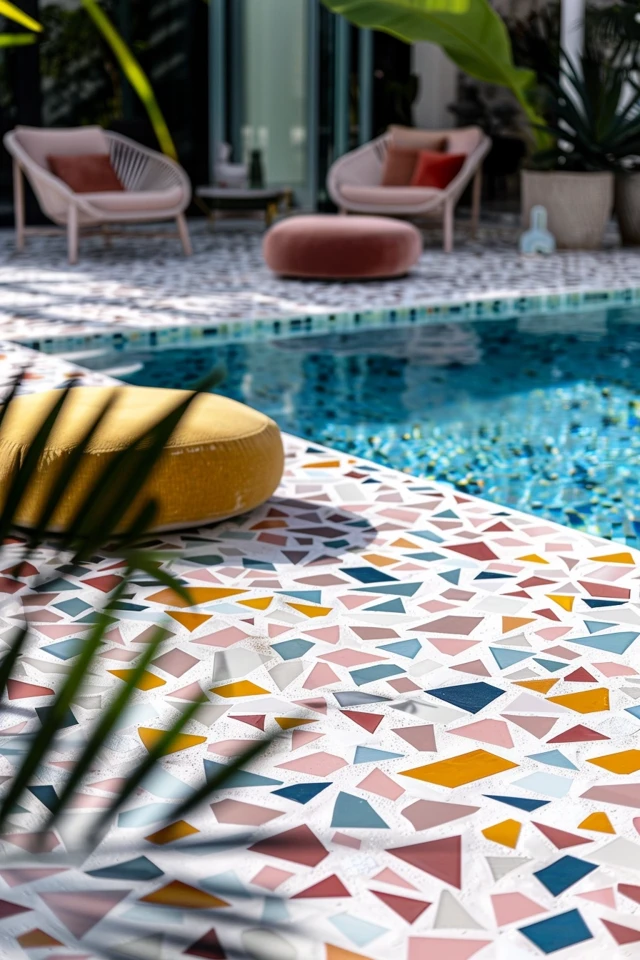
Title: Refreshing Pool Deck Tile Ideas for Your Home
Introduction
Designing a pool deck is about much more than just picking a pretty color. This space acts as the primary entertainment zone of your exterior, bridging the gap between your architecture and the natural landscape. It needs to handle wet feet, harsh UV rays, and the occasional spilled margarita without compromising on style.
When I start a pool project, I always ask clients to envision how they will actually use the space. Are you hosting large parties where people will congregate in groups, or is this a quiet sanctuary for morning yoga? For a dose of visual inspiration, I have curated a full Picture Gallery at the end of this blog post.
In this guide, we are going to look at the intersection of safety, durability, and aesthetics. We will cover the best materials for specific climates, how to manage heat absorption, and the layout tricks I use to make small decks feel expansive. Let’s dive into the details of creating a pool deck that lasts.
1. Selecting the Right Material: The Big Three
The material you choose sets the maintenance schedule for the next decade. While there are dozens of options, I usually steer clients toward three primary categories: Natural Stone, Porcelain Pavers, and Architectural Concrete. Each has distinct pros and cons depending on your lifestyle.
Natural Stone (Travertine and Limestone)
Travertine is the gold standard for a reason. It is naturally porous, which means it absorbs water quickly, preventing puddles. It also stays remarkably cool to the touch, even in direct sunlight.
The Look: Organic, warm, and textured. Tumbled finishes offer a rustic, old-world charm, while honed finishes look more contemporary.
The Maintenance: Stone requires sealing. If you have a saltwater pool, you must seal soft stones like limestone annually to prevent salt erosion.
My Rule of Thumb: Always ask for “Select Grade” or higher. Commercial grade often has large fill holes that can pop out over time, leaving sharp edges.
Porcelain Pavers
Exterior porcelain has changed the game in the last five years. Unlike standard indoor tile, these are usually 2cm (approx. 3/4 inch) thick and incredibly robust. They are virtually stain-proof and fade-resistant.
The Look: You can get porcelain that mimics wood, concrete, or stone with high-definition printing.
The Safety Factor: Look for a textured “grip” finish. Indoor porcelain is dangerous outdoors; ensure it is rated for exterior use specifically.
Durability: This is the best choice for harsh freeze/thaw climates because porcelain absorbs almost no water, meaning it won’t crack when temperatures drop.
Architectural Concrete
This isn’t your average poured sidewalk. We are talking about pre-cast concrete pavers or sand-finished poured-in-place concrete. It offers a clean, modern aesthetic at a lower price point than stone.
The Texture: A sand finish provides excellent slip resistance without being rough on sensitive feet.
Heat Warning: Concrete can get hot. If you live in Arizona or Florida, opt for very light colors to reflect the sun.
Design Flex: You can use large rectangular pads separated by grass or artificial turf for a high-design look.
Designer’s Note: The Temperature Test
I learned this the hard way early in my career. I specified a gorgeous, dark charcoal slate for a pool deck in a sunny region. It looked stunning in photos, but it was physically painful to walk on by 2:00 PM.
Now, I always perform a “heat test” with clients. We take samples outside and let them bake in the sun for an hour. If you can’t keep your hand on it comfortably, your kids won’t be able to walk on it. Prioritize lighter colors like ivory, sand, or silver if the deck has no shade cover.
2. Layouts, Scale, and Visual Flow
The pattern in which you lay your tile dictates the energy of the space. The size of the tile also plays a massive role in how big the deck feels. In modern design, bigger is almost always better.
The French Pattern (Versailles)
This is a four-size pattern used primarily with travertine or limestone. It breaks up grid lines and feels organic and casual. It hides stains and chips well because the pattern is already busy.
Large Format Grids
For a modern home, I use large squares or rectangles. Common sizes are 24″ x 24″ or even 24″ x 48″.
Running Bond: This is the classic “brick” offset pattern. It elongates the space. If your deck is narrow, lay the long edge of the tile parallel to the long side of the pool to stretch it visually.
Seamless Transitions
One of my favorite design moves is using the same flooring material inside the house and extending it continuously to the pool deck.
The Effect: When the sliding doors are open, the living room feels like it doubles in size.
Thresholds: Ensure your contractor installs flush thresholds if possible, so there is no step down, just a seamless flow.
3. The Crucial Detail: Pool Coping
Coping is the capstone that sits on the edge of the pool shell. It frames the water and is the most visible element of the design. You cannot treat this as an afterthought.
Bullnose Coping
This has a rounded, semi-circle edge.
Pros: It is soft on the back of your knees when sitting on the edge and dangling feet in the water.
Cons: It can look a bit dated or traditional. It is better suited for kidney-bean-shaped pools or Mediterranean styles.
Square Edge / Eased Edge
A flat edge with a very slight bevel to take the sharpness off.
Pros: Clean, architectural, and modern.
Cons: Can be prone to chipping if hit with heavy objects, but generally very durable.
Drop Face (Rebated) Coping
This is an L-shaped piece that drops down over the waterline tile.
The Look: It makes the rim of the pool look thick and substantial.
The Benefit: It hides the adhesive line between the deck and the pool shell, offering a very high-end finish.
Common Mistakes + Fixes
Mistake: Ignoring the expansion joint.
The Reality: Concrete and stone expand with heat. If you tile right up to the coping without a gap, cracks will appear within a year.
The Fix: Ensure there is a flexible expansion joint (usually filled with Sikaflex or similar) between the coping stones and the main deck pavers. It acts as a shock absorber.
Mistake: Using polished stone.
The Reality: Polished marble or granite becomes an ice rink when wet.
The Fix: Always specify Tumbled, Honed, Flamed, or Bush-hammered finishes. These provide the necessary friction for bare feet.
4. Managing Drainage and Slopes
Water management is the unsexy hero of a great pool deck. You never want standing water. It attracts mosquitoes, grows algae, and leaves mineral deposits on your beautiful tile.
The Standard Slope
Your deck must slope away from the pool (or toward a channel drain) to prevent dirty runoff from washing back into your clean pool water.
The Ratio: The standard is usually 1/4 inch of drop per linear foot.
Visuals: A good installer makes this invisible. If the slope is too steep, furniture will feel wobbly, and you will feel like you are standing on a hill.
Strip Drains vs. Spot Drains
Avoid the cheap white plastic circle drains in the middle of your expensive stone.
Linear Drains: Use a deco-drain or channel drain that runs along the perimeter of the patio.
Slot Drains: These are ultra-thin gaps in the pavement that catch water. They are nearly invisible and very architectural.
Turf Inlays
If you are struggling with drainage or impervious surface coverage limits (common in city codes), use paver pads separated by 4-inch strips of artificial turf or gravel. This allows water to percolate directly into the ground rather than running off.
5. Lighting and Styling the Perimeter
Once the hardscaping is down, the way you light and style the tile affects how the texture reads at night. Lighting is essential for safety, but it also highlights the investment you made in the materials.
Grazing Light
Place small well lights in the landscaping just off the deck to shine across the surface of the stone. This technique, called grazing, highlights the texture of travertine or slate.
Step Lighting
If you have a raised deck or sunken pool lounge, under-cap lighting on steps is mandatory for safety. Strip LEDs hidden under the lip of the tread provide a soft glow without glaring in your eyes.
Rug Sizing Rules
Yes, you can use rugs on a pool deck to define zones!
Material: Polypropylene is the standard. It resists mold and can be hosed off.
Size: Ensure the front legs of all lounge chairs sit on the rug.
* Safety: Do not place rugs in high-traffic wet zones (like right at the pool stairs). They become tripping hazards. Save them for the dining area or dry lounging zone.
Final Checklist: What I’d Do in a Real Project
If I were managing your pool deck renovation tomorrow, here is the mental checklist I would run through before ordering a single tile:
1. Verify the Slip Rating:
Check the spec sheet for the DCOF (Dynamic Coefficient of Friction). For wet outdoor areas, you want a rating of at least 0.42, but I prefer 0.60 or higher for pool decks.
2. Check the “Touch Temperature”:
Order a sample. Put it in direct sunlight at noon. Step on it barefoot. If you wince, pick a lighter color.
3. Plan the Coping Overhang:
The coping should overhang the water by about 1 to 1.5 inches. This acts as a wave breaker and gives you a handhold.
4. Coordinate the Grout:
For outdoor pavers, I often recommend polymeric sand instead of cement grout if using a sand-set base. It is flexible and doesn’t crack. If using cement grout, pick a color that matches the dirt in your yard (usually a mid-grey or tan). White grout outdoors will break your heart.
5. Seal Immediately:
If using natural stone, have the sealer applied before the furniture is moved in. Dip-sealing implies sealing the stone on all six sides before installation—highly recommended for saltwater pools to prevent salt damp rising through the stone.
FAQs
Can I tile over my existing concrete pool deck?
Yes, often you can. We call this an “overlay.” You can use thinner pavers (around 1 inch or 30mm) specifically designed for remodeling. However, you must account for the height difference. Will the new height block door thresholds? Will it cover the bottom of the fence?
What is the best material for dogs?
Concrete pavers or Porcelain. Travertine is durable, but dog claws can sometimes scratch softer fillers. Porcelain is virtually scratch-proof and does not absorb urine odors if washed down properly. Avoid wood decking, which scratches and splinters.
How often do I need to reseal travertine?
In a sunny, exposed area, you should reseal every 2 to 3 years. If you have a saltwater pool, you might want to apply a densifier or sealer annually around the coping specifically to stop salt erosion.
Is wood-look tile tacky outdoors?
Not if you buy quality. Cheap printed tiles look fake because the pattern repeats too often. Look for high-end porcelain with a high “variation rating” (V3 or V4) and texture that matches the grain. It gives you the warmth of a timber deck without the rotting and staining.
Conclusion
Refreshing your pool deck is a significant investment, but it offers one of the highest returns on enjoyment of any home improvement project. The goal is to create a surface that is safe enough for running kids, durable enough for blazing sun or freezing winters, and beautiful enough to serve as the backdrop for your summer memories.
Take your time selecting materials. Borrow samples and live with them for a few days. Wet them, walk on them, and look at them at sunset. When you prioritize function and flow, the aesthetics naturally follow.
Picture Gallery


