
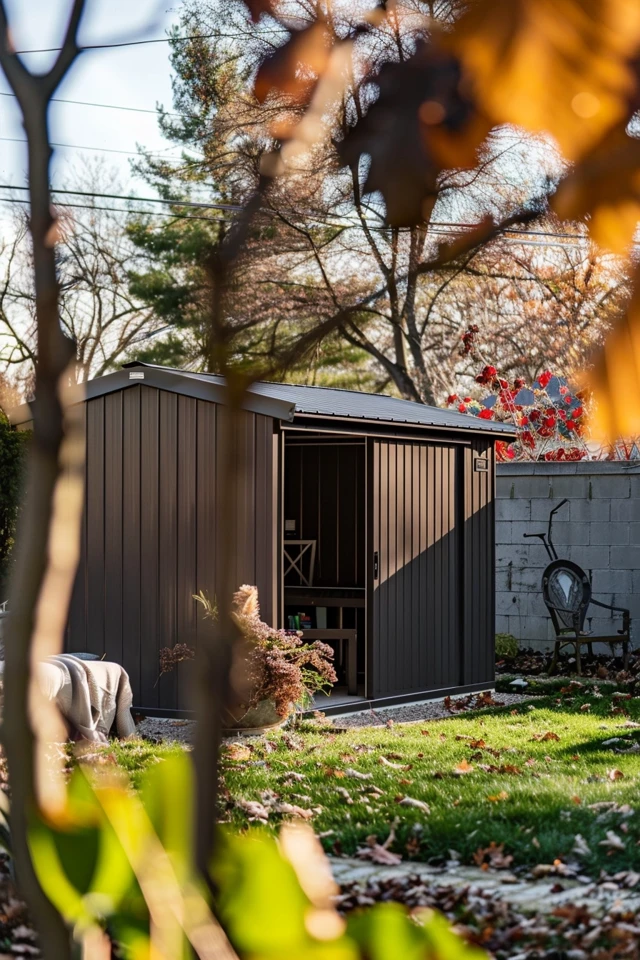
Metal Shed – Revamp Your Space with These Makeover Ideas
Most homeowners look at a metal shed and see nothing more than a hot, noisy tin can where spiders go to thrive. It is usually the place where garden tools rust and holiday decorations gather dust in the dark. However, as a designer, I see one of the most cost-effective ways to add square footage to your property without the headache of a full home addition.
With the right structural tweaks and aesthetic layers, that corrugated metal box can become a legitimate home office, a high-end potting studio, or a moody reading retreat. The transformation requires navigating some specific challenges unique to metal structures, specifically temperature control and condensation.
I have turned several of these “tin cans” into usable living spaces, and the results often surprise clients more than a full kitchen remodel. For visual proof of how dramatic these transformations can be, be sure to check out the Picture Gallery at the end of this blog post.
1. Controlling the Climate: Insulation and Condensation
Before you buy a single throw pillow or paint brush, you must address the “metal” part of the shed. Metal is an incredible conductor, meaning your shed will be freezing in winter and an oven in summer if left raw.
The first step in any habitable metal shed project is establishing a thermal break. If you skip this, your furniture will warp, and your soft goods will mold due to condensation dripping from the roof.
Insulation Options for Metal Walls
- Spray Foam: This is the gold standard for metal sheds. Closed-cell spray foam adds structural rigidity and creates a perfect vapor barrier, preventing that dreaded “shed sweat.”
- Rigid Foam Board: A more DIY-friendly option. Glue 2-inch thick foam boards directly to the metal panels. You must tape the seams with foil tape to seal out moisture.
- Bubble Foil Insulation: This is thinner and reflects radiant heat. It is okay for a tool shed, but I do not recommend it if you plan to spend prolonged time inside, like for an office.
Designer’s Note: The Sweating Roof
In my first shed project, we insulated the walls but left the ceiling metal exposed for an “industrial” look. Big mistake. On the first cold morning, condensation dripped onto the client’s desk. Always insulate the roof deck. If you want an industrial look, paint the insulation or cover it with corrugated plastic, but never leave the raw metal exposed to interior temperature shifts.
2. Exterior Treatments: De-Industrializing the Look
The exterior of a standard metal shed usually screams “utility.” To make it feel like an intentional part of your landscape design, we need to soften those hard, corrugated lines.
Paint is your highest ROI (Return on Investment) tool here. However, you cannot just slap leftover wall paint on a metal exterior. It will peel within a season.
Painting Metal Siding
- Prep is 80% of the work: Scrub the shed with a TSP (Trisodium Phosphate) substitute to remove factory oils and mildew. If there is rust, sand it down and use a rust-converter primer.
- Direct-to-Metal (DTM) Paint: Buy paint specifically formulated for metal. These acrylic resins bind to the slick surface and expand/contract with the metal as it heats up.
- Color Selection: Avoid pure black or charcoal if you live in a hot climate, as it will increase the interior temperature significantly. I prefer sage greens, deep navies, or warm putties that blend with garden foliage.
Landscaping to Anchor the Structure
A shed plunked in the middle of a lawn looks temporary. To make it feel permanent, you need to ground it with planting beds.
I always recommend a “foundation bed” wrapping around at least two sides of the shed. Plant ornamental grasses or hydrangeas about 18 to 24 inches away from the metal walls. This gap allows for airflow and prevents wet leaves from piling up against the metal, which accelerates rust.
3. Interior Finishes: Walls and Flooring
Once your shell is insulated, you need to define the interior. The goal is to hide the skeleton of the building so you forget you are standing in a metal box.
Framing and Walls
Most metal sheds lack traditional studs. To hang drywall or shiplap, you usually need to build a “room within a room” by framing 2×4 walls inside the metal shell. This eats up about 4 inches of space on each side, but it allows for electrical wiring and heavy shelving.
If you are tight on space and cannot frame out walls, use magnetic organization systems. High-strength magnetic hooks and shelves can turn the raw metal walls into a functional storage grid without drilling a single hole. This is a perfect solution for renters or budget projects.
Flooring Solutions
The floor of a metal shed is often plywood on a metal frame. It can be bouncy and prone to moisture from below.
- Luxury Vinyl Plank (LVP): This is my go-to. It is waterproof, durable, and floats over the subfloor. Choose a wide-plank oak look to warm up the space.
- Painted Plywood: For a budget studio, simply paint the plywood floor with porch and patio paint. It is durable and easy to touch up.
- Avoid: Hardwood or laminate. The temperature fluctuations in an outdoor structure will cause real wood to cup and buckle.
Common Mistake: Ignoring the Door Threshold
Metal sheds often have a ramp or a high metal lip at the door. If you install thick flooring, the door might not swing inward. Always measure the clearance of your door swing before buying flooring. If the door swings out, ensure your new flooring height doesn’t create a trip hazard at the threshold.
4. Lighting and Electrical Planning
Lighting changes a space from a storage locker to a sanctuary. Since metal sheds rarely have windows on all sides, they can be dark and cave-like.
The Lighting Layering Rule
Never rely on a single overhead bulb. It creates harsh shadows and feels clinical.
- Ambient Light: Use recessed LEDs or a flush mount fixture if you have the ceiling height. Aim for 3000K or 3500K color temperature. 4000K+ is too blue and feels like a garage.
- Task Light: If this is a workshop or office, you need directed light. Clamp lamps are excellent here.
- Accent Light: This is where the magic happens. I love using warm LED strip lights hidden behind a work surface or along a ceiling beam. It washes the walls with light and makes the small space feel larger.
Running Power
If trenching an electrical line from the house isn’t in the budget, consider a robust solar generator setup for basic needs like charging a laptop and running LED lamps. However, if you plan to run a space heater or AC unit, you must hire an electrician to run a dedicated circuit. Safety is non-negotiable here.
5. Functional Layouts and Zoning
Metal sheds are typically small—often 10×12 or 12×16. Every inch must work hard. The layout depends entirely on the function, but scale is critical.
The Home Office Layout
Do not push your desk directly against a wall if you can avoid it. Floating the desk perpendicular to a window or in the center of the room commands the space.
- Clearance: You need at least 36 to 42 inches behind your desk chair to slide back comfortably.
- Storage: Go vertical. Use tall, narrow bookcases to draw the eye up, making the low ceiling feel higher.
The Garden Studio Layout
For potting sheds or workshops, functionality reigns.
- Counter Depth: A standard counter is 24 inches deep. In a small shed, you can get away with 18 inches for potting to save floor space.
- Traffic Flow: Keep a 36-inch clear path from the door to the back of the shed. If you are carrying large items or pushing a mower, expand this to 48 inches.
What I’d Do in a Real Project
If I were designing a 10×12 metal shed for a client today, here is my exact checklist:
- Replace the Doors: Swap the sliding metal barn doors for a pre-hung, residential glass door. It seals better and lets in light.
- Add a Window: Cut the metal skin and frame in at least one operable window for cross-ventilation.
- Decking: Build a small wood deck (even 4×6 feet) outside the entry. It creates a transition zone so you don’t track mud directly onto your interior rug.
Common Mistakes + Fixes
Mistake: Sealing the shed too tightly without ventilation.
Fix: Metal sheds need to breathe, or they will grow mold. Install a ridge vent or simple gable vents near the roof peak. If you are insulating heavily, you might need a small mechanical exhaust fan.
Mistake: Using standard interior drywall mud.
Fix: Standard drywall tape and mud will crack with the vibration and temperature shifts of a shed. Use “purple board” (moisture resistant) and consider using wood trim over seams instead of mudding them for a board-and-batten look. This is flexible and won’t crack.
Mistake: Ignoring the noise factor.
Fix: Rain on a metal roof is deafening. If you plan to take Zoom calls, insulation is mandatory for sound dampening, not just temperature. Rugs are also essential to absorb echo.
Final Checklist
Before you call your project complete, run through this list to ensure your revamped shed is durable and comfortable.
- Water Test: Spray the exterior with a hose for 5 minutes. Check for any leaks inside, especially around screw holes and roof seams.
- Pest Proofing: Use steel wool and expanding foam to seal any gaps between the floor frame and the ground. Mice love insulated sheds.
- Wi-Fi Check: Metal walls block Wi-Fi signals effectively. You will likely need a mesh extender or a hardwired ethernet cable.
- Lighting Temperature: Ensure all bulbs match in color temperature (ideally 3000K).
- Door Seal: Check the weatherstripping on your door. Can you see daylight? If so, you are losing your heat/AC.
- Scale Check: Is your furniture too big? In a 10×12 room, a loveseat works better than a sofa. Keep furniture lightweight and visually open.
FAQs
Can I hang heavy items on metal shed walls?
Not directly on the metal skin. It is too thin and will buckle. You must locate the structural ribs (if present) or build an internal wood frame to support heavy tools or cabinets.
How do I stop my metal shed from rusting at the bottom?
Rust at the base usually comes from splashback during rain. Install gutters on the shed roof to direct water away. Also, ensure there is a gravel perimeter around the base so water drains quickly rather than pooling against the metal.
Is it cheaper to buy a new shed or revamp an old one?
Revamping is almost always cheaper if the structural integrity is sound. If the metal is rusted through or the frame is bent, you are better off replacing it. A basic cosmetic and insulation revamp costs a fraction of a new, high-quality structure.
Can I put a bathroom in a metal shed?
Technically yes, but it complicates the project largely. You will need permits, a trench for sewer/water, and a significant budget. A composting toilet is a much easier solution for a simple studio.
Conclusion
Transforming a metal shed is about looking past the utilitarian shell and seeing the volume of space within. It is a project that rewards patience and preparation. By addressing the invisible elements first—insulation, ventilation, and power—you create a room that feels just as comfortable as the main house.
Whether you are craving a quiet yoga studio, a focused writing nook, or just a workshop where you can actually see what you are doing, that metal box in the backyard is waiting for its second act. Grab your DTM paint, plan your layout, and reclaim that square footage.
Picture Gallery


