
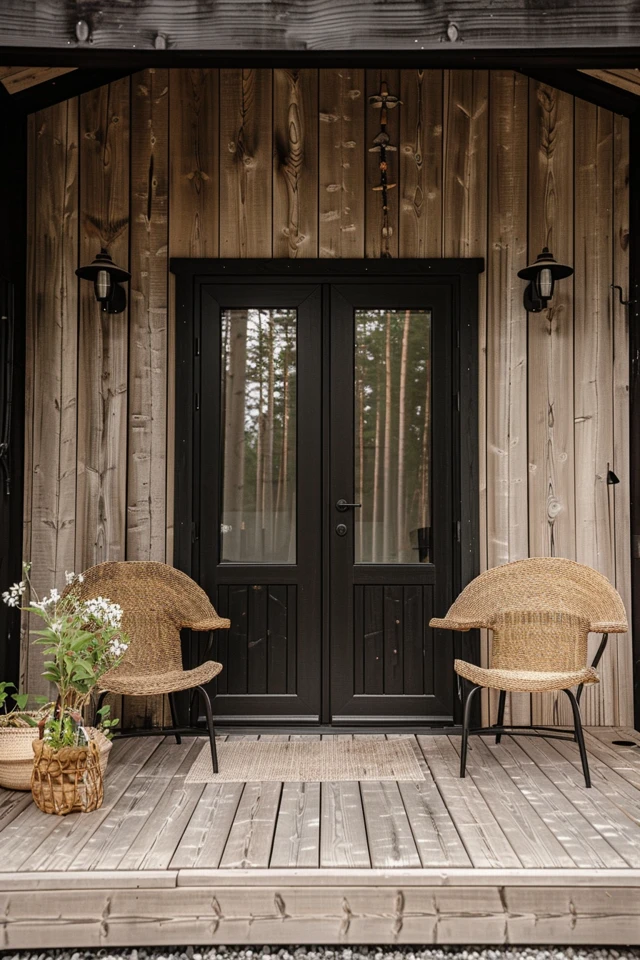
Title: Rustic Cabin Front Door Ideas to Welcome You Home
Introduction
There is a specific feeling that hits you when you pull into the driveway of a cabin. It is the crunch of gravel under the tires, the scent of pine or damp earth, and the immediate drop in blood pressure as you disconnect from city life. The architecture of a cabin isn’t just about shelter; it is about creating a seamless transition between the rugged outdoors and a cozy sanctuary.
Your front door is the handshake of your home. It sets the expectation for the warmth and comfort waiting inside, while also needing to be tough enough to withstand harsh weather conditions often found in mountains or lakeside settings. Choosing the right design involves balancing aesthetic charm with serious durability.
If you are looking for visual inspiration to jumpstart your renovation, be sure to check out the Picture Gallery at the end of the blog post.
1. Material Matters: Wood Species and Alternatives
When designing a rustic entry, the material you choose dictates the longevity of the door. In my projects, I almost always start with solid wood for that authentic tactile experience. However, not all woods are created equal when exposed to the elements.
Top Wood Choices for Cabins
- Knotty Alder: This is the darling of rustic design. It has a pronounced grain and visible knots that take stain beautifully. It is moderately soft, meaning it can get dinged, but that often adds to the character.
- Douglas Fir: A classic choice for craftsman and mountain homes. It has a tight, vertical grain that looks sophisticated yet grounded. It is naturally rot-resistant but requires regular sealing.
- White Oak: If the budget allows, this is a superior option. It is incredibly hard, dense, and water-resistant. The grain pattern is subtle and works well with modern-rustic blends.
- Cedar: Known for its aromatic scent and natural resistance to insects and decay. It is lightweight but durable, making it ideal for larger, oversized doors.
The Case for Fiberglass
I often have clients who love the look of wood but hate the maintenance. If your cabin is a vacation rental or sits unoccupied for months, real wood can warp or crack without climate control.
High-end fiberglass doors with a “wood grain” texture are virtually indistinguishable from the real thing once stained. They do not expand or contract with temperature swings. If you are in a zone with heavy snow or intense humidity, I highly recommend looking into fiberglass composites.
Designer’s Note: The Overhang Rule
A common mistake I see is installing a solid wood door without adequate protection. If you use real wood, you must have an overhang.
The Rule of Thumb: The overhang should extend out at least half the distance of the height of the door from the base. If your door is 8 feet tall, your overhang needs to project 4 feet to keep sun and rain off the finish.
2. Architectural Styles and Configurations
The shape and construction of the door define the personality of the cabin. A standard six-panel door often feels too suburban for a rustic setting. We want something that feels structural and deliberate.
The Vertical Plank Door
This is the quintessential cabin look. It mimics the board-and-batten siding found on old barns. It emphasizes height and simplicity.
- Style Tip: Add horizontal cross-bucks (a “Z” or “X” pattern) to the bottom half for a stable, barn-door aesthetic.
- Hardware Pairing: This style demands heavy, iron strap hinges to visually break up the wood expanse.
The Dutch Door
If you have kids, pets, or just love a breeze, a Dutch door is a fantastic functional choice. The top and bottom halves operate independently.
You can keep the bottom closed to keep the dog inside while opening the top to let in the mountain air. It instantly adds a whimsical, storybook charm to a cottage or lakeside cabin.
Glass Considerations
Natural light is a priority, but so is privacy. In a remote cabin, you might feel comfortable with clear glass, but consider the “fishbowl” effect at night.
- Seeded Glass: This glass has tiny bubbles trapped inside. It distorts the view slightly and feels antique.
- Reeded Glass: Vertical ridges provide excellent privacy while letting in light. It feels modern yet textural.
- Caming: This is the metal strip that holds glass pieces together. For rustic homes, choose black or dark bronze caming rather than silver or gold.
3. Hardware: The Jewelry of the Entry
You can have a beautiful door, but cheap hardware will ruin the effect immediately. In rustic design, hardware should feel substantial. When you grab the handle, it should have weight.
Finishes and Textures
Skip the polished chrome or brushed nickel. Those finishes feel too sterile for a cabin.
- Oil-Rubbed Bronze: A living finish that changes over time, revealing copper undertones.
- Matte Black: Classic and high-contrast, especially against lighter wood stains.
- Antique Pewter: A softer, gray tone that works well with weathered cedar shingles.
Handle Sets vs. Knobs
Always opt for a “grip handle set” rather than a simple doorknob. This includes a large vertical handle with a thumb latch.
Scale Rule: If your door is 8 feet tall, look for an escutcheon plate (the backplate behind the handle) that is at least 18 to 20 inches tall. Standard residential hardware looks like a toy on a grand cabin door.
Accessories
- Clavos: These are decorative nail heads hammered into the door face. They add an Old World, medieval touch. Use them sparingly—perhaps three in a row at the top and bottom.
- Speakeasy Grille: A small, eye-level window with a wrought iron grate. It is charming and allows you to see who is knocking without opening the door.
- Kickplates: In snowy areas, we kick snow off our boots against the door. A metal kickplate in a matching finish protects the wood from salt and moisture damage.
4. Colors and Stains: Connecting to Landscape
The goal of rustic design is to harmonize with the environment. Your door color should pull from the stone, bark, and soil surrounding the property.
Stain Recommendations
I prefer stains over paint for cabins because they showcase the natural material.
- Dark Walnut: A rich, chocolate brown that provides high contrast against stone siding. It feels elegant and grounded.
- Provincial: A warmer, honey-toned brown. This works well if your cabin has grey siding, as it warms up the palette.
- Driftwood/Gray Wash: This mimics the look of aged barn wood. It is trendy but timeless in coastal or lakeside settings.
Bold Paint Choices
If you do paint, stick to earth tones.
- Forest Green: Specifically, a blackened green (like Benjamin Moore’s ‘Salamander’). It blends with the trees but looks upscale.
- Oxblood Red: A classic barn red offers a pop of color that guides visitors to the entry, especially in the snow.
- Slate Blue: Perfect for lakeside cabins, mirroring the water and sky.
Common Mistakes + Fixes
Mistake: Picking a stain that matches the siding exactly.
Fix: Your door needs to pop. If your siding is dark cedar, go for a lighter stain or a painted door. If your siding is light log chinking, go for a dark, moody door. Contrast is key to curb appeal.
5. Lighting and Porch Styling
The door is the star, but the stage needs to be set. Lighting in rustic areas is crucial for safety and ambiance.
Lighting Placement and Size
The biggest error I see is lights that are too small. Exterior lanterns should be roughly 1/3 to 1/4 the height of the door.
Placement: Mount sconces at eye level, roughly 66 to 72 inches from the floor to the center of the light source. They should sit 6 to 12 inches away from the door casing.
Kelvin Temperature: Use bulbs that are 2700K (Warm White). Anything higher (3000K-5000K) will look blue and clinical, destroying the cozy cabin vibe.
Rugs and Mats
You need a double-layer system for cabins.
1. The Scraper: A heavy-duty coir or rubber mat specifically for removing mud and grit.
2. The Framer: A larger, flat-weave outdoor rug underneath the scraper mat. This adds color and increases the footprint of the entry.
Planters and Decor
Use natural containers like half-whiskey barrels, galvanized steel tubs, or glazed ceramic in deep greens and blues.
Planting Tip: Use evergreens (dwarf spruce or boxwood) for year-round structure. In the summer, trail ivy or petunias over the edge. In the winter, stick birch branches and berries into the soil for height.
What I’d Do in a Real Project: A Checklist
If I were designing your cabin entry today, here is the exact workflow I would follow to ensure success.
1. Assess the Exposure
- Check which direction the door faces. South and West facing doors get battered by UV rays.
- If exposure is high, I am selecting a fiberglass composite door with a gel stain, or a solid wood door with a marine-grade spar varnish.
2. Measure the Rough Opening
- I never assume a standard size. I measure width, height, and wall thickness (jamb width).
- Cabins often have 2×6 framing or log walls, requiring deeper jambs than a standard suburban house.
3. Select the Operation
- Does the door swing in or out? In snow country, doors usually swing in so you do not get trapped by a snowdrift.
- However, in high-wind hurricane zones, out-swing doors seal tighter against the wind.
4. Coordinate the Finishes
- I create a “flat lay” sample board. I put the door stain sample next to the stone veneer, the siding color, and the hardware finish.
- I ensure the undertones do not clash (e.g., mixing a red-based wood stain with a yellow-based stone usually looks off).
5. Order Early
- Custom rustic doors often have lead times of 12 to 16 weeks. I order the door as soon as framing begins.
FAQs
How often do I need to refinish a wood front door?
It depends on exposure. If your door gets direct sunlight or rain, you may need to apply a fresh topcoat every 1 to 2 years. If it is well-protected by a porch, you might go 5 to 7 years. Signs you need to refinish include peeling, a dry/chalky texture, or graying wood.
What is the best R-value for a cabin door?
In cold climates, insulation is key. Solid wood has a low R-value (around R-2). Fiberglass doors with foam cores can reach R-5 or R-6. If you plan to use the cabin in winter, prioritize a thermally broken fiberglass or steel door for better heat retention.
Can I install a smart lock on a rustic door?
Yes, but aesthetics matter. Many major brands now make smart locks in matte black or oil-rubbed bronze with traditional styling. Look for models where the keypad is discreet or hidden until touched. Avoid shiny plastic screens that ruin the vintage look.
How wide should a main cabin entry door be?
The standard is 36 inches. However, for a cabin, I prefer 42 inches if space allows. It feels more luxurious and makes it much easier to move large furniture or coolers in and out.
Conclusion
Designing a rustic cabin front door is about more than just picking a slab of wood. It is about honoring the landscape, understanding the climate constraints, and creating a welcoming transition for your guests. Whether you choose a sturdy knotty alder plank door or a charming Dutch door, the details—like hardware scale, lighting warmth, and protective overhangs—make all the difference.
Your cabin is a place to make memories. Ensure your front door is ready to greet them.
Picture Gallery


