
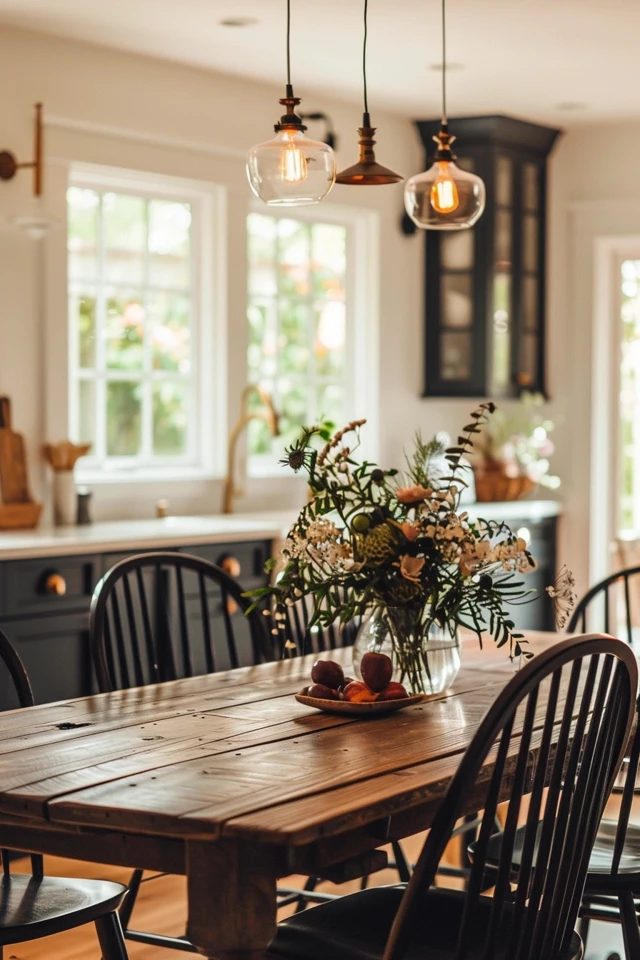
Farmhouse Dining Room Decor – Rustic Charming Ideas
There is something inherently inviting about a farmhouse dining room that other design styles struggle to replicate. It is a space designed for lingering over coffee, messy family breakfasts, and holiday dinners that last for hours. The aesthetic balances rugged utility with soft, welcoming textures, creating a home that feels lived-in rather than strictly admired.
Creating this look requires more than just buying a trestle table and a metal light fixture. It is about layering materials and understanding how rustic elements interact with modern functionality. If you are looking for visual inspiration, check out our comprehensive Picture Gallery at the end of this blog post.
In this guide, I will walk you through the practical steps of building a farmhouse dining room from the ground up. We will cover layout rules, material selection, and the specific measurements you need to make the space livable. Whether you are renovating a historic home or adding character to a builder-grade rental, these principles apply.
Setting the Foundation: Walls and Architectural Details
The “envelope” of the room sets the tone before you move a single piece of furniture in. In farmhouse design, walls usually rely on texture rather than bold, saturation color. This is where you create the rustic backdrop that allows your furniture to pop.
Shiplap is the most recognizable element, but it is not your only option. Board and batten wainscoting is often a better choice for dining rooms because it adds visual weight to the bottom half of the wall. This protects the drywall from dining chair scuffs and adds a historic architectural feel.
If you are renting or on a strict budget, you do not need to install real wood. Paint is your most powerful tool here. Aim for warm whites or soft greiges (gray-beige) rather than stark, hospital whites.
Designer’s Note: The Paint Undertone Lesson
I once had a client paint their entire farmhouse dining room a “bright white” that ended up looking blue in the afternoon sun. It clashed horribly with their warm wood table. Always test your white paint on all four walls. For a cozy farmhouse feel, look for whites with yellow or red undertones (like Creamy or Swiss Coffee) to bridge the gap between rustic woods and modern trim.
Flooring Considerations
Wide-plank flooring is the gold standard for this aesthetic. The wider the plank (think 7 inches or more), the more historical and casual the room feels. The wood tone should generally be mid-range; too dark shows every crumb, and too light can feel too Scandinavian.
If replacing floors isn’t an option, use a large area rug to cover generic tile or carpet. We will discuss rug sizing in detail later, but the goal is to introduce natural fibers like jute, wool, or sisal to ground the space.
The Centerpiece: Tables and Seating
The dining table is the anchor of the room. In farmhouse design, the table should feel substantial and solid. Look for “harvest tables” with thick tops and sturdy legs, preferably in reclaimed or distressed wood.
Distressed wood is actually a functional choice for families. If you have children or pets, a pristine lacquered table will show every scratch. A table that already has knots, grooves, and a matte finish will hide new dents and scratches, simply adding to the patina over time.
The “Mix and Match” Seating Rule
Avoid buying the matching set of chairs that comes with the table. That look often feels too “showroom” and lacks the collected-over-time charm of a true farmhouse. Instead, mix your seating styles.
A common layout is to use timber cross-back chairs or Windsor chairs on the sides, and fully upholstered armchairs at the heads of the table. This adds softness and creates a hierarchy in the seating arrangement.
Benches: Pros and Cons
Pros:
- Benches are excellent for maximizing space, especially if you need to squeeze more kids at the table.
- They can slide under the table when not in use, opening up traffic flow in narrower rooms.
- They provide a casual, communal picnic feel that suits the style perfectly.
Cons:
- They offer no back support, which makes them uncomfortable for long dinner parties.
- Getting in and out requires everyone on the bench to shuffle.
- Older guests generally dislike sitting on benches.
Common Mistakes + Fixes
Mistake: Buying a table that is too large for the room, making it impossible to walk around when people are seated.
Fix: You need a minimum of 36 inches of clearance between the edge of the table and the wall (or buffet). ideally, aim for 42 to 48 inches if it is a main walkway.
Lighting: Scale and Placement
Lighting in a farmhouse dining room needs to make a statement. It is the “jewelry” of the room. The fixtures usually feature materials like black iron, distressed wood, or woven textures.
Linear chandeliers are fantastic for rectangular tables. They distribute light evenly and mirror the shape of the table. If you prefer round fixtures, look for wagon wheels or lantern styles.
The Rules of Lighting Height
Getting the height right is critical for both aesthetics and function. If the light is too high, it feels disconnected from the table. If it is too low, it blocks conversation.
Hang the bottom of your fixture 30 to 36 inches above the tabletop. If you have ceilings higher than 8 feet, add 3 inches of chain length for every additional foot of ceiling height.
Dimmer Switches
I consider dimmer switches mandatory for dining rooms. Farmhouse style is about atmosphere. You need bright light for homework or cleaning, but you want a soft, warm glow for dinner.
Lighting Temperature Tip:
Always use bulbs with a color temperature between 2700K and 3000K. This provides a warm, yellow-white light. Anything over 3500K will look blue and sterile, killing the cozy vibe immediately.
Textiles: Rugs and Window Treatments
Textiles soften the hard surfaces of wood and metal. They also play a huge role in acoustics, preventing the room from sounding like a cafeteria.
Rug Sizing and Materials
A rug defines the dining zone. The most common error I see is a rug that is too small. When you pull a chair out to sit down, the back legs of the chair should remain on the rug.
The Rule of 24: Your rug should extend at least 24 inches beyond the table on all sides. For a standard dining table, this usually means you need an 8×10 or 9×12 rug. A 5×7 rug is almost always too small for a dining room.
For materials, natural fibers like jute are classic, but they can be rough on bare feet and hard to clean. If you eat in this room daily, consider a high-quality polypropylene vintage-look rug. They are virtually indestructible and can often be hosed down.
Curtains
Farmhouse curtains should be simple and airy. Linen or cotton blends in white, cream, or subtle ticking stripes work best. Avoid heavy velvets or shiny synthetics.
Installation height: Mount your curtain rod 4 to 6 inches above the window frame (or all the way to the ceiling molding). This draws the eye up and makes the room feel taller. Ensure the rod extends 6 to 10 inches past the sides of the window so the curtains don’t block the natural light when open.
Storage and Serving Pieces
Practical storage is a hallmark of farmhouse living. You need a place to store linens, serving platters, and candles. A sideboard, buffet, or hutch is the standard solution.
The Hutch
A tall hutch adds vertical interest to the room. It is the perfect place to display ironstone pottery, white serving ware, or cake stands. When styling a hutch, keep the color palette restrained. Sticking to all-white dishes or clear glass prevents the display from looking cluttered.
The Buffet (Sideboard)
If you have a smaller room, a buffet is a better choice than a tall hutch. It provides a serving surface for food during parties.
Designer’s Tip:
Look for a buffet that contrasts slightly with your table. If your table is raw wood, consider a painted buffet (black, sage green, or slate blue). If your table is painted, go for a natural wood buffet. This reinforces the “collected” look.
Accessories and Styling
The final layer brings the personality. Farmhouse decor relies on natural elements and vintage finds. However, it is easy to veer into “clutter” territory.
The Centerpiece
Keep your everyday centerpiece simple. A large dough bowl filled with moss balls or seasonal fruit is classic. Alternatively, a group of three ceramic vases in varying heights works well.
Ensure your centerpiece isn’t too tall. You should be able to see the person sitting across from you without craning your neck. If you use tall branches or greenery, make sure they are sparse enough to see through.
Wall Decor
Avoid small, scattered art. Use one large piece of art, a large round mirror, or a gallery wall of consistent frames. Mirrors are excellent for dining rooms as they reflect light and make the space feel larger.
An oversized wall clock is a farmhouse staple, but use it with caution. It can feel cliché if it looks too mass-produced. Look for genuine vintage clocks or high-quality metal reproductions.
Final Checklist: What I’d Do in a Real Project
If I were designing your dining room tomorrow, this is the exact workflow I would follow to ensure success.
1. Measure everything twice
- Measure the room length and width.
- Determine the maximum table size allowing for 36-42 inches of walkway space.
- Check the centering of your junction box (ceiling light) to see if it aligns with where the table will go. swaging a light (hanging it by a chain hook) is acceptable in farmhouse design if you can’t move the electrical box.
2. Select the “Anchor” pieces
- Choose the table first. It consumes the most budget and visual space.
- Select a rug that fits the “Rule of 24” (24 inches past the table on all sides).
3. Coordinate finishes
- If the table is wood and the floors are wood, ensure the tones are different enough to contrast, or use a rug to separate them.
- Mix metals. If your chandelier is black iron, your cabinet hardware can be antique brass. This adds depth.
4. Plan for real life
- If you have kids, choose a performance fabric for upholstered chairs (like Crypton or Sunbrella).
- If you have a cat, avoid loop-pile rugs like Berber; they will be destroyed. Stick to cut-pile or flatweave.
FAQs
Is Farmhouse style still popular?
Yes, but it has evolved. The “kitsch” version with signs that say “EAT” or “GATHER” is fading. The current trend is “Modern Farmhouse,” which focuses on authentic materials, cleaner lines, and higher quality craftsmanship rather than themed decor.
Can I mix wood tones in a dining room?
Absolutely. In fact, you should. A room where the floor, table, and buffet all match perfectly feels flat and artificial. Try to keep the undertones consistent (e.g., all warm woods), but vary the darkness and grain patterns.
How big should my chandelier be?
Add the length and width of the room together in feet. That number in inches is a good guideline for the diameter of a chandelier. For example, a 12×14 foot room could handle a fixture around 26 inches wide. Alternatively, the fixture should be about one-half to two-thirds the width of your dining table.
What if my dining room is small?
Use a round table. It eliminates sharp corners and improves flow in tight spaces. Use a pedestal base rather than legs to allow for more flexible seating. Hang a large mirror to double the visual space.
Conclusion
Creating a rustic, charming farmhouse dining room is about prioritizing warmth and connection. It is a style that forgives the scratches of daily life and celebrates the imperfection of natural materials.
By focusing on scale, durable materials, and a mix of textures, you can design a room that looks beautiful in photos but works even better for Friday night pizza. Remember that the best dining rooms are the ones where guests feel comfortable enough to stay long after the dessert is finished.
Picture Gallery


