
Rustic Charm: My Top Ranch Decor Ideas Unveiled
There is something undeniably grounding about ranch-style architecture. It reminds me of a project I worked on in Montana where the client wanted the home to feel like a warm hug after a long day in the snow. We moved away from the cliché cowboy themes and focused on what truly makes a ranch home special: durability, connection to nature, and effortless flow.
True ranch decor isn’t about hanging horseshoes above every doorway or covering your sofa in cowhide. It is about honoring honest materials and creating spaces that can handle the wear and tear of real life, whether that includes muddy boots, paws, or messy kids. For endless inspiration and visual examples of these concepts, be sure to check out the curated Picture Gallery included at the end of this post.
In this guide, I am going to walk you through the exact strategies I use when designing modern ranch interiors. We will cover everything from selecting the right wood finishes to laying out furniture in those characteristically long, open ranch living rooms. Let’s dive into the practical side of creating a home that feels both rustic and refined.
1. Establishing the Foundation: Materials and Architecture
The soul of a ranch home lies in its shell. Before we talk about throw pillows, we need to address the architectural envelope of the room. In my professional opinion, the most successful rustic spaces rely on a “high-texture, low-gloss” palette.
Embracing Natural Wood Beams
If your home has existing ceiling beams, highlight them. If not, installing faux beams is a renovation trick I use constantly to lower visual height and add warmth.
However, scale is critical here. A common mistake I see is installing beams that are too thin for the room’s width.
Designer’s Rule of Thumb: For ceilings 8 feet or higher, beams should be at least 6 inches wide and 6 inches deep. If you are spanning a room wider than 15 feet, bump that up to 8×8 or 10×10 inches.
Flooring That Lasts
Ranch living implies a connection to the outdoors, which means your floors will see traffic. I almost exclusively recommend wide-plank hardwood or natural slate for these projects.
For hardwood, look for White Oak with a matte, oil-rubbed finish rather than a high-gloss polyurethane. Glossy floors show every scratch from a dog’s claws; matte floors hide imperfections and age gracefully.
Stone Features
If you have a fireplace, it should be the focal point. Avoid polished marble in a rustic ranch; it feels too cold and formal.
Instead, opt for stacked stone, river rock, or even a rough-coat plaster wash. The texture should feel rough to the touch.
2. The Living Room: Layout, Scale, and Comfort
Ranch homes often feature long, rectangular living areas that can feel like bowling alleys if not furnished correctly. The goal is to stop the eye and create cozy conversation zones.
Anchoring with the Right Sofa
In a rustic setting, comfort is king. I usually specify a deep-seated sofa (at least 40 to 42 inches deep) to encourage lounging.
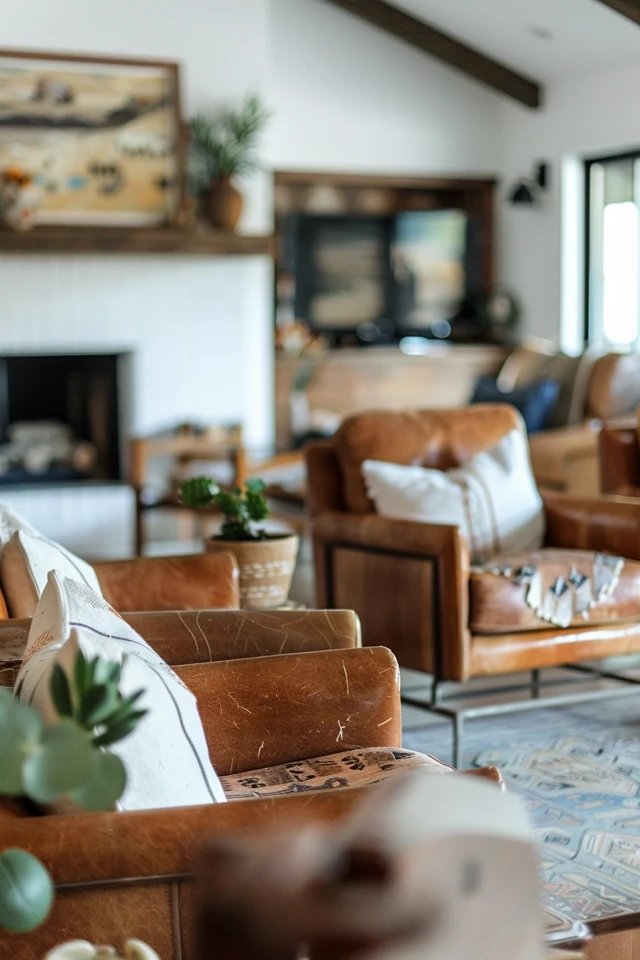
Leather is a fantastic choice here because it develops a patina over time. If you have pets, look for “distressed” leather where scratches blend in, rather than a pristine top-grain leather that ruins easily.
Rug Sizing and Placement
Nothing kills the vibe of a room faster than a postage-stamp-sized rug floating in the middle of the floor. In spacious ranch rooms, the rug defines the “zone.”
Measurements that matter:
- Ensure the front legs of all seating furniture sit on the rug.
- Ideally, all four legs should be on the rug if the room allows.
- Leave about 12 to 18 inches of bare floor between the edge of the rug and the wall to keep the room from feeling choked.
The “Float” Technique
Do not push all your furniture against the walls. This creates a “dead zone” in the center of the room.
Pull your sofa and chairs into the center to create an intimate grouping. Place a console table behind the floating sofa to anchor it visually and provide a place for lamps or decor.
Common Mistakes + Fixes
The Mistake: Relying on a single overhead light fixture.
The Fix: Layer your lighting. I always aim for three sources of light in a living room: ambient (recessed cans), task (reading lamps), and accent (picture lights or sconces).
3. The Ranch Kitchen: Function Meets Form
The kitchen is the workhorse of a ranch home. It needs to be rugged enough for canning vegetables or hosting large family gatherings, but stylish enough to feel welcoming.
Cabinetry and Finishes
I tend to steer clients toward Shaker-style cabinets or flat-front doors with visible wood grain. Painted cabinets are beautiful, but a stained wood island can ground the space and hide scuffs better than white paint.
If you choose painted perimeter cabinets, consider warm, earthy tones like sage green, mushroom, or a deep navy rather than sterile bright white.
The Kitchen Island
The island is usually the gathering spot. When designing this piece, think about overhangs for seating.
Designer’s Note: You need a minimum of 12 to 15 inches of countertop overhang for comfortable knee space. Anything less, and your guests will be knocking their knees against the cabinetry.
Mixing Metals
Don’t feel pressured to match your faucet to your drawer pulls. In fact, a “collected” look feels more authentic to the ranch style.
I love mixing oil-rubbed bronze hardware with a hammered copper sink or matte black light fixtures. It adds depth and prevents the kitchen from looking like a showroom display.
Lighting the Island
Pendants over the island are non-negotiable for both style and task lighting.
Placement Rules:
- Hang pendants 30 to 36 inches above the countertop surface.
- Space them about 24 to 30 inches apart (measured center-to-center).
- Ensure the outer lights are at least 6 inches from the edge of the island so no one hits their head.
4. Connecting to the Landscape: Mudrooms and Transitions
Ranch design is inextricably linked to the land outside. Whether you overlook mountains or a suburban backyard, the transition from outdoors to indoors must be seamless and durable.
The Mudroom Drop Zone
This is the most critical functional space in a ranch home. You need a designated place to stop the dirt before it enters the main living area.
What I’d do in a real project:
- Flooring: Use slate or a porcelain tile that mimics stone. It is impervious to water and mud.
- Bench: Build in a bench at 18 inches high. This is the standard ergonomic height for putting on shoes.
- Hooks: Install heavy-duty iron hooks. Place a lower row at 36 inches for kids and an upper row at 60 inches for adults and long coats.
Window Treatments
The goal is to frame the view, not block it. Avoid heavy, opaque drapes that pool on the floor; they collect dust and block light.
I prefer woven wood shades or bamboo blinds. They add a natural wood texture to the walls and filter light beautifully without darkening the room completely. If privacy isn’t a major issue, leaving upper windows bare can dramatically increase natural light.
Bringing Greenery Inside
Don’t rely on fake plants. They gather dust and look cheap.
Use large-scale, low-maintenance plants like a Fiddle Leaf Fig or a Snake Plant in oversized terracotta or basket-weave planters. The natural green color acts as a neutral and connects the interior palette to the view outside.
5. Accessorizing: Textiles, Art, and “The Last Layer”
This is where the “charm” part of the title comes in. The finishing touches determine whether the home feels curated or cluttered.
Textile Layering
Texture is the secret weapon of rustic design. Since we often use neutral color palettes (creams, browns, grays), we need texture to prevent boredom.
Mix these materials for a rich look:
- Wool: For throw blankets and rugs.
- Linen: For pillows and curtains.
- Leather: For ottomans or side chairs.
- Sheepskin: draped over a hard wooden chair for softness.
Art and Wall Decor
Please avoid mass-produced “farmhouse” signs with words on them. Instead, hunt for vintage landscape oil paintings, botanical prints, or black-and-white photography of nature.
I often frame vintage maps of the local area for clients. It grounds the home in its specific location and serves as a great conversation starter.
Lighting Temperature
The color of your light bulbs changes everything. For a warm, rustic environment, avoid “Daylight” bulbs which cast a blue, hospital-like hue.
Pro Tip: Buy LED bulbs with a color temperature of 2700K (Warm White) or 3000K (Soft White). This mimics the glow of incandescent bulbs or candlelight and makes wood tones look rich rather than washed out.
Final Checklist: Creating Your Rustic Ranch
Before you start buying furniture or knocking down walls, run through this summary checklist to keep your project on track.
Planning & Layout:
- Measure your room and map out traffic patterns. Ensure 30-36 inches of walking path between furniture pieces.
- Identify your focal point (fireplace or view) and orient furniture toward it.
- Check rug sizes: Ensure the rug is large enough to slide under the front legs of all seating.
Materials & Finishes:
- Select matte finishes for floors and metals to hide wear.
- Mix wood tones (e.g., walnut table with oak floors) rather than matching them perfectly.
- Choose durable fabrics like leather or performance linen for high-traffic areas.
Lighting & Decor:
- Install dimmer switches on every light fixture.
- Verify bulb temperature is between 2700K and 3000K.
- Layer textures using pillows, throws, and window treatments.
Frequently Asked Questions
Is rustic style always dark?
Not at all. “Modern Rustic” is actually quite bright. By using white or cream walls (I love Sherwin Williams Alabaster) as a backdrop for wood beams and leather furniture, you get a space that feels airy but still grounded. The contrast is what makes it beautiful.
How do I decorate a ranch style home on a budget?
Focus on vintage and second-hand items. Rustic style benefits from wear and tear. A scratched coffee table from a thrift store fits the aesthetic better than a brand new, shiny particle-board table. Look for solid wood pieces that can be sanded and refinished.
Can I mix modern furniture with rustic decor?
Absolutely. In fact, I encourage it. A sleek, mid-century modern armchair looks incredible next to a chunky stone fireplace. The clean lines of modern furniture prevent the room from feeling like a log cabin theme park. It keeps the look fresh and intentional.
What is the best way to deal with low ceilings in a ranch house?
Paint the ceiling bright white to reflect light. Use low-profile furniture; if your sofa back is low, the ceilings will feel higher in comparison. Also, hang curtain rods as close to the ceiling line as possible (not right above the window frame) to draw the eye upward.
Conclusion
Designing a home with rustic ranch charm is about balancing rugged durability with soft, welcoming comfort. It is a style that invites you to put your feet up and relax without worrying about coasters or pristine surfaces.
Remember to prioritize natural materials, pay attention to scale, and layer your lighting. If you follow the rules of thumb regarding layout and measurements, you will create a space that functions just as beautifully as it looks. Trust your gut, embrace the imperfections of natural materials, and enjoy the process of building a home with soul.
Picture Gallery


