
Title: Rustic Hunting Bedroom Ideas for Outdoor Enthusiasts
Introduction
There is something undeniably grounding about coming home to a space that reflects the rugged beauty of the outdoors. Designing a bedroom with a rustic hunting theme isn’t just about hanging a pair of antlers on the wall; it is about creating a sanctuary that feels safe, warm, and deeply connected to nature. As an interior designer, I often tell my clients that this style works best when it balances masculinity with genuine comfort, using textures that invite you to touch them and colors that soothe the eyes after a long day in the field.
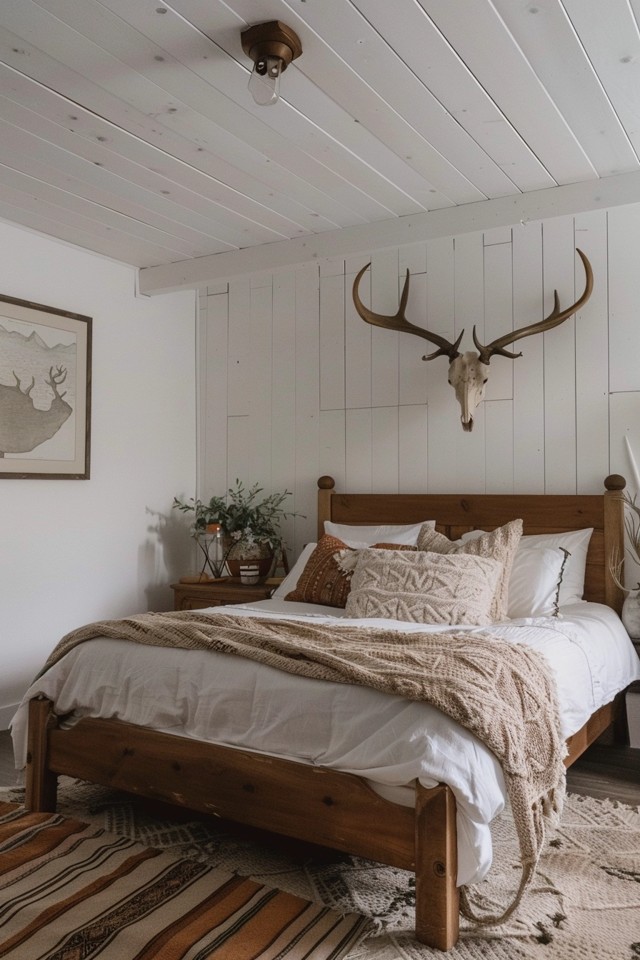
The key to nailing this aesthetic lies in the layering of organic materials like distressed leather, reclaimed wood, and heavy wool. We want to avoid the “kitschy cabin” look that feels like a souvenir shop and instead aim for the sophisticated atmosphere of a high-end hunting lodge. The inspiration for this guide comes from a recent mountain cabin project, and you can find a full Picture Gallery at the end of the blog post.
Whether you are designing a master suite in a log home or adding character to a spare room in the suburbs, the principles of scale and texture remain the same. This guide will walk you through the practical steps of building a rustic bedroom that honors your passion for the outdoors while functioning as a restful retreat.
1. Establishing the Foundation: Walls and Flooring
The largest surface areas in your room dictate the entire mood. In a rustic hunting bedroom, white drywall often feels too sterile. You need to introduce depth and character immediately through your material choices.
If you have the budget for it, installing wood paneling is the most effective way to warm up the space. However, I usually advise against covering every single wall in heavy logs, as this can make a standard-height room feel claustrophobic. Instead, consider a feature wall behind the bed using reclaimed barn wood or shiplap installed horizontally.
For flooring, hardwood is the gold standard. Wide-plank oak or hickory with a matte finish hides scratches from boots and dog claws much better than high-gloss finishes. If you are renovating and ripping out carpet, look for engineered hardwoods with a “hand-scraped” texture. These add instant age and history to the room.
Designer’s Note: The “Too Much Wood” Trap
A common mistake I see is when clients match their wood floors to wood walls and wood furniture. This creates a “sauna effect” where everything blends together. If your floors are dark walnut, keep your wall paneling lighter or painted. Contrast is necessary for the eye to distinguish different elements in the room.
Paint Colors for the Hunting Aesthetic
If wood paneling isn’t an option, paint is a powerful tool. Stick to earth tones found in the forest. Here are my go-to shades:
- Deep Olive Green: This creates a cocoon-like effect that is great for sleeping.
- Warm Charcoal: A dark grey with brown undertones looks incredible against leather headboards.
- Creamy Off-White: If you have low light, use a warm white (not stark white) to keep the room airy while still feeling aged.
2. Selecting Furniture with Scale and Weight
Rustic design relies heavily on “visual weight.” This means your furniture needs to look sturdy and substantial. Delicate, spindly legs often look out of place in a hunting-themed room. You want pieces that look like they could survive a hundred years.
Start with the bed frame. A solid wood log bed is a classic choice, but iron frames also work beautifully to break up the wood textures. If you choose a wooden headboard, ensure it is tall enough to be seen behind your pillows. A good rule of thumb is that the headboard should rise at least 24 to 30 inches above the top of your mattress.
Case goods, such as dressers and nightstands, should also be hefty. I prefer nightstands that are at least 24 inches wide for a Queen bed and 30 inches wide for a King bed. This ensures the furniture doesn’t look like a toy next to a large bed frame.
Common Mistakes + Fixes
Mistake: Using matching bedroom sets where the bed, dresser, and nightstands are identical.
Fix: Curate a collected look. If you have a wood bed, try metal or painted nightstands. If you have a leather upholstered bed, wood nightstands are perfect. This makes the room feel designed, not bought from a catalog.
Nightstand Height Rule
Functionality is key. Your nightstand surface should be level with the top of your mattress, or no more than two inches higher. If it is lower, it becomes difficult to reach your water glass or alarm clock in the dark.
3. The Art of Layering Textiles
Textiles are where the “cozy” factor happens. In a hunting bedroom, you want fabrics that are durable and warm. This is where we introduce patterns like plaid, buffalo check, and native motifs.
For bedding, start with high-quality cotton percale or flannel sheets in a solid neutral color. Layer a heavy duvet or comforter on top. I often use a duvet cover in a textured linen or a subtle tweed. Avoid large, loud prints on the main duvet; save the patterns for the accents.
At the foot of the bed, fold a thick wool blanket or a faux fur throw. This provides a visual anchor and practical warmth.
Rug Sizing Logic
A rug is essential for grounding the bed and adding softness underfoot.
- Placement: The rug should run perpendicular to the bed.
- Size: It needs to extend at least 18 to 24 inches beyond the sides of the bed.
- For a Queen Bed: Use an 8×10 rug.
- For a King Bed: Use a 9×12 rug.
If you have beautiful hardwood floors that you don’t want to cover entirely, you can layer a faux cowhide or sheepskin rug at an angle over the corner of a larger jute or sisal rug. This adds an organic shape that breaks up the straight lines of the room.
4. Lighting the Lodge
Lighting in a rustic room should be warm and atmospheric. We are trying to mimic the glow of a fire or a lantern, not the harsh brightness of an office.
Color Temperature matters:
Always check the Kelvin rating on your light bulbs. For a bedroom, you want 2700K (Warm White). Anything above 3000K will look too blue and clinical, which kills the rustic vibe instantly.
Layering Your Light Sources
You need three types of light:
1. Ambient: This is your general overhead light. An antler chandelier or a wrought iron wagon wheel fixture makes a great statement piece.
2. Task: These are your bedside lamps. Look for bases made of stone, pottery, or wood. The bottom of the lampshade should be roughly at eye level when you are sitting up in bed reading.
3. Accent: Small picture lights over artwork or a warm glow from a fireplace sconce add depth to the corners of the room.
Chandelier Height Rule
If you hang a chandelier over the bed, ensure the bottom of the fixture is at least 7 feet off the floor to prevent head bumps. If you have vaulted ceilings, you can drop it lower, but visually it should center over the bottom two-thirds of the bed.
5. Curating Decor: The Hunt and The History
This is the section where you can showcase your passion, but restraint is necessary. The goal is a curated gallery, not a cluttered garage.
Displaying Trophies and Gear
If you have taxidermy, treat it like fine art. A single, impressive shoulder mount over a fireplace or centered on a wall is dignified. A wall crowded with twenty different mounts can feel chaotic and overwhelming in a bedroom setting.
European mounts (skull and antlers only) are often easier to style in smaller bedrooms because they have less visual weight than full shoulder mounts.
Vintage gear makes for excellent decor. Old wooden snowshoes, antique fishing rods, or a vintage recurve bow can be mounted on the wall as art. This adds history and storytelling to the space.
Window Treatments
Avoid flimsy blinds. Go for heavy drapery panels in velvet, wool blend, or heavy cotton.
- Mounting Height: Hang the curtain rod 4 to 6 inches above the window frame (or all the way to the ceiling molding) to make the room feel taller.
- Width: The rod should extend 8 to 12 inches past the window frame on each side so that when the curtains are open, they don’t block the glass.
Designer’s Note: Storage Solutions
Hunting gear is heavy and bulky. If this bedroom also serves as storage for your actual equipment, invest in a beautiful, locking gun cabinet that matches your furniture. Avoid leaning gear in corners. A heavy wooden trunk at the foot of the bed is perfect for storing off-season camouflage clothing or boots.
Final Checklist: What I’d Do in a Real Project
If I were hired to design your rustic bedroom today, this is the exact checklist I would follow to ensure the project stays on track and looks professional.
Planning Phase
- Measure the room specifically for the rug and bed size. Tape the outlines on the floor with painter’s tape to check traffic flow.
- Select one “hero” material (e.g., a leather headboard or a stone wall) and build the palette around it.
- Determine the lighting plan. Do you need an electrician to move a junction box for a centered chandelier?
Purchasing Phase
- Buy the rug first. It is often the hardest piece to match later.
- Order fabric swatches for curtains and bedding before buying. Computer screens distort colors.
- Verify the weight capacity of wall anchors if you plan to hang heavy taxidermy or antique gear.
Installation Phase
- Install the curtain rods high and wide.
- Place the rug, then the bed, then the nightstands.
- Install lighting with dimmer switches—this is non-negotiable for mood.
- Style the surfaces last. Leave 20% of shelf space empty to let the room breathe.
FAQs
How do I make a small bedroom look rustic without feeling cramped?
In a small room, focus on texture rather than heavy furniture. Use a metal bed frame instead of a thick log frame to keep the sightlines open. Use lighter wood tones for the walls (like a whitewashed pine) and save the dark rustic colors for the bedding and rug.
Can I mix modern furniture with rustic style?
Absolutely. This is often called “Modern Rustic.” The trick is to keep the lines of the furniture clean and simple but choose materials that are raw and natural. For example, a sleek, modern chair looks rustic if it is upholstered in distressed cognac leather.
What is the best way to clean taxidermy in a bedroom?
Dust is the enemy. Use a soft, high-quality feather duster or compressed air (canned air) gently on fur and feathers once a month. Avoid using water or household cleaning sprays, as they can damage the preservation oils.
Is it okay to use faux materials?
Yes, but be selective. Faux fur throws have come a long way and feel very luxurious. However, avoid faux wood laminate furniture if possible; it rarely ages well. I would rather see a painted metal nightstand than a fake wood one.
Conclusion
Creating a rustic hunting bedroom is about more than just aesthetics; it is about crafting a space that resonates with your love for the wild. By focusing on natural materials, proper scale, and warm lighting, you can build a room that feels timeless and sturdy.
Remember that the best interiors evolve over time. Start with the foundational pieces—a great bed, a quality rug, and the right paint color—and then slowly add the layers of decor and personal trophies that tell your specific story. Whether you are in a downtown apartment or a cabin in the woods, these design principles will help you bring the spirit of the outdoors in.
Picture Gallery


