
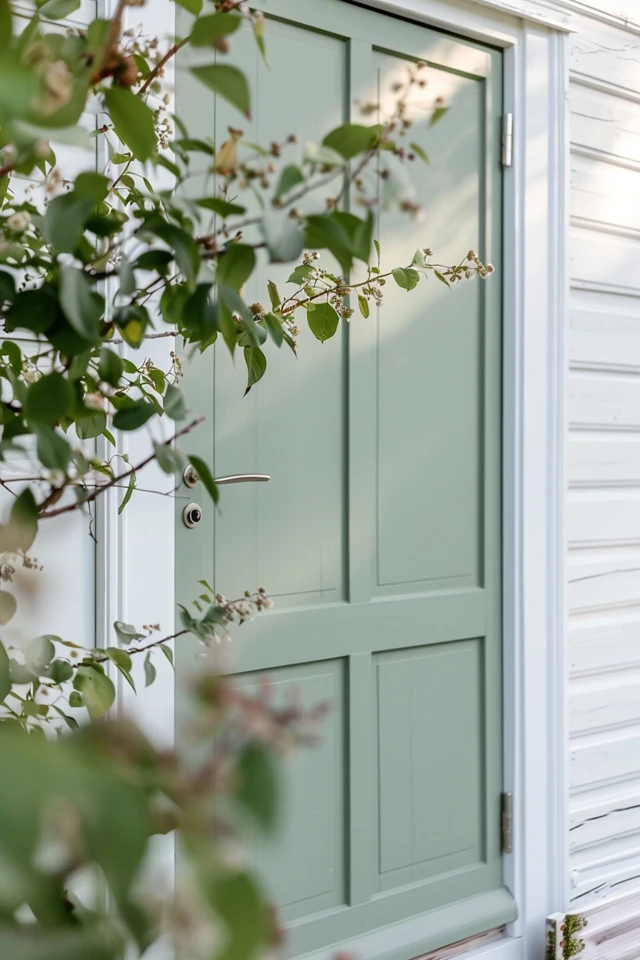
Sage Green House Front Door Color Ideas
There is a reason sage green is taking over exterior design boards everywhere. It is the perfect bridge between the natural landscape of your front yard and the architectural structure of your home. It feels organic, grounding, and incredibly welcoming.
I recently worked with a client who was terrified of color. She lived in a white farmhouse and wanted character, but she was afraid anything too bold would look tacky. We settled on a muted, gray-leaning sage for the front door, and it completely transformed the curb appeal without feeling “loud.”
Whether you have a red brick colonial, a stucco bungalow, or modern vinyl siding, there is a shade of sage that works. If you are looking for visual inspiration, jump to the Picture Gallery at the end of this blog post.
1. Mastering Undertones and Light Exposure
The biggest mistake homeowners make is assuming all sage greens are created equal. Sage is a complex color that sits between green and gray, often with yellow or blue undertones. The direction your house faces changes everything.
If your front door faces North, the light will be cool and indirect. This blue-tinted light can turn a gray-sage into a flat, cold gray. In North-facing entries, you need a sage with stronger yellow or warm undertones to counteract the cool light.
Conversely, a South-facing door receives intense, warm direct sunlight. This can wash out delicate colors. For Southern exposures, I always recommend going two shades darker than you think you need. A deep, muddy sage will read as a perfect mid-tone green when hit by the noon sun.
Designer’s Note: The 24-Hour Test
Never pick a paint color based on how it looks in the hardware store. Buy a sampler pot and paint a large poster board.
Tape this board to your front door for 24 hours. Look at it in the morning, at noon, and under your porch light at night. You will be shocked at how much the color shifts.
East and West Considerations
East-facing doors get bright morning light but turn shadowy in the afternoon. A sage with a slight blue undertone looks crisp here in the morning. West-facing doors get that “golden hour” sunset glow, which will turn a yellow-sage very warm, almost olive.
2. Coordinating with Exterior Cladding
Your front door does not exist in a vacuum. It has to have a conversation with your siding, brick, or stone. The goal is contrast and harmony.
Red Brick Homes
Sage green is arguably the best possible choice for red brick. Red and green are complementary colors on the color wheel, meaning they intensify each other naturally. However, you must be careful with the brightness.
Avoid bright, minty sages against red brick, as this can look like Christmas decor. Stick to “muddy” sages with heavy gray or brown undertones. These earthy shades ground the red brick and create a historic, sophisticated palette.
White and Cream Siding
If you have a white farmhouse or cream siding, you have more flexibility. Here, you can lean into clearer, lighter sage greens for a breezy, coastal feel.
If you want a moody, modern look, choose a dark, forest-leaning sage. High contrast between a white house and a dark door creates a focal point that draws the eye immediately to the entry.
Gray and Stone Facades
This is the trickiest combination. If your gray siding has cool blue undertones, a yellow-based sage will clash. If your stone has warm beige flecks, a blue-based sage will look out of place.
To get this right, hold your paint chip against the darkest stone in your facade. You want the door to share the same “temperature” (cool vs. warm) as the fixed elements of the house.
Common Mistakes + Fixes
- Mistake: Ignoring the roof color.
- Fix: Your roof is a massive block of color. If you have a brown shingle roof, stick to warm olive-sages. If you have a charcoal or black roof, cooler gray-sages work best.
- Mistake: Painting the trim the same color.
- Fix: Frame your sage door. Use a crisp white or a dark charcoal for the door jamb and trim to make the green pop.
3. Selecting the Right Hardware Finishes
Think of door hardware as the jewelry of your entryway. Because sage is an earth tone, it plays very well with warm metals, but it can also look sleek with cool tones depending on the vibe you want.
The Case for Brass
Unlacquered or antique brass is my top choice for sage green doors. The gold tones warm up the green and add a touch of classic luxury. This combination is timeless and works exceptionally well on traditional or cottage-style homes.
If you choose brass, ensure it is substantial. A flimsy handle will lower the perceived value of the whole paint job. Look for solid brass that will develop a patina over time.
Matte Black for Modernity
If you prefer a modern farmhouse or industrial look, matte black is the way to go. The sharp contrast between soft sage and harsh black is visually striking.
Matte black hardware also tends to hide fingerprints better than polished metals. Just ensure the black finish is powder-coated for exterior durability, or it will chip within a year.
Brushed Nickel and Chrome
I use silver tones less often with sage, but they have their place. If you have a very cool, blue-leaning sage door on a coastal home, satin nickel can look fresh and airy. Avoid polished chrome, which can look too sterile against an organic color like sage.
What I’d Do in a Real Project: Hardware Checklist
- Entry Set: I prefer a handleset with a thumb latch rather than a simple knob for front doors. It adds weight and scale.
- Kickplate: If the door is wood or fiberglass, add a 6-to-8-inch kickplate in a matching metal. It protects the paint from scuffs and adds a “finished” look.
- Door Knocker: Center it at eye level (roughly 57-60 inches from the ground).
- Hinges: Do not forget to swap the hinges to match the handle. It’s a small detail that screams “custom.”
4. Landscaping and Porch Decor
The design does not stop at the door slab. To make the sage green make sense, you need to pull that color into the surrounding porch area.
Rug Selection and Sizing
A rug grounds the entry. For a standard single door, a 3×5 foot rug is usually the minimum. Do not use a tiny 2×3 mat; it looks skimpy and unwelcoming.
With a sage door, look for rugs that incorporate natural fibers like jute or coir. The tan texture looks beautiful against the green. If you want a pattern, a black and white geometric print provides a nice modern edge to the soft door color.
Planters and Foliage
Since sage is a color found in nature, your plant choices should enhance it, not compete with it. I love using terracotta pots with sage doors. The orange clay is the direct complement to the green paint.
For plants, look for foliage that offers contrast. Dark purple ornamental grasses or deep burgundy Heuchera (Coral Bells) look stunning against sage. Avoid plants with leaves that are the exact same shade of green as the door, as they will disappear visually.
White flowers, such as hydrangeas or gardenias, also look incredibly crisp next to a sage entry. They highlight the freshness of the palette.
Lighting Temperature
Your porch lighting affects how the paint looks at night. Avoid “Daylight” bulbs (5000K), which cast a blue, hospital-like glare. This will make your sage door look sickly.
Stick to “Warm White” or “Soft White” LED bulbs (2700K to 3000K). This warm light enhances the cozy, welcoming undertones of the green.
5. Paint Types and Application Logic
You can pick the perfect color, but if the finish is wrong, the result will be disappointing. Exterior doors take a beating from UV rays, rain, and daily handling.
Sheen Matters
For front doors, I almost exclusively specify a Semi-Gloss or Satin finish.
Semi-gloss is the standard. It is durable, easy to wipe clean of muddy paw prints, and makes the color appear richer. The slight reflection draws the eye.
Satin is beautiful for older doors with imperfections. If your door has dings and dents that you can’t sand out, high gloss will highlight them. Satin hides texture better but is slightly harder to scrub clean.
Never use Flat or Eggshell paint on a front door. It will look chalky, absorb moisture, and show every single fingerprint.
Latex vs. Oil
In the past, oil-based paints were the gold standard for durability. Today, high-quality 100% acrylic latex enamels are excellent and much easier to work with. They resist cracking and fading better than oil because they remain flexible as the wood expands and contracts.
Preparation is Key
Most paint failures happen because of bad prep, not bad paint. You must scuff-sand the old finish with 120-grit sandpaper. You are not trying to remove all the paint, just the gloss, so the new paint can grip.
If you are painting over a dark color (like black or navy) to go to a light sage, use a gray-tinted primer. It will help you get true coverage in fewer coats.
Final Checklist
Before you head to the paint store, run through this list to ensure you have covered all your bases.
- Check HOA Rules: Ensure sage green is an approved color in your neighborhood.
- Test the Swatch: View the color on the door in the morning, noon, and evening.
- Assess the Roof: Does the green clash with your brown or gray shingles?
- Gather Supplies: 120-grit sandpaper, tack cloth, painter’s tape, angled sash brush, and a mini foam roller.
- Check the Weather: Do not paint if the temperature is below 50°F or if rain is in the forecast for the next 24 hours.
- Plan for Drying: You will need to leave the door open for several hours. Plan this for a day when you can be home to guard the entry.
FAQs
Can I paint a vinyl or fiberglass door sage green?
Yes, absolutely. For fiberglass, you can often paint directly with acrylic latex. For vinyl, you must check the manufacturer’s specs. Some vinyl warps if painted a dark color due to heat absorption, but sage is usually light enough to be safe. Always use a bonding primer meant for slick surfaces.
Does a sage green door work with a red brick house?
It is one of the best combinations possible. To make it work, choose a sage with a gray or “dusty” undertone rather than a bright, candy-apple green. The muted green balances the visual weight of the brick.
Should I paint the interior side of the door sage as well?
This is a personal design choice. I often advise painting the interior side white (or whatever your trim color is) to keep the hallway looking bright. However, if you want a pop of color in your entryway, wrapping the sage color onto the inside can be a lovely feature.
How many coats of paint do I need?
Plan for one coat of primer and two coats of exterior enamel. Even if the paint claims to be “paint and primer in one,” a dedicated primer coat ensures longevity. Thin, multiple coats are always better than one thick, gloppy coat.
Conclusion
Choosing a sage green front door is a low-risk, high-reward design move. It respects the architecture of almost any home style while adding a layer of personality that standard white or black doors lack.
By paying attention to lighting conditions, coordinating with your hardware, and taking the time to prep the surface correctly, you can create an entryway that feels curated and professional.
Remember that the goal is to create a cohesive look. Let the sage green be the handshake that welcomes guests into your home. Take your time with the samples, trust your gut, and enjoy the process of transforming your curb appeal.
Picture Gallery


