
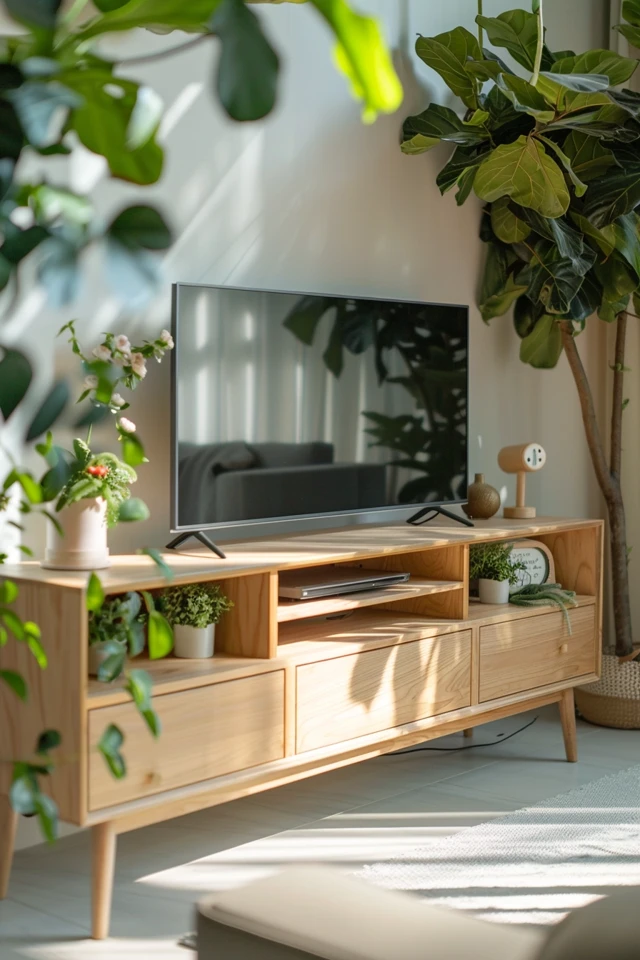
Scandinavian TV Stands: Functional Decor
Introduction
I remember walking into a client’s apartment in Brooklyn a few years ago, and immediately feeling a sense of visual tension. The living room was beautiful, featuring high ceilings and lovely natural light, but a massive, glossy black television sat precariously on a tiny, dark metal cart. It looked top-heavy, cluttered, and completely out of place against the airy vibe they were trying to achieve.
We fixed the issue by introducing a low-profile, white oak Scandinavian media console that instantly grounded the room. It hid the tangle of wires, provided storage for their gaming consoles, and turned the “black hole” of the TV screen into part of a cohesive design vignette. For plenty of visual examples on how to achieve this look, keep in mind that a curated Picture Gallery is waiting for you at the end of this blog post.
Scandinavian design is not just about minimalism; it is about intentional functionality wrapped in warm, natural aesthetics. When selecting a TV stand, you aren’t just buying a place to park your electronics. You are choosing a piece of furniture that dictates the flow, storage, and atmosphere of your primary gathering space.
1. Defining the Scandinavian Aesthetic: Materials and Form
When we talk about Scandinavian design in the context of media consoles, we are looking for specific visual markers. The most obvious is the material choice, which predominantly favors light, natural woods. White oak, ash, and birch are the standard bearers because they reflect light and keep the room feeling airy.
However, the form is just as important as the finish. You want to look for clean, straight lines that lack ornate carving or heavy molding. The silhouette should feel simple and honest, often featuring sliding slat doors or flush-front drawers that eliminate the need for bulky hardware.
Another non-negotiable element is the leg structure. Authentic Scandinavian pieces almost always sit on tapered or cylindrical legs that elevate the body of the cabinet off the floor. This isn’t just for style; seeing the floor continue underneath the furniture makes the room feel larger.
Designer’s Note: The “Leg” Rule
One thing I always tell clients is to pay attention to the “visual weight” of the furniture legs. If your sofa has chunky, blocky legs, a TV stand with very spindly, thin legs might look fragile in comparison. Try to match the visual weight of the legs across your major furniture pieces to create a sense of harmony.
Common Materials to Look For:
- Solid White Oak: The gold standard for durability and grain patterns.
- Ash Veneer: Offers a slightly cooler, paler tone that works well in modern grey-based palettes.
- Walnut: While darker, mid-century modern walnut often overlaps with Scandi design and adds significant warmth.
- Matte Lacquered MDF: Often used for drawer fronts to create a two-tone look with the wood frame.
2. Sizing and Scale: The Mathematics of the Media Wall
The most common mistake I see in DIY interior design is buying a TV stand that is too small for the television. This creates a “mushroom effect,” where the screen looks like it is crushing the furniture beneath it. It makes the room feel cheap and temporary.
To look intentional and high-end, your media console must be wider than your television. I recommend a buffer of at least 4 to 6 inches on both sides of the screen, though 8 to 10 inches is ideal if you have the wall space. This extra width grounds the TV and provides surface area for decor.
You also need to understand the difference between screen size and actual width. A “65-inch TV” is measured diagonally, but the actual width is usually around 57 inches. Therefore, your stand needs to be at least 65 to 70 inches wide to maintain proper proportions.
Common Mistakes + Fixes
- Mistake: Mounting the TV too high above the console, leaving a large gap of dead space.
- Fix: The bottom of the TV should only be 4 to 8 inches above the surface of the stand if wall-mounted. If it is on feet, the stand does the work for you.
- Mistake: Buying a console that is too tall.
- Fix: Aim for a console height of 18 to 22 inches. When seated on your sofa, your eye level should hit the dead center of the screen.
What I’d do in a real project:
If I am designing a living room with a standard 8-foot ceiling, I almost always choose a low-profile console (around 16-20 inches tall). This leaves plenty of breathing room above the TV for art or negative space, which prevents the wall from feeling crowded.
3. Functionality: Cable Management and Component Storage
A Scandinavian TV stand fails if it looks pretty but leaves a rat’s nest of cables visible on the floor. The “functional” part of this design philosophy means the unit must work hard to conceal the mess of modern technology.
When shopping, inspect the back panel of the unit immediately. You need generous cutouts (grommets) for passing wires through from the receiver, gaming console, and router to the wall outlet. If the unit has a solid back, you will be forced to drill your own holes, which can compromise the veneer if not done carefully.
Ventilation is another factor that often gets ignored until a PlayStation overheats. If you plan to keep high-performance electronics behind closed doors, look for slatted door designs. The vertical or horizontal slats allow heat to escape and, crucially, allow remote control (IR) signals to pass through to the device.
Storage Configurations to Consider:
- Drawers: Best for hiding small clutter like batteries, remotes, manuals, and coasters.
- Open Shelves: Good for soundbars or decorative items, but they require strict dusting and cable discipline.
- Sliding Doors: Excellent for tight spaces because they don’t swing out into the room, saving floor space.
- Drop-down Doors: These usually conceal media components but can be fragile if kids step on them.
Designer’s Note: The Soundbar Dilemma
If you use a soundbar, measure it before buying the stand. Many Scandi stands have a center support leg that might block a soundbar from sliding onto a lower shelf. If the soundbar sits on top, ensure the TV stand is deep enough (usually 16+ inches) to accommodate both the TV stand feet and the soundbar without overhang.
4. Styling the Unit: Balancing the “Black Hole”
The television is essentially a giant black void in your room. To counteract this visual weight, you need to style the console surface with intention. The goal is to bridge the gap between the technology and the rest of your organic, soft decor.
I typically use the “Rule of Three” and asymmetry to create interest. Since the TV is a perfect rectangle centered on the unit, you want to avoid placing identical items on either side, which creates a rigid, altar-like appearance. Instead, create balance through visual weight rather than symmetry.
On one side, you might place a tall, organic element like a vase with dried branches or a slender table lamp. On the other side, stack two or three coffee table books with a small sculptural object on top. This creates a “Z” pattern that guides the eye across the arrangement.
Lighting the Media Wall:
- Sconces: Installing plug-in sconces on the wall flanking the TV adds warmth and reduces eye strain at night.
- Bias Lighting: Placing an LED strip behind the TV screen (reflecting off the wall) improves contrast and looks very modern.
- Table Lamps: A small, low-lumen lamp on the console itself adds a cozy “hygge” vibe, but ensure it doesn’t glare against the screen.
What I’d do in a real project:
I often layer a piece of art behind the TV if the console is wide enough. By leaning a framed print on the far end of the console, partially behind the screen edge, you create depth. It reminds the viewer that this is a decorated room, not just a home theater.
5. Durability and Real-Life Constraints
We have to be realistic about how these pieces are used. If you have toddlers, a lightweight particle-board Scandi stand can be a tipping hazard. If you have pets, certain wood finishes might scratch easily under the pressure of claws.
For households with children, anchoring the TV stand to the wall is mandatory. Even if the unit is low, the weight of the TV or a child climbing on open drawers can cause a tip-over. Look for units that come with anti-tip hardware, or purchase a heavy-duty strap kit separately.
regarding durability, solid wood is always the most repairable option. If a toy gets smashed into a solid oak edge, you can sand and re-oil it. If the same happens to a thin veneer or melamine surface, that damage is permanent.
The Renter’s Perspective:
Scandinavian stands are perfect for renters because they are generally freestanding and modular. Unlike built-ins, you can take them with you. However, pay attention to the feet. Some legs are very sharp or narrow and can dent soft rental flooring. Always use felt pads or furniture cups under the legs.
Cleaning and Maintenance:
- Oiled Wood: Requires re-oiling once or twice a year to prevent drying and cracking. It offers a beautiful matte look but is sensitive to water rings.
- Lacquered Wood: Much easier to wipe down and more resistant to spills, but harder to repair if scratched deep.
- Dusting: Slatted doors are beautiful but are dust magnets. You will need a vacuum attachment with a brush to clean between the slats regularly.
Final Checklist: Before You Buy
Before you click “purchase” on that beautiful oak console, run through this quick checklist to ensure it fits your space and lifestyle.
1. The Width Check
Is the stand at least 8 to 12 inches wider than the actual width of your TV? (Not the diagonal screen size).
2. The Height Check
When sitting on your sofa, is your eye level aligned with the center of where the screen will be?
3. The Depth Check
Is the unit deep enough to hold your largest component (usually an AV receiver or gaming console) plus the cables sticking out the back? You generally need 16 to 18 inches of depth.
4. The Robot Vacuum Test
If you have a Roomba or similar vacuum, are the legs at least 4 inches tall to allow it to pass underneath?
5. The Cable Path
Does the unit have pre-drilled holes in the back of the specific compartments where you plan to put your devices?
FAQs
Can I mix wood tones between my floor and the TV stand?
Absolutely. In fact, matching them perfectly often looks flat. If you have warm oak floors, a slightly paler ash or a darker walnut stand creates a nice contrast. The key is to keep the undertones (warm vs. cool) consistent or deliberately contrasting.
Should I wall mount the TV or put it on the stand?
In Scandinavian design, both are acceptable. However, putting the TV on the stand’s feet feels slightly more casual and flexible. Wall mounting looks cleaner but requires concealing cables inside the wall to truly look “Scandi.”
How do I hide the cable box if the remote needs to see it?
You have two options. First, buy a stand with slatted wood doors, which allow the signal to pass through. Second, use an “IR Repeater” system, which is a tiny sensor you stick on the TV that relays the signal to the box hidden inside a solid cabinet.
Is it okay to put a TV in front of a window?
Ideally, no. It causes glare and blocks natural light, which is a sin in Scandi design. However, if space is tight, use a low-profile stand that sits below the window sill, so you don’t block the view or the light coming in.
Conclusion
Choosing the right Scandinavian TV stand is about more than just finding a place to put your screen. It is about reclaiming your living room from technology and reintroducing warmth, texture, and organization.
By focusing on materials like solid oak or ash, prioritizing low and wide proportions, and ensuring the piece has the functional storage your devices require, you can create a media wall that feels peaceful rather than chaotic.
Remember that the best design serves your real life. Whether you are binge-watching your favorite series or hosting friends for game night, your environment should feel calm and collected. A well-chosen media console is the anchor that makes that possible.
Picture Gallery


