
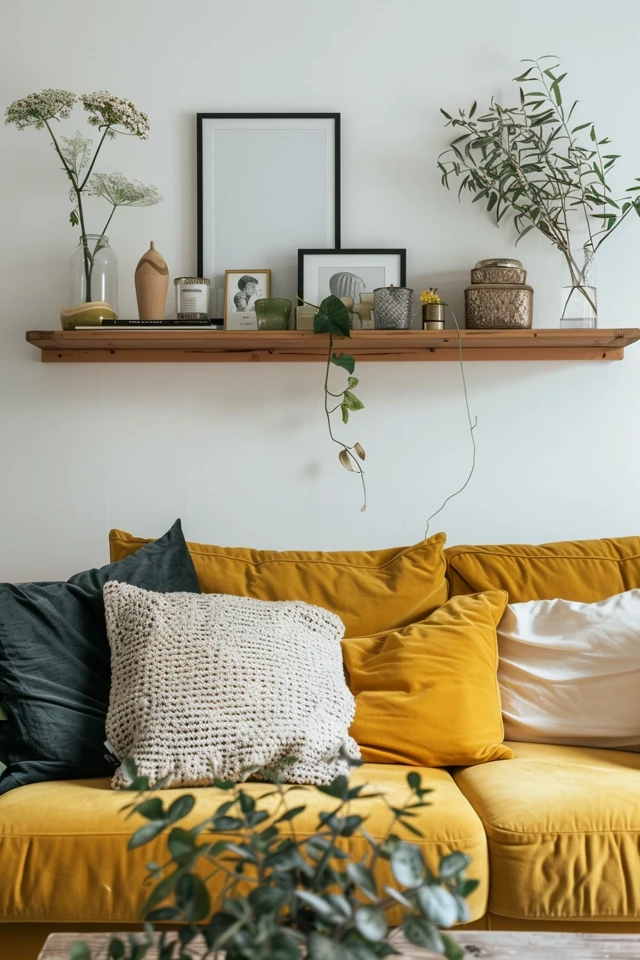
Title: Shelf Above Couch Ideas for Chic Living Spaces
Introduction
The wall space directly behind a sofa is often a notorious “dead zone” in living room design. It is too large to leave entirely blank, yet it can be tricky to fill without overcrowding the room or interfering with head space. Installing a shelf—or a series of them—is one of the most functional and aesthetically pleasing solutions to this common layout dilemma. It draws the eye upward, creates vertical storage, and offers a perfect stage for your personality to shine through art and objects.
I remember a project where the client, Sarah, had a beautiful but compact apartment with zero floor space for bookcases. We utilized a long, shallow architectural ledge behind her sectional. It completely transformed the room from a temporary rental feel to a custom, high-end look, all while giving her a place to display her vintage camera collection. For a huge dose of inspiration, make sure to check out the Picture Gallery at the end of this blog post.
Whether you are looking to display rotating art prints or need a spot for trailing plants, the key is execution. A shelf above the couch requires precise measurements and careful curation to ensure it looks intentional rather than cluttered. In this guide, I will walk you through everything from the math of hanging height to the art of styling.
1. The Math of Placement: Height and Depth Rules
Before you buy a single bracket, you must understand the ergonomics of the space. The biggest failure point in DIY shelf installation is hanging the shelf too low. If a guest hits their head when leaning back, the design has failed, no matter how beautiful it looks.
The Golden Rule of Height
As a general standard, the bottom of your shelf should sit roughly 10 to 12 inches above the top of your sofa back. However, this is not a rigid law. If you have very tall family members or a sofa with a low back, you may need to go higher.
Sit on the couch and lean your head back comfortably. Have someone mark the wall where the top of your head hits, then add at least 6 inches of clearance above that point. This ensures visual connectivity between the furniture and the shelf without sacrificing safety.
Depth Matters
Deep shelves can feel looming and heavy when placed directly over seating. For a shelf above a couch, aim for a depth between 4 and 8 inches.
If you plan to use the shelf strictly for leaning art frames (a picture ledge), a depth of 3 to 4 inches is sufficient. If you want to layer books and small sculptural objects, 6 to 8 inches is the sweet spot. Anything deeper than 10 inches will cast a large shadow and likely feel invasive to the person sitting below.
Designer’s Note: The Visual Anchor
I often see homeowners install a shelf that is too short for the sofa. Ideally, your shelf—or the arrangement of shelves—should span about two-thirds to three-quarters of the width of the couch. If the shelf is too short, the sofa will swallow it visually. If it is exactly the same width as the sofa, it can look rigid and boxy.
2. Selecting the Right Shelf Style for Your Aesthetic
The hardware and finish you choose will dictate the room’s vibe. You are not just buying wood; you are buying a style statement.
Floating Shelves
These are the most popular choice for modern, minimalist, and contemporary homes. They have hidden internal brackets, creating a clean line that looks like it is extruding from the wall. This keeps the look airy and reduces visual clutter.
Bracketed Shelves
Visible brackets add character and are excellent for farmhouse, industrial, or traditional spaces. Brass or matte black iron brackets can act as jewelry for the wall. If you choose this route, ensure the brackets are spaced evenly and hit wall studs for maximum support.
Picture Ledges
A picture ledge has a small lip on the front edge to prevent frames from sliding off. These are fantastic for commitment-phobes because you can swap out artwork in seconds without making new nail holes. They are also much slimmer than standard shelves, making them ideal for small rooms where every inch of depth counts.
Common Mistakes + Fixes
Mistake: Matching the wood shelf perfectly to the wood floor.
Fix: It is very difficult to match wood tones exactly, and a “near miss” looks accidental. Instead, go for a deliberate contrast. If you have honey oak floors, try a dark walnut shelf or a painted finish that matches your wall color for a monochromatic look.
3. Styling Your Shelf: The Triangle Method
Once the shelf is up, the real work begins. Styling is what separates a storage rack from a design feature. I always tell my clients to think of the shelf as a composition, not a parking lot for random items.
The Triangle Technique
Visual triangles keep the eye moving. Arrange your objects so that the tallest items form the peaks of imaginary triangles. For example, place a tall framed print on the left, a medium-height vase in the middle, and a tall plant on the right. This creates a balanced “valley” in the center.
Layering is Essential
Do not line everything up in a single soldier-straight row. Lean a large piece of art against the back of the wall. Then, place a smaller frame slightly overlapping it in front. Place a small bowl or candle in front of that. This creates depth and makes the arrangement feel organic.
The Power of Books
Books add texture and warmth. Stack two or three hardcover books horizontally to create a riser for a small object, like a ceramic knot or a succulent. You can also stand books vertically, but use a heavy object as a bookend to prevent them from tipping.
Greenery Brings Life
Every shelf needs something organic. For high shelves, a trailing plant like a Pothos or String of Hearts is perfect. The vines drape down, bridging the gap between the shelf and the sofa, which helps integrate the two elements.
What I’d Do in a Real Project (My Mini Checklist)
- Palette Check: I pick 3 core colors for the accessories (e.g., terracotta, sage green, and brass) and stick to them to avoid chaos.
- Texture Mix: I ensure there is at least one shiny item (glass/metal), one matte item (ceramic/stone), and one soft item (paper/wood).
- Negative Space: I leave about 20% of the shelf empty. The eye needs a place to rest.
4. Lighting and Atmosphere Integration
A shelf can be a functional light source, adding a cozy glow to your evening lounging. Overhead lights are often too harsh for relaxing, so integrating lighting into your shelf design is a pro move.
Rechargeable Sconces
If you don’t want to hire an electrician, look for battery-operated sconces that can be mounted just above or even onto the shelf. This adds a library-style sophistication.
LED Strip Lighting
For floating shelves, routing a channel for an LED strip on the underside can create a beautiful wash of light down the wall and onto the sofa. This is particularly effective if you have textured wallpaper or a brick wall behind the couch.
Puck Lights
Small, remote-controlled puck lights can be hidden behind large art frames leaning on the shelf. This creates a backlit “halo” effect that looks very expensive but costs very little.
5. Safety and Installation Priorities
Safety is paramount when hanging heavy objects over a seating area. I cannot stress this enough: you must secure your shelving properly.
Find the Studs
For a shelf holding books or heavy ceramics, you must anchor into the wall studs. A standard stud finder is an essential tool. Ideally, you want at least two solid stud connections for a standard 4-foot shelf.
Use Proper Anchors
If you absolutely cannot hit a stud (which happens in older homes or with specific placement needs), do not use the cheap plastic plugs that come with the shelf. Buy high-quality toggle bolts or strap toggles. These expand behind the drywall and can hold significantly more weight.
Earthquake and Pet Safety
If you live in an earthquake zone or have cats that like to climb, use museum wax (also called quake hold) on the bottom of your breakable items. A small pea-sized amount will keep vases and sculptures glued to the shelf so they don’t topple onto someone sitting below.
Real-World Constraint: Renters
If you are renting and cannot drill large holes, a shelf might be off limits. In this case, consider a “console table” or a slim sofa table sandwiched between the couch and the wall. It provides the exact same visual effect and surface area as a shelf, but it stands on the floor. You get the ledge look with zero wall damage.
6. Material Selection and Durability
The material of your shelf needs to stand up to the environment. While the living room isn’t as humid as a bathroom, dust and sunlight are factors.
Wood Finishes
Solid wood is durable but heavy. Veneer over engineered wood is lighter and easier to install, which puts less strain on your drywall. If your shelf is in direct sunlight from an opposite window, be aware that dark wood stains may fade over time.
Metal Options
Thin metal shelves are trending for industrial and modern spaces. They are incredibly strong and have a very slim profile, making them look sleek. However, they can be noisy when you set down hard objects. I recommend adding small felt pads to the bottom of your accessories to prevent clanking sounds.
Painted MDF
For a built-in look, painted MDF is a great choice. You can paint it the same color as your wall to make the shelf disappear, allowing your art and objects to float visually. This is a great trick for small rooms as it reduces visual noise.
Final Checklist: From Blank Wall to Styled Shelf
Follow this summary to ensure you haven’t missed a step in your project.
- Measure Twice: Confirm the shelf is at least 10 inches above the sofa back (or higher for tall households).
- Check Width: Ensure the shelf width is roughly 2/3 the width of the couch.
- Locate Studs: Mark your studs with painter’s tape before drilling.
- Level It: Use a long spirit level. A crooked shelf is instantly noticeable.
- Secure Items: Apply museum wax to unstable or heavy objects.
- Layer Art: Place largest frames in the back, overlapping with smaller items.
- Add Life: distinct greenery or dried botanicals to soften the lines.
- Test Comfort: Sit on the couch and lean back to ensure you don’t feel the shelf presence.
FAQs
Q: Can I put a shelf above a sofa if the sofa is against a window?
Generally, no. Blocking a window with a shelf looks awkward and blocks natural light. If your sofa is in front of a window, focus on styling the window sill or using curtains to frame the space instead.
Q: How much weight can a floating shelf actually hold?
This depends entirely on the hardware and installation. A properly stud-mounted floating shelf can often hold 30-50 lbs. However, if relying on drywall anchors, keep the load light—mostly photos and small decor, avoid heavy stacks of books.
Q: Should the shelf color match the wall or the trim?
Matching the wall color creates a modern, seamless look. Matching the trim (usually white or wood) creates a more traditional, architectural feel. Both are correct; it just depends on whether you want the shelf to stand out or blend in.
Q: Is it safe to put heavy hardback books on a shelf above the couch?
Only if the shelf is anchored into studs. Books are deceptively heavy. A row of art books can easily weigh 40 lbs. If you have any doubt about the installation, stick to paperbacks mixed with lighter decor.
Conclusion
Adding a shelf above your couch is one of the highest-impact updates you can make to a living room. It solves the problem of large, empty walls and provides a rotating gallery for your life’s treasures. By adhering to proper scale, prioritizing safety in installation, and using the triangle method for styling, you can create a focal point that feels professional and polished.
Remember that design is iterative. Don’t feel pressured to fill the shelf perfectly on day one. Let it evolve as you find new art, travel souvenirs, or books that inspire you. The best shelves tell a story, and stories take time to write.
Picture Gallery


