
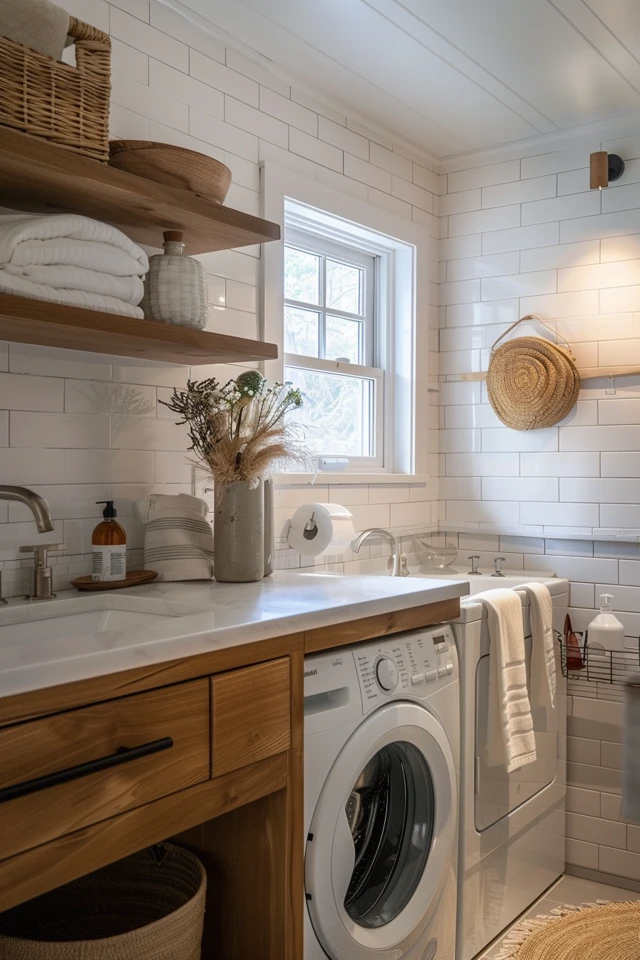
Small Bathroom Laundry Combo Designs & Tips
Integrating a laundry station into a bathroom is a common design challenge, particularly in urban apartments or smaller homes where square footage is at a premium. While it is standard practice in Europe, many US homeowners worry that combining these functions will look cluttered or utilitarian. However, when executed correctly, this combination can actually improve your home’s workflow.
I remember a project in a historic row house where the only spot for a washer and dryer was the guest bathroom. The client was terrified that the noise would disturb guests and that the moisture would ruin the new wallpaper. By switching to a ventless heat-pump dryer and hiding the units behind custom louvered cabinetry, we created a space that felt like a high-end spa, not a laundromat.
The secret lies in treating the appliances as part of the architecture rather than an afterthought. If you are looking for visual inspiration, please scroll down to the bottom of this page where you will find the Picture Gallery.
1. Layout Planning and Spatial Requirements
The biggest mistake homeowners make is underestimating the space required for modern laundry machines. Washers and dryers have grown significantly in size over the last two decades. You cannot simply look at the width of the machine; you must account for the clearance required for plumbing, venting, and vibration.
When planning your layout, you generally have two options: side-by-side or stacked.
Stacked Configuration
This is usually the best choice for small bathrooms. By going vertical, you save floor space for other bathroom essentials like the vanity or toilet.
- Width: A standard unit is 27 inches wide, but you need at least 30 inches of rough opening to allow for wiggle room during installation.
- Height: Stacked units typically reach about 75 to 80 inches high. You need to ensure your ceiling height can accommodate this, plus room for a top shelf or trim.
- Depth: This is where people get stuck. A machine might be 30 inches deep, but you need 4 to 6 inches behind it for dryer vents and water hoses.
Side-by-Side Configuration
This works well if you have a long, narrow bathroom or if you can tuck the machines under a continuous countertop.
- Counter height: If you plan to put a counter over the machines, the finished height will be around 40 to 42 inches. This is higher than a standard 36-inch vanity, so be careful not to create an awkward step-up in your counter levels.
- Access: This layout is much easier for servicing the machines since you do not have to lift a heavy dryer off the washer to reach the back panel.
Clearance Rules of Thumb
As a designer, I live by specific measurements to ensure the room functions comfortably.
- Door Swing: Ensure the washer door and the bathroom entry door do not collide. Most front-load washers have doors that swing out 20 to 24 inches.
- Traffic Flow: You need at least 36 inches of clear floor space in front of the machines to load and unload laundry comfortably. If you are crouching down to pull wet clothes out, you do not want your back hitting the toilet.
- Serviceability: Always leave a “service loop” in your electrical and plumbing lines so the machines can be pulled out without disconnecting everything immediately.
2. Concealment Strategies: Hiding the Appliances
Unless you have very stylish machines and a hyper-modern aesthetic, you probably want to hide the washer and dryer when they are not in use. Visible appliances can make a bathroom feel cluttered and industrial, which kills the relaxation vibe.
Custom Cabinetry
Building the machines into a “laundry armoire” is the most seamless approach. This looks like a linen closet from the outside.
- Pocket Doors: These are the gold standard because they disappear completely. However, they require thick walls to house the pocket mechanism. You generally need a 2×6 wall framing rather than the standard 2×4.
- Bifold Doors: These are a good alternative if you cannot open up the walls. However, standard bifold tracks are flimsy. Invest in heavy-duty architectural hardware so the doors do not derail after a month of use.
- Flipper Doors: These doors open like a standard cabinet but then slide back into the cabinet box along the sides of the machine. They offer the best of both worlds but can be expensive and eat up about 3 inches of width per side.
Curtains
For a more cottage or budget-friendly vibe, a heavy linen curtain on a brass rod can hide the machines. This softens the hard surfaces of the bathroom and improves acoustics.
- Ensure the fabric is mildew-resistant or washable.
- Mount the rod high, near the ceiling, to draw the eye up and make the room feel taller.
The “Open” Look
If you cannot hide them, embrace them. This only works with front-loading machines in pristine condition.
- Install a waterfall countertop over side-by-side units to frame them.
- Use matching pedestals to lift them up, which reduces bending and creates a more built-in look.
- Stick to white or grey machines; wild colors like red or blue tend to date the room quickly.
3. Ventilation and Moisture Control
Bathrooms are already high-humidity zones. Adding a dryer to the mix creates a moisture management challenge that must be taken seriously to prevent mold and peeling paint.
The Dryer Venting Dilemma
If you use a standard vented dryer, you must have a route to the outdoors. The vent run should be as short and straight as possible.
- Rigid Metal Ducting: Never use flexible foil or plastic ducts inside walls. They trap lint and are a major fire hazard. Use smooth, rigid galvanized steel.
- Make-Up Air: A powerful dryer sucks air out of the room. In a small, sealed bathroom, this can create negative pressure, potentially drawing sewer gases up from drains or making the exhaust fan ineffective. You may need a vented door (louvered) to allow air from the hallway to enter the bathroom while the dryer is running.
The Ventless Solution
In many of my recent projects, I recommend heat pump dryers (also known as ventless dryers).
- How they work: They recycle the air within the drum, pulling moisture out and draining it into the same pipe the washer uses. They do not vent hot air into the room or outside.
- The Benefit: You can place them anywhere, even on interior walls without exterior access. They are also much more energy-efficient.
- The Downside: They take longer to dry clothes than standard gas or electric dryers. You need to adjust your laundry habits slightly.
Exhaust Fans
Your bathroom exhaust fan needs to be powerful. Do not settle for the builder-grade 50 CFM fan.
- Aim for at least 110 CFM (Cubic Feet per Minute) for a bathroom with laundry.
- Install a humidity-sensing switch that automatically turns the fan on when moisture levels rise, ensuring the room dries out even if you forget to flip the switch.
4. Electrical and Plumbing Infrastructure
You cannot simply plug a washing machine into a standard shaving outlet. The infrastructure requirements for a combo room are strict for safety reasons.
Electrical Requirements
- GFCI Protection: All outlets in a bathroom must be GFCI (Ground Fault Circuit Interrupter) protected. This is non-negotiable for safety in wet environments.
- Dedicated Circuits: The washing machine needs its own dedicated 20-amp circuit. If you have an electric dryer, it requires a dedicated 240-volt, 30-amp circuit. Do not try to share these lines with your hairdryer or floor heating; you will trip the breaker constantly.
- Access Locations: Place the shut-off valves and electrical plugs in a spot where you can reach them without moving the machine. A recessed “laundry box” in the wall is the standard way to handle this.
Plumbing Logic
- Drain Pan: If your bathroom is on a second floor, you absolutely must install a drain pan under the washing machine. Connect this pan to a drain line. This is your insurance policy against a burst hose flooding your living room below.
- Water Hammer Arrestors: Washing machines have fast-acting valves that slam shut, causing pipes to bang (water hammer). Install arrestors at the supply points to protect your bathroom plumbing from vibration damage.
5. Acoustics and Vibration Management
Bathrooms are full of hard surfaces—tile, glass, porcelain—which bounce sound around. A spinning washer can sound like a jet engine in a tiled box.
Vibration Control
- Leveling: The machine must be perfectly level. Even a quarter-inch tilt can cause excessive shaking.
- Rubber Pads: Place thick anti-vibration rubber pads under the feet of the washer. This decouples the machine from the floor and significantly reduces structural noise transfer.
- Solid Core Doors: If you are using cabinet doors to hide the laundry, use solid core wood rather than hollow core. Solid material blocks sound much better.
Soft Surfaces
To dampen the airborne noise, introduce soft textures into the bathroom design.
- Use a plush, washable bath runner rug.
- Hang ample towels.
- If you have a window, use fabric roman shades rather than wood blinds.
Designer’s Note: Real-World Lessons
The “Depth Trap”
In one of my first solo projects, I designed a beautiful laundry cabinet for a client based on the dimensions listed on the manufacturer’s website. The website said the washer was 27 inches deep. I built the cabinet 29 inches deep.
When the appliances arrived, we realized the website dimensions did not include the bowed shape of the front door or the space required for the heavy-duty dryer cord behind the unit. The cabinet doors wouldn’t close. We had to cut into the drywall behind the machine to recess the dryer vent to gain that extra inch.
The Lesson: Always add at least 5 to 6 inches to the depth of the machine when planning cabinetry. If the spec sheet says 30 inches, plan for 36 inches of cabinet depth to be safe. It is better to have extra air space than to have doors that won’t close.
Common Mistakes + Fixes
Mistake: Blocking the Air Intake
Many people build cabinetry that is too tight around the machines.
The Fix: Washers and dryers need to “breathe” to prevent overheating. Leave at least one inch of clearance on the sides and top. If you are using solid doors, consider drilling ventilation holes in the toe kick or the top of the cabinet to allow airflow.
Mistake: Inaccessible Water Shut-offs
Installing the water valves directly behind the machine where they cannot be reached in an emergency.
The Fix: distinct laundry hook-up boxes allow you to position the valves slightly above the machine level. Alternatively, place the shut-off valves in the adjacent sink vanity cabinet, running the lines through the side. This gives you instant access without moving a 200-pound appliance.
Mistake: Poor Lighting
Relying only on overhead mood lighting. You need to see stains to treat them.
The Fix: Install directional task lighting or under-cabinet LED strips specifically above the folding area or the machine opening.
“What I’d Do” Checklist
If I were renovating my own bathroom to include laundry today, this is exactly how I would proceed:
- Audit the electrical panel: Confirm I have space for two new dedicated circuits before buying anything.
- Select a ventless heat pump dryer: This solves 90% of the ducting headaches and allows for a cleaner exterior wall.
- Choose a recessed washer box: Install this in the wall to save 3 inches of depth.
- Order a “pan” with a drain: Non-negotiable for leak protection.
- Plan for storage: Allocate a specific shelf for detergent, bleach, and steamer. These bottles are ugly; they need a home behind a door.
- Mock up the door swing: Use painter’s tape on the floor to ensure I can stand in front of the vanity while the washer door is open.
- Select porcelain floor tile: It is the most durable option for vibration and potential leaks. Avoid natural hardwood in this zone.
FAQs
Does having laundry in the bathroom hurt resale value?
Generally, no. In smaller homes or condos, having in-unit laundry is a massive value add, regardless of location. However, in a large luxury suburban home, buyers usually expect a dedicated laundry room. If this is your only option for adding laundry, the convenience factor usually outweighs the location stigma.
Can I install a washer/dryer in a half-bath (powder room)?
Yes, and this is often a great location. Since powder rooms don’t have showers, humidity is less of an issue. It also keeps the laundry on the main floor, which is excellent for aging-in-place design. Just ensure the noise won’t disturb the adjacent living areas.
What is the smallest space needed for a laundry closet?
For a stacked unit, the absolute minimum interior dimension is roughly 30 inches wide by 35 inches deep. However, a 32-inch width is much safer for installation. For height, aim for 80 inches to allow for the units and basic clearance.
How do I stop the washing machine from “walking” across the tile floor?
This usually happens because the legs aren’t level or the floor is slippery. First, use a bubble level to adjust the feet perfectly. Second, use rubber isolation pads. If the problem persists, check if the load size is too large or if the shipping bolts (used for transport) were accidentally left in the back of the machine.
Conclusion
Combining your laundry and bathroom functions is not just a space-saving compromise; it is a smart strategic move for smaller homes. It centralizes plumbing, keeps dirty clothes where they are often discarded (the bathroom), and frees up other areas of your home for living space.
The key to success is in the details: robust ventilation, smart soundproofing, and cabinetry that treats the appliances like furniture. By planning for the unseen elements—like vibration clearance and humidity control—you can create a space that is hardworking yet serene.
Picture Gallery


