
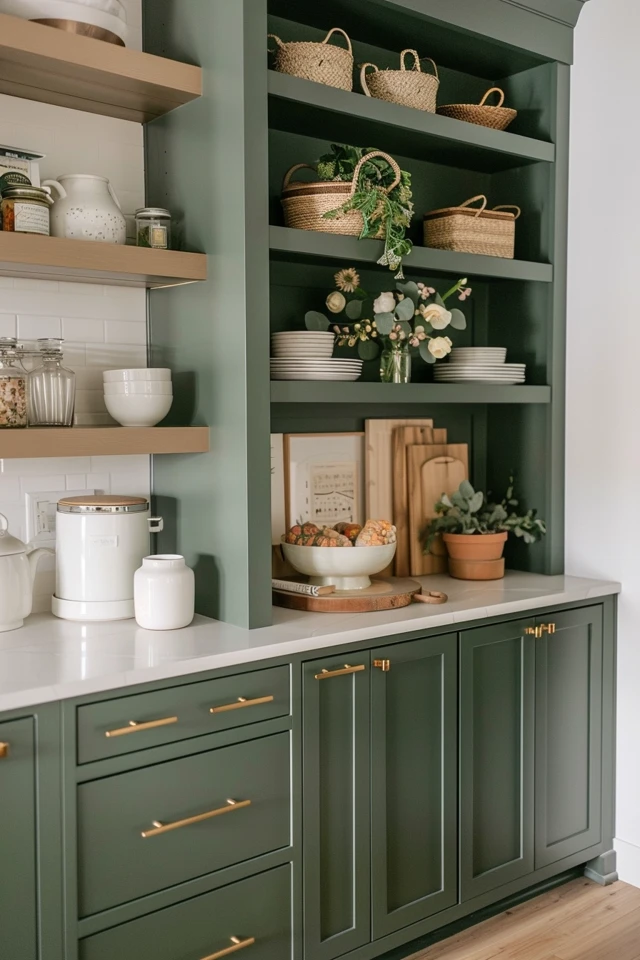
Small Butler Pantry Ideas for Space-Savvy Homes
There is a common misconception that a butler’s pantry is reserved exclusively for sprawling estates or historic manors with square footage to spare. In reality, modern interior design has reclaimed this feature for homes of all sizes, turning awkward nooks and transitional hallways into highly functional assets. A well-designed pantry acts as a bridge between the kitchen and dining area, offering a designated zone for beverage service, appliance storage, or food staging that keeps your main kitchen clutter-free.
When dealing with a compact footprint, every inch must work double duty, balancing aesthetic appeal with rigorous utility. The secret lies in scaling down standard dimensions without sacrificing the “luxury” feel that makes these spaces so desirable. For a visual breakdown of these concepts, be sure to check out our curated Picture Gallery at the end of this blog post.
Whether you are renovating a closet, repurposing a hallway, or carving out space in an open-concept living area, the principles remain the same. We will explore how to manipulate lighting, storage depth, and material finishes to create a jewel-box moment in your home. Let’s dive into the specifics of planning a small but mighty butler’s pantry.
1. Identifying the Right Location and Layout
The first step in creating a butler’s pantry is finding space where you thought you had none. You do not need an entire room; you simply need a transitional zone. In my projects, I often look for “dead zones” near the dining room or just off the kitchen.
The Spare Closet Conversion
One of the most effective renovations involves removing the doors and framing from a standard coat or linen closet. A standard closet depth is usually 24 inches, which is perfect for a base cabinet and countertop setup. By removing the header and taking the cabinetry up to the ceiling, you create an alcove that feels built-in rather than retrofitted.
The Hallway Nook
If you have a hallway connecting the kitchen to the living or dining area, this is prime real estate. Even a shallow recession in the wall can accommodate a pantry.
Designer’s Note: The 12-Inch Rule
If you are working with a tight hallway, standard 24-inch deep base cabinets might block traffic. In these cases, I reduce the cabinet depth to 12 or 15 inches. You can still store wine bottles, glassware, and small appliances on a 12-inch shelf, but you save a foot of floor space. Always ensure you maintain a minimum of 36 inches of clearance for the walkway behind the pantry area.
Common Mistake + Fix
- Mistake: Ignoring door swings. Homeowners often place a pantry near a doorway where the swing of the interior door hits the pantry cabinetry.
- Fix: Switch standard hinged doors for pocket doors or sliding barn doors in tight areas. This eliminates the swing radius entirely and keeps the flow open.
2. Optimizing Vertical Storage and Cabinetry
In a small footprint, you cannot afford to waste vertical space. The most successful small butler pantries utilize the full height of the wall, drawing the eye upward and providing storage for items used only occasionally, like holiday platters or large serving bowls.
Floor-to-Ceiling Cabinetry
I typically recommend taking upper cabinets all the way to the ceiling, topping them off with crown molding. If your ceilings are exceptionally high (over 9 feet), consider a “library ladder” setup or simply use the top tier for decorative items.
Glass Fronts vs. Solid Doors
Solid doors can make a small, narrow space feel heavy and closed in. Using glass-front upper cabinets—or even antiqued mirror inserts—adds depth and reflects light, making the area feel larger.
The Appliance Garage
Counter space is premium in a small pantry. To keep it clear, design an “appliance garage” at countertop level. This is a cabinet with a lift-up door or retractable doors where you can slide a coffee maker or toaster oven out of sight when not in use.
Renter-Friendly Adjustments
If you cannot install permanent cabinetry, use heavy-duty floating shelves or a freestanding hutch. Anchor a freestanding piece to the wall for safety, and swap out the standard hardware for something high-end to elevate the look.
Standard Dimensions to Know
- Counter Height: Standard is 36 inches.
- Backsplash Height: The distance between the countertop and the bottom of the upper cabinets is usually 18 inches. In a butler pantry, you can lower this to 15 or 16 inches for a cozier, more furniture-like look, provided your appliances fit.
- Upper Cabinet Depth: Standard is 12 inches. Do not go deeper than this for uppers in a small space, or it will feel like the walls are closing in on you.
3. Selecting Hardworking Materials
Because a butler’s pantry is smaller than a main kitchen, it is the perfect place to splurge on materials that might be too expensive to use in a large quantity. This is where you can use that remnant slab of exotic marble or the unlacquered brass hardware you have been eyeing.
Countertop Durability
Even though it is a secondary space, a butler’s pantry often sees high traffic for wine pouring or coffee making. Acids (like wine and citrus) and heat (from coffee makers) are threats.
- Natural Stone: Marble is beautiful but etches easily with wine spills. If you choose marble, commit to the patina.
- Quartz or Porcelain: These are non-porous and excellent for drink stations where spills are frequent.
- Wood/Butcher Block: This adds warmth and is often budget-friendly. However, it requires sealing to prevent rings from wet glasses.
The Power of the Backsplash
In a small pantry, the backsplash is the focal point. Since you don’t have much wall space, you can be bold here.
- Mirror: Using an antiqued mirror as a backsplash is my favorite trick for windowless pantries. It doubles the visual depth and bounces light around.
- Wallpaper: High-traffic vinyl wallpaper in a bold print adds personality. Just ensure you install a small glass or stone curb (about 2-4 inches) at the bottom to protect the paper from countertop spills.
Hardware Selection
Think of hardware as the jewelry of the room. In a small space, knobs and pulls are very noticeable. I recommend mixing metals cautiously. If your faucet is polished nickel, consider matte black or unlacquered brass for the cabinet pulls to add layers of interest.
4. Lighting and Atmosphere
Lighting can make or break a small space. A butler’s pantry should feel moody and atmospheric, distinct from the bright utility of the main kitchen. It is often a windowless space, so your artificial lighting plan is critical.
Under-Cabinet Lighting
This is non-negotiable. LED strip lights installed under the upper cabinets provide essential task lighting for pouring drinks or plating dessert. They also highlight your backsplash material.
Sconces and Picture Lights
If you have open shelving or art, install picture lights above them. If you have wall space flanking a mirror, small sconces add a hotel-bar vibe.
- Pro Tip: Ensure your fixtures are scaled correctly. In a small nook, a sconce that projects too far from the wall will feel intrusive. Look for fixtures with a projection of 4 inches or less.
Recessed Lighting Rules
Avoid placing a single, bright recessed can light in the center of the ceiling; it casts unflattering shadows. Instead, use gimbal lights (adjustable recessed lights) directed at the cabinetry faces to wash the storage in light.
Color Temperature
Stick to 2700K to 3000K (Warm White). Anything cooler (4000K+) will make the space feel like a sterile hospital closet, which kills the vibe of a butler’s pantry.
5. Zoning for Specific Functions
A small butler’s pantry fails if it tries to do too much. You must define its primary purpose. Is it a coffee bar? A wine cellar? A baking station? Trying to jam all three into a 4-foot width will result in clutter.
The Coffee Station
If this is the primary use, prioritize drawer storage for pods, spoons, and sugars directly beneath the machine. You will need dedicated electrical outlets at counter height.
What I do in real projects: I often drill a grommet hole in the countertop or back of the cabinet to feed cords through, keeping the counter wire-free.
The Bar/Wine Zone
Prioritize a wine fridge. In small spaces, an 18-inch wide under-counter wine fridge is a lifesaver. Dedicate the upper shelving to glassware storage.
Display logic: Group glassware by type (red, white, sparkling) and keep the most frequently used items on the lowest open shelf.
The Serving Station
If the pantry connects the kitchen and dining room, its main job is a staging area. Keep the countertop completely clear. Store napkins, placemats, and serving utensils in drawers. The counter becomes the “landing zone” for dishes heading into the dining room or dirty dishes coming out.
Designer’s Note: The “Junk Drawer” Trap
Because these pantries are often tucked away, they become magnets for mail, keys, and random batteries. Fight this urge. If you must use it as a drop zone, designate one specific drawer for “admin” items and use drawer dividers to keep it organized.
Final Checklist: What I’d Do in a Real Project
If I were consulting on your home today, this is the checklist I would run through to ensure your small butler pantry is successful:
1. Measure the “swing zone.”
I would verify that no doors from adjacent rooms swing into the pantry standing area. If they do, I would price out a pocket door installation immediately.
2. Check electrical capacity.
I would bring in an electrician to confirm we can run a dedicated circuit if you plan to use a high-draw appliance like a fancy espresso machine or a wine fridge.
3. Choose the focal point.
I would decide on one “hero” element. Is it the backsplash? The cabinet color? The hardware? In a small space, you get one hero; everything else is a supporting character.
4. Plan the outlet placement.
I would ensure outlets are tucked high up under the upper cabinets or matched to the backsplash color so they don’t ruin the aesthetic.
5. Select the finish durability.
I would ask about your household habits. If you have kids or are messy cooks, I would steer you toward quartz over marble and semi-gloss paint over matte for wipeability.
Frequently Asked Questions
Can I add a sink to a small butler pantry?
Yes, but it adds significant cost. You will need to tap into existing plumbing lines. If the pantry shares a wall with a kitchen or bathroom, it is easier. Stick to a small “bar sink” (15 inches wide) rather than a full-size sink to preserve counter space.
How much does a small butler pantry cost to build?
This varies wildly. A DIY conversion of a closet using IKEA cabinets and butcher block might cost $1,500–$3,000. A custom build with high-end stone, electrical work, and custom millwork can easily run $8,000–$15,000.
Does a butler pantry add value to a home?
Absolutely. It is considered a luxury feature. Even a small, well-executed pantry signals to buyers that the home has abundant storage and is designed for entertaining.
Can I retrofit a freestanding piece of furniture?
Yes. An antique armoire or a sturdy sideboard can act as a butler’s pantry. You can modify it by drilling holes for electrical cords and adding internal organizers. This is a great solution for renters or historic homes where you don’t want to damage original walls.
Conclusion
Creating a small butler pantry is less about having massive square footage and more about intentional design. By repurposing a closet, nook, or hallway, you can add a layer of sophistication and functionality to your home that changes how you live and entertain.
Remember that in small spaces, details matter. The finish of the hardware, the warmth of the lighting, and the organization of the drawers all contribute to the experience. Do not let the size deter you; some of the most stunning pantries I have seen are less than 20 square feet.
Take these rules of thumb, measure your space, and start planning your upgrade. A well-organized home is not just about storage; it is about creating spaces that make daily rituals, like your morning coffee or evening glass of wine, feel special.
Picture Gallery


One thought on “Small Butler Pantry Ideas for Space-Savvy Homes”