
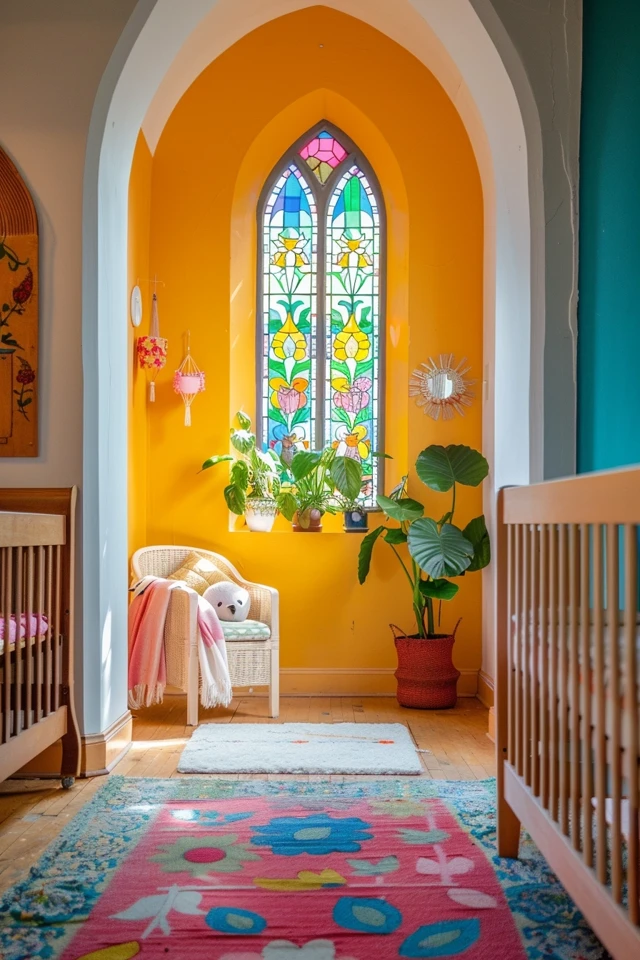
Small Church Nursery Ideas for Welcoming Spaces
Designing a church nursery is distinct from designing a residential nursery because you are solving for high traffic, varied age groups, and parents who need immediate reassurance. When a visitor hands over their infant for the first time, the environment speaks louder than the volunteers. The space needs to look clean, organized, and undeniably safe within seconds of them walking through the door.
In my years of designing institutional and hospitality spaces, I have learned that a church nursery must function like a commercial space but feel like a living room. You are balancing strict fire codes and sanitation requirements with the need for softness and warmth. It is a tricky balance, especially when dealing with limited square footage and tight committee budgets.
If you are looking for visual inspiration, jump to our curated Picture Gallery at the end of this blog post.
1. Zoning for Safety and Flow
The biggest mistake I see in small church nurseries is a lack of defined zones. When cribs are next to the play mat, and the changing table is near the door, you create chaos. In a small room, zoning is not just about organization; it is about safety and noise control.
You need to establish three distinct zones: the Wet Zone (diapering/sink), the Active Zone (tummy time/crawling), and the Quiet Zone (sleeping/nursing). Even in a 10×12 room, these functions must be separated visually and physically. I usually recommend placing the Quiet Zone in the darkest corner furthest from the door to minimize light pollution from the hallway.
The entry requires a “transition zone.” This is a 4-foot by 4-foot area right inside the door where parents can physically step in, sign a check-in sheet, and hand off the bag without stepping onto the play rug. This keeps street dirt off the crawling surfaces and creates a security buffer.
Designer’s Note: The 36-Inch Rule
In commercial design, we live by traffic flow measurements. In a nursery, never have less than 30 to 36 inches of clearance between major furniture pieces. If a volunteer is rocking a baby in a glider, another volunteer needs to be able to walk past them swiftly in an emergency without tripping. If your room is too tight, remove a crib. Flow trumps capacity every time.
2. Commercial-Grade Flooring and Finishes
Residential flooring options rarely hold up in a church setting. You might have ten babies in that room on a Sunday morning, which equals the wear and tear of a regular home over a month. However, you cannot use cold, hard hospital tiles because babies spend their time on the floor.
I almost exclusively specify Luxury Vinyl Plank (LVP) for these spaces. It is waterproof, sound-dampening, and warm underfoot. Look for a wear layer of at least 20 mil for commercial durability. LVP allows you to clean up spills instantly without the fear of warping that comes with real wood or laminate.
For the “softness” factor, do not install wall-to-wall carpet. It is a hygiene nightmare in a public nursery. Instead, use commercial-grade carpet tiles or large, heavy-weight area rugs that can be sent out for professional cleaning. Carpet tiles are excellent because if one gets stained beyond repair, you simply pop it out and replace it with a spare from the closet.
Common Mistake + Fix
Mistake: Painting walls with flat or matte paint to hide imperfections.
Fix: Use an Eggshell or Satin finish. Nursery walls get touched constantly by sticky hands and bumped by cribs. You need a paint finish that can withstand scrubbing with chemical cleaners without burnishing (losing its texture/color).
3. Lighting: The Mood Setter
Lighting is the most undervalued tool in a nursery. Most church classrooms are lit by overhead fluorescent tubes that hum and cast a sickly green glow. This overstimulates infants and makes the room feel sterile.
If you cannot remove the overhead fluorescents, disable the bulbs directly over the crib area. Better yet, swap the switch for a dimmer. Being able to lower the lights during the sermon when babies are napping is essential for keeping the room calm.
Layer your lighting. I always include wall sconces or high-placed shelf lamps with warm LED bulbs (2700K to 3000K temperature). Avoid floor lamps, as they are a tipping hazard. The goal is to create a soft, residential glow that mimics a cozy bedroom, forcing the volunteers to lower their voices instinctively.
What I’d Do in a Real Project
If I were renovating a nursery with drop ceilings, I would replace the standard acrylic light panels with “cloud” or “sky” diffuser panels. They filter the harsh fluorescent light and give the babies something soothing to look at when they are lying on their backs during diaper changes.
4. Vertical Storage and Clutter Control
In a small nursery, floor space is gold. It must be reserved for cribs, rockers, and play mats. Therefore, storage must go up. Clutter is the enemy of a safe environment; if counters are covered in papers and diaper creams, the room feels out of control.
Install upper cabinets for supplies that need to be out of reach of toddlers (sanitizers, extra wipes, administrative forms). These should be mounted at least 54 inches off the finished floor. Use closed cabinetry rather than open shelving to reduce visual noise.
For the diaper bags, avoid the pile-up on the floor. Construct or purchase a cubby wall unit near the entrance. Each cubby should be at least 12 inches wide, 12 inches high, and 12 inches deep to accommodate modern, bulky diaper bags.
Checklist for Storage Organization:
- Diapering Essentials: Store within arm’s reach of the changing pad, but out of baby’s reach. Wall-mounted baskets work well here.
- Personal Items: Ensure volunteers have a secure place for their purses and coffee, completely separate from the child zones.
- Toy Rotation: Keep half the toys in a locked closet. Rotate them monthly to keep interest high and germ load low.
5. Furniture Selection: Durability Meets Comfort
The furniture in a church nursery takes a beating. While it is tempting to rely on donated cribs and rockers, this is a liability risk. Residential cribs may have been recalled or reassembled incorrectly.
Cribs: Use commercial evacuation cribs. These are made of heavy-duty steel or wood and feature oversized, locking casters. In the event of a fire alarm, volunteers can place multiple babies in one crib and wheel them out safely. This is a standard safety requirement in many jurisdictions.
Rocking Chairs: Avoid standard wooden rockers where little fingers can get pinched in the mechanism. Opt for fully upholstered gliders with a locking mechanism. The fabric should be a commercial-grade performance fabric (like Crypton) that repels liquids and resists microbial growth.
Changing Tables: Built-in cabinetry is best because it is sturdy. Orient the changing table perpendicular to the wall, not flat against it. This allows the volunteer to stand at the baby’s feet or side while maintaining eye contact with the rest of the room.
Designer’s Note: Scaling
In a small room, avoid overstuffed “daddy” recliners. They eat up too much square footage. Look for “apartment scale” gliders. They provide the comfort needed for nursing or rocking but save you about 6-8 inches of width per chair.
Final Checklist for Your Nursery Renovation
Before you launch your new nursery, run through this designer-approved checklist to ensure you have covered both function and style.
- Sight Lines: Can you see every crib and corner from the doorway? Remove any tall bookcases that block views.
- Outlet Safety: Are all outlets tamper-resistant or covered with commercial-grade safety plates (not the little plastic plugs that are choking hazards)?
- Sanitation Station: Is there a hands-free trash can for diapers and a dedicated sink for hand washing?
- Evacuation Path: Is the path to the door completely clear of rugs, toys, or furniture legs?
- Corner Protection: Have you installed clear corner guards on any sharp edges of counters or low shelving?
- Sound Check: Have you added soft materials (curtains, acoustic panels, canvas art) to absorb crying sounds?
- Shoe Policy: Do you have a bench and shoe storage for volunteers to remove shoes or put on shoe covers?
Frequently Asked Questions
How many babies can fit in a small nursery?
The general rule of thumb for code and comfort is about 35 to 50 square feet per child. In a small 10×12 room (120 sq ft), you are realistically looking at a maximum of 3 to 4 infants plus 2 volunteers. Overcrowding increases stress for the babies and the risk of illness spreading.
What is the best color for a church nursery?
Avoid bright primary colors (red, bright yellow) as they are high-energy. I recommend soft, nature-inspired tones. Sage green, pale watery blue, or warm “greige” (gray-beige) are timeless. These colors lower the heart rate and look clean and modern.
Should we use a rug or foam mats?
For the “Active Zone,” I prefer high-quality foam play mats that look like rugs. They provide better cushioning for falls than a standard rug and can be wiped down with disinfectant spray between services. Fabric rugs trap bacteria and are harder to sanitize quickly.
How do we handle shoe policies in a small space?
Since babies crawl on the floor, the floor must remain clean. If you don’t have room for a shoe removal zone, provide a box of disposable medical shoe covers at the door. It is faster for volunteers and parents than taking shoes off and keeps the floor sanitary.
Conclusion
Creating a welcoming small church nursery is about prioritizing the user experience—both for the anxious parent and the dedicated volunteer. By focusing on commercial-grade durability, logical zoning, and soothing aesthetics, you can transform even a cramped storage room into a sanctuary for the littlest members of your congregation.
Remember that safety is the ultimate form of hospitality. When a parent sees evacuation cribs, clear sightlines, and spotless flooring, they feel the care you have put into the ministry. Start with the floor plan, invest in the right lighting, and keep the clutter off the ground.
Picture Gallery


