
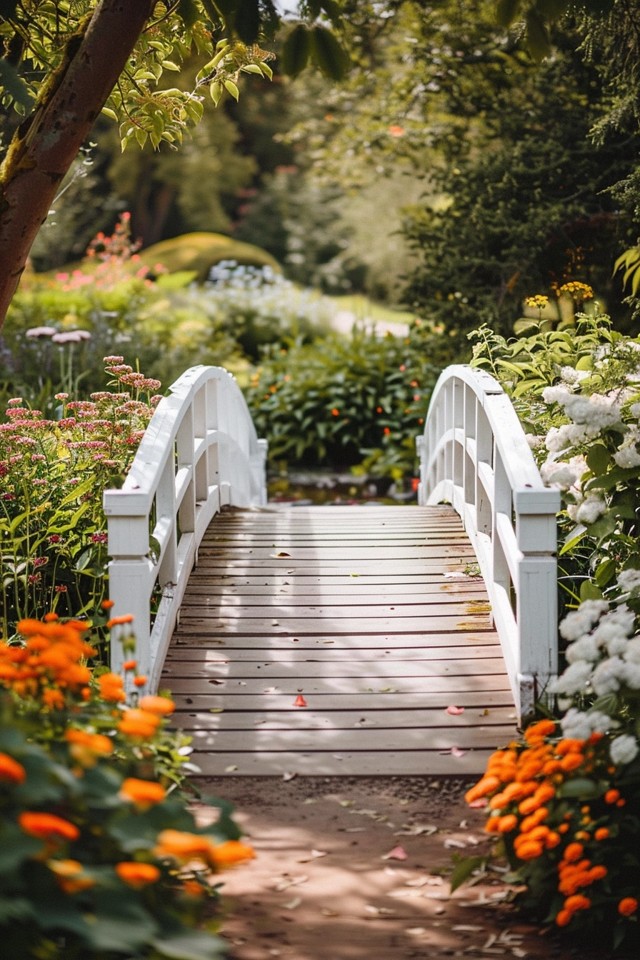
Title: Small Garden Bridge Ideas for Enchanting Landscapes
Introduction
There is something inherently magical about a garden bridge. In landscape design, we often talk about “transitions” and “zones,” but a bridge does something more profound than just connecting point A to point B. It invites you to pause, observe, and consciously move from one atmosphere to another. Whether it spans a bubbling koi pond or a dry riverbed of river rocks, a bridge creates a focal point that instantly elevates the architectural interest of a yard.
I remember one of my first landscape projects involving a small, awkward drainage ditch that cut right through the client’s backyard. Instead of burying it in a pipe, we turned it into a feature. We lined it with stone and built a simple, low-arch cedar bridge across it. Suddenly, that muddy eyesore became the most photographed spot in the garden. It taught me that constraints are often just opportunities in disguise.
If you are struggling to visualize how this might look in your own space, you can find plenty of visual inspiration if you scroll down to the Picture Gallery at the end of the blog post. Before you head to the lumber yard or garden center, however, we need to discuss the practical mechanics of scale, material, and placement to ensure your bridge is safe and enduring.
1. Determining the Purpose and Placement
Before falling in love with a specific aesthetic, you must define the bridge’s primary function. In my design practice, I categorize garden bridges into two distinct types: decorative and functional. A decorative bridge might only need to hold the weight of a wandering cat or a potted plant. A functional bridge must support the dynamic weight of adults, wheelbarrows, and potentially heavy garden equipment.
Start by identifying the “gap.” This could be a water feature, a drainage swale, or a transition between a concrete patio and a soft lawn. I often use bridges to protect sensitive ground cover. If you have a patch of delicate moss or a wildflower meadow you want to preserve, a bridge guides foot traffic over it rather than through it.
For renters or those with small courtyards, a bridge can simply be a visual device. Placing a small, flat bridge over a bed of gravel creates the illusion of a water feature without the plumbing headaches. It adds depth and implies a journey, even if the bridge is only four feet long.
Designer’s Note: The “Bridge to Nowhere” Syndrome
I see this happen frequently in DIY projects. A homeowner places a bridge in the middle of a flat lawn with no clear destination. It looks disconnected and confusing.
Always ensure your bridge connects two distinct zones. If you don’t have a water feature, dig a shallow trench and fill it with slate chips or river rocks to create a “dry creek.” This grounds the structure and gives the bridge a reason to exist.
2. Selecting Materials for Longevity and Safety
The material you choose dictates the maintenance schedule and the lifespan of the structure. In interior design, we worry about wear and tear; in landscape design, we battle UV rays, rot, and moisture.
Wood
Cedar and redwood are the gold standards for wooden garden bridges. They contain natural oils that resist rot and insect damage. However, they will turn silvery-grey over time if not sealed. Pressure-treated pine is a budget-friendly option, but it tends to warp and crack (check) more aggressively than cedar.
Metal
Wrought iron or steel bridges offer a classic, sometimes Victorian, aesthetic. They are excellent for small spaces because the railings are usually thinner, blocking less visual flow. If you choose steel, I recommend Corten steel if you like the rusted, industrial look, or powder-coated aluminum for zero maintenance.
Stone and Concrete
For a modern or Zen application, a flat slab of stone is unbeatable. It provides a sense of permanence. However, stone is heavy. You need to assess if your soil can support the weight without the slab sinking over time.
Common Mistakes + Fixes: Slippery Surfaces
The Mistake: Using smooth decking boards or polished stone for the walking surface. When wet, these become ice rinks.
The Fix: If you are painting or staining wood, mix a specifically formulated non-skid grit additive into the finish. If using raw wood, ensure the grain runs perpendicular to the walking direction for traction. For stone, choose a flamed or thermal finish rather than a honed finish.
3. Mastering Scale and Proportions
Scale is where most non-designers struggle. A bridge that is too small looks like a toy; one that is too large overwhelms the garden.
Width
For a functional bridge, the minimum width should be 24 inches. This allows one person to cross comfortably. However, if you have the space, I always aim for 36 inches. This width feels substantial and allows you to carry bags of mulch or tools across without scraping your knuckles on the railings.
Length and Overhang
Your bridge must be longer than the gap it spans. A good rule of thumb is to have at least 12 to 18 inches of solid footing on either side of the gap. If your creek is 4 feet wide, your bridge should be at least 6 to 7 feet long. This distributes weight onto solid ground rather than the unstable edges of the bank.
The Arch
High-arched bridges (often seen in Japanese garden styles) look dramatic, but they can be difficult to walk on. A steep arch changes the biomechanics of your stride. For a comfortable walking bridge, keep the arch subtle. If the bridge rises more than 12 inches over an 8-foot span, you might need to add steps at the ends.
What I’d Do in a Real Project: Stability Check
If I am installing a wooden bridge, I never place the wood directly on the dirt. Soil contact accelerates rot.
Here is my mini-checklist for foundations:
- Dig out four distinct footing spots at the corners.
- Fill these spots with tamped crushed gravel or use pre-cast concrete deck blocks.
- Rest the bridge runners on these stones or blocks. This keeps the timber dry and creates air circulation underneath.
4. Style and Aesthetics: Matching the Architecture
Your landscape is an extension of your home’s architecture. The style of the bridge should converse with the style of the main house.
The English Cottage Look
If you have a traditional home, look for rustic rails or lattice detailing. Weathered wood works beautifully here. I often plant trailing vines like Clematis near the base of the railings so they can soften the hard lines of the structure over time.
Modern and Minimalist
For contemporary homes, less is more. I often design “floating” bridges for these spaces. This involves using heavy timber beams or concrete slabs with no handrails (if the drop is less than 30 inches, check your local codes). The lines should be straight and the geometry crisp.
The Japanese Influence
The “Moon Bridge” is iconic, but requires a specific context. It works best in gardens that already utilize gravel, maples, and rocks. Red is the traditional color, but for US residential gardens, I often specify a natural dark stain or a charred wood finish (Shou Sugi Ban) to keep it feeling grounded and organic.
5. Landscaping the Approaches
A bridge should not look like it was dropped from a helicopter. It needs to be “anchored” into the landscape. This means the transition from the path to the bridge should be seamless.
Hiding the Transition
The point where the wood meets the ground is often unsightly. I use large river rocks or boulders to flank the four corners of the bridge. This hides the concrete footings or gravel pads we discussed earlier. It gives the impression that the bridge has been there for a century.
Plant Selection
Use plants to frame the entrance. I love using ferns, Hostas, or Astilbe near the base of the bridge. These plants enjoy the moisture that is usually present near water features or drainage swales. Their soft, feathery textures contrast beautifully with the rigid structure of the bridge.
Lighting for Drama and Safety
Do not forget lighting. At night, a bridge can be a tripping hazard if not illuminated.
- Strip Lights: I often run waterproof LED tape light under the handrail for a hidden, magical glow.
- Solar Post Caps: The easiest DIY solution. Just pop them on the posts.
- Uplighting: Place a spot-light at the base of the bridge, aiming across the water or rocks to highlight the texture of the arch.
Final Checklist: Before You Build or Buy
Use this checklist to ensure you haven’t missed a critical step in your planning.
- Measure the Gap: Did you add at least 12-18 inches of overlap on both sides?
- Check the Weight Rating: If buying a pre-made kit, does it support at least 300+ lbs?
- Plan the Foundation: Do you have gravel or patio stones ready to keep the wood off the mud?
- Safety Check: If the bridge is high, do the railings meet safety standards for children and pets? (Gaps usually need to be less than 4 inches).
- Material Prep: If using wood, do you have the sealer or stain ready to apply immediately?
- Anchoring: Do you have stakes or hardware to secure the bridge against high winds or theft?
FAQs
How much weight can a small garden bridge hold?
This varies wildly by design. A decorative kit from a big-box store might only hold 250 lbs. A custom-built bridge using 2×10 or 2×12 pressure-treated runners can easily hold 500 to 1,000 lbs. Always check the manufacturer’s specs or consult a carpenter if you need it to hold riding mowers or heavy equipment.
Do I need a permit for a garden bridge?
Generally, for small, movable landscape bridges over shallow depressions, no. However, if the bridge crosses a recognized waterway, wetlands, or is raised significantly off the ground (usually over 30 inches), you may need a permit or safety railings that meet code. Always call your local building department to be safe.
How do I stop my wooden bridge from becoming slippery?
Algae and moss are the enemies here. Scrub the bridge annually with a stiff brush and a mixture of vinegar and water. As mentioned earlier, applying a clear coat with a sand or grit additive provides long-term traction.
Can I put a bridge over grass?
Absolutely. This is a great way to break up a large, monotonous lawn. To make it look intentional, dig out the grass underneath the bridge and replace it with river rock or mulch. This prevents the grass from growing up through the slats, which is a nightmare to trim.
Conclusion
Adding a small bridge to your landscape is one of the most high-impact projects you can undertake. It adds vertical interest to a flat yard and introduces a sense of narrative to your garden. It implies that there is a destination worth reaching.
Whether you opt for a sleek, modern slab or a whimsical cottage arch, remember that the success of the design lies in the integration. Anchor the ends with stones, soften the edges with plants, and ensure the scale makes sense for your specific yard. A bridge is an invitation. Make sure yours says “welcome.”
Picture Gallery


