
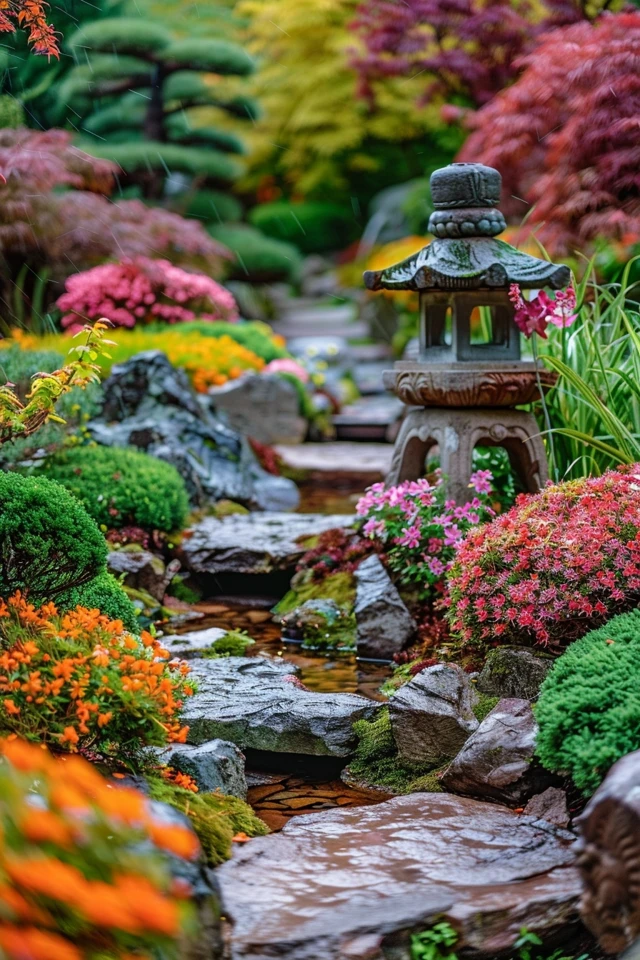
Small Space Japanese Garden Designs & Tips
There is a profound misconception that Japanese gardens require acres of rolling hills, massive koi ponds, and ancient temples to feel authentic. In my design practice, I have found that the most impactful Japanese-inspired spaces are often the smallest. We call these “Tsubo-niwa,” or courtyard gardens, and they are specifically designed to bring serenity to tiny urban footprints.
When working with a compact patio, a balcony, or a narrow side yard, the goal is not to shrink a large landscape but to create a distinct, enclosed universe. The constraints of a small space actually help focus the design, forcing us to choose every rock and plant with intention. If you are looking for visual inspiration, keep reading because there is a comprehensive Picture Gallery at the end of the blog post.
In this guide, I will walk you through the structural principles, plant palettes, and hardscaping tricks I use to transform cramped quarters into Zen sanctuaries. We will look at how to manipulate scale to make a space feel larger and how to maintain that look without spending every weekend pruning.
1. The Philosophy of Scale: Mastering Tsubo-niwa
The concept of Tsubo-niwa dates back to Heian-period Japan, where merchants built small gardens in the open-air courtyards between buildings. The primary lesson from this era is that you are not building a garden to walk through; you are usually building a garden to look at.
In small American homes, this shift in perspective is crucial. We often try to cram a seating area, a BBQ, and a lawn into a 10×12 space. To achieve a Japanese aesthetic, you must prioritize the view.
By treating the garden as a three-dimensional painting viewed from a window or a sliding glass door, you expand the visual square footage of your interior living room.
Designer’s Note: The Rule of Ma
In my projects, I constantly refer to the concept of “Ma,” which translates roughly to negative space. In a small garden, empty space is as important as the objects within it.
- Don’t fill every corner: If you place a lantern, give it breathing room.
- Ground coverage: Leave roughly 40% of the ground plane open (using gravel or moss) to let the eye rest.
- The lesson: I once had a client who wanted three maples in a 100-square-foot atrium. We compromised on one sculptural tree and a large stone. The result was dramatic and elegant; three trees would have just looked like an overgrown nursery.
2. Hardscaping: Rocks, Gravel, and Pathways
Hardscaping forms the “bones” of a Japanese garden. In a small space, you cannot rely on sweeping lawns, so stone becomes your primary floor material. This is also excellent for durability and low maintenance.
Gravel and Sand (Karesansui)
Raked gravel is the quickest way to establish a Zen aesthetic, but there is a practical technique to it.
- Size matters: Do not use sand; it tracks into the house and attracts neighborhood cats. Use 3/8-inch angular granite gravel.
- Depth: Lay the gravel 2 to 3 inches deep. Any deeper and it becomes difficult to walk on; any shallower and the weed barrier shows through.
- Color: Stick to muted grays, beiges, or off-whites. Avoid stark white marble chips, which glare in the sun and look artificial.
The Art of Rock Setting
I often see DIYers place rocks directly on top of the soil, which looks unnatural, as if the rocks fell from the sky. To make a garden feel established, rocks must look like they are emerging from the earth.
- Bury the base: Always bury the bottom 1/3 of the rock. This grounds the stone and gives it a sense of permanence.
- grouping: Use odd numbers. A triad arrangement (one tall vertical rock, one shorter bridging rock, and one flat grounding rock) is the classic formation.
- Texture: Use weathered, mossy rocks with crevices. In small spaces, you are viewing these materials up close, so texture is paramount.
Common Mistakes + Fixes
Mistake: Using straight, symmetrical paver paths in a small area. This highlights the square footage and feels rigid.
The Fix: Use “Tobi-ishi” or stepping stones laid in a slightly zigzag pattern. This slows the pace of walking and forces the visitor to look down and be mindful. It also creates an illusion of a longer journey.
3. Selecting Plants for Tight Quarters
Scale is the enemy of the enthusiastic gardener. A standard cherry blossom tree will destroy a small courtyard’s foundation and block all light within five years. You must select slow-growing cultivars and plants that tolerate rigorous pruning.
The Hero Trees
You generally only have room for one “specimen” tree. This tree serves as the focal point.
- Japanese Maple (Acer palmatum): Look for dwarf varieties like ‘Sharp’s Pygmy’ or ‘Shaina’ for containers. For in-ground, ‘Bloodgood’ is popular but gets large; ‘Tamukeyama’ offers a beautiful weeping habit that stays lower.
- Black Pine (Pinus thunbergii): These can be kept small through “candling” (pruning new growth), but they require dedication.
- Hollywood Juniper: These have a natural, twisting architectural form that looks great against a flat wall.
The Ground Layer
In lieu of grass, we use moss or groundcovers to simulate a rolling landscape.
- True Moss: Requires high humidity and shade. If you live in a dry climate, do not force it.
- Scotch Moss / Irish Moss (Sagina subulata): A great alternative that handles foot traffic and sun better than true moss.
- Mondo Grass (Ophiopogon japonicus): Perfect for edging paths. Use the dwarf variety (Nana) to keep heights under 3 inches.
What I’d Do in a Real Project
If I were designing a 150-square-foot balcony garden today, this is the exact plant list I would order:
- Focal Point: One Acer palmatum ‘Mikawa Yatsubusa’ (very slow growing, sculptural layers) in a glazed ceramic pot.
- Mid-Height: Three Nandina domestica ‘Fire Power’ for evergreen foliage that turns red in winter, kept pruned below 18 inches.
- Ground cover: Creeping Jenny (Lysimachia) for spilling over pot edges, or Blue Star Creeper between stepping stones.
- Backdrop: Clumping Bamboo (Fargesia rufa) in a contained trough planter to hide the railing.
4. Water and Bamboo Features
Sound is a powerful tool in interior design and landscaping. In a small city garden, the sound of trickling water can mask traffic noise, instantly changing the psychological feel of the space.
The Tsukubai (Water Basin)
You do not need a pond. A Tsukubai is a small stone basin historically used for ritual cleansing before tea ceremonies.
- Setup: Place a stone basin low to the ground. Use a bamboo spout (kakei) to feed a trickle of water into it.
- Drainage: Create a hidden reservoir underneath the gravel with a small recirculating pump. The water overflows the basin, disappears into the rocks, and cycles back up.
- Scale: The basin should be roughly 12 to 18 inches in diameter for a small patio.
Bamboo Fencing and Screening
Privacy is often the biggest issue in small spaces. Standard 6-foot dog-ear fences look heavy and boxy.
- Bamboo Rolls: You can staple rolled bamboo fencing over existing wooden fences. This immediately adds texture and warmth.
- Framing: Finish the top and bottom of the bamboo roll with a dark stained 1×4 piece of lumber. This “frames” the bamboo and makes it look like a custom architectural element rather than a cheap cover-up.
Common Mistakes + Fixes
Mistake: Planting “running” bamboo directly in the ground.
The Fix: Running bamboo is invasive and destructive. Always use “clumping” varieties (like Fargesia) or plant running bamboo inside a heavy-duty rhizome barrier made of 60-mil HDPE plastic. Better yet, keep bamboo in metal troughs.
5. Bringing the Indoors Out: Lighting and Thresholds
The transition between your home and the garden is where the magic happens. In traditional Japanese architecture, the “Engawa” is a wooden strip of flooring along the window—a transition zone between inside and outside.
Creating a Threshold
Even if you are renting, you can simulate this connection.
- Decking: Use wooden deck tiles to create a small platform right outside your sliding door. This extends your floor visually.
- Leveling: If possible, keep the indoor floor level and the outdoor deck level the same. This seamless flow tricks the brain into thinking the garden is part of the room.
Lighting for Mood
Japanese gardens are never brightly lit like a stadium. The lighting should be subtle, mysterious, and focused on forms.
- Moonlighting: If you have a tree, place a light high up shining down through the leaves to create dappled shadows on the ground.
- Uplighting: Place a small spot fixture at the base of your feature rock or stone lantern.
- Color Temperature: Always use warm white bulbs (2700K to 3000K). Cool white (4000K+) looks sterile and clinical in a garden setting.
- Lanterns: A stone lantern (Toro) is decorative, but you can put a small battery-operated LED candle inside for soft ambience during parties.
Final Checklist: Designing Your Small Zen Space
Before you buy a single bag of gravel, run through this checklist to ensure your plan is solid.
1. Analyze the View
Sit inside your home in your favorite chair. What do you see? Orient the garden’s focal point (the tree or the lantern) to align with this view, not the view from the back fence.
2. Establish the Bones
- Clear the space of clutter.
- Install privacy screening (bamboo or lattice).
- Lay down weed barrier fabric.
- Position your large rocks (remember to bury the bottom 1/3).
3. Hardscape Layer
- Install edging material to separate gravel from soil beds.
- Place stepping stones (test the stride distance—usually 18-22 inches center-to-center).
- Pour gravel (2-3 inches deep).
4. Planting
- Place the specimen tree first.
- Plant mid-sized shrubs in asymmetrical clusters.
- Plant ground cover and moss.
5. Finish
- Add the water feature.
- Adjust lighting fixtures at night to get the shadows right.
- Rake the gravel.
FAQs
How much maintenance does a small Japanese garden really require?
Surprisingly little, but it must be consistent. Unlike a lawn that you mow once a week, a Japanese garden requires “micro-maintenance.” You will spend 10 minutes a week raking the gravel to keep it crisp and picking fallen leaves out of the moss. Pruning is done twice a year—once in winter for structure and once in summer to control growth.
I have a dog. Is a gravel garden realistic?
Gravel can be tough with dogs who like to dig or run. If you have active pets, I recommend using larger river stones (1-2 inches) rather than fine pea gravel, as they don’t scatter as easily. You should also create a designated “potty area” with mulch or artificial turf tucked away behind a screen, as dog urine will kill moss instantly.
Can I do this on a balcony?
Absolutely. However, you must check your building’s weight restrictions. Rocks and gravel are heavy. On balconies, use lightweight faux rocks (high-quality ones look very real), use expanded clay pellets or lava rock as a base layer for planters to reduce weight, and stick to container gardening. Use wind-tolerant plants like Pines rather than delicate Maples if you are on a high floor.
Is it expensive to build?
It can be very cost-effective because the space is small. You are buying fewer plants and materials. However, because there are fewer elements, quality matters. Don’t skimp on the specimen tree or the feature lantern. Spend your budget on the “focal points” and save money by using standard gravel and smaller starter plants for the ground cover.
Conclusion
Creating a Japanese-inspired garden in a small space is an exercise in restraint. It challenges you to strip away the unnecessary and focus on texture, balance, and nature in its most distilled form.
Whether you are transforming a dark side yard or a concrete balcony, the principles remain the same: control the scale, frame the view, and respect the negative space. The result is not just a garden, but a decompression zone—a place where the chaos of the outside world stops at the gate.
Picture Gallery


