
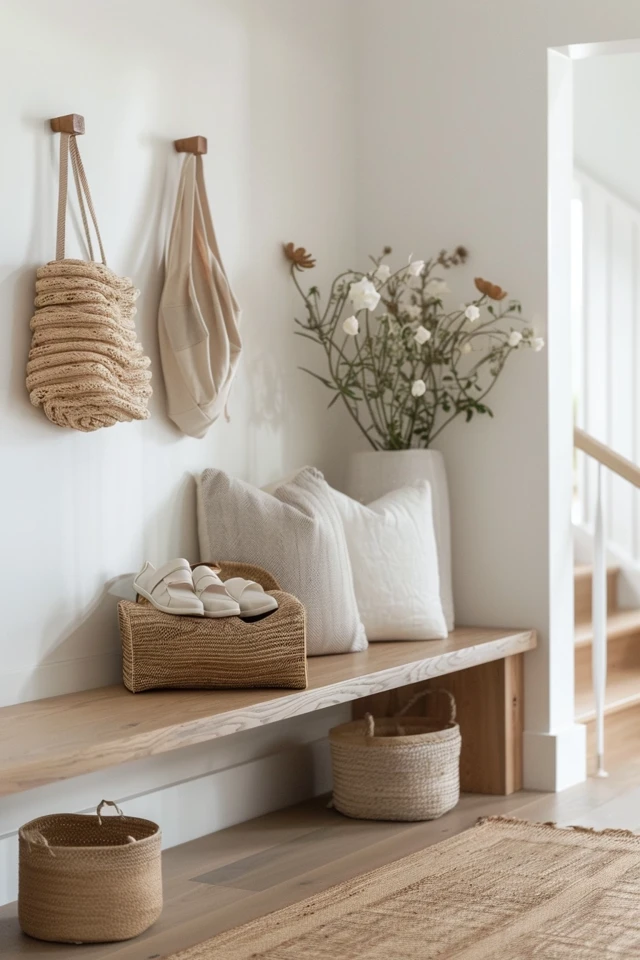
Title: Foyer Furniture – Smart & Stylish Functional Entryway Ideas
Introduction
Your foyer is the handshake of your home. It is the very first thing guests see when they walk in, and more importantly, it is the last thing you see when you rush out the door in the morning. A well-designed entryway sets the emotional tone for the rest of the house, balancing immediate functionality with welcoming aesthetics.
I often tell clients that the entryway is the hardest working room in the house, despite usually being the smallest. It has to handle muddy boots, heavy coats, piles of mail, and wet umbrellas, all while looking curated and intentional. For visual inspiration on how these layouts come together, be sure to check out the Picture Gallery at the end of this blog post.
If you are struggling with a cluttered drop zone or a space that feels undefined, you are not alone. The secret lies in selecting furniture that fits the scale of the architecture while serving a distinct purpose. Let’s dive into the mechanics of creating an entry that works as good as it looks.
1. Assessing the Space and Flow
Before buying a single piece of furniture, you need to understand the traffic patterns of your home. The biggest mistake homeowners make is obstructing the flow of traffic with pieces that are too deep.
In the design world, we adhere to strict clearance rules to ensure a space feels comfortable. You need a minimum of 36 inches of clear walking path through any entry point. If your foyer is a narrow hallway, this might limit you to very slim furniture or wall-mounted solutions.
You also need to account for the “door swing zone.” Open your front door fully and measure where the edge of the door lands. Nothing should be placed within this radius, or you risk damaging your furniture and your door finish.
Designer’s Note: The “Visual Weight” Rule
In small foyers, I always recommend furniture with “legs” rather than solid, blocky pieces to the floor. Being able to see the floor running underneath a console table or bench tricks the eye into thinking the room is larger than it is.
Determining Your Primary Need
Identify the main pain point of your current setup.
- The dumper: If you drop keys and mail everywhere, you need surface area and drawers.
- The shoeless house: If you have a no-shoes policy, a bench and shoe storage are your top priorities.
- The collector: If you have minimal clutter but want drama, focus on a round center table or a sculptural console.
2. The Console Table: The Anchor Piece
The console table is the backbone of most foyer designs. It provides a horizontal surface for a lamp and a “catch-all” tray, and it grounds the decorative elements on the wall above it.
Scale is everything here. A standard console table ranges from 30 to 33 inches high. If you have high ceilings (9 feet or higher), look for a console closer to 34 or 36 inches high so it doesn’t look like a toy piece of furniture.
In terms of width, the console should generally fill about 60% to 70% of the wall space available. A tiny table on a huge wall looks lost, while a wall-to-wall table can feel suffocating.
Material Matters
Since the entry is a high-traffic zone, durability is key.
- Wood: Warm and classic, but ensure it has a sealed finish to protect against water rings from wet mail or umbrellas.
- Metal and Stone: A stone top (marble, slate, or quartz) is nearly indestructible and easy to wipe down.
- Glass: excellent for tight spaces as it takes up zero visual weight, but be wary if you have toddlers who might bump into edges.
Common Mistake + Fix
Mistake: Buying a console that is too deep for the hallway, causing hip-bumping.
Fix: For narrow halls, look for “demilune” (half-moon) tables or consoles specifically labeled “shallow depth” (10 to 12 inches deep). Secure them to the wall with an anchor kit to prevent tipping.
3. Seating and Shoe Storage Solutions
Unless you have a massive mudroom elsewhere, your foyer needs a place for people to sit and remove shoes. This is a universal need that transcends style.
A bench is the most versatile option. Look for a bench that is roughly 18 to 20 inches deep. If you are placing a bench under a console table (a great space-saving trick), ensure the bench is at least 6 inches shorter than the table on each side for a balanced look.
If space allows, a standalone bench with internal storage is a goldmine. Lift-top benches can hide seasonal items like scarves and gloves. However, I prefer benches with an open shelf below for shoes because guests are more likely to use open storage than they are to open a lid.
The “Shoe Shoe” Problem
If you have a strict no-shoes household, you need a designated “shoe purgatory.”
- Baskets: Large woven baskets tucked under a console are the easiest solution.
- Tip-out cabinets: These are shallow cabinets (often only 7-9 inches deep) where the drawers tip forward. They are perfect for narrow entries and hide the clutter completely.
Designer’s Note: Fabric Choices
Never put delicate silk or dry-clean-only linen on a foyer bench. Use high-performance fabrics like Crypton, heavy canvas, or leather. Leather is my favorite for entries because it wipes clean and develops a nice patina over time.
4. Lighting: Layering for Ambiance and Utility
Lighting in a foyer must serve two masters: it needs to be bright enough to find your keys, but soft enough to be welcoming at night. A single overhead “boob light” rarely does the job well.
The Chandelier or Pendant
This is your jewelry. If you have a standard 8-foot ceiling, a semi-flush mount is usually best to keep the walkway clear. The bottom of the fixture should never be lower than 7 feet from the floor.
If you have a two-story foyer, you have more drama to work with. The fixture should be centered in the window or aligned with the door, hanging no lower than the second-story floor line if viewed from above.
Sconces and Table Lamps
Eye-level lighting is what makes a home feel cozy. I always try to include a table lamp on the console. It provides a warm glow that is much more inviting than harsh overhead can lights.
If you don’t have surface space, wall sconces are excellent.
- Placement: Mount sconces roughly 60 to 66 inches from the floor to the center of the bulb.
- Spacing: If flanking a mirror, place them 6 to 8 inches away from the mirror’s frame.
Mirror Math
A mirror is non-negotiable in a foyer. It allows for a final “check” before leaving and bounces light around small spaces.
- Width: The mirror should be roughly 2/3 the width of the console table below it.
- Height: Hang the mirror so your eye level hits the center of the glass. Generally, leave a 4 to 8-inch gap between the bottom of the mirror and the top of the console table.
5. Rugs: The Foundation of Durability
The foyer rug takes a beating. It deals with grit, mud, moisture, and constant friction. This is not the place for a delicate viscose rug or a high-pile shag that traps dirt.
Sizing the Rug
A common error is the “postage stamp” rug. Your rug should be large enough to greet the guest.
- Clearance: Leave about 12 to 18 inches of bare floor visible around the perimeter of the rug.
- Door Swing: Ensure the pile height is low enough that the front door can clear it easily. There is nothing more annoying than a door that gets stuck on a rug every time you open it.
Material Selection
Wool: The gold standard. It is naturally stain-resistant due to lanolin, cleans easily, and is very durable.
Natural Fibers (Jute/Sisal): These look great and add texture, but they can stain with water and are hard to clean. Only use these in dry climates or covered porches.
Polypropylene: These are synthetic, essentially waterproof, and can often be hosed down. They are excellent for families with young kids or pets, even if they lack the luxe feel of wool.
What I’d Do in a Real Project
If I am designing for a client with kids and a dog, I almost always spec a patterned wool rug or a high-quality vintage rug. Patterns hide dirt and crumbs much better than solid colors. I would pair this with a thin, non-slip rug pad to keep it from sliding without adding too much height.
Final Checklist: The “Liveability” Test
Before finalizing your purchases, run through this mental checklist to ensure the space will function for your actual lifestyle.
- The Drop Test: Walk in the door with your hands full. Is there an immediate surface within reach to set down keys and mail?
- The Mirror Check: Can you see your face in the mirror without standing on tiptoes or crouching?
- The Path Check: Can two people comfortably stand in the entry at the same time to say goodbye?
- The Light Switch: Is the lamp reachable, or is the switch accessible immediately upon entering?
- The Storage Reality: Do you have roughly 20% more storage than you think you need? (Coats always bulk up in winter).
FAQs
What is the best furniture for a non-existent entryway?
If your front door opens directly into the living room, create a “landing strip.” Use a narrow console table or a low bookshelf perpendicular to the wall to create a visual divider. Alternatively, place a small chest of drawers against the wall right next to the door to define the zone without blocking the path.
How do I mix wood tones in the foyer?
The foyer often connects to the living room or dining room, so the wood tones should harmonize but don’t need to match perfectly. If your floors are dark oak, try a console in a lighter walnut or even a painted finish (like black or navy) to create contrast. Avoid using the exact same wood tone as the floor, or the furniture will disappear.
Can I use a dresser instead of a console table?
Absolutely. A dresser is often a better choice for families because the drawers offer concealed storage for hats, gloves, dog leashes, and flashlights. Just ensure the depth isn’t too intrusive; standard dressers are 18-20 inches deep, which might be tight in a small hall.
How do I style a long, narrow hallway foyer?
Treat it like an art gallery. Use a runner rug to draw the eye down the hall. Instead of one long piece of furniture, use a series of shallow floating shelves or picture ledges. Good lighting is critical here to prevent the “tunnel” effect.
Conclusion
Designing a foyer is an exercise in editing. Because the space is limited, every piece of furniture must earn its keep. By focusing on the “triangle of function”—a surface for dropping items, a spot for lighting, and a place for shoes—you can transform a chaotic pass-through into a composed entry.
Remember that this space is the first impression of your home. It doesn’t need to be grand, but it should be thoughtful. Measure your clearances, choose materials that can handle the grit of daily life, and don’t be afraid to add a little personality through mirrors and lamps.
Picture Gallery


