
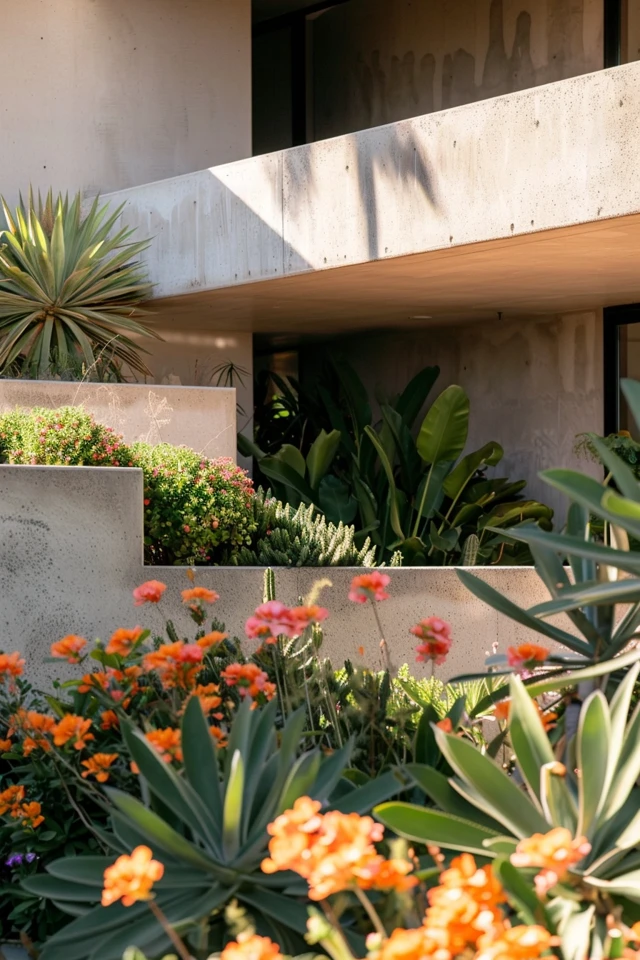
SoCal Landscape Inspirations I Love
Southern California living is defined by a unique relationship with the outdoors. In my design practice, I treat the backyard not as a separate entity, but as a direct extension of the square footage inside the home. The goal is always to blur that threshold so life flows effortlessly from the kitchen to the patio.
Whether you are in a sprawling mid-century home in Palm Springs or a cozy bungalow in Silver Lake, the principles of SoCal landscape design remain consistent. We focus on drought tolerance, privacy, and creating functional “rooms” without walls. It is about creating a sanctuary that looks effortless but is actually highly curated.
For those of you looking for pure visual motivation, I have curated a stunning Picture Gallery at the end of this blog post. But before you scroll down, I want to walk you through the structural and stylistic elements that make these gardens work. Let’s dive into the specific inspirations and practical rules I use to bring these spaces to life.
1. The Modern Desert Minimalist
One of the most requested styles I encounter is the modern desert look. This isn’t just about dumping gravel and planting a single cactus. It is a study in texture, sculptural forms, and restraint.
The key to this look is mass planting. Instead of one agave here and one aloe there, I like to plant in clusters of three, five, or seven. This creates visual weight and intention.
For the ground cover, I almost always specify Decomposed Granite (DG). However, a major mistake people make is using loose DG. You must use a stabilizer binder, or you will be tracking grit into your house forever.
Plant Selection and Spacing
When selecting plants for a modern desert vibe, scale is everything.
- Agave Attenuata: These are the soft, spineless agaves. They are great near walkways because they won’t stab your guests. Give them a 3-foot radius to grow.
- Blue Glow Agave: These have sharp tips but incredible color. Keep these at least 3 feet back from any path or seating area.
- Palo Verde Trees: These offer amazing filtered shade and bright yellow flowers. They are messy when they bloom, so keep them away from pools.
Designer’s Note: The “Rule of Threes”
In a recent project in Joshua Tree, the client felt their yard looked “messy” despite having beautiful plants. The issue was they had one of everything. We reorganized the landscape by grouping identical species together in triangles. Instantly, the yard looked designed rather than accumulated.
2. The Mediterranean Courtyard Vibe
SoCal creates the perfect climate for Mediterranean-inspired gardens. This style feels lush and romantic but is surprisingly hardy once established. It relies heavily on olive trees, rosemary, and warm-toned hardscaping.
The anchor of this look is almost always the Olive tree. If you are planting near a patio, you must be careful about fruit. Dropped olives stain stone and concrete, turning a beautiful patio into a black, sticky mess.
Always ask for “Swan Hill” or “Wilsonii” olive trees. These are fruitless varieties. They give you that silvery, ancient aesthetic without the maintenance nightmare of staining fruit.
Hardscaping for the Mediterranean Look
I love using gravel or limestone pavers here.
- Pea Gravel: Use 3/8-inch gravel. Anything smaller feels like sand; anything larger is hard to walk on.
- Paver Spacing: If you use stone pavers, leave 2 to 4 inches between them. Plant dwarf mondo grass or thyme in the gaps for that “overgrown ruins” look.
- Edging: Always use steel edging to contain gravel. Without it, your carefully curated stones will migrate into your planting beds within a week.
Common Mistakes + Fixes
Mistake: Overwatering lavender and rosemary.
Fix: These plants hate “wet feet.” I typically amend the soil with pumice or sand to ensure rapid drainage. If you put them on the same irrigation valve as your thirsty tropical plants, they will rot and die.
3. The Seamless Indoor-Outdoor “California Room”
This is where interior design meets landscape architecture. A California Room is a covered outdoor space that functions exactly like a living room. It usually involves a pergola or a solid roof extension.
When I plan these spaces, I use standard interior furniture layouts. You need conversation circles, clear traffic paths, and designated zones.
A common failure here is undersized rugs. Just like indoors, your outdoor rug needs to anchor the furniture.
Layout Rules of Thumb
- Rug Sizing: Ensure at least the front legs of all sofas and chairs are on the rug. If you have a 10×10 patio, an 8×10 rug is usually the minimum.
- Traffic Flow: Leave 30 to 36 inches of walking space behind any furniture. Do not block the flow from the sliding glass door.
- Lighting: Do not rely on a single floodlight. Layer your lighting. I use string lights overhead for ambiance and portable outdoor floor lamps for task lighting.
What I’d Do in a Real Project
If I am designing a rental property or a budget-conscious space, I skip the expensive custom pergola. Instead, I use a high-quality cantilever umbrella (minimum 10-foot span). I pair this with a propane fire table. The fire table acts as a coffee table during the day (with a cover) and a heat source at night, extending the usability of the room by three months a year.
4. The Privacy Green Wall
In Southern California, our neighbors are often close. Privacy is a top priority for 90% of my clients. While wood fences are functional, a “green wall” of hedging creates a lush, expensive feel that hard fencing cannot match.
The two main contenders here are Ficus Nitida and Podocarpus.
Ficus grows incredibly fast and creates a dense, solid wall. However, its roots are notoriously invasive. I never plant Ficus within 5 feet of a foundation, pool, or plumbing line without a serious root barrier installed.
Podocarpus: The Safer Alternative
Podocarpus Gracilis (Fern Pine) is my preferred choice for tighter spaces. It is cleaner, has less invasive roots, and has a soft, fern-like texture.
- Spacing for Privacy: For an instant screen, plant 15-gallon Podocarpus 30 inches apart on center. If you have patience and a smaller budget, plant them 48 inches apart; they will touch in about two to three years.
- Height Maintenance: To keep them dense, you must trim the tops. Once you cut the vertical leader, the plant pushes energy outward, becoming bushier.
Renter-Friendly Privacy
If you cannot plant in the ground, use large rectangular planter boxes. They should be at least 24 inches tall and 18 inches wide. Plant “Horsetail Reed” (Equisetum) for a modern look or Bamboo for height. Note: Only plant Bamboo in containers. Never put it in the ground, or it will take over the entire neighborhood.
5. Sustainable Native Gardens
There is a movement away from the sterile, perfectly manicured lawn toward native, wilder landscapes. This is often called the “New Perennial” movement, adapted for the California climate.
This style uses plants that evolved here, meaning they support local pollinators and require zero fertilizer once established. It is less about “keeping it tidy” and more about embracing seasonal cycles.
I love using White Sage (Salvia apiana) and California Poppies. The scent of White Sage in the heat of the afternoon is the signature smell of the California chaparral.
Structuring the Wild Look
To prevent a native garden from looking like a weed patch, you need hardscape structure.
- Retaining Walls: Use board-formed concrete walls to create clean lines against the fluffy, wild plants.
- Pathways: Keep pathways wide and geometric. A straight, clean concrete path cutting through wild sagebrush creates a beautiful contrast.
- Zoning: Keep the “wild” plants in the perimeter beds. Keep the areas near the house more manicured. This gradient from clean to wild helps the house settle into the landscape.
Designer’s Note: Irrigation Realities
Just because a plant is “drought tolerant” does not mean it needs no water. Native plants need regular water for their first two summers to establish deep roots. After that, you can taper off. I usually set native zones to water deeply but infrequently—perhaps once every 10 to 14 days in the summer—to mimic a heavy thunderstorm.
Final Checklist: Bringing SoCal Home
Before you buy a single plant or paver, run through this checklist. This is the exact mental process I use during a site consultation.
- Check your sun exposure: Map where the sun hits at 9 AM, 12 PM, and 3 PM. A “full sun” plant will die in a shady side yard.
- Audit your water: Do you have hose bibs accessible? Is there an existing drip system? Retrofitting irrigation is expensive, so know what you have first.
- Define the function: Are you dining here? Lounging? Or is it just for looking at? Form follows function.
- Measure access: If you plan to bring in a 36-inch box tree or a hot tub, do you have a gate wide enough to get it into the backyard?
- Check drainage: After a rain, where does the water sit? Do not build a patio over a low spot without installing channel drains.
Frequently Asked Questions
Is artificial turf tacky?
It has come a long way. Ten years ago, I would have said yes. Today, high-quality turf with a proper thatch layer looks very convincing. It is a practical solution for dog owners and small, shady courtyards where real grass won’t grow. I recommend using it as an area rug—framed by concrete or gravel—rather than wall-to-wall carpet.
How much does a landscape design cost?
For a full overhaul in Southern California, budgets typically start at $25 per square foot for basic landscaping and can easily exceed $100 per square foot once you add concrete, lighting, and premium plants.
What is the best lighting temperature for outdoors?
Always use 2700K (Warm White). Anything higher (3000K-4000K) looks like a security spotlight or a hospital. You want the lighting to mimic the warmth of a fire or candlelight.
Can I mix styles?
Yes, but you need a unifying thread. Usually, the hardscape (flooring) is the unifying element. If you have consistent concrete pavers throughout, you can have a succulent garden in one corner and a vegetable bed in another without it looking chaotic.
Conclusion
Creating a Southern California landscape is about more than just curb appeal. It is about maximizing your living space and embracing the climate we are lucky to have. Whether you gravitate toward the structural drama of agaves or the soft romance of olive trees, the rules of scale, flow, and soil health always apply.
Remember that a garden is never “finished.” It evolves. Start with the “bones”—the hardscape, the trees, and the hedges. Let the smaller plantings change as you learn what thrives in your specific microclimate. Take your time, measure twice, and don’t forget to install that root barrier.
Picture Gallery


