
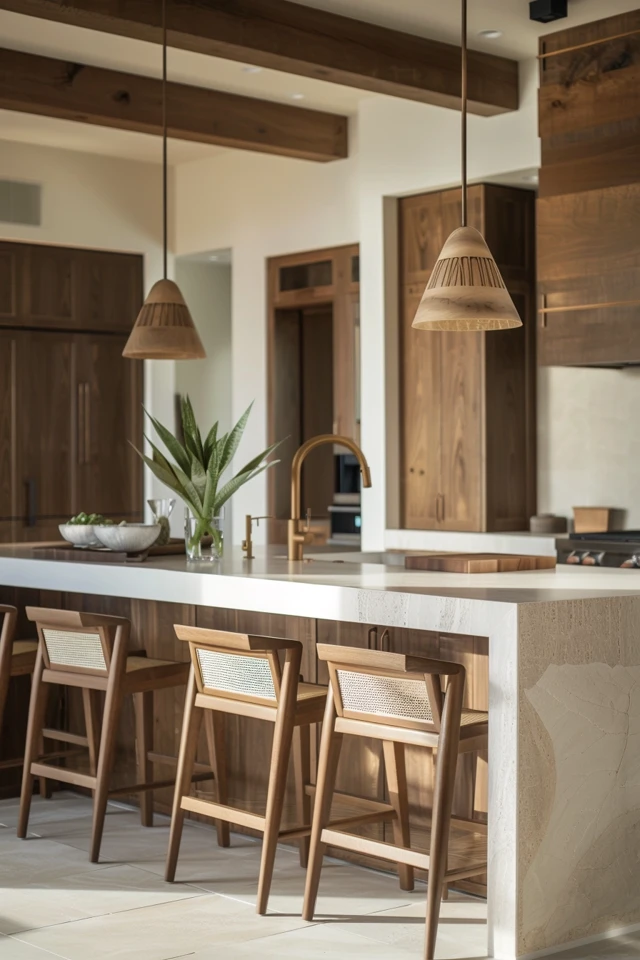
Title: Southwest Kitchen Ideas: Chic Desert-Style Designs
Introduction
I still remember the first time I walked into a truly authentic adobe home outside of Santa Fe. The light hit the plaster walls in a way that made the whole room feel like it was glowing from within, smelling faintly of piñon wood and sage. That specific warmth and grounded energy is exactly what we try to replicate in modern Southwest kitchen design, moving away from the kitschy chili-pepper motifs of the 90s toward something much more organic and refined.
Today’s “Desert Chic” is about texture over pattern and natural materials over bright, artificial colors. It is a style that balances the rustic nature of the outdoors with high-end, comfortable living. Whether you are renovating a historic hacienda or just want to bring some warmth to a city apartment, the principles of this design style are surprisingly adaptable.
For plenty of visual inspiration to spark your creativity, don’t miss the curated Picture Gallery included at the end of this post.
1. The New Desert Palette: Beyond Turquoise and Terra Cotta
When most people think of Southwest design, they immediately picture bright turquoise and heavy orange clay. While those colors have their place, a chic modern approach relies on a much subtler, earth-driven spectrum. We want the kitchen to feel like an extension of the desert landscape, not a caricature of it.
Foundational Neutrals
Start with your wall colors and cabinetry base. Instead of stark, clinical white, look for creamy off-whites, warm greige, or soft sand tones.
Warm Plaster Whites: These mimic the look of adobe and reflect light beautifully.
Sandy Beiges: These hide dust well and bridge the gap between wood tones and stone.
Mushroom Greys: A modern twist that pairs exceptionally well with brass hardware.
Accent Tones
Bring in color through architectural elements or an island base, but keep the saturation dusty rather than neon.
Sage and Agave: Muted greens ground the space and bring the “plant life” indoors.
Dusty Rose and Rust: Think of a sunset fading; these colors are warm but not aggressive.
Deep Charcoal or Iron: Use this for contrast in window frames or lighting to prevent the room from looking “washed out.”
Designer’s Note: Lighting Temperature
In a Southwest kitchen, your light bulb temperature is critical. Because we are using so many warm tones (wood, rust, cream), using a cool daylight bulb (4000K+) will turn your room yellow or sickly green.
Stick to 2700K to 3000K LED bulbs.
This range mimics the golden hour sunlight that defines the Southwest aesthetic.
It enhances the natural grain of wood cabinets rather than flattening them.
2. Authentic Materials and Cabinetry Finishes
The soul of a Southwest kitchen lies in its materials. We want surfaces that feel good to the touch and develop a patina over time. Flat, glossy surfaces rarely work in this aesthetic because they feel too manufactured.
Wood Selection
Knotty Alder is the traditional choice for this style because of its rustic grain and warmth. However, for a more contemporary look, White Oak with a matte clear coat is incredibly popular. It offers that dry, driftwood feel that fits the desert vibe perfectly.
If you are renovating on a budget, you don’t need to replace all your cabinets. Sanding down existing doors and applying a sheer, warm stain can often achieve the look. If painting, opt for a matte or satin finish rather than semi-gloss to mimic the texture of clay or chalk.
Countertops
Avoid sparkly quartz or highly veined polished marble, which can look too formal.
Concrete: A custom concrete counter offers a raw, industrial-meets-rustic look.
Honed Granite: If you want natural stone, get it honed (matte) rather than polished.
Real-World Constraint: The Plaster Hood
A massive trend in Southwest kitchens is the custom plaster range hood. It looks like a structural part of the architecture.
The Issue: Real plaster is expensive and heavy. It can crack if the framing shifts.
The Fix: Frame the hood in wood and drywall, then use a “limewash” paint or a specialty “Roman Clay” finish. This gives you the visual texture of plaster for a fraction of the cost and weight.
Sizing Rule: For visual balance, I prefer the hood to be 6 inches wider than the range (3 inches overhang on each side). If you have a 30-inch range, aim for a 36-inch hood.
3. Flooring and Backsplash: The Impact of Tile
If there is one element that defines this style, it is tile. However, this is also where homeowners make the most expensive mistakes regarding maintenance and durability.
Saltillo Tile (The Real Deal)
Saltillo is that iconic, terracotta-colored paver tile. It is handmade, meaning no two tiles are perfectly flat.
Pros: Incredible warmth, hides dirt, feels soft underfoot.
Cons: It is extremely porous. If you drop a glass of red wine on unsealed Saltillo, it is there forever.
Maintenance: You must strip and reseal these floors every few years.
Common Mistakes + Fixes: Flooring
Mistake: Installing Saltillo with narrow grout lines.
Fix: Because the tiles are irregular, you need a wide grout joint (often 1/2 inch to 3/4 inch). Do not try to butt them up tight like modern porcelain; they will look crooked.
Mistake: Using high-gloss sealer.
Fix: Use a matte or satin sealer. High gloss makes the floor look like plastic and shows scratches instantly.
Backsplash Options
For the walls, you have two distinct paths:
1. Zellige: Moroccan clay tiles that are glazed and cut by hand. They reflect light beautifully and have uneven edges.
2. Talavera: Traditional hand-painted Mexican tiles. These are bold. If you use them, keep the rest of the kitchen neutral to avoid visual chaos.
Renter and Budget Solutions
If you cannot rip out your floors, layering is your best friend.
Use a large, flat-weave jute or sisal rug to cover generic laminate flooring.
Look for “vintage vinyl” floor mats. These mimic the pattern of encaustic cement tiles but sit right on top of your existing floor. They are waterproof, pet-friendly, and wipe clean.
4. Architectural Details: Beams and Arches
Southwest architecture is structural. It is about the bones of the house. If your kitchen is a plain white box, we need to add some architectural character to ground the design.
Ceiling Beams (Vigas)
Exposed wood beams are a hallmark of the style.
New Build: We install real timber beams during framing.
Remodel: We use “box beams.” These are three pieces of wood mitered together to look like a solid beam. They are hollow and lightweight.
Scale Rule: Beams need breathing room. Space them at least 4 to 6 feet apart. If you pack them too closely in a standard 8-foot ceiling, the room will feel claustrophobic.
Arches
Softening sharp corners helps mimic the organic shape of adobe.
Niches: If you have thick walls, carving out a small arched niche for spice storage or display is very authentic.
What I’d Do in a Real Project: Beam Staining
Never paint your beams the same color as the ceiling. Contrast is key.
1. I usually start with a “Provincial” or “Special Walnut” stain base.
2. I layer a gray wash over it to kill the yellow/orange undertones.
3. The result is a weathered, sun-bleached look that looks 100 years old, not fresh from the lumber yard.
5. Lighting and Hardware Selection
In Desert Chic designs, metals provide the necessary contrast to all the soft wood and clay tones. We generally avoid chrome or polished nickel, as they feel too cool and modern.
Hardware Finishes
Oil-Rubbed Bronze / Matte Black: This mimics the look of wrought iron, which is traditional in Spanish Colonial architecture. It creates a strong graphic pop.
Lighting Fixtures
Lighting should feel substantial. Thin, delicate fixtures often get lost against textured walls.
Ceramic Sconces: Fixtures made of clay or plaster blend into the walls for a seamless look.
Iron Lanterns: For islands, large-scale glass and iron lanterns provide excellent task lighting without feeling too glitzy.
Pro Tip: Pendant Spacing
When hanging pendants over an island in this style, bigger is usually better.
I prefer two large oversized woven pendants (18-24 inches wide) rather than three tiny glass ones.
Space them 30 to 32 inches apart (measured from center to center).
The bottom of the fixture should sit 30 to 36 inches above the countertop.
6. Textiles and Styling: The Finishing Layer
This is where the room comes alive. Styling a Southwest kitchen is about restraint. We want it to feel collected, not cluttered.
Rug Selection
A vintage or vintage-inspired runner is essential. Look for kilims, Navajo-style patterns, or Turkish runners in faded reds, terracottas, and indigos.
Durability: In a kitchen, you need wool or a washable synthetic. Wool naturally repels water and is easy to clean.
Sizing: Ensure you have at least 6 inches of floor visible between the rug and the cabinets.
Pottery and Greenery
Ditch the small knick-knacks. Use large statement pieces.
Plants: Olive trees (if you have light), snake plants, or succulents are accurate to the region.
Open Shelving: If you have open shelves, stack simple stoneware plates. Stick to a color palette of cream, stone, and one accent color to keep it from looking messy.
Final Checklist: The Desert Chic Kitchen
If you are planning a renovation or a refresh, run your plan through this checklist to ensure you are hitting the right notes.
Palette Check: Are your whites warm? (Cream/Alabaster, not bright white).
Texture Balance: Do you have at least three distinct textures? (e.g., Wood cabinets, iron hardware, woven rug).
Lighting Temp: Have you specified 2700K-3000K bulbs?
Metal Finish: Did you avoid Chrome? (Stick to Brass, Bronze, or Black).
Floor Protection: If using Saltillo/Terracotta, is the sealer matte and high-quality?
Scale: Are your lighting fixtures large enough to stand up to the rustic elements?
Nature: Is there a living element? (Potted succulent or fresh herbs).
FAQs
Can I do this style in a small kitchen?
Absolutely. In a small space, lean heavily on the “Modern” side of Southwest. Keep the walls and cabinets a similar light plaster tone to expand the space visually. Use texture (like a Zellige backsplash) rather than bold color to add interest without closing the walls in.
How do I mix Southwest with other styles?
Southwest blends beautifully with Mid-Century Modern and Boho.
vs. Boho: Southwest is more restrained and earthy; Boho is more colorful and patterned.
vs. Mid-Century: Both love warm wood and clean lines. Use Mid-Century furniture shapes with Southwest textiles and materials.
Is terracotta flooring okay with pets?
Yes, but with caveats. The texture gives dogs great grip (unlike slippery hardwood). However, because it is porous, accidents need to be cleaned up immediately to prevent staining the grout or the tile itself. I recommend a darker grout color to hide paw traffic.
What if I hate orange?
You do not need orange! You can achieve a Southwest vibe using strictly sage greens, sandy beiges, and dark browns. The “desert” look is about the
Conclusion
Designing a Southwest kitchen is about slowing down and appreciating the imperfections in natural materials. It is a style that welcomes wear and tear, getting better as the leather ages, the brass patinas, and the wood deepens in color. It creates a space that feels warm, hospitable, and deeply connected to the earth.
Whether you are going for a full adobe renovation or just swapping out your cabinet hardware and adding a vintage runner, the goal is to create a kitchen that feels like a sanctuary. Trust your tactile senses—if it feels good to touch, it belongs in your design.
Picture Gallery


