
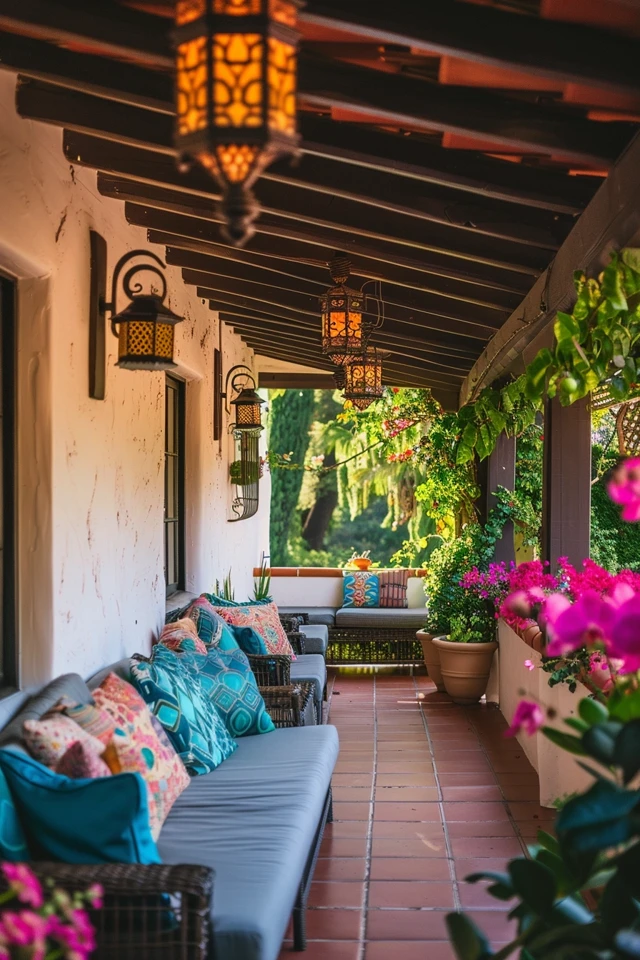
Spanish Style Front Porch Ideas: My Top Picks
There is something undeniably magnetic about a Spanish-style home. Whether it is a true Spanish Colonial Revival from the 1920s or a modern tract home with Mediterranean influences, the vibe is always warm, welcoming, and grounded. The front porch is crucial in this architectural style because it serves as an outdoor living room that bridges the gap between the street and the sanctuary inside.
I recall a project I worked on in Southern California where the homeowners felt their entry was cold and uninviting. By simply swapping the concrete path for Saltillo tile and adding oversized terracotta planters, the entire energy of the home shifted. It went from a “house” to a “hacienda.” You do not need a massive renovation budget to capture this spirit; often, it comes down to getting the materials and scale right.
In this guide, I will walk you through the specific design choices that create that authentic Spanish look. For a huge dose of inspiration, make sure to check out the Picture Gallery at the end of this post. Let’s dive into the details that make these porches so special.
1. The Foundation: Authentic Flooring and Tile Work
The floor is the single most impactful element of a Spanish-style porch. If you are working with plain grey concrete, you are missing a massive opportunity to set the tone. The gold standard for this look is terracotta or Saltillo tile. These handmade clay tiles bring a warmth that no manufactured porcelain can replicate.
However, working with authentic Saltillo requires knowledge. These tiles are porous and irregular. In a real project, I always advise clients to seal these tiles professionally before and after grouting. If you skip this, they will stain immediately from water, mud, or spilled drinks. For a family with kids or pets, I often suggest a “high-fire” terracotta or a matte porcelain look-alike for better durability.
If retiling isn’t an option, you can use outdoor rugs to fake the look. Look for flat-weave rugs in brick red, burnt orange, or deep patterns that mimic cement tiles. A rug covers ugly concrete and defines the seating area immediately.
Designer’s Note: The Riser Rule
One of my favorite tricks for elevating a Spanish porch is focusing on the stair risers. The “tread” is where you step, but the “riser” is the vertical part you see as you walk up.
- I love installing hand-painted Talavera tiles here.
- Mix and match patterns for an eclectic, bohemian look, or stick to two alternating patterns for something more formal.
- This is a high-impact, low-cost upgrade because you only need a small square footage of tile.
2. Architectural Elements: Arches, Stucco, and Wood
Spanish architecture is defined by its “bones.” If you are building or doing a heavy renovation, arches are the signature move. Soft, rounded archways soften the hard lines of a building and frame the view of the garden beautifully. When designing arches, scale is everything. A skinny, narrow arch looks cheap. You want the columns or piers supporting the arch to feel substantial and thick.
Stucco is the skin of a Spanish home. The texture matters just as much as the color. I generally steer clients toward a “Santa Barbara” smooth finish or a light “sand” finish. Avoid heavy lace textures, which can look dated and collect too much dirt.
If you cannot change the architecture, focus on the wood elements. Dark, heavy timber is a hallmark of this style. Exposed rafter tails under the roofline or a heavy timber pergola can add that necessary weight. If you have existing wood columns that feel too thin, simply wrapping them in rough-sawn cedar and staining it a dark walnut can completely change the character of the porch.
Common Mistakes + Fixes
Mistake: Painting the stucco a bright, refrigerator white.
The Fix: Spanish homes need creamy, warm whites.
- Look for colors like Benjamin Moore’s “Swiss Coffee” or “White Dove.”
- The goal is a color that looks like it has been baked in the sun, not bleached by it.
- Bright white can feel clinical and harsh against the warm tones of the roof tiles.
3. Furniture Selection: Materials and Layout
When selecting furniture for a Spanish porch, I follow a strict material palette: wrought iron, teak/wood, and wicker. You want to avoid sleek aluminum or shiny plastics. The furniture should feel like it has history. Wrought iron is the most traditional choice, but it can be uncomfortable. If you choose iron, ensure you have thick, high-quality cushions.
Layout is where functionality meets aesthetics. A Spanish porch is often social. If you have the space, arrange furniture to encourage conversation rather than just facing the street. I like to place two lounge chairs perpendicular to the house, facing each other, with a low table in between.
If you have a narrow front porch, a classic wooden bench is your best friend. Look for one with carved details or a high back. To make it functional, ensure you have at least 36 inches of walking clearance past any furniture. You never want guests to have to turn sideways to get to your front door.
What I’d do in a real project:
- The Mix: I never buy a full matching set of outdoor furniture. It looks too “catalog.” instead, I might pair a heavy wooden bench with two iron side chairs.
- The Fabrics: Use performance fabrics (like Sunbrella) in solids or stripes. Good colors are terracotta, sage green, deep navy, or cream.
- The Scale: Ensure the furniture is heavy enough to withstand wind but not so large that it blocks the windows. The back of a bench should generally sit below the window sill.
4. Landscaping: Pottery and Greenery
In Spanish design, the line between the garden and the house is blurred. Your porch needs to feel alive. The easiest way to achieve this is through pottery. I cannot stress this enough: plastic pots kill the vibe. You need real terracotta, glazed ceramic, or concrete pots.
I like to use the “thriller, filler, spiller” method for planting, but with a Spanish twist.
- Thriller: Olive bushes, citrus trees, or tall cacti.
- Filler: Agave, aloe, or lavender.
- Spiller: Trailing rosemary or creeping jenny.
Bougainvillea is the quintessential Spanish-style plant. If you have a post or a trellis, train bougainvillea to climb it. The pop of magenta or red against white stucco is iconic. However, be realistic about maintenance. Bougainvillea drops flowers constantly. If you are a neat freak, star jasmine is a cleaner, fragrant alternative that still gives you that lush, climbing look.
Designer’s Note: Grouping Pots
Never place one lonely pot in a corner. It looks sad and accidental.
- Always group pots in odd numbers (groups of 3 or 5).
- Vary the heights. You want a tall pot, a medium pot, and a low, wide bowl.
- This creates a vignette that feels curated and intentional.
5. Lighting and Iron Hardware
Lighting is the jewelry of the home. On a Spanish porch, the fixtures should be substantial and made of dark metal. Oil-rubbed bronze or matte black finishes are perfect. Lantern-style sconces are the traditional choice.
A common issue I see is sizing. Most people buy lights that are too small. From the street, a tiny light fixture disappears. A good rule of thumb is that your wall lantern should be roughly one-quarter the height of the door entrance. If you have a standard 8-foot door frame, your light should be close to 24 inches tall. Go big.
Don’t forget the door hardware. If you have a standard builder-grade shiny brass knob, swap it out. A handle-set with a thumb latch in a dark, distressed finish instantly adds age and character.
Hardware Checklist:
- Clavos: These are decorative nail heads often found on rustic wooden doors. You can actually buy “dummy” clavos that stick on or screw in to give a plain wood door that old-world look.
- House Numbers: Choose hand-painted tiles or wrought iron numbers. Ensure they are legible from the street for safety and delivery purposes.
- Mailbox: A hammered copper or black iron mailbox completes the look.
Final Checklist: The Spanish Porch Revamp
If I were consulting on your porch today, this is the step-by-step checklist I would have you follow to ensure the project stays on track and looks professional.
Phase 1: The Envelope
- Assess the paint condition. Do we need to warm up the white?
- Check the flooring. If concrete, can we tile? If not, source a large outdoor rug in warm tones.
- Update the door hardware to dark iron.
Phase 2: The Large Pieces
- Select seating. Prioritize a mix of wood and iron.
- Check the scale. Ensure 36 inches of clearance for walkways.
- Install large-scale lantern lighting (warm 2700K bulbs only).
Phase 3: The Styling
- Buy at least three terracotta pots of varying sizes.
- Plant drought-tolerant, Mediterranean species (Olive, Agave, Rosemary).
- Add soft accessories: pillows in performance fabric and a throw blanket for chilly evenings.
FAQs
Can I do a Spanish style porch if my house is a different style?
You have to be careful here. If you have a super modern home or a Victorian, a full Spanish porch might look disjointed. However, you can borrow elements. A “Transitional Spanish” look is very popular. You can use the white stucco and black iron elements but skip the red tile roof and heavy carvings. It’s about nodding to the style without forcing it.
How do I clean Saltillo tile?
Saltillo is delicate. Never use harsh acids or bleach. I recommend a pH-neutral cleaner specifically made for natural stone or terracotta. You should sweep it often because grit and sand can scratch the sealant. Re-seal the tiles every 1-2 years depending on sun and rain exposure.
What is the best budget tip for this look?
Paint and plants. Painting your front door a dark wood tone (to mimic timber) or a deep teal/sage can change the look instantly. Combine that with three large terracotta pots from a garden center (much cheaper than buying new furniture), and you have significantly shifted the style for under $200.
Conclusion
Creating a Spanish-style front porch is about more than just buying a specific chair or painting a wall white. It is about creating an atmosphere of warmth, history, and hospitality. It draws on natural materials like clay, iron, and wood to create a space that feels grounded and permanent.
Whether you are doing a full renovation with arches and custom tile or just styling a rental with the right rug and planters, the goal remains the same: to create an entry that feels like a warm embrace. Take your time selecting materials that will age well, and remember that in Spanish design, a little bit of rustic imperfection is part of the charm.
Picture Gallery


