
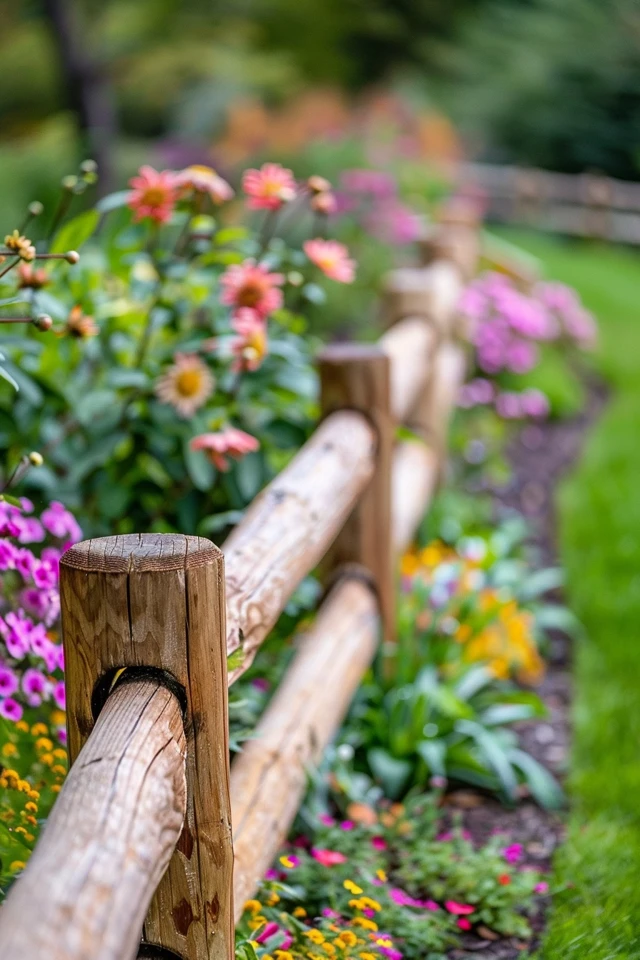
Title: Split Rail Fence – Landscaping Ideas for Your Yard
Introduction
There is a distinct, timeless beauty to a split rail fence that few other hardscape elements can match. It immediately evokes a sense of pastoral charm, defining your property lines without creating a fortress-like barrier between you and the surrounding landscape. If you are looking for visual inspiration, don’t miss our curated Picture Gallery included at the end of this blog post.
In my years of designing outdoor spaces, I have found that homeowners often shy away from fencing because they fear it will make their yard feel smaller or boxy. The split rail is the perfect antidote to that fear; its open design borrows views from the horizon or the woods, making your yard feel expansive rather than enclosed.
However, a fence alone is rarely enough to carry the design of a yard; it needs thoughtful landscaping to ground it. Whether you are trying to corral a sprawling golden retriever or simply want to add curb appeal to a farmhouse-style home, the way you plant and style along the rails makes all the difference. This guide will walk you through professional strategies to elevate this rustic staple into a cohesive part of your home’s exterior design.
Choosing the Right Material and Scale
Before we dig into plants, we have to talk about the “bones” of the design. The material you choose dictates the maintenance schedule and the overall vibe of the property. While traditionalists love cedar or black locust wood, vinyl alternatives have come a long way in mimicking texture without the rot.
If you choose wood, I always recommend Western Red Cedar or Black Locust. These woods have natural oils that resist decay and insects, meaning you won’t be replacing posts every five years. Pressure-treated pine is cheaper, but it tends to warp and twist, which ruins the clean horizontal lines we are aiming for.
Scale is the next critical factor that many DIYers overlook. For a standard residential yard, a two-rail fence usually sits around 36 to 48 inches high, which is unobtrusive and welcoming. If you have large livestock or need a more substantial visual barrier, a three-rail system stands closer to 48 to 60 inches.
Designer’s Note: The Corner Post Rule
One lesson I learned early in my career involved a client who ignored the corner bracing. Split rail fences rely on gravity and friction, but corners take a lot of tension. Always concrete your corner and gate posts, even if you are just tamping dirt for the line posts. If the corners shift, the rails fall out. It is that simple.
Layering Plants for Softness and Color
The biggest mistake I see with split rail landscaping is the “soldier row” approach. This happens when a homeowner plants a single row of identical bushes straight down the fence line. This looks rigid and unnatural, fighting against the organic, flowing nature of the split rail aesthetic.
Instead, you want to use a technique called drift planting. This involves grouping plants in odd numbers (groups of 3, 5, or 7) and varying the depth of the bed. Pull the mulch bed out three to four feet from the fence in some areas and tuck it back in others to create a serpentine edge.
The Backdrop Layer
Use the fence as a support structure for climbing plants. This blurs the line between hardscape and softscape.
- Clematis: These are fantastic because they are lightweight and won’t weigh down the rails. Look for ‘Jackmanii’ for deep purples or ‘Sweet Autumn’ for late-season white blooms.
- Climbing Roses: A classic choice for a reason. Ensure you tie the canes loosely to the rails using twine; do not use wire, which cuts into the plant.
- Virginia Creeper: If you want lush greenery that turns brilliant red in the fall, this is a native winner, though it can be aggressive.
The Middle Layer
This is where you add volume. I love using ornamental grasses here because their texture mimics the rustic grain of the wood.
- Karl Foerster Grass: It grows upright and won’t flop over the fence.
- Russian Sage: The airy purple flowers look stunning against the graying wood of a cedar fence.
- Hydrangeas: Specifically, Limelight or Annabelle varieties. Their large heads provide a heavy visual anchor to balance the negative space between rails.
The Ground Layer
Finally, plant low-growers to hide the gap between the bottom rail and the ground. This also suppresses weeds, reducing the need for string trimming.
- Creeping Phlox: Creates a carpet of color in spring.
- Liriope: A tough, grass-like plant that stays green nearly all year in many zones.
- Hostas: If your fence line is shaded, these are your best friends. Just be wary if you have a deer problem.
Making It Functional: The Wire Mesh Solution
A common complaint about split rail fencing is that it doesn’t hold small dogs or children. The gaps are simply too wide. However, you don’t have to sacrifice the look for safety. The solution is welded wire mesh, often referred to in the trade as “2×4 horse fence” or “no-climb” wire.
The trick is to buy wire that is black vinyl-coated. Green is okay, but black virtually disappears to the eye from a distance. Silver galvanized wire reflects sunlight and ruins the rustic aesthetic, making your yard look like a construction zone.
Installation Best Practices
- Staple Placement: Use ¾-inch galvanized staples. Place them every 6 inches along the posts and every 12 inches along the rails.
- The “Inside” Rule: Always install the mesh on the “pet side” of the fence. If you are trying to keep a dog in, the wire goes on the inside. If the dog jumps against it, the wire presses against the sturdy wood rails. If you put it on the outside, the staples have to hold the dog’s weight, and they will eventually fail.
- Burial: If you have a digger, bury the bottom 3-4 inches of the wire into a trench. This prevents escape artists from tunneling under the bottom rail.
Common Mistakes + Fixes
Mistake: Not pulling the wire tight enough during installation.
Fix: You cannot pull welded wire tight by hand. You need a “fence stretcher” bar or a makeshift lever system. If the wire is wavy, it looks cheap. Take the time to stretch it taut before stapling.
Defining Entrances and Gateways
The gate is the handshake of your home. It is the first thing people interact with, so it deserves special attention. A split rail fence can feel very informal, so your gate choice helps set the tone for the rest of the property.
For a cohesive look, use a gate constructed from the same timber as the fence. However, I often advise clients to upgrade the hardware. Heavy-duty, matte black iron hinges and latches add a sense of quality and weight. A flimsy latch that rattles in the wind diminishes the entire installation.
Arbors and Pergolas
Framing a gate with an arbor creates a distinct portal. This is an excellent interior design trick brought outdoors: compression and release. Walking through a small, covered arbor (compression) makes the yard on the other side feel larger and more open (release).
If you install an arbor, match the scale to the fence. If you have a bulky 3-rail fence, a thin metal arbor will look spindly. opt for chunky 4×4 or 6×6 timber posts for the arbor structure to maintain visual harmony.
Lighting the Way
Lighting is crucial for both safety and ambiance. Since split rail fences often line driveways or property perimeters, they are prime real estate for lighting fixtures.
- Post Cap Lights: These sit on top of the vertical posts. Solar options are popular, but hardwired low-voltage copper caps provide a much warmer, consistent light.
- Up-lighting: Instead of lighting the fence, light the trees or arbors nearby. Placing a well light at the base of a climbing rose on a fence post creates dramatic shadows at night.
Maintenance and Longevity
We cannot talk about wood fencing without addressing maintenance. The “graying out” process is natural. Cedar and locust will turn a silvery gray within a year or two. Many people love this weathered look—it fits the farmhouse vibe perfectly.
However, if you want to maintain the warm, honey tones of new wood, you need to commit to a staining schedule. You will need to clean and restain the fence every 3 to 5 years.
Protection Against Rot
The point of failure for 90% of split rail fences is right where the post meets the soil. This area stays wet, inviting fungi and termites.
- Gravel Backfill: Do not fill the post hole entirely with concrete or dirt. Add 3-4 inches of crushed gravel at the bottom of the hole for drainage.
- Concrete Crown: If you use concrete, stop pouring about 2 inches below the soil surface, or slope the concrete away from the post at the top. This sheds water away from the wood.
- Mulch Gap: When landscaping, never pile mulch directly against the wooden post. This creates a moisture trap. Leave a 1-to-2-inch gap around the base of the post.
Designer’s Checklist: What I’d Do in a Real Project
If I were managing your project tomorrow, this is the exact workflow I would follow to ensure success:
1. Check Property Lines: Never guess. Find the survey pins. I usually set the fence line 6 inches inside the property line to ensure we don’t encroach on a neighbor.
2. Call Before You Dig: Contact your local utility marking service (811 in the US). Hitting a gas or cable line is a disaster you want to avoid.
3. Layout with String: Run a mason line string for the straight runs. A split rail fence allows for some wiggle, but the posts should still be in a straight line for the best visual appeal.
4. Material Acclimatization: If using wood, buy it a week early and let it sit in your yard. This allows the wood to adjust to your local humidity, reducing warping after installation.
5. The “Pet Audit”: Decide immediately if wire mesh is needed. Installing it during the initial build is 50% faster than adding it later.
6. Planting Plan: Mark out your plant beds with spray paint before the fence goes up. It is easier to visualize the curves without the obstruction.
FAQs
How far apart should split rail posts be?
Standard rails usually come in 10-foot or 11-foot lengths. However, you must account for the overlap inside the post hole. Generally, posts are spaced 10 feet apart on center, but you must measure your specific rails before digging.
Can I paint my split rail fence?
You can, but I generally advise against painting it with solid latex paint. Paint sits on top of the surface and will eventually peel and crack, requiring tedious scraping. Oil-based semi-transparent stain is a better choice; it penetrates the wood and fades gradually, making re-application much easier.
Does a split rail fence add value to a home?
Yes, especially in suburban or rural settings. It defines the boundary clearly without blocking views, which is a major selling point. It also signals to buyers with pets that the yard is “dog-ready” if you include the wire mesh.
How do I handle a steep hill?
Split rail is actually the best fence for hills. You don’t “step” the fence like you do with privacy panels. You “rack” the fence, meaning the rails follow the contour of the ground. It looks much smoother and leaves no gaps at the bottom.
Conclusion
A split rail fence is more than just a property marker; it is a design element that invites creativity. By layering textures with plants, ensuring functionality for your family and pets, and maintaining the materials properly, you create a boundary that feels welcoming rather than restrictive.
Remember that landscaping is a process. You might start with the fence and the wire mesh this year, add the trees next year, and finish with the flower beds the year after. The key is to have a master plan so that every addition feels intentional. Whether you are aiming for a cottage garden feel or a clean, modern ranch aesthetic, the humble split rail provides the perfect canvas for your vision.
Picture Gallery


