
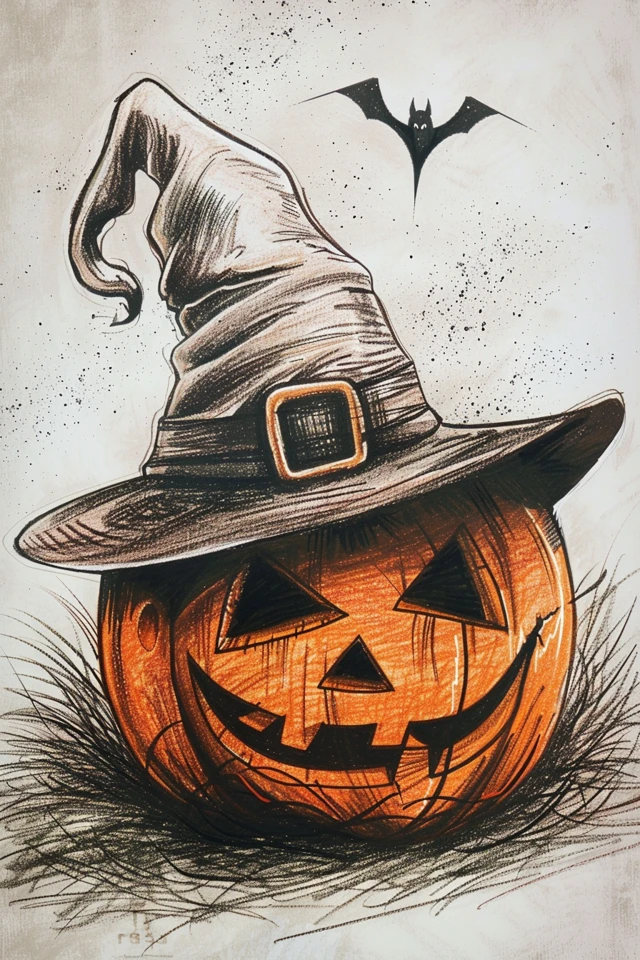
Spooky Fun with Easy Halloween Drawing Ideas
Halloween decor often falls into two camps: inexpensive plastic items that break easily, or high-end pieces that cost a fortune. As a designer, I have found that the sweet spot lies in creating your own art. Custom drawings allow you to control the color palette, the scale, and the overall vibe of your space without compromising your design aesthetic.
I remember a project where a client wanted a “haunted mansion” vibe for a party but hated the look of store-bought gore. We bought vintage frames from a thrift store and created simple, charcoal-style silhouette drawings to replace her usual family photos. It completely transformed the room, felt incredibly chic, and cost next to nothing.
If you are looking for visual inspiration, don’t miss the Picture Gallery at the end of this blog post.
Setting the Scene: Creating a Functional Art Station
Before we put pen to paper, we need to talk about the setup. Drawing and crafting require a dedicated zone, especially if you are involving children or using materials that could stain your furnishings. In interior design, we call this “zoning for activity.”
You need a solid surface that is easy to clean. If you are using your dining table, protect it. I recommend a heavy-duty kraft paper roll. Tape it down with painter’s tape, which won’t leave a sticky residue on your wood finish.
Lighting is critical for any detailed work. You want task lighting that hits the surface directly without casting shadows from your hand. If you are using a dining room chandelier, ensure it is on a dimmer. For drawing, you want the light at full brightness, ideally around 3000K color temperature for true color accuracy.
Designer’s Note: The Flow of Traffic
I learned this the hard way during a holiday workshop. Never place your art station in a main thoroughfare.
If people are walking behind chairs, you need at least 36 to 42 inches of clearance from the table edge to the nearest wall or obstruction. If you squeeze this zone, accidents happen, and art supplies end up on the floor. Keep the station in a low-traffic corner or distinct zone of the room.
Essential Materials Checklist
- Heavyweight mixed-media paper (at least 98 lb weight).
- Black fine-liner pens in varying widths (0.5mm, 0.8mm, and brush tip).
- Kraft paper roll for table protection.
- Chalk markers (white and metallics).
- Painter’s tape.
- Graphite pencils for sketching outlines.
Elevating Pumpkin Decor with Drawn Motifs
Carving pumpkins is messy and significantly reduces the lifespan of the gourd. In my design projects, I prefer “drawn” pumpkins using paint pens or permanent markers. This allows the pumpkin to last for weeks, bridging the gap between early October and Thanksgiving.
The key to making this look professional rather than childish is the finish. Choose pumpkins with smooth skins and interesting colors, like “Jarrahdale” (blue-grey) or “Lumina” (white). These act as a neutral canvas that fits better with modern interiors than standard bright orange.
When drawing on 3D objects, scale is everything. A common mistake is drawing small, intricate patterns that get lost from a distance. You want bold, high-contrast designs. Geometric patterns, botanical vines, or large spooky faces work best.
Common Mistakes + Fixes
Mistake: Using water-based markers on pumpkin skin.
Fix: Pumpkin skin is waxy and resists water-based ink. Use oil-based paint pens. Shake them well before use and test on the bottom of the pumpkin first.
Mistake: Drawing a single face on the front.
Fix: Treat the pumpkin as a sculptural object. Draw a continuous pattern that wraps around the entire circumference. This looks better on a coffee table or centerpiece where it can be viewed from all angles.
Grouping Rules of Thumb
When displaying your drawn pumpkins, follow the “Rule of Three.” Odd numbers are more visually pleasing than even numbers.
Vary the height and width. I like to pair one tall, slender gourd with two rounder pumpkins. If you are placing them on a console table, ensure the largest pumpkin is anchored in the back, with the smaller ones layered in front.
Large-Scale Window and Glass Art
One of the most underutilized surfaces in a home is the glass. Windows and mirrors offer a massive canvas that can dramatically change the mood of a room. Using liquid chalk markers, you can create temporary murals that wipe away clean with a damp cloth.
This is particularly great for renters who cannot paint walls or hammer nails for heavy decor. I often use this technique on entry mirrors to set the tone immediately when guests walk in.
When drawing on windows, consider the view from both inside and outside. White chalk markers show up best against the dark night sky, making them visible from the street.
Placement and Ergonomics
Draw at eye level. For an average adult, eye level is roughly 57 to 60 inches from the floor. Center your main design element at this height.
If you are drawing on a mirror above a fireplace mantel, leave a “breathing room” gap of at least 4 to 6 inches between the bottom of your drawing and the items on the mantel. This prevents the visual space from looking cluttered.
What I’d Do in a Real Project
- Step 1: Clean the glass thoroughly with vinegar and water. Any grease will cause the marker to streak.
- Step 2: Tape a sketch on the outside of the window facing in. This gives you a template to trace without having to freehand on a slippery vertical surface.
- Step 3: Outline everything in a thick white marker first.
- Step 4: Add details with thinner tips.
- Step 5: Step back 5 feet every 10 minutes to check the scale. Up close, you lose perspective.
DIY Gallery Wall Swaps
You likely already have art hanging in your home. A “designer hack” for seasonal decor is to not add new holes to your walls, but to swap the art inside existing frames.
This requires standardizing your frame sizes. If you have 8×10 or 11×14 frames, you can easily create spooky sketches on high-quality paper and slide them in front of your existing prints for the month of October.
I recommend sticking to a strict color palette for these drawings to maintain a cohesive look. Black ink on cream paper creates a vintage, apothecary aesthetic that looks expensive. Avoid using standard printer paper; it is too bright white and flimsy. Use a textured cardstock or watercolor paper.
Drawing Ideas for Sophisticated Interiors
Avoid cartoonish witches or pumpkins. Instead, look to biology and nature for inspiration.
- Botanical Sketches: Draw withered branches, poisonous plants, or dried florals.
- Anatomy: Skulls or skeletal hands drawn in a medical illustration style.
- Silhouettes: Solid black profiles of ravens, bats, or Victorian figures.
- Typography: Gothic lettering with simple phrases like “Wicked” or “Boo.”
Hanging Logistics
If you are creating a new gallery wall from scratch, proper spacing is non-negotiable. Place frames 2 to 3 inches apart. Any wider, and they feel disconnected; any closer, and they feel crowded.
Use a level. Nothing ruins a professional look faster than crooked art. If you are in a high-traffic area where doors slam, use a small piece of museum putty on the bottom corners of the frame to keep them straight.
Tablescapes: The Drawn Runner
For a Halloween dinner party, the table is your centerpiece. Instead of buying a fabric runner that you have to wash and store, create a custom drawn runner using a roll of brown kraft paper or black butcher paper.
This creates an interactive element for guests and protects your table from spills. It also allows you to draw place settings directly onto the paper, eliminating the need for place cards.
Sizing Your Runner
The runner should be approximately one-third the width of your table. If your table is 40 inches wide, aim for a runner that is roughly 12 to 14 inches wide. This leaves ample room for plates and glassware without them sitting unevenly on the paper edge.
Ensure the runner hangs over the ends of the table by at least 10 to 12 inches. This adds visual weight and elegance, making the paper look like intentional drapery rather than a scrap.
Styling the Center
Once you have drawn your spooky vines, cobwebs, or spiders down the center of the paper runner, layer real physical objects on top. This mixes 2D and 3D elements.
I suggest using brass candlesticks for height. Vary the heights—6 inches, 9 inches, and 12 inches—to keep the eye moving. Intersperse these with small votives and perhaps a few of the drawn pumpkins we discussed earlier.
Lighting the Table
Overhead lighting should be dimmed. The primary light source should be candlelight (real or battery-operated) and ambient light from nearby lamps. This low-light setting hides imperfections in your drawings and creates that moody, spooky atmosphere we are aiming for.
Final Checklist for Your Halloween Drawing Project
Use this checklist to ensure your project runs smoothly and looks professional.
- Define the Zone: clear a workspace with 36+ inches of clearance for traffic.
- Protect Surfaces: Tape down kraft paper or use a drop cloth.
- Check Lighting: Use 3000K bright light for working, then dimmer warm light for display.
- Select Palette: Stick to 2-3 colors (e.g., Black/White/Gold or Orange/Cream/Black).
- Prep Surfaces: Clean pumpkins and glass with alcohol or vinegar to remove oils.
- Test Materials: Scribble paint pens on scrap paper to get ink flowing before touching the final surface.
- Measure Spacing: Keep gallery wall frames 2-3 inches apart.
- Layer Decur: Mix your drawings with 3D elements like candles and textures.
FAQs
What are the best markers for drawing on glass windows?
Water-based liquid chalk markers are the industry standard for glass. They are opaque, vibrant, and wipe off easily with water. Brands like Posca or Chalk Ink are reliable. Avoid oil-based markers on glass unless you want the design to be permanent and require razor blades to remove.
How do I make my drawings look less messy?
Sketch lightly with a pencil first. Even on pumpkins or canvas, a faint guideline prevents spacing errors. Also, anchor your hand. Place a clean sheet of paper under your drawing hand to prevent smudging the ink you just laid down.
Can I use these ideas outdoors?
Paper drawings obviously cannot go outside. However, pumpkins drawn with oil-based paint pens are weather-resistant. Chalk marker art on the inside of a window is visible from the outside and safe from rain. For outdoor chalkboard signs, you must use a spray sealant if you want the drawing to survive moisture.
How do I choose the right size frame for my drawing?
Art looks best when it has room to breathe. I always recommend using a mat. If your drawing is 8×10, put it in an 11×14 frame with a mat opening for the 8×10. This white space elevates the drawing from a “sketch” to a piece of “art.”
Conclusion
Bringing handmade drawing elements into your Halloween decor allows for a level of customization that big-box stores cannot match. It gives you control over the color, scale, and theme of your home, ensuring that the “spooky” elements still fit within your sophisticated interior design.
Whether you are sketching a runner for a dinner party or curating a gallery wall of vintage-style silhouettes, the key is execution. Pay attention to lighting, keep your color palette restrained, and always consider how the art integrates with the rest of the room’s layout. With these guidelines, you can create a home that feels festive and designed, not cluttered.
Picture Gallery


