
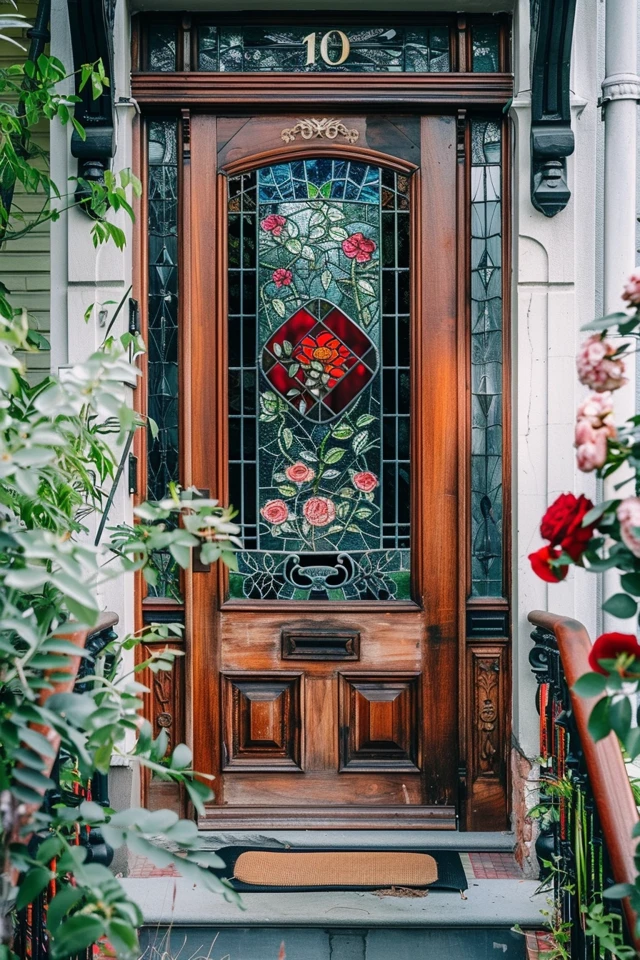
Stained Glass Front Door Ideas for Your Home
The front door is the handshake of your home. It creates the very first impression for guests and sets the tone for the entire interior experience. While a solid wood door offers security, it often lacks the personality and light-filtering magic that defines a truly welcoming entryway. Stained glass offers a unique solution by blending artistry with architecture, allowing you to curate privacy while flooding your foyer with dynamic, colored light.
I have worked on countless entryways where the homeowners felt their space was dark or uninspired. Replacing a standard six-panel door with a custom leaded glass unit completely transformed the energy of the hall without requiring a single paintbrush. If you are looking for visual inspiration, be sure to check out our curated Picture Gallery at the end of the blog post. However, selecting the right glass is about much more than just picking a pretty pattern; it involves technical considerations regarding weight, opacity, and architectural integrity.
In this guide, I will walk you through the practicalities of choosing stained glass for your front door. We will move beyond basic aesthetics to discuss structural framing, insulation value, and how to match the glass style to your home’s era. Whether you live in a 1920s bungalow or a modern new build, there is a glazing solution that fits.
1. Matching Glass Style to Architectural Era
The biggest mistake homeowners make is choosing a glass pattern that fights against the architecture of the house. A front door should look original to the build, not like an afterthought. When I design an entry, I look at the roofline and the window shapes first.
If you have a Craftsman or Bungalow style home, you want geometric lines and earthy tones. Think about the “Prairie Style” popularized by Frank Lloyd Wright. You should look for designs that feature chevrons or straight vertical lines. The colors should be subtle—moss greens, ambers, and pale yellows—rather than vibrant primaries. The caming (the metal framework holding the glass) should usually be zinc or dark patina lead to match the heavier visual weight of Craftsman wood trim.
For Victorian or Queen Anne homes, you have permission to be much more ornate. These homes can handle complex floral patterns, swirls, and “jewels” (faceted glass pieces that act like prisms). In these renovations, I often use brass caming because it complements the warm oak or mahogany woods often found in Victorian millwork.
If your home is Modern or Contemporary, less is more. I recommend sticking to clear, textured glass rather than colored glass. Using textures like “reeded” or “rain” glass in a simple grid pattern adds sophistication without looking dated. The goal here is to play with light distortion rather than color.
Designer’s Note:
When mixing eras, use the “80/20 rule.” Keep 80% of the design consistent with the home’s age (like the shape of the door and the wood finish) and let the remaining 20% (the glass pattern) be a bridge to your personal style. If you put a Victorian rose pattern on a Mid-Century Modern slab door, it will always look disjointed.
2. Balancing Privacy with Natural Light
The primary functional challenge with a glass front door is maintaining privacy. You want to see out, but you likely don’t want the delivery driver seeing straight through to your dinner table. This is where understanding “opacity ratings” and glass textures becomes critical.
In the glass industry, we often rate privacy on a scale of 1 to 10. A clear window is a 1. A solid wood door is a 10. For a front door, I usually recommend aiming for a privacy rating between 5 and 7. This allows light to pass through but obscures defined shapes into blurs.
You achieve this privacy through texture rather than just darkness. “Water glass” has a gentle ripple that offers mild distortion (rating 3-4). “Glue chip” glass looks like frost on a window and offers high privacy (rating 7-8) because it scatters light aggressively. “Beveled” glass is clear but bends light at the edges; it offers privacy only in small sections, so it is best used as an accent rather than the main field of the door.
Common Mistakes + Fixes:
- Mistake: Using too much clear glass in a street-facing door.
- Fix: If you love a clear design, ensure the clear pieces are situated at the very top of the door (above eye level) or are small enough that no one can peep through.
- Mistake: Assuming “tinted” glass provides night privacy.
- Fix: Remember that at night, when your indoor lights are on, colored glass becomes transparent from the outside. Always rely on texture, not just color, for privacy.
3. Durability and Insulation: The Triple-Pane Solution
A common misconception is that stained glass is fragile and drafty. While this was true for the single-pane windows of the 1900s, modern front door glass is constructed very differently. As a designer, I almost never install “raw” stained glass on an exterior door anymore due to energy codes and security concerns.
The industry standard for high-quality exterior doors is “triple glazing.” This is a sandwich construction. The decorative stained glass panel is sealed between two sheets of clear, tempered safety glass. This encapsulates the delicate lead and colored glass, protecting it from wind, oxidation, and physical impact.
From a maintenance perspective, triple glazing is a lifesaver. You never have to polish the lead caming or clean dust out of the textured crevices. You are simply cleaning smooth, tempered glass on both the interior and exterior. This is essential for homes with dogs that might scratch at the door or kids with sticky hands.
What I’d do in a real project:
- Insulation: I always check the U-factor of the glass unit. Triple-paned units effectively act like a thermal break, keeping your hallway warm in winter.
- Security: I ensure the outer layers are tempered. Tempered glass is four times stronger than standard glass and crumbles into pebbles rather than jagged shards if broken.
- Sealant: I look for units that are “argon filled.” This gas filling between the panes further reduces heat transfer and prevents fogging.
4. Sizing and Scale: Transoms and Sidelights
Sometimes the door itself isn’t enough. If you have a wide hallway, a single 36-inch door can feel underwhelming. This is where sidelights (vertical windows on the sides) and transoms (horizontal windows above) come into play. They dramatically increase the visual footprint of your entry.
The key to successfully using sidelights is alignment. The “caming” (metal lines) in your sidelights should align horizontally with the caming in your door. If the horizontal lines don’t match up across the assembly, the entryway will feel chaotic to the eye.
Regarding scale, you must consider the “stile” width. The stile is the solid wood border around the glass. For structural stability, I never recommend a stile width of less than 5 inches for an exterior door. If you make the glass too wide, you compromise the door’s ability to hold its shape over time, leading to warping and sticking.
A note on transoms:
If you have high ceilings (9 feet or higher), a transom is almost mandatory to bridge the gap between the door frame and the ceiling. I often use the transom to display the house number in the glass work itself. This is a classic, functional detail that adds instant curb appeal and helps guests find your home.
5. Choosing Your Metal Finish (Caming)
The metal that holds the glass pieces together is called caming, and its finish is just as important as the glass colors. The metal finish acts like the eyeliner of the design—it defines the shapes. If you choose the wrong metal, the pattern can disappear or clash with your door hardware.
The three most common finishes are:
- Brass: Bright and gold-toned. It looks incredible on dark wood doors like mahogany or cherry. However, it can look dated if not paired with the right glass. I use this mostly for strict Victorian restorations.
- Zinc: A silver, satin finish. This is the go-to for modern or contemporary homes. It looks sharp against black or brightly painted doors (like teal or red).
- Patina (Black): This is the most versatile and popular choice. It looks like dark, aged lead. It provides the highest contrast against the glass, making the pattern pop. It works on almost any architectural style, from Farmhouse to Tudor.
Designer’s Note:
Coordinate your caming with your door handle and lockset, but they don’t have to match perfectly. A matte black handle sets off patina caming beautifully. A satin nickel handle works well with zinc caming. Avoid mixing warm metals (brass) with cool metals (chrome) within the same three-foot radius of the door.
6. Budget-Friendly Alternatives and Rental Solutions
Custom leaded glass is an investment. A full triple-glazed unit pre-installed in a fiberglass or wood door can range from $3,000 to over $8,000 depending on complexity. However, there are ways to achieve the look without the heavy renovation costs, which is vital for renters or budget-conscious renovations.
Adhesive Films:
There are high-quality, architectural-grade window films available today that mimic the look of textured glass. While they won’t fool an expert up close, they are excellent for adding privacy to an existing clear glass door. Look for “static cling” versions which are easily removable, making them landlord-friendly.
Vintage Panels:
I often source antique stained glass windows from architectural salvage yards. Instead of building them into the door, you can hang them securely on the inside of an existing glass door using chains or brackets. This essentially layers the art over the view. It provides privacy and color but can be taken with you when you move.
The “Insert” Replacement:
If you have a standard steel or fiberglass door with a plain glass insert, you might not need a new door. Many manufacturers sell just the glass cassette. You can unscrew the frame of your current window insert and swap it for a decorative stained glass unit. This usually costs $300-$800 rather than thousands for a whole new door system.
Final Checklist: Before You Order
Before you commit to a custom door or a glass insert, run through this quick checklist to ensure you haven’t missed a critical detail.
- Check the Sun Direction: Which way does your door face? South-facing doors get intense heat. Ensure your glass unit is UV rated to prevent your foyer rug from fading.
- Verify Nighttime Visibility: Have you considered what the glass looks like at night? Stand inside a showroom or turn off the backlight on the sample to see the “reflected” look.
- Measure the “Rough Opening”: If replacing the whole frame, measure the rough opening (stud to stud), not just the current door slab.
- Coordinate Hardware: Does the pattern of the glass interfere with where the deadbolt needs to go? Ensure there is solid glass or a wide enough border to accommodate the lockset visual.
- Safety Code: Confirm the unit is tempered safety glass. This is non-negotiable for doors.
FAQs
Can I install stained glass in a fiberglass door?
Yes, absolutely. Fiberglass is actually one of the best materials for stained glass entryways because it doesn’t expand and contract as much as wood. This stability protects the glass seal. Most major manufacturers sell fiberglass doors specifically designed to accept glass inserts.
How do I clean the lead caming?
If you have a triple-glazed unit (which I recommend), you don’t need to touch the lead. You simply clean the outer glass surfaces with standard glass cleaner. If you have true, exposed leaded glass, avoid ammonia-based cleaners as they can oxidize the lead. Use a soft cloth and a gentle, pH-neutral soap.
Will stained glass reduce the security of my front door?
Not if you choose triple-glazed, tempered units. In fact, a triple-pane unit is often harder to break through than a standard single-pane window. The layers of glass and the metal grid inside act as a significant deterrent.
Does the glass style have to match my interior windows?
No. The front door is a standalone feature. It is considered “furniture” rather than part of the window package. It should coordinate with the architecture, but it does not need to match your double-hung windows in the living room.
Conclusion
Choosing a stained glass front door is one of the most high-impact upgrades you can make to your home. It serves a dual purpose: it acts as a piece of art that elevates your curb appeal from the street, and it functions as a light-modifying device that changes the mood of your interior.
By balancing the architectural style of your home with the practical needs of privacy and insulation, you can design an entry that feels both timeless and personal. Remember to prioritize the triple-glaze construction for longevity and pay attention to the metal finishes. Whether you choose a simple geometric Craftsman design or a flowing Victorian floral, the play of colored light in your foyer will greet you happily every time you walk through the door.
Picture Gallery


