
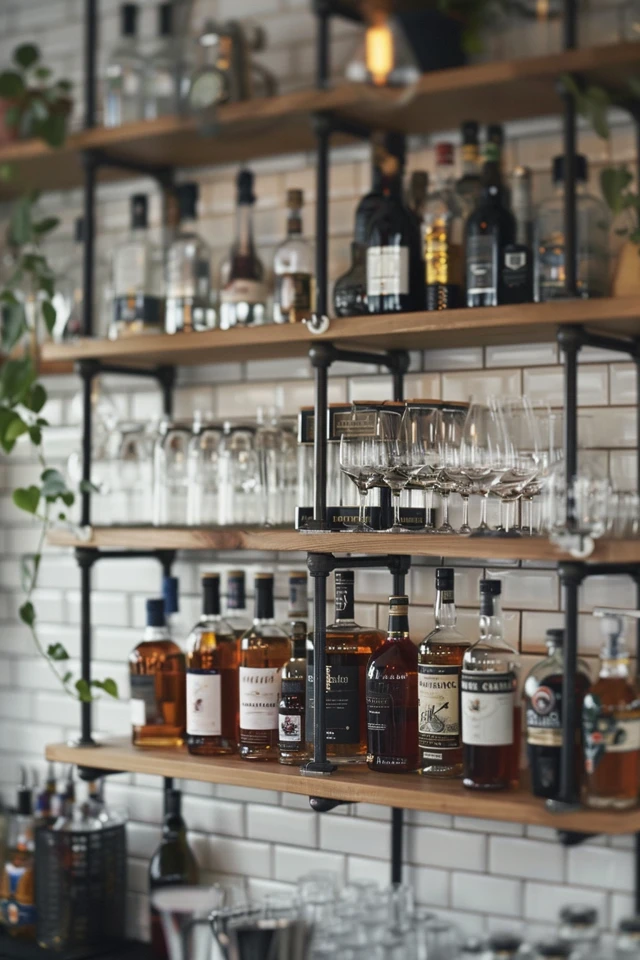
Stylish Bar Shelf Ideas to Elevate Your Space
Creating a dedicated space for spirits and glassware is one of the most requested features in my recent residential projects. A well-designed bar shelf does more than just hold liquor; it creates a focal point for entertaining and adds a layer of sophistication to a living or dining room. It transforms a blank wall into a functional piece of art that invites guests to relax.
However, moving from a cluttered liquor cabinet to an open shelving concept requires a shift in mindset regarding curation and maintenance. You have to consider weight loads, bottle heights, and how light interacts with glass. For plenty of visual inspiration to help you decide, be sure to check out the Picture Gallery at the end of the blog post.
I have designed dry bars in tiny apartments and elaborate wet bars in sprawling estates. The principles of scale, balance, and accessibility remain the same regardless of square footage. Let’s dive into the practical details of designing a bar shelf that works as good as it looks.
1. Location and Layout: Finding the Perfect Niche
Before buying lumber or brackets, you must determine the best location for your bar. This decision dictates the flow of traffic during a party. You want the bar accessible, but not in a bottleneck where people gathering will block a hallway.
In open-concept living spaces, I often utilize alcoves or “dead zones” flanking a fireplace. These recessed areas are natural candidates for shelving because they provide structural boundaries. If you don’t have an alcove, a flat wall in the dining room works well, provided you have enough clearance behind dining chairs.
Designer’s Note: The 36-Inch Rule
In a dining room, ensure you have at least 36 inches of clearance between the edge of your bar shelf (or the cabinet below it) and the back of a pulled-out dining chair. If the space is tight, keep your shelves shallow—around 8 to 10 inches deep—so they don’t encroach on the walkway.
Common Mistakes + Fixes
Mistake: Placing wine storage near heat sources or direct sunlight.
Fix: Wine degrades quickly in heat and UV light. If your bar shelf is near a south-facing window or a radiator, use it strictly for hard spirits (vodka, whiskey, gin) and glassware. Store the wine in a cooler or a dark pantry.
Calculating the Height
The height of your shelves is critical for ergonomics.
- The Pouring Surface: If you have a cabinet below, the counter height should be standard kitchen height (36 inches) or bar height (42 inches).
- The First Shelf: Position the lowest floating shelf at least 18 to 20 inches above the counter. This allows space for tall bottles, cocktail shakers, and the act of pouring.
- Shelf Spacing: Standard spirit bottles are 10–12 inches tall, but some premium bottles (like Grey Goose or tall decanters) can reach 14–15 inches. I always space shelves 16–18 inches apart to ensure versatility.
2. Selecting the Right Material and Finish
The material you choose sets the tone for the entire room. It needs to harmonize with existing furniture but can also serve as a contrasting accent. Durability is also a factor, as glass bottles are heavy and spills are inevitable.
Wood: This is the most versatile option. Walnut or white oak brings warmth to a space and hides dust relatively well. For a modern farmhouse or rustic look, a live-edge slab is stunning, but ensure the surface is planed flat enough that bottles won’t wobble.
Glass: Tempered glass shelves feel light and airy, making them perfect for smaller rooms where you don’t want to visually shrink the space. However, they require high maintenance regarding dusting and fingerprints.
Metal: Brass, blackened steel, or copper shelving units add an industrial or glam edge. Metal is excellent for thin profiles that still hold significant weight.
Designer’s Note: Mixing Metals
If your room already has brushed nickel hardware on the curtains or lamps, you don’t necessarily have to match the bar shelves to it. However, you should coordinate. Matte black pairs well with brass. Polished chrome pairs well with black. Avoid mixing two similar but slightly different finishes, like brushed nickel and chrome, as it looks like a mistake.
Weight Capacity Realities
This is the most boring but dangerous part of bar design.
Liquid is heavy. A 750ml bottle weighs roughly 3 pounds. A liter is closer to 4 pounds.
- If you place 10 bottles on a floating shelf, that is 30 to 40 pounds of dead weight.
- Add heavy crystal tumblers and the shelf weight itself, and you are easily looking at 50+ pounds.
- The Rule: Always anchor floating bar shelves into wall studs. Drywall anchors are rarely sufficient for a fully stocked bar. If studs aren’t available where you want them, you must use toggle bolts rated for heavy loads, but studs are always safer.
3. The Debate: Floating Shelves vs. Built-In Units
Choosing between floating shelves and a full built-in unit often comes down to budget and rental status. Both offer distinct aesthetic advantages.
The Case for Floating Shelves
Floating shelves are modern, clean, and less visually heavy. They make a room feel larger because you can see the wall all the way to the corners.
They are also cost-effective. You can buy high-quality solid wood floating shelves for a fraction of the cost of cabinetry.
For renters, floating shelves are generally permissible if you patch the holes later. However, getting that “invisible bracket” look usually requires drilling deep into studs.
What I’d do in a real project (Rental Edition):
If I cannot drill into studs or am worried about wall damage, I use a freestanding etagere or a console table with a wall-mounted shelving unit that rests on the console. This distributes the weight to the floor rather than the wall.
The Case for Built-Ins
Built-in wet bars (with a sink) or dry bars (without) offer the ultimate luxury: concealed storage.
Open shelves are great for display, but they are terrible for hiding the ugly stuff.
You don’t want to display bags of pretzels, paper napkins, or cheap plastic mixers.
A built-in unit with lower cabinets allows you to hide the clutter while showcasing the premium bottles and crystal above.
Common Mistakes + Fixes
Mistake: Using shelves that are too deep.
Fix: Deep shelves (12+ inches) result in bottles getting lost in the back. You end up knocking over front bottles to reach the back ones. Stick to 10-12 inches max for depth. If you have deep built-ins, use the back space for artwork or tall decor, not a second row of bottles.
4. Lighting: The Secret Ingredient
Lighting is what separates a “shelf with booze” from a “design feature.” Glass and liquid interact beautifully with light, refracting and glowing in a way that adds ambiance to the room.
LED Strip Lighting
The professional standard is recessed LED tape light. This requires routing a channel into the underside of the wood shelf so the strip sits flush.
You should aim for a color temperature of 2700K (warm white) or 3000K (soft white).
Avoid 4000K or 5000K, which looks like a sterile pharmacy or a convenience store fridge.
Puck Lights
If you have a cabinet-style unit, recessed puck lights in the top look dramatic. They create pools of light that highlight specific bottles or decanters.
Battery Operated Options
If you are retrofitting shelves and can’t run wires behind the wall, look for rechargeable, motion-sensor LED bars. They attach magnetically.
While not as seamless as hardwired options, they prevent visible cords dangling down the wall.
Designer’s Note: The Mirror Trick
If you have a small space or a dark corner, consider installing an antique mirror or a bronze-tinted mirror on the wall behind the shelves.
This doubles the light, makes the collection look larger, and adds immense depth to the room.
Clear mirrors can feel a bit too much like a bathroom; tinted or antiqued mirrors feel like a speakeasy.
5. Styling Your Collection: The Art of Arrangement
Styling a bar shelf is an exercise in balance. You want it to look stocked but not cluttered.
As a designer, I follow a few specific layering techniques to achieve that catalog look.
The Zoning Method
Don’t mix everything randomly. Group items by function.
- Zone 1: The Top Shelf. Use this for items you rarely reach for but look beautiful. Think vintage decanters, decorative objects, or premium bottles you save for special occasions.
- Zone 2: The Eye-Level Shelf. This is prime real estate. Place your most attractive glassware here. Group glasses in clusters of 4 or 6.
- Zone 3: The Working Zone. The lowest shelf or counter. This is for the bottles you pour daily, the shaker, the ice bucket, and the cutting board.
The Triangle Rule
Create visual triangles with your objects. Place a tall bottle, a medium stack of books, and a low bowl of limes in a rough triangle shape.
This keeps the eye moving across the shelf.
Avoid lining up all bottles like soldiers in a straight row; it looks like a grocery store inventory.
Adding Life and Texture
Glass and liquid are “hard” textures. You need to soften them.
Add a trailing plant like a Pothos or Philodendron on a high shelf. The organic shape breaks up the straight lines.
Add wood elements, such as a wooden muddler, a cutting board, or a bowl of corks.
Add art. Leaning a small framed print behind a cluster of low whiskey tumblers adds depth and personality.
Common Mistakes + Fixes
Mistake: Overcrowding the shelf.
Fix: Embrace negative space. Leave 20% of the shelf empty. If you buy a new bottle and have no room, finish an old one or move it to the pantry. A jammed shelf looks messy and is dangerous to access.
Final Checklist: The “Pro-Finish”
Before you call your project done, run through this checklist. This is the mental list I use on a final walkthrough to ensure the client is happy and the installation is safe.
- The Shake Test: Gently shake the shelf. If the hardware moves or the wall flexes, it is not secure enough for glass bottles. Reinforce immediately.
- Lip Protection: If you live in an earthquake-prone area or have active cats, consider a small gallery rail (a metal brass railing) on the front of the shelf to prevent sliding.
- Glassware Inspection: Check that your glasses aren’t touching each other. They should have a half-inch of breathing room to prevent chipping when you grab one.
- Label Orientation: Turn bottles slightly so labels face forward or slightly angled. Hide the barcode stickers.
- Cord Management: Are there any visible wires from your lights? Tuck them into paintable cord covers or route them behind decor.
FAQs
How do I keep my open bar shelves dust-free?
There is no magic trick; open shelving requires dusting. I recommend a microfiber wand for quick weekly swipes. To minimize grime, rinse your glasses before using them if they haven’t been touched in a few weeks. Also, avoid placing the bar right next to the kitchen stove where grease travels.
Can I store wine on my bar shelves?
Only if you plan to drink it very soon (within a month). Wine needs temperature stability and to be stored on its side to keep the cork moist. Upright storage on a warm living room shelf will turn fine wine into vinegar. Keep the display for spirits and use a wine fridge for the vino.
What is the minimum depth for a bar shelf?
For just bottles, you can get away with 6 inches, but it’s risky. 10 inches is the sweet spot. This accommodates wider bourbon bottles and standard rocks glasses comfortably. 12 inches is luxurious but can start to look bulky if the shelves are thick.
How high should I hang the shelves if I have high ceilings?
Don’t chase the ceiling. Keep the top shelf reachable without a step stool, generally maxing out at 7 feet off the ground. If you have 10-foot ceilings, use the space above the top shelf for a large piece of art or a sconce light, rather than adding more unreachable shelves.
Conclusion
Designing stylish bar shelves is about merging structure with personality. It transforms the ritual of making a drink into a visual experience. By focusing on sturdy installation, thoughtful lighting, and curated styling, you can create a corner of your home that feels like a high-end lounge.
Remember that this space should evolve. As you travel and collect new spirits or upgrade your glassware, your shelves will change. Start with the basics: good wood, strong anchors, and your favorite bottles. The rest is just decoration.
Picture Gallery


