
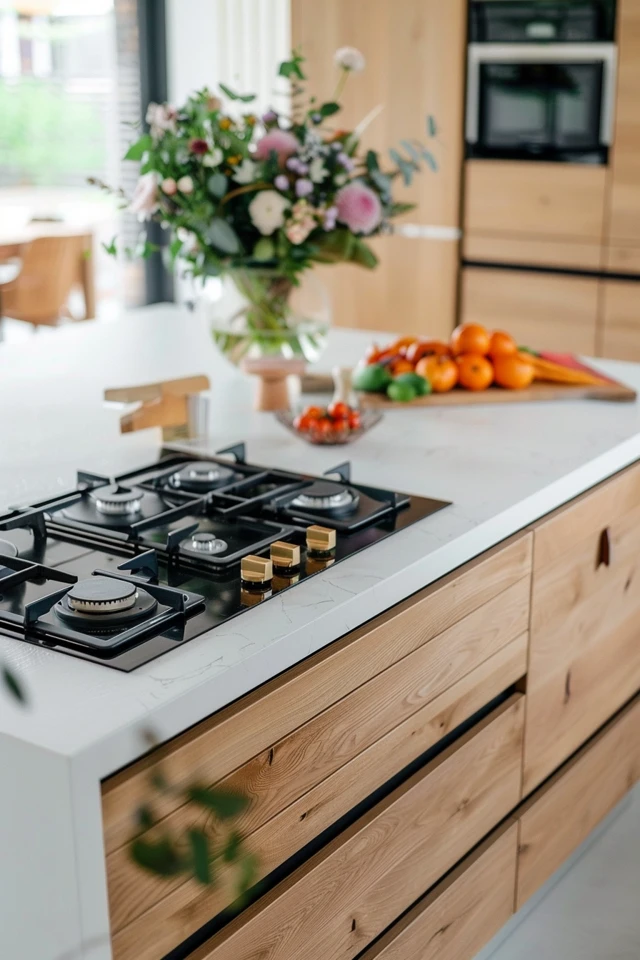
Stylish Kitchen Island Ideas with Stove Designs
Introduction
Designing a kitchen island with a built-in stove is often the ultimate goal for home chefs who love to entertain. It changes the dynamic of the room entirely, allowing the cook to face guests or family members rather than staring at a tiled backsplash. This layout transforms cooking from a solitary chore into a social performance.
However, moving the heat source to the center of the room introduces complex technical challenges regarding ventilation, safety, and ergonomics. It requires careful planning to ensure the island remains a functional workspace rather than just a showpiece. Check out our curated Picture Gallery at the end of this post for visual inspiration.
In this guide, I will walk you through the structural requirements, aesthetic choices, and pro-level measurements needed to make this layout work. We will cover everything from downdraft vents to safety clearances for seating. Let’s dive into the details of designing a safe and stylish cooking island.
1. Evaluating Feasibility: Is a Stove Island Right for You?
Before ripping up the floorboards to move gas lines or electrical wiring, you must evaluate if your space can handle a stove in the island. The primary consideration is usually the “work triangle.”
In a professional layout, the path between your sink, refrigerator, and stove should be unobstructed. When the stove moves to the island, it often becomes the pivot point of the kitchen.
You must also consider your cooking style. If you frequently sear steaks or fry food, an island stove creates a “splatter zone” that is much harder to contain than a perimeter counter.
Designer’s Note: The Reality of the “Open” Kitchen
I often warn clients that an island stove puts your messy pots and pans on display. Unlike a perimeter counter where you can hide a dirty skillet behind a high wall or in a corner, the island is front and center. If you are a messy cook who likes to clean up later, this layout might frustrate you.
The Infrastructure Check
- Fuel Source: Moving a gas line through a concrete slab is expensive and invasive. Induction or electric cooktops are often easier to relocate in renovations.
- Venting Route: Can you run a duct under the floor or through the ceiling? This is often the dealbreaker in multi-story homes.
- Island Size: If the island is less than 7 feet long, it is usually too small to house a cooktop safely while preserving prep space.
2. Solving the Ventilation Puzzle
Ventilation is the most difficult aspect of placing a stove in a kitchen island. Without a wall to mount a standard hood, you are left with three primary options. Each has distinct aesthetic and functional trade-offs.
Overhead Island Hoods
These hang directly from the ceiling over the cooktop. They offer the best capture area for smoke and steam because heat rises naturally.
However, they can visually obstruct the room. If your goal is an open-concept sightline, a bulky stainless steel chimney right at eye level can defeat the purpose.
To keep it stylish, look for “liner” inserts that can be clad in wood or drywall to match your ceiling. Alternatively, minimal glass and steel designs can help keep the view relatively open.
Downdraft and Pop-Up Vents
Downdraft systems pull air down into a vent located behind or beside the burners. Pop-up versions rise out of the countertop when in use and retract flush when finished.
These are excellent for preserving sightlines. However, they struggle against the laws of physics since they must fight the natural rise of hot air. They are generally less effective for high-heat cooking like wok frying.
Ceiling-Recessed Units
These are flush-mounted into the ceiling, looking similar to a large light fixture or AC vent. They are the most discreet option available.
Common Mistakes + Fixes
Mistake: Installing a ceiling-recessed hood in a room with 10-foot ceilings without a remote blower.
Fix: If the hood is more than 30 inches above the cooking surface, you need a significantly higher CFM (cubic feet per minute) rating to catch the smoke before it disperses.
3. Critical Measurements and Safety Clearances
This is where DIY designs often fail. A stove is a heat source, and placing it on an island where people sit and eat requires strict adherence to safety numbers.
If you ignore these dimensions, you risk guests getting splattered with hot grease or papers sliding off the seating area onto a burner.
The “Backside” Buffer
If you plan to have barstools on the back side of the island, you need a safety buffer.
- Minimum Distance: I recommend a minimum of 9 inches of countertop space between the back of the cooktop and the edge of the overhang.
- Ideal Distance: 12 to 15 inches is safer. This prevents a child reaching across for a toy or a guest’s wine glass from getting too close to the heat.
- Raised Bar Option: A 42-inch high “bar height” section behind the stove is a great physical barrier that hides the mess and protects guests.
Side Landing Zones
You strictly need counter space on both sides of the cooktop.
- Left and Right Clearance: Aim for at least 15 inches on one side and 12 inches on the other. You need room to set down a hot pot or a spoon rest.
- Handle Space: This clearance ensures pot handles don’t hang over the edge of the island where someone walking by could bump them.
Aisle Widths
Because the stove is a high-traffic zone, the aisle behind the chef needs to be wider than usual.
- One Cook: 42 inches is the standard minimum aisle width.
- Two Cooks/High Traffic: 48 inches is preferred. This allows someone to walk behind the person cooking without bumping them into a hot pan.
4. Material Selection for Durability and Style
When the stove is in the island, the surrounding countertop material takes a beating. It is exposed to higher heat and more oil splatter than a sink island.
Natural Stone vs. Engineered Stone
Quartz is the most popular choice for islands due to its stain resistance. However, standard quartz employs resin binders that can scorch or turn yellow if exposed to extreme heat.
If you are a heavy cook, be careful with hot pots sitting directly on quartz seams near the burner.
Natural stones like Granite and Quartzite are incredibly heat resistant. They can handle a hot lid being set down next to the burner better than man-made composites.
Soapstone is another excellent choice for a stove island. It is impervious to heat and acids, and it develops a beautiful patina over time that suits a “working kitchen” aesthetic.
Butcher Block Hybrids
I love mixing materials on an island. A common layout is using stone around the perimeter of the stove for safety, and transitioning to wood (butcher block) for the dining or prep end of the island.
This visually separates the “hot zone” from the “eating zone.” Just ensure the transition seam is sealed perfectly to prevent crumbs and grease from accumulating in the gap.
What I’d do in a real project:
If the budget allows, I prefer using a sintered stone (like Dekton) for stove islands. It is virtually indestructible against heat and scratches, meaning you can slide pans right off the burner without fear.
5. Designing the “Social Kitchen” Layout
The main reason for this layout is socialization. However, nobody wants to sit directly in front of a boiling pot of pasta water.
Asymmetrical Seating
Instead of lining up four stools in a row directly behind the stove, consider an L-shaped seating arrangement.
- Place the seating on the short end of the island and the far corner.
- This keeps guests out of the direct line of fire from grease splatters while still allowing for conversation.
The Split-Level Island
A split-level design is practical for stove islands. The lower level (36 inches) houses the stove and prep space. A raised tier (42 inches) houses the seating.
This backsplash wall created by the height difference serves as a splash guard. It also allows you to install electrical outlets in the riser, which are code-mandated for islands in most US states.
Lighting the Workspace
Lighting a stove island is tricky. You want decorative pendants, but you don’t want them coated in grease.
- Placement: Hang pendants slightly wider than the cooktop width so they aren’t directly over the steam.
- Material: Avoid fabric shades or intricate crystal near a stove. Stick to glass, metal, or ceramic shades that can be easily wiped down with degreaser.
- Recessed Cans: Always supplement pendants with recessed task lighting. Position the cans so the light falls in front of the cook, not behind them, to avoid casting shadows on the pans.
6. Appliance Selection: Gas vs. Induction
The type of stove you choose heavily dictates the design aesthetic and the technical requirements.
The Case for Induction
For an island, induction is my top recommendation.
- Safety: The surface doesn’t get as hot as gas grates, making it safer for islands where people are gathering.
- Visuals: It is completely flat and sleek. When not in use, it almost disappears into the countertop, doubling as workspace.
- Airflow: Induction creates less ambient heat, which puts less strain on your ventilation system.
The Case for Gas
Gas offers visual drama and tactile control.
- Statement Piece: A heavy-duty Wolf or Viking rangetop creates a focal point. It says, “This is a chef’s kitchen.”
- Clearance Issues: Gas flames require stricter clearances to combustible materials (like overhead wood beams or pendant lights).
- Air turbulence: If you have a nearby window or strong AC vent, it can flicker the flame. This is rarely an issue with perimeter stoves but common on open islands.
Final Checklist: Before You Break Ground
Use this checklist to ensure you haven’t missed a critical step in your island planning.
- Verify Venting Path: Have a contractor confirm you can vent to the outside before buying the hood. Recirculating kits should be a last resort.
- Check Local Code: Some states require an electrical outlet on the island even if you have a stove. Confirm placement.
- Measure the “Swing”: Ensure the oven door (if it’s a range) or dishwasher door (if adjacent) doesn’t block the walkway when open.
- Select Easy-Clean Surfaces: Confirm your backsplash or bar wall material is wipeable (semi-gloss paint or tile, not flat matte).
- Plan for the Gas Shutoff: Ensure the gas shutoff valve is accessible, usually in a cabinet adjacent to the cooktop.
FAQs
Can I have a sink and a stove on the same island?
Yes, but the island needs to be large. You need at least 18 to 24 inches of counter space between the sink and the stove for safety and prep work. An island with both usually needs to be at least 8 or 9 feet long.
Is it better to have the stove or the sink on the island?
From a functional standpoint, the sink is often better on the island because you spend more time prepping and cleaning than actually standing over a burner. However, the stove on the island is more social for active cooking.
How high should a range hood be above an island cooktop?
Standard recommendation is 30 to 36 inches above the cooking surface. If you go higher to preserve the view, you must increase the width of the hood and the power (CFM) of the blower.
Do I need a backsplash for an island stove?
If the island is flat (one level), you don’t have a vertical backsplash. If you have a raised bar, the riser acts as the backsplash. For flat islands, the “backsplash” is essentially the empty counter space behind the burners.
Conclusion
Placing a stove in your kitchen island is a bold design move that can revitalize how you use your home. It invites interaction and turns meal preparation into a shared experience. While the technical hurdles of ventilation and safety clearances are significant, they are solvable with careful planning.
Focus on getting the flow right first. Ensure your aisle widths are generous and your ventilation is adequate. Once the mechanics are sound, you can layer on the beautiful materials and lighting that make the space your own. A well-executed stove island isn’t just a place to cook; it’s the heart of the home.
Picture Gallery


