
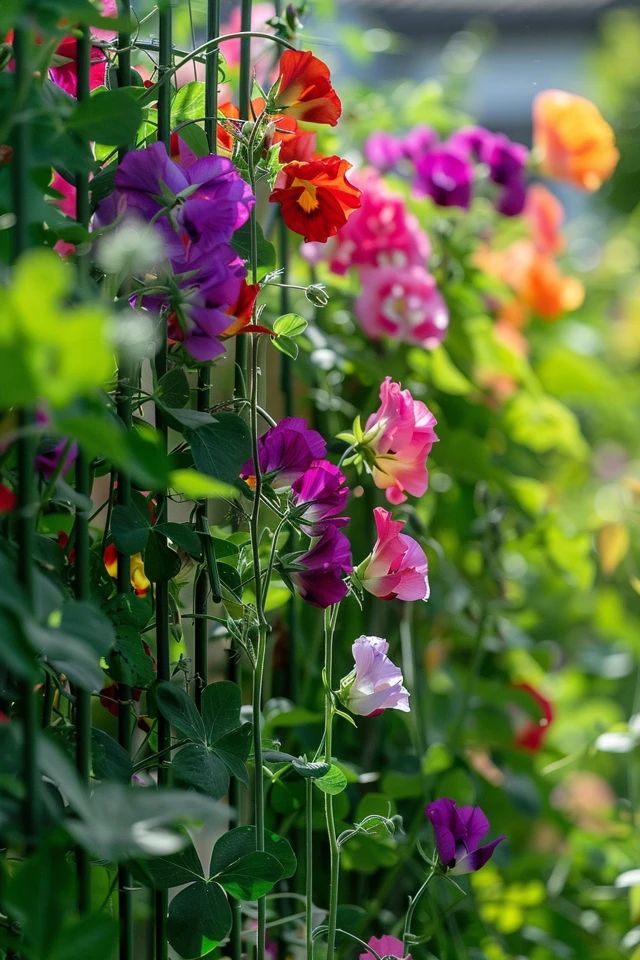
Title: Sweet Pea Trellis Ideas for Enchanting Gardens
Introduction
Few things in the garden evoke as much nostalgia and romance as the scent of sweet peas drifting on a summer breeze. As a designer, I treat sweet peas not just as flowers, but as architectural tools that can soften hard edges, create vertical drama, and introduce ephemeral walls of color to a landscape. However, the difference between a chaotic tangle of vines and a stunning floral display usually comes down to one thing: the structure you provide for them to climb.
Choosing the right trellis is about balancing the needs of this vigorous annual with the aesthetic of your home and garden. Sweet peas are prolific growers, often reaching heights of six to eight feet, and they require a specific type of support system that accommodates their delicate tendrils. If you are looking for visual inspiration to accompany these technical tips, please note that a curated Picture Gallery is located at the very end of this blog post.
In this guide, we will move beyond basic garden stakes and explore design-forward trellis ideas that elevate your outdoor space. Whether you are working with a sprawling country estate or a compact urban balcony, getting the vertical element right is the key to a professional-looking garden.
1. The Mechanics of Support: What Sweet Peas Actually Need
Before we dive into specific styles, we must address the biology of the plant. This is where I see most DIY projects fail. Unlike roses, which have thorns to hook onto structures, or clematis that twists its leaf stalks, sweet peas climb using tiny, sensitive tendrils.
These tendrils cannot grip anything with a diameter larger than a standard pencil. If you provide a chunky wooden lattice or thick bamboo stakes without modification, the plant will struggle to climb, flop over, and eventually sprawl along the ground.
To fix this, any trellis design you choose must incorporate a secondary layer of support. This usually means wrapping supports in twine, attaching jute netting, or using chicken wire. The trellis provides the strength to hold the heavy wet foliage, while the netting allows the tendrils to grab hold.
Designer’s Note: The “Invisible” Grid
In my projects, I often use heavy-gauge fishing line or thin galvanized wire strung between main posts. From a distance, the wires disappear. This creates the illusion that the flowers are floating in mid-air, which looks much cleaner than bulky plastic netting.
The Weight Factor
Never underestimate how heavy a healthy wall of sweet peas can be, especially after a rainstorm. The foliage holds water, and the biomass increases rapidly in June and July.
Anchoring: Any structure taller than 5 feet needs to be anchored at least 12 to 18 inches into the ground.
Wind Load: If you are creating a flat screen, wind resistance is high. Ensure your vertical posts are sturdy enough to withstand gusts; otherwise, the whole wall may snap.
2. The Classic Wigwam and Obelisk
The most traditional method for growing sweet peas is the wigwam (or teepee) and the obelisk. This style is synonymous with the English cottage garden aesthetic. It works exceptionally well in borders to add height and rhythm.
When designing a border, I follow the rule of odds. Grouping three wigwams in a loose triangle looks more natural and dynamic than a single structure or an even pair. These vertical moments draw the eye upward, breaking the monotony of low-growing perennials.
Building the Perfect Rustic Wigwam
You don’t need to buy expensive premade structures. I prefer using hazel or willow branches for a bespoke, organic look.
1. Select Your Canes: You will need 5 to 7 long poles (bamboo or hazel), approximately 8 feet long.
2. Spacing: Push the thick ends of the canes into the soil in a circle. The circle should be roughly 3 to 4 feet in diameter.
3. The Top Knot: Gather the tops together. Do not tie them right at the very tip. Tie them about 12 inches down from the top. This creates a decorative spray at the peak and ensures the structure is stable.
4. The Lattice: Spiral natural twine around the wigwam from bottom to top, spacing the twine lines about 6 inches apart. This gives the tendrils their ladder.
Common Mistake: The “Maypole” Effect
A common error is tying the top of the wigwam too tight and too low, creating a very narrow cone. Sweet peas need airflow. If the top is too constricted, the foliage creates a dense, damp cluster that invites powdery mildew. Keep the base wide and the angle steep, but allow some breathing room at the apex.
The Formal Obelisk
For a more polished or formal garden, painted timber obelisks are a better choice than rustic twigs. I typically paint these in a dark charcoal or a soft sage green. Dark colors tend to recede visually, allowing the bright pop of the flowers to take center stage.
If you are using a wooden obelisk with thick slats, remember to staple inconspicuous bird netting over the wood so the plants can actually climb it.
3. Creating Rooms with Arches and Tunnels
If you want to create an immersive experience, nothing beats a sweet pea tunnel or archway. This allows you to walk through the scent, which is the primary reason we grow these flowers.
In landscape design, we use arches to mark transitions—moving from a patio to a lawn, or from a vegetable patch to a flower garden. A sweet pea arch provides a temporary, seasonal “doorway” that feels magical for six to eight weeks of the summer.
Scale and Dimensions
The biggest failure point here is scale. Plants grow inward. If you buy a standard “big box store” arch that is only 3 feet wide, the plants will close in on you.
Minimum Width: I never specify an arch less than 5 feet wide for climbers. Once the sweet peas bulk up (adding 6 to 8 inches of depth on both sides), you are left with a comfortable 3.5 to 4-foot walking path.
Minimum Height: Aim for an arch that is at least 7.5 to 8 feet tall at the apex. The flowers will hang down, and you don’t want to be ducking to avoid wet blooms hitting your face.
The Cattle Panel Trick
For a cost-effective, architectural solution, I use cattle panels (heavy-gauge wire fencing used for livestock). They are rigid, incredibly strong, and come in 16-foot lengths.
1. Drive four heavy-duty T-posts into the ground (two on each side of your path).
2. Bend the cattle panel into an arch shape between them.
3. Secure the panel to the T-posts with heavy wire.
4. The grid of the panel is perfect for sweet peas to grab, and the steel is strong enough to last for decades.
What I’d Do in a Real Project
I would plant the sweet peas on the outside of the arch. On the inside, at the base, I would plant low-growing shade lovers like hostas or ferns. The sweet peas will shade the ground, keeping their own roots cool (which they love) and protecting the underplanting.
4. Wall-Mounted and Fence Trellising
Many of my clients deal with “the ugly fence” problem. Whether it is a boring vinyl barrier or weather-beaten cedar, covering a fence with sweet peas is a fantastic camouflage strategy. However, you cannot simply let them grow directly against the wood.
The Airflow Gap
Sweet peas are prone to fungal diseases if air cannot circulate around the leaves. Growing them flat against a fence is a recipe for mildew.
You must create an offset. I mount wooden battens or metal brackets to the fence that hold the trellis or netting at least 2 to 3 inches away from the surface. This creates a chimney effect where air can flow behind the foliage, keeping the plant healthy and the fence dry.
Trellis Materials for Walls
Jute Netting: This is my preferred biodegradable option. You can staple it to the top of the fence and stake it into the ground at the bottom. At the end of the season, you simply rip the whole thing down—plant and net—and throw it in the compost. No detangling required.
Metal Grids: For a modern industrial look, use rebar mesh painted black. It looks sculptural in the winter when the vines are gone.
Tension Wire Kits: These are stainless steel hubs that screw into the wall, connected by steel cables. They are very sleek and perfect for high-end contemporary homes.
Designer’s Note: The Renter’s Solution
If you are renting and cannot drill into the fence, use large rectangular planter troughs placed at the base of the wall. Insert tall bamboo canes into the planters and lean them against the wall, secured only by the weight of the soil. This creates a “living wall” without any permanent damage to the property.
5. The Cordon Method: For Show-Quality Blooms
If you have ever wondered how flower show growers get those impossibly long, straight stems with four or five blooms each, the answer is the Cordon Method. While this is more labor-intensive, the visual result is architectural and incredibly tidy.
This is not a “wild” look; it is a linear, disciplined design choice that looks fantastic in modern gardens or designated cutting patches.
How it Works
Instead of a net or a wigwam where the plant bushes out, the Cordon Method uses tall, individual vertical canes (usually bamboo) spaced about 8 to 10 inches apart in a long row.
1. One Plant, One Cane: You select the strongest shoot from your seedling and tie it to the cane.
2. Remove Tendrils: You must cut off every single side shoot and every tendril. You only allow the main leader to grow up the cane.
3. Tying In: Because you removed the tendrils, the plant cannot hold itself up. You must use wire rings or sweet pea clips to secure the stem to the cane every few inches.
Why Do This?
By removing all side growth, the plant directs all its energy into the main stem and the flowers. The result is stems that are 15 to 18 inches long (perfect for bouquets) and larger flowers.
Visually, a row of cordons looks like a green striped curtain. It is very graphic and orderly. I often use this method along the edge of a vegetable garden to create a transparent screen.
Maintenance Reality Check
I only recommend this method if you enjoy spending time in the garden every other day. You have to stay on top of pinching out the side shoots, or the system turns into a mess. If you prefer a “plant it and forget it” approach, stick to wigwams and netting.
Final Checklist: Planning Your Sweet Pea Structure
Before you head to the hardware store or garden center, run through this quick checklist to ensure your design is viable.
Sun Exposure: Is the trellis location getting at least 6 hours of direct sun? Sweet peas will not bloom in the shade.Height Clearance: Have you accounted for 6 to 8 feet of vertical growth? If your trellis is too short, the vines will bunch at the top and look messy.
Grip Factor: Does the structure have elements thin enough (under 1/4 inch) for tendrils, or have you added netting/twine?
Stability: Is the structure buried deep enough (12+ inches) to resist high winds when fully leafed out?
Access: Can you reach all sides of the trellis? You need to pick flowers continuously to keep them blooming. If you plant a wide block against a wall, you won’t be able to reach the back blooms, which will go to seed and stop the plant’s production.
Soil Prep: Have you dug in plenty of organic matter at the base before* installing the trellis? It is much harder to amend the soil once the structure is in place.
FAQs
Q: When should I install the trellis?
A: Always install the trellis before you plant out your seedlings. Sweet pea roots are sensitive to disturbance. If you try to hammer stakes into the ground after the plants are in, you risk severing the roots and killing the plants.
Q: Can I use chicken wire for sweet peas?
A: Yes, you can. It provides plenty of gripping points. However, visually, it can look a bit utilitarian. I recommend using the green-coated variety or spraying it black so it disappears into the background.
Q: What if my sweet peas outgrow the trellis?
A: This happens often in good soil! If they reach the top, they will naturally flop over and hang down. This can actually look very romantic. If you want to avoid this, you can “layer” the vines (untie them and lay the stems along the ground to lower the growing tip), but this is tricky. Usually, letting them cascade is the best aesthetic choice.
Q: How far apart should I plant sweet peas on a wigwam?
A: I plant two seedlings at the base of each cane. This ensures that if one fails, you still have coverage, and it creates a lush, full look quickly.
Conclusion
Sweet peas are one of the most rewarding plants to grow, offering a sensory experience that few other flowers can match. However, treating them as a design element rather than just a crop is what elevates a garden from good to enchanting. Whether you choose the rustic charm of hazel wigwams, the immersive experience of a cattle panel tunnel, or the architectural precision of the cordon method, the structure is just as important as the seed.
Remember that the trellis is the skeleton of your summer garden. It provides interest in the spring before growth starts, supports the glory of the season in summer, and adds architectural form in the autumn. By investing time in selecting and installing the right support system, you ensure that your sweet peas are not just a fleeting scent, but a stunning visual feature in your home’s landscape.
Picture Gallery


